
Keep Kids Creative Week: Turn Off Screens, Turn On Creativity

Keep Kids Creative Week transforms the third full week of September into a grassroots rebellion against screen dominance. Bruce Van Patter established this movement in 2003 after working with nearly 100,000 school-age children. The author and illustrator watched kids lose their natural "think outside the box" abilities at younger ages each year.
When families need simple solutions, his approach costs nothing but time. The week champions children's innate creativity through hands-on activities families can use anywhere.
Van Patter designed this observance as a direct counter to screen-driven lifestyles that replace imaginative play with passive consumption. This grassroots approach reaches communities worldwide; local flexibility remains the priority.
Key Info: Keep Kids Creative Week
- When is Keep Kids Creative Week?
Occurs in the 3rd week of September - This Year (2026):
Monday 21st - Sunday 27th September 2026 -
Future Dates
- Monday 20th - Sunday 26th September 2027
- Monday 18th - Sunday 24th September 2028
- Monday 17th - Sunday 23rd September 2029
-
Additional Details
- Observed By: Parents, educators, families, and children in educational and home settings
- Where Is It Observed: United States
- Primary Theme: Youth Creative Expression
- Hashtags: #KeepKidsCreative #KidsCreativity #CreativeKids #CreativityWeek #KidsArt
Quick Links: Keep Kids Creative Week
Why This Week Changes Everything for Young Minds
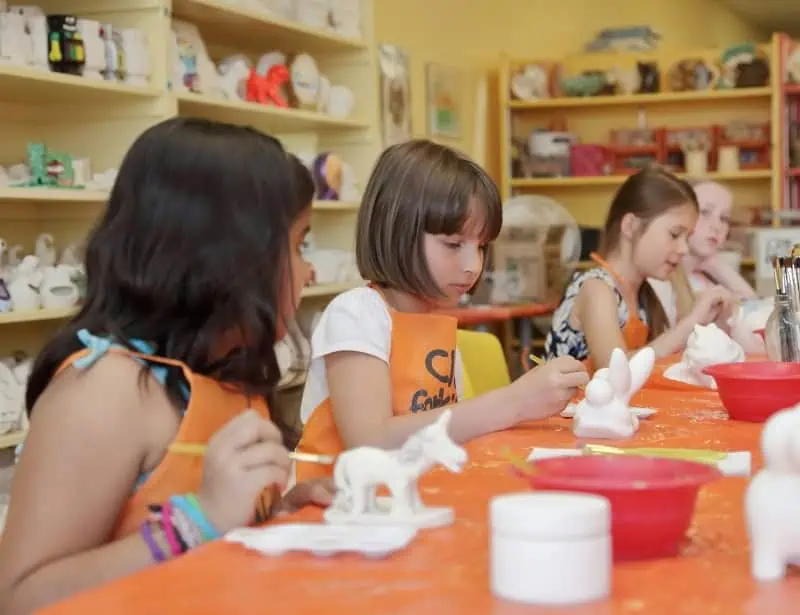
Children's creative minds suffer most in the early years, when brains crave active exploration. Neuroimaging studies connect digital screen exposure to cognitive inflexibility, the opposite of creative thinking.
Early childhood appears vulnerable to prolonged screen exposure. Children under three years old show persistent negative impacts on lower cognitive and social–emotional development.
Nicholas Kardaras, author of "Glow Kids," advocates for creative protection: "If you really want a child to thrive and blossom, lose the screens for the first few years of their lives." He points to boredom as a creativity catalyst: "Let them experience boredom; there is nothing healthier for a child than to learn how to use their own interior resources."
Arts-based interventions produce clear results. Intensive creative programming increases overall GPA by 0.55 sd among 14-16-year-old students.
Does this harmful habit reverse itself without intentional intervention? Evidence suggests no.
Essential Facts and Founding Story
Since 2003, Van Patter has launched Keep Kids Creative Week with a simple observation. Cultural and educational pressures prioritize standardized outcomes over creative exploration.
His background as a children's author-illustrator provided firsthand evidence of this creativity decline. And what he saw was troubling.
Government data reveals the scope: 50.4% of teenagers spend four or more hours daily with screens; only 3% maintain less than one hour. Children exposed to four or more hours daily show developmental delays. Odds ratios range from 2.67 to 4.78 across different domains.
The movement gained traction through educator adoption rather than corporate sponsorship.
Timeline:
Bruce Van Patter establishes Keep Kids Creative Week as screen time alternative
Digital awareness expansion while maintaining grassroots focus
Annual third week September observance with growing educator adoption
Smart Ways to Celebrate and Engage

For Families:
Create collaborative stories using Van Patter's creative writing techniques. Take turns selecting random elements. Design invention projects using household items. Focus on creative problem-solving over finished products.
Establish screen-free zones during creative hours. Boredom becomes the catalyst for original thinking.
For Educators:
Integrate multiple artistic approaches. Implement project-based learning challenges that emphasize divergent thinking.
Schedule physical activity breaks between creative sessions. Movement shapes creative output.
For Communities:
Organize intergenerational storytelling events where children transform adult memories into art. Host "invention fairs" showcasing original creations made from recycled materials.
Create collaborative art projects where multiple families contribute individual pieces.
Age-specific adaptations ensure engagement across stages. Preschoolers thrive with sensory exploration while teenagers respond to complex narrative challenges that connect personal experiences with creative expression.
Core Philosophy That Drives Results
Van Patter's methodology centers on "think outside the box" as a teachable skill, not an innate talent. His approach challenges the myth that creativity can't be developed through practice.
This contrasts sharply with educational systems that often "educate creativity out of children," as Sir Ken Robinson observed. The philosophy emphasizes process over product; children learn creative confidence through exploration rather than predetermined outcomes.
Van Patter maintains consistent annual themes while adapting activities to current needs. This suggests creative skill-building connects to broader educational outcomes and long-term child development benefits that extend far beyond artistic ability.
Madeleine L'Engle captured this urgency: "All children are artists, and it is an indictment of our culture that so many of them lose their creativity, their unfettered imaginations, as they grow older."
Extending Creative Impact Year-Round
One week can't reverse years of creative decline.
But it can spark permanent lifestyle transformations. Van Patter provides ongoing resources through educational materials and community connections. Families discover that creative engagement often requires less—less effort than managing screen time conflicts, actually.
Simple daily practices build creative thinking muscles year-round: storytelling during car rides, collaborative cooking experiments, invention games using common objects. These replace passive entertainment with active creation.
In practice, September's creative explosion becomes the catalyst for sustainable practices that prioritize imagination over digital consumption.
For more days to boost children's creativity, save National Coloring Book Day and National Encourage A Young Writer Day in your calendars.
Resources:
FAQs (Frequently Asked Questions)
Schools looking to join Keep Kids Creative Week face a bit of a puzzle. The main sources don't list clear steps for official participation, and several education websites mention this gap in their resources. This suggests interested schools might need to reach out directly to the organizers. In practice, checking with local creative education groups might be your best bet for finding the actual sign-up process.
Kids who get creative during their early school years tend to feel better about themselves as teens. Place2Be research points to real gains in self-esteem and better bounce-back when things get tough. Beyond this, a BMC Pediatrics study found that 14-17 year olds who regularly did creative activities showed stronger thinking skills. The effect shows up most clearly in problem-solving tests. No surprise there.
When it comes to cultural adaptation, Keep Kids Creative Week remains something of a mystery. Current research doesn't tell us how the program changes across different countries or cultures. Similar youth programs have spread worldwide with local changes, but no published studies track how this specific week gets modified. This relates to a broader gap in documenting how creative initiatives translate across cultural boundaries.
Parents can track creative growth using Van Patter's checklist that focuses on 3 key areas: new ideas, problem-solving, and artistic confidence. The tool looks at process rather than just what kids make. Today's experts suggest watching for changes in play time quality and a child's willingness to try new approaches. Kids who ask for less screen time often show the strongest creative progress.
Kids need about twice as much free play as organized activities for the best creative development. A study in Frontiers in Psychology found that children with more unstructured time showed better self-direction skills. Chen and colleagues at Nature confirmed in 2024 that this 2:1 ratio supports both mental and physical growth. But structured time still matters - it teaches specific skills while free play builds innovation thinking.
Barbara is a former journalist who is passionate about translating important causes into engaging narratives. She combines communication expertise with an environmental science background to create accessible, fact-driven content.
