September 15th: National & International Days, Celebrations and Observances
Freedom rings across five Central American nations on September 15. These independence celebrations share the date with Democracy Day - a UN initiative pushing for stronger democratic systems.
Virtual classrooms take the lead as schools mark National Online Learning Day. Students plug into lessons from home, while teachers adapt traditional methods to digital spaces.
In art rooms and classrooms, kids turn simple dots into wild creations. This global art project, known as International Dot Day, proves creativity starts with just one small mark.
Cleaning crews and maintenance teams rarely grab headlines, but Environmental Services Week puts them first. These workers keep our spaces safe and spotless - a job that matters every single day.
And yes, there's always room for fun - just ask anyone enjoying a double cheeseburger on this date. From independence declarations to creative challenges, September 15 packs meaning into every hour.
September 15 marks multiple celebrations: the International Day of Democracy and independence days for five Central American nations - Costa Rica, El Salvador, Guatemala, Honduras, and Nicaragua. Americans observe National Online Learning Day, International Dot Day, and National Double Cheeseburger Day. The date also falls during September, which honors professionals who maintain clean, healthy spaces.
September 15th: Quick Links
National Days and Awareness Events on September 15th
 Work & Skills
 Work & Skills
 Equality & Diversity
Awareness Weeks Including September 15th

 Mind & Body
 Work & Skills
 Charity & Civil Society
 Sustainable Living
4 Monthly Observances Across September
 Mind & Body
 Mind & Body
 Mind & Body
 Mind & Body
Make A Difference On September 15th
Looking to do some good this September 15th? Your neighborhood needs you.
- Local sanitation teams deserve recognition - drop off thank-you cards or set up a coffee morning for the crew.
- During election season, many folks need help with voter forms or understanding town meetings.
- For a creative break, join the Dot Day art movement - it's amazing what people design from a single spot.
- Grab lunch from the family-run burger place downtown, or try those new veggie options everyone's talking about.
- Spanish phrases come in handy this month, especially during local Hispanic Heritage events.
- Keep our roads safer by giving those big rigs extra space - truckers will appreciate it.
- The library's online portal has excellent courses about ecology and city planning.
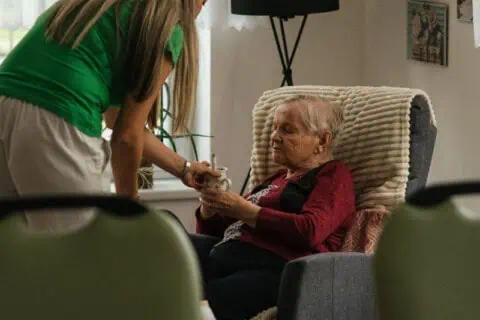
- Here's something special: spend an afternoon with seniors at Oak Grove or Riverside homes. They've got stories about how our streets and shops have changed over decades. Bring photos - they love seeing what's new in the neighborhood.
These everyday actions may seem small, but they add up. Our community grows stronger one connection at a time.
Did You Know? September 15th Facts and Historical Events
Charles Darwin stood at the Beagle's rail in 1835, watching the Galápagos Islands rise from the Pacific. After dropping anchor near San Cristóbal, he roamed the volcanic terrain for five weeks. His specimen bags filled quickly. His notebooks captured details that no one had documented before.
- The mockingbirds caught his eye first. Moving between islands, Darwin spotted differences in their features - small changes that varied by location. The giant tortoises showed this pattern too. Their shells differed from island to island, matching the terrain where they lived.
- Darwin didn't rush to conclusions. Back in England, his notes from the Galápagos kept him thinking. The pieces came together over decades. His 1859 publication drew heavily from what he saw on those remote islands, changing biology forever.
Few places match the Galápagos for pure scientific value. Since 1978, its UNESCO World Heritage status has helped protect these islands. National parks now cover 97% of the area, keeping Darwin's outdoor classroom intact for modern researchers.
September 15th - Notable Birthdays
September 15th links an odd intersection of scientific and literary history. Each date-connected figure took their field in unexpected directions.
- James Fenimore Cooper (1789-1851) documented early American wilderness with unflinching detail. His "Pioneers" rang early alarms about resource waste - a message many dismissed at the time. The vivid landscapes in his "Leatherstocking Tales" preserved scenes of untamed America. His field notes on passenger pigeons, initially just personal observations, later proved vital after their species vanished.
- Behind Harvard Observatory's brick walls, Anna Winlock (1857-1904) tackled the complex math of the stars. As head of the "Harvard Computers," she set new standards for stellar data analysis. Observatory publications still carry her team's exacting calculations - essential reference points for modern astronomical work.
- Murray Gell-Mann (1929-2019) spotted patterns in particle physics that others missed. His quark theory met initial skepticism but explained the basic building blocks of matter. Later, at Santa Fe Institute, he applied these physics insights to environmental systems - a connection few scientists saw coming.
- Neil Bartlett's (1932-2008) lab notes from 1962 record an impossible reaction: the first noble gas compound. Textbooks had called these gases inert for decades. His evidence forced chemists to rewrite those texts, opening new paths in atmospheric research and chemical theory.
These advances came from questioning accepted wisdom. Each specialist added vital pieces to our understanding - though some of their ideas took years to gain acceptance.