
April 12th: National & International Days, Celebrations and Observances
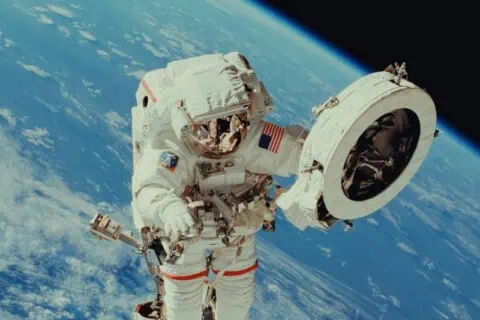
Yuri Gagarin left Earth behind on April 12, 1961. As his spacecraft climbed past the atmosphere, he became the first human to see our planet against the black of space. No political lines carved up the surface below. Instead, he watched clouds swirl above blue oceans and brown continents.
His flight reshaped space science. Scientists and astronauts gained fresh insights about Earth's environment by studying it from above. At that distance, artificial boundaries vanish, leaving just one living world.
April 12 now serves double duty. Space enthusiasts honor Gagarin's achievement and its environmental message. Meanwhile, local organizations use astronomy to inspire street children.
In neighborhoods worldwide, volunteers teach kids about stars and planets while providing meals and support. These grassroots efforts turn space science into practical help. Simple acts add up - a sandwich shared during a lesson about orbits might spark tomorrow's astronaut.
April 12 marks the International Day of Human Space Flight and Cosmonautics Day - the date humans first reached space. The day also recognizes International Day for Street Children and National Grilled Cheese Sandwich Day. During National Environmental Education Week, this date lets us see Earth in fresh ways.
April 12th: Quick Links
National Days and Awareness Events on April 12th
 Work & Skills

 Mind & Body
 Work & Skills
 Charity & Civil Society
Awareness Weeks Including April 12th
 Mind & Body
4 Monthly Observances Across April

 Environment
 Mind & Body
 Mind & Body
 Charity & Civil Society
Make A Difference On April 12th
Get involved this April 12. Post your astronomy shots on social media with #SpaceDay - it might spark someone's interest in science.
- Local youth programs always need volunteers and supplies, and kids benefit right away.
- Want to help a shelter? Grilled cheese sandwiches work perfectly. Quick to make, always appreciated.
Take photos around your neighborhood. These images tell the story of Earth's natural world. Scientists tracking environmental changes welcome help from regular people like us. And those emergency dispatchers keeping watch? They'd love a thank-you note.
Your local library stocks great resources on space and Earth science. Browse through satellite photos of our planet. They show why protecting the environment really matters. Small steps add up.
Did You Know? April 12th Facts and Historical Events
April 12th stands out in science and medicine.
- Back in 1955, Dr. Thomas Francis Jr. made an announcement from the University of Michigan. His research team had spent months testing a new vaccine across a vast sample: 1.8 million children. The results left no doubt - doctors could stop polio. The proof came fast. Cases dropped 90% in just two years.
- Soviet cosmonaut Yuri Gagarin broke boundaries in 1961. For 108 minutes, Vostok 1 carried him through space, reaching 203 miles above ground. As he stared at the planet below, Gagarin simply said: "I see Earth! It is so beautiful!"
- Terry Fox took his first steps from St. John's, Newfoundland in 1980. With his artificial leg, he ran the distance of a marathon - 42 kilometers - day after day across six Canadian provinces. He wore out 24 prosthetic legs along the way.
The distance added up: 5,373 kilometers total. Fox went through 917 pairs of shorts. He wanted $1 million for cancer research. Canadians responded with $24.17 million, far beyond what anyone expected.
April 12th - Notable Birthdays
Natural science owes much to scientists born on April 12th.
- Back in the 1680s, naturalist Martin Lister set new standards with "Historiae Conchyliorum." His precise shell drawings serve modern marine biology - a testament to pure observational skill.
- At France's Jardin des Plantes, Antoine Laurent de Jussieu tackled botanical chaos. His 1789 work "Genera Plantarum" sorted plants by natural relationships, not just surface features. This insight reshaped plant science.
- Field notes from Central Asia took new form under Nikolay Przhevalsky. In harsh terrain, he spotted an unknown horse species - now bearing his name. His expeditions also recorded wild Bactrian camels in their stark desert home.
- Through the American Indian Movement, Dennis Banks showed how Native traditions protect nature. He demonstrated that ancient ecological practices hold answers for modern conservation.
- Modern disease patterns intrigue researcher Roy M. Anderson. His work reveals connections between shifting climates and health - tracking how environmental changes affect disease spread in both people and wildlife.
