
September 24th: National & International Days, Celebrations and Observances
Workers on ships and docks take time for World Maritime Day each September 24. Sign language supporters also use this date to spotlight deaf communities' rights.
Fall arrives in the north, sparking local environmental projects. Building designers sketch greener offices and homes. Town councils test solar panels and wind power - small steps toward bigger changes.
Heritage Day brings South Africans together in street festivals and family meals. Many restaurants serve cherries jubilee, keeping an old dessert tradition alive. No two places mark September 24 exactly alike.
September 24 features World Maritime Day and International Day of Sign Languages as key global events. The U.S. marks National Punctuation Day and National Cherries Jubilee Day, while South Africa celebrates Heritage Day. This date occurs during National Clean Energy Week and World Green Building Week.
September 24th: Quick Links
National Days and Awareness Events on September 24th
We don't have any dedicated pages written for the day-long events on September 24th, 2026 at the moment - do check back we're working on building these out all the time
Awareness Weeks Including September 24th
 Work & Skills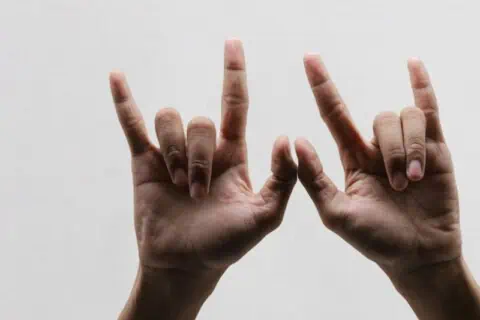
 Equality & Diversity
 Mind & Body
 Environment
4 Monthly Observances Across September
 Mind & Body
 Mind & Body
 Mind & Body
 Mind & Body
Make A Difference On September 24th
Want to help your community this September 24th? Here's what works.
- Pick up some basic sign language - a simple "hello" or "thank you" shared online helps more people feel welcome.
- Look for the blue MSC label when buying fish - it shows which catches protect ocean life.
- Grab some friends and clean up the shoreline or riverside near you.
- Got a book that changed how you see things? Hand it to someone new.
- Save money and energy by checking for plugged-in devices you're not using.
- Maritime jobs need young talent - tell that teenager who's looking for their path.
- Grab a coffee with someone whose life looks nothing like yours. Their story might surprise you.
- Even a tiny balcony fits native plants in pots.
- Each small choice adds up, especially when neighbors join in.
Did You Know? September 24th Facts and Historical Events
Science and conservation have shaped September 24th in surprising ways.
- Theodore Roosevelt put Devils Tower on the map in 1906 by designating it as a national monument - a first for America. This Wyoming landmark stretches upward 867 feet, spreading across 1,347 acres of rugged terrain. Local Lakota tribes have long known it as "Bear Lodge." The protected area supports a thriving ecosystem, where 166 species of birds soar and more than 400 types of plants take root.
- A massive wildfire changed the landscape in 1950. The Chinchaga inferno consumed 3.5 million acres as it swept through British Columbia and Alberta. Its smoke left such a thick blanket that even New York City plunged into an eerie midday darkness.
- By 1996, nations worldwide had grown weary of nuclear testing. A groundbreaking treaty emerged, with 187 countries joining the agreement. Monitor stations keep watch day and night for any test violations.
- The latest chapter unfolded in Utah's desert. On a clear morning at 7:52 EDT in 2023, NASA's OSIRIS-REx spacecraft completed its seven-year quest. Its reward? Over 250 grams of asteroid Bennu's surface - ancient material that tells stories of our solar system's birth.
September 24th - Notable Birthdays
Five scientists born on September 24th shaped distinct fields of research.
- d'Archiac's eight-volume "Histoire des progrès de la géologie" advanced the study of rock strata and fossils. His analytical methods still influence modern climate research.
- The early 1900s brought Georges Claude's innovations in thermodynamics. Beyond introducing neon lighting to Paris streets, this French engineer built systems to extract power from oceanic thermal gradients. His temperature-differential techniques now inform cutting-edge renewable energy projects.
- From her post at Mount Wilson, Charlotte Moore Sitterly created precise atomic spectroscopy tables of solar elements. These reference works remain fundamental to NASA's analysis of solar behavior.
- Chilean astronomer María Teresa Ruiz broke new ground in stellar research. Her detection of the Southern Hemisphere's first brown dwarf expanded scientific understanding of stellar mass limits and evolution.
- In paleontology, Michael S. Engel examines fossilized insects in amber deposits and sedimentary formations. His extinction pattern analysis provides direct evidence linking historical insect die-offs to current population declines worldwide.
