
Rosetta Stone Discovery Day: Breaking History's Language Barrier

July 19, 1799, marks when French soldiers unearthed the Rosetta Stone in Egypt. Lieutenant Pierre-François Bouchard spotted something unusual while rebuilding Fort Julien near Rosetta town. The soldiers had to pry a dark slab from old, crumbling walls during Napoleon's Egyptian campaign. Three different scripts covered this single stone in bands. Hieroglyphics filled the top section, Demotic script ran through the middle, and Ancient Greek text completed the bottom third.
Museums and Egyptologists worldwide note this date, Rosetta Stone Discovery Day, without any official designation. The 760-kilogram granodiorite slab unlocked hieroglyphics after 1,400 years of silence. What ancient voices might still be quiet without this lucky find? This chance discovery gave voice to an entire civilization.
Key Info: Rosetta Stone Discovery Day
- When is Rosetta Stone Discovery Day?
Occurs annually on the 19th of July - This Year (2026):
Sunday, July 19, 2026 (date has passed) -
Future Dates
- Monday, July 19, 2027
- Wednesday, July 19, 2028
- Thursday, July 19, 2029
- Friday, July 19, 2030
-
Additional Details
- Observed By: Museums, historians, archaeologists, linguists, and educational institutions
- Where Is It Observed: International
- Primary Theme: Historical Archaeological Discovery
- Hashtags: #RosettaStone #AncientEgypt #Archaeology #HistoricalDiscovery #Hieroglyphs #BritishMuseum
Quick Links: Rosetta Stone Discovery Day
Historical Significance
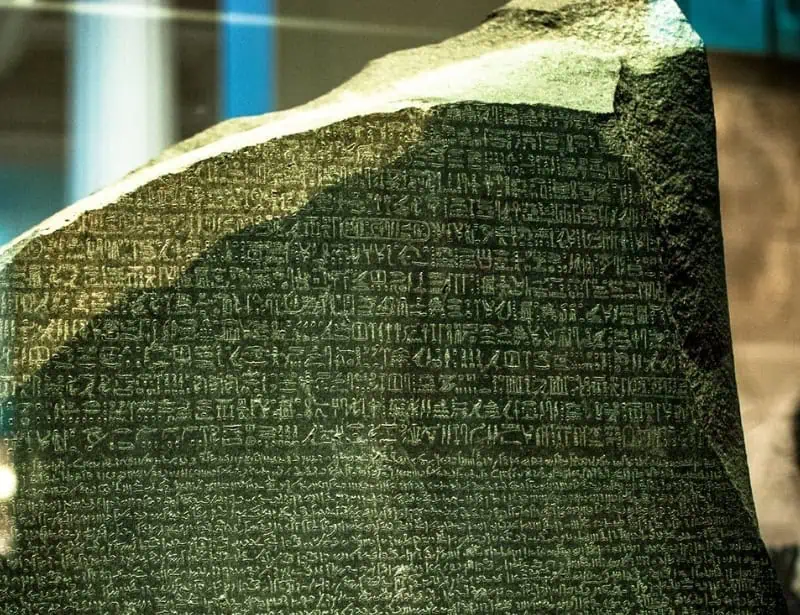
The Rosetta Stone created a bridge between today's researchers and ancient Egyptian thought. Its three-language nature gave scholars the comparison tool they needed. English physicist Thomas Young first noticed that certain hieroglyphs recorded the sounds of royal names. French scholar Jean-François Champollion took this insight further through careful analysis. His breakthrough happened when he realized hieroglyphs showed both sounds and concepts working together.
The stone contains a decree from 196 BCE during Ptolemy's rule. Priests decided that King Ptolemy V's statues would stand in temples across Egypt. According to this official text, daily worship would happen three times. Hartwig Fischer, former Director of the British Museum, pointed to its huge effect: "For the first time in 3,000 years, Ancient Egyptians spoke directly to us".
Since 2022, the stone sits at the center of heated return discussions. Zahi Hawass, former Egyptian Minister of Antiquities, filed a formal request arguing the stone represents "cultural loot" taken under colonial conditions. Questions about cultural heritage remain open as museums rethink their old acquisitions.
Timeline of the Rosetta Stone
French soldier Bouchard finds the stone near Rashid (Rosetta)
Stone changes to British hands after French defeat in Egypt
Rosetta Stone arrives at the British Museum
Champollion announces successful hieroglyphic deciphering
Champollion publishes complete decoding system
British Museum marks 200th anniversary of discovery
Virtual 3D model of Rosetta Stone released online
Talks continue about possible return to Egypt
Institutional Recognition
The British Museum displays the Rosetta Stone in Room 4 with other Egyptian sculptures. About 6.2 million visitors see this famous artifact yearly, based on recent numbers. The museum creates special programs around major anniversaries each July 19th. They offer longer viewing hours and expert tours that explain the stone's discovery story and linguistic importance.
In 2022, the National Museum of Egyptian Civilization unveiled its first exact replica. This gave Egyptians direct access to this key piece of their heritage without traveling abroad.
Can technology truly capture what makes such old objects special? This question drives new developments in how we reproduce archaeological items.
The stone's 200th decipherment anniversary show "Hieroglyphs: Unlocking Ancient Egypt" brought 136,000 visitors to the British Museum. Online content about the stone generated over a million YouTube views during this celebration.
Ilona Regulski, Curator of Egyptian Written Culture, said: "We decided because the Rosetta Stone was such an important key to that decipherment that we will do this properly: with an exhibition that also features our star objects".
Educational Significance

Teachers use the Rosetta Stone story to connect multiple subjects through one compelling example. It bridges archaeology, languages, history, and code-breaking in classrooms. Students learn how careful analysis unlocked an entire civilization previously hidden by time.
Pattern recognition meets historical investigation in this perfect teaching case. The British Museum's cracking cartouches teach practical hieroglyphic principles through an interactive PowerPoint game. Students learn to write their names using ancient Egyptian symbols, creating personal connections to distant history.
Classroom exercises mimic the decipherment process through guided code-breaking. This lets students compare known Greek text with hieroglyphic passages and experience their own breakthrough moments.
One artifact connects countless educational areas through its rich story. Archaeological methods meet language theory. Cultural studies align with scientific analysis. The stone transforms abstract concepts into real learning experiences.
Ways to Engage with Rosetta Stone History
Museum visits create direct connections with the original stone or detailed copies. The British Museum runs specialized tours highlighting discovery circumstances and decoding challenges. University collections feature similar multilingual inscriptions from the ancient world.
Smaller museums have accurate casts letting people examine the three-language text without traveling to London. Classroom activities recreate the breakthrough experience through structured exercises:
- Decode messages using partial translation keys
- Create personal cartouches using hieroglyphic equivalents
- Compare writing systems across ancient civilizations
- Trace the stone's journey from Egypt to London through map activities
Home learning works through documentaries exploring Napoleon's Egyptian expedition. Digital reconstructions allow virtual examination from anywhere with internet. Interactive apps teach hieroglyphic symbols with pronunciation guides.
Online courses examine Egyptian language development across different time periods. Community engagement happens through library events featuring archaeological speakers. Book clubs discuss histories of famous discoveries and their cultural effects. Local museums create scaled replicas for hands-on examination. One remarkable stone inspires countless exploration paths.
Digital Resources and Virtual Experiences
The Digital Rosetta Stone Project shows archaeological technology at its best. This collaboration between Leipzig University and the British Museum creates new access opportunities for worldwide audiences. Their high-resolution 3D models capture surface details at extreme precision, revealing tool marks and inscriptions completely invisible to the naked eye.
Scholars now study nuances hidden since the stone's creation. Google Arts & Culture hosts detailed stone examinations with zoom capabilities beyond normal vision. The British Museum's virtual tour makes this famous artifact available to remote viewers.
Beyond this, the Ugarit Alignment Editor provides comparison tools with access to over 250,000 user-aligned texts for language study.
Multispectral imaging recently uncovered previously undetectable details on the stone's surface. Colors and markings emerge that remained invisible since its creation through specialized photography.
Sketchfab hosts manipulable 3D models, letting viewers examine the stone from any angle online. These digital approaches complement traditional museum experiences rather than replacing them.
Traditional scholarly access combines with democratized digital availability, both approaches reveal different aspects of this linguistic breakthrough artifact.
Conclusion
The Rosetta Stone's discovery opened a doorway between our world and ancient Egypt. Its continued relevance demonstrates our human need to understand those who came before us. July 19th provides a moment to appreciate this archaeological milestone and its lasting effect on human knowledge.
Digital tools create new possibilities for global audiences previously excluded by geography. Cultural heritage conversations continue around proper stewardship and historical justice. Languages fade, and civilizations vanish. Human ingenuity bridges these gaps through systematic research and technological innovation.
This single artifact transformed our understanding of an entire civilization; its effect remains strong after more than two centuries. The Rosetta Stone stands as both a scholarly resource and a powerful symbol of human connection across thousands of years.
For more relevant dates, save International Translation Day and International Archives Day.
Resources:
FAQs (Frequently Asked Questions)
The Rosetta Stone taught us a simple but powerful idea: compare text in different languages to crack the code. This exact approach kickstarted statistical machine translation when Franz Och at USC moved beyond rigid rule-based systems. His team trained computers on texts existing in multiple languages. Since 2010, this method has proven most valuable for less common languages that need quality parallel examples. What makes this approach effective for both ancient scripts and modern AI? The stone's comparison principle addresses the core translation challenge. Today's Large Language Models build on this foundation while adding better context understanding. They create more natural-sounding results, working alongside traditional systems rather than replacing them. Training Industry's research confirms this effect.
The sources provided don't contain specific information about scientific techniques used to study the actual Rosetta Stone artifact. They mention the stone as a metaphor in other fields like cell research and exoplanet studies, but don't describe current archaeological methods applied to the stone itself. This question requires additional research from sources focused on the British Museum's conservation practices or recent archaeological studies of the artifact.
When archaeologists face unknown writing systems, they turn to what they call the "Rosetta principle." This approach connects what you don't know with what you do. The method directly led to deciphering scripts that once stumped researchers, including Linear B and Maya hieroglyphs. The stone established comparison as a fundamental archaeological tool. Today, researchers actively seek similar parallel texts when working with mysterious ancient languages. They hope to find their own version of the breakthrough that unlocked Egyptian hieroglyphs almost two centuries ago. This suggests the stone's legacy extends far beyond Egyptian studies alone.
The Rosetta Stone's biggest challenge isn't physical preservation but ownership disputes. Egyptian scholars have intensified calls for its return. They argue the artifact was taken illegally during colonial times. Euronews reports growing pressure on the British Museum through formal petitions and academic advocacy. This reflects a wider debate happening with museum artifacts worldwide. But the stone's prominence makes it especially significant in discussions about historical justice and cultural heritage. These ethical questions now overshadow traditional conservation concerns that museums typically focus on.
The stone's basic approach – creating parallel texts that connect languages – now serves as a blueprint for saving dying languages. Linguists work with native speakers to record their speech, often developing writing systems where none existed. They create resources showing the endangered language alongside major languages. This practical protection helps communities maintain their unique ways of speaking even as fewer people use them daily. Beyond this, these efforts generate progress in understanding language evolution. When researchers document these connections between languages, they often discover unexpected relationships that clarify how human communication developed across regions and time periods.
Sources & References
- [1]
- British Museum. (n.d.). Everything you ever wanted to know about the Rosetta Stone.
↩ - [2]
- British Museum. (2022). Hieroglyphs: unlocking ancient Egypt.
↩ - [3]
- Amin, M., Barmpoutis, A., Berti, M., Bozia, E., Hensel, J., & Naether, F. (2023). The Digital Rosetta Stone Project. In Ancient Egypt, New Technology (pp. 58–84).
↩ - [4]
- Yuliani, S. (2024). The Impact of Rosetta Stone on Students' Pronunciation for English Subject. Pegem Journal of Education and Instruction, 14(2), 315–322.
↩
Barbara is a former journalist who is passionate about translating important causes into engaging narratives. She combines communication expertise with an environmental science background to create accessible, fact-driven content.
