
December 17th: National & International Days, Celebrations and Observances
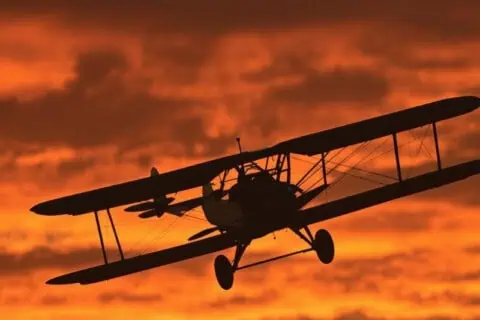
The Wright Brothers achieved powered flight at Kitty Hawk on December 17, 1903. Their Wright Flyer stayed airborne for 12 seconds, lifting off in 27-mph winds.
Early December recalls this aviation breakthrough. The Wright Brothers' 852-foot flight showed controlled, powered flight was possible.
North American maple farmers track winter temperatures closely. When nights drop below freezing and days warm slightly, the sap starts flowing - usually around 20°F to 45°F marks the sweet spot for collection.
December 17 marks Wright Brothers Day and Pan American Aviation Day - two milestones in flight history. It's also National Maple Syrup Day, perfect timing for this winter sweetener. The date holds additional meaning as the International Day to End Violence Against Sex Workers.
December 17th: Quick Links
National Days and Awareness Events on December 17th
 Work & Skills
Awareness Weeks Including December 17th
We don't have any dedicated pages written for the week-long events including December 17th, 2026 at the moment - do check back we're working on building these out all the time
4 Monthly Observances Across December

 Equality & Diversity
 Mind & Body
 Work & Skills
 Mind & Body
Make A Difference On December 17th
On December 17, flight history meets forest conservation.
- Drop by your nearest air museum - most have Wright Brothers collections worth seeing. Want to help forests? Look for maple syrup from small producers who care about their trees. Some still use methods passed down through generations of Indigenous harvesters.
- Aviation buffs love sharing old photos and stories of flight pioneers online. Meanwhile, tree conservation needs local hands, just like groups working for sex worker safety need support.
- Skip the artificial stuff - real maple syrup makes food taste better. And if you fly often, take a minute to check your carbon impact. Small changes add up.
Did You Know? December 17th Facts and Historical Events
December 17th produced several defining moments in our past.
- In 1938, atomic science took its first steps when Otto Hahn and Fritz Strassmann managed to split a uranium atom. Their work succeeded because of Lise Meitner's theoretical insights. Working from Sweden after fleeing Nazi Germany, Meitner explained the physics behind their discovery. The Nobel committee awarded Hahn alone, dismissing Meitner's critical role.
- A construction project altered our view of ancient Mexico in 1790. Workers digging in Mexico City's main square found a massive stone disc. This Aztec artifact, weighing 24 tons, showed an advanced grasp of time and natural cycles. Its markings proved the society's deep knowledge of seasonal patterns and farming schedules.
- Tunisia changed in 2010 when street vendor Mohamed Bouazizi stood up against local authorities. His protest connected three urgent issues: environmental rights, food security, and social inequality. Soon after, multiple North African nations strengthened their environmental laws in response to public pressure.
December 17th - Notable Birthdays
December 17th connects several scientific pioneers across history.
- When Émilie du Châtelet set up her laboratory in 1706, few European women worked in physics. She went beyond translating Newton's principles - her own studies of kinetic energy pushed science forward.
- Chemistry changed forever after Humphry Davy isolated sodium and potassium in the 1800s. His practical mind also solved a deadly problem in mining. The safety lamp he designed saved workers from dangerous gases. Under his leadership, the Royal Society brought new chemical methods to farming.
- Scientists today still use the testing method Willard Libby created. His radiocarbon dating system won him the Nobel Prize by solving an old problem: how to determine the exact age of ancient materials. Climate research now depends on his techniques to understand past patterns.
- A young Craig Kielburger started Free The Children in his school years. The organization grew into WE Charity, and his work on environmental education led to the Order of Canada.
- The internet age brought new questions about how people find information online. Eli Pariser spotted what he called "filter bubbles" - the way digital systems limit what we see. His work with Avaaz.org opened fresh approaches to environmental activism in the digital world.
