Interview: Sedat Gündoğdu, Marine Biologist and Environmental Researcher
Sedat Gündoğdu is a marine biologist and environmental researcher at Çukurova University, Türkiye. His work focuses on plastic and microplastic pollution, with a special emphasis on plastic waste trade, its socio-political dimensions, and climate implications. With a background in fish population dynamics and ecological modeling, he shifted his research focus after witnessing firsthand the plastic pollution crisis along Türkiye’s Mediterranean coast. Since then, he has published extensively on microplastics, marine debris, and the environmental and public health risks associated with plastic waste.
Sedat’s interdisciplinary approach combines natural sciences, environmental policy, and public engagement. He has led or participated in numerous national and international projects, including collaborations with NGOs, municipalities, and academic institutions.
He is also a founding member of the Scientists' Coalition for an Effective Plastics Treaty and actively contributes to public discourse through media, scientific publications, and civil society networks.
Sedat’s landmark research has informed policymaking in Türkiye and the EU, especially on issues related to imported plastic waste and environmental justice. His current focus is on revealing the hidden climate costs of global waste flows and advancing equitable, data-driven waste governance ahead of the United Nations Climate Change Conference (COP31), which puts waste and circularity at the center of a UN climate summit for the first time as the headline top priority among the ten themes of the COP31 Action Agenda rather than just a side event.
Zero Waste Initiative: Introduces concrete 2035 milestones, including halving projected municipal solid waste growth by 2035, scaling secondary/recycled materials to meet at least 15% of global demand, and integrating waste-related methane reduction targets into updated Nationally Determined Contributions (NDCs).
Satellite & District Implementation: The framework scales down to local and regional levels through satellite and decentralized efforts like the Zero Waste Districts initiative (operating across multiple international cohorts) and regional platforms such as the Marine Litter Action Platform. A report by Stop Methane of UCLA highlights the 10 waste sites in Turkiye.
Zero Waste Adoption Status: While it is a central pillar of the Turkish Presidency's Action Agenda—building on First Lady Emine Erdoğan's national Sıfır Atık movement and the Zero Waste Foundation—formal adoption into binding global UN climate treaty mechanisms depends on ongoing negotiations among the 190+ participating nations in Antalya.
1. Tell us your educational and professional journey to becoming a marine biologist
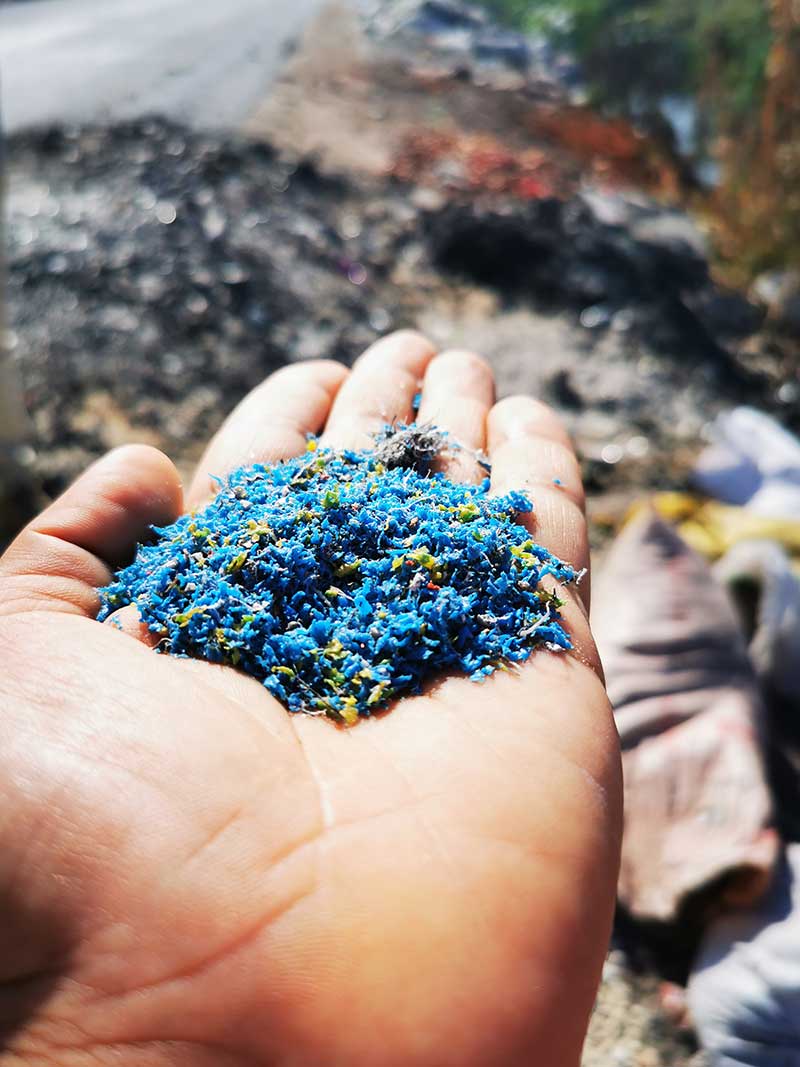
I did my PhD there Çukurova University’s Faculty of Fisheries in Adana. I trained in fisheries and fish biology. Over time, I moved towards plastic pollution because plastic kept showing up in every sample I looked at: seawater, sediments, fish, then rivers, lakes, soil, farmland, and even indoor air. Today I’m a professor at the same faculty. I’ve published more than 80 peer-reviewed papers and received the Bilim Akademisi BAGEP Young Scientist award. I’m also a founding member of the Scientists’ Coalition for an Effective Plastics Treaty and sit on its Spokespersons Board for 2026–2027. Last year I finalised my waste trade project under Mercator-IPC program at the Istanbul Policy Center at Sabancı University, which has pulled my work strongly towards policy and the waste trade.
2. Did you have any role models?
My role models are less individuals than a type of scientist: those who don’t stay in their safe area, but take their data to the public and to decision-makers, even when it’s uncomfortable.
3. Tell us about the Plastic Waste Trade Between Germany/EU and Türkiye and a Specific Emphasis on Its Climate Effect.
Since China closed its doors in 2018, Türkiye has become Europe’s main destination for plastic waste. The EU Commission’s own figures show the scale. Türkiye is the first destination for exports of plastic waste from the EU, with 510 000 tonnes imported in 2025; this represents 36% of all exports of plastic waste. Germany is the biggest exporter in this system. Germany was the world’s largest exporter of plastic waste in 2025, shipping over 810,000 tonnes abroad, with the UK close behind at more than 675,000 tonnes.
My fellowship project asks a question that is rarely asked: what is the climate cost of this trade? I model the greenhouse gas emissions under different fates for the waste:
- Open burning or incineration, which turns fossil carbon straight into CO₂ and also releases black carbon and toxic emissions.
- Partial recycling with heavy losses: the rejects are landfilled, dumped or burned, and the process uses a lot of energy.
- Displacement: imported waste pushes Türkiye’s own collected plastic out of the recycling system, so our domestic waste ends up in landfill instead.
On top of that comes shipping and trucking. The key message is that Europe counts this waste as “recycled” in its statistics, while the emissions and the pollution happen in Türkiye and never appear on Europe’s climate balance sheet. That is waste colonialism with a carbon footprint.
4. Wide-scale implications for the Mediterranean coast
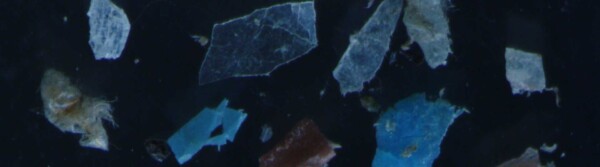
This summer, at Alanya Municipality’s request, we sampled four coastal stations and two treatment-plant outlets. Measurements ranged from two to 65 times the highest values previously reported in scientific studies of Türkiye’s Mediterranean coastline. Surface densities ran from about 1 to 34 million particles per km².
Three things came together:
- Source: in some stations 60% of the particles, and in others 93%, were fragments typical of plastic recycling facilities in Adana and Mersin. Many of those facilities process imported waste.
- Rain: the 2025–2026 water year brought record rainfall, which washed accumulated microplastics from canals, rivers and illegal dumpsites into the sea.
- Currents: the Eastern Mediterranean’s counter-clockwise surface currents carry the material west to Alanya, Kemer and as far as Fethiye. Modelling shows particles take roughly 51 days to reach the coast in winter and 33 in summer.
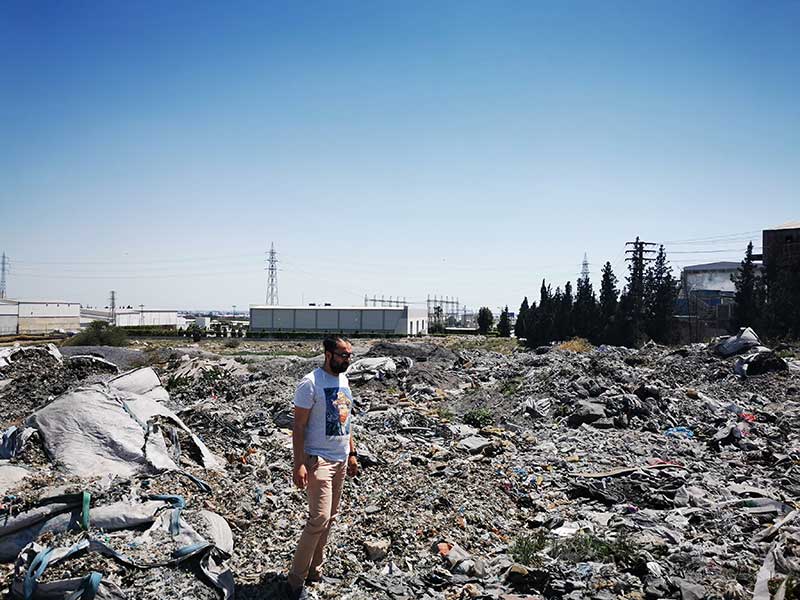
The wider point is that the sea has no customs border. Pollution created in one province ends up on the beaches of another, and on the coasts of neighbouring countries. That threatens marine ecosystems, the seafood we eat, and a tourism economy worth billions, all for an import business that earns a small fraction of that.
What needs to happen:
- stop plastic waste imports
- require zero microplastic discharge from recycling facilities, and monitor their effluent continuously
- enforce strictly against illegal discharges and dumping
5. Your programmes and events at COP31
I will join multiple events both in Blue zone and Green zone as well as outside of the venue.
The first event was on the 12 of November. I organized a book launch with Muratpaşa Municipality in Antalya: for the public-audience book I edited on Türkiye’s plastic problem, produced with the IPC–Sabancı–Stiftung Mercator Initiative and Heinrich Böll Stiftung. Afterward I joined as a moderator to a panel on the resilient city at the same location.
I have an event at Peoples' Summit on Mediterranean, plastic and climate nexus together with some other organisations on the 15 of November.
I will join a EU Pavilion side event (16 November): on the final phase of the Plastics Treaty negotiations, where I represent the Scientists’ Coalition.
I will also be a keynote speaker at Estonia Pavilion: “The fallacy of plastic cleanup technology”. It argues that cleanup gadgets distract from the only real solution, which is producing less plastic.
There will also be events at Green Zone with Antalya Municipality on 15 of November on the Mediterranean coastal management.
6. Anything else you would like to add?
Under the new EU Regulation, on waste shipment plastic waste exports to non-OECD countries will be banned from 21 November 2026, which falls in the middle of COP31. Türkiye is an OECD member, so it isn’t covered. The Commission has also assessed exports to Türkiye and decided they can continue until it looks again in 2028. The risk is that waste turned away from Asia flows even more to Türkiye. Türkiye is hosting COP31 and has put zero waste on the agenda. It cannot be credible on zero waste while remaining Europe’s dumping ground. A Türkiye that hosts COP31 should announce an end to plastic waste imports.
7. How can people reach you?
sgundogdu@cu.edu.tr
www.mikroplastik.org · Çukurova University, Faculty of Fisheries, Adana
Glossary Terms:
Selva Ozelli Esq, CPA is a legal and finance executive with diversified experience dealing with highly complex issues in the field of international taxation and related matters within the banking, securities, Fintech, alternative and traditional investment funds. Her first of its kind legal analyses involving tax laws, Foreign Corrupt Practices Act (FCPA), blockchain technology, solar technology and the environment and have been published in journals, books and by the OECD. Her writings have been translated into 15 languages.
