
Interview: Derin Ege Sezgin, President and Founder of SDG Youth Connect
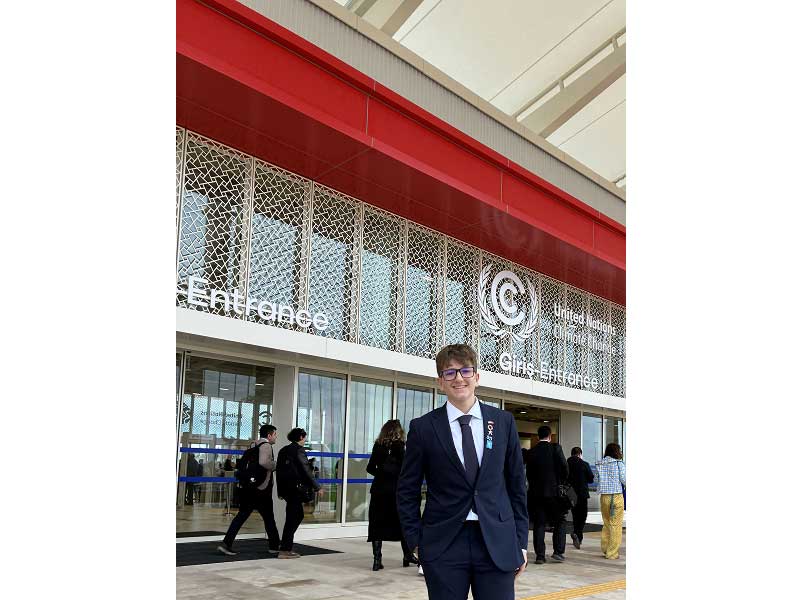
Derin Ege Sezgin is a prominent youth advocate and leader deeply involved in the UN Sustainable Development Goals (SDGs). He frequently addresses the intersection of zero waste, artificial intelligence, and the UN Sustainable Development Goals (SDGs) at UN conferences, including COP31.
He serves as the President and Founder of SDG Youth Connect, which he formally established in July 2025, evolving from SDG Kids Connect, which he founded in September 2023. Today, the organization connects 500+ young people across more than 60 countries around the Sustainable Development Goals, youth leadership, and emerging global challenges.
He has spoken at major international forums like the UN General Assembly (UNGA 80), AI for Good, and the high-level political forum Global AI Youth Survey: In collaboration with NextGenNav, his organization launched a worldwide initiative to record and map how young populations interact with and experience artificial intelligence across crucial sectors such as education, climate, governance, inequality, and work.
Sezgin heavily campaigns for this initiative to ensure that youth opinions leave a permanent trace in actual global Zero Waste policy and framework planning rather than being sidelined as an afterthought, including at COP31.
1. Tell us about your journey to forming SDG Youth Connect.
My journey with SDG Youth Connect really began in 2023, when I was just 13 years old. At the time, I was learning more about the United Nations Sustainable Development Goals (SDGs), and I became increasingly interested in how interconnected so many of the challenges facing our world are, from climate change and poverty to educational inequality and access to technology.
However, one thing that really stood out to me was the gap between how much young people care about these issues and how many opportunities they actually have to do something about them.
I kept asking myself a relatively simple question: why should young people have to wait until they're older to contribute to solving the problems that will define their futures?
That's ultimately what inspired me to establish SDG Youth Connect. What initially began as a small youth-led initiative has since grown into an international nonprofit organization connecting more than 1,000 young people across over 55 countries.
Through our work, we've developed initiatives focused on sustainable development education, youth advocacy, responsible artificial intelligence, and providing opportunities for young people to develop innovative solutions to global challenges. I've also had the privilege of bringing these perspectives into discussions at the United Nations and international conferences, including COP31 in Antalya.
For me, however, what matters most isn't necessarily how much we've grown or the conferences we've participated in. It's that we're helping young people recognize that their age does not have to be a barrier to making a meaningful difference. That has really been the guiding principle behind SDG Youth Connect from the beginning.
2. Did you have any role models?
Absolutely. I think I've been inspired by a combination of people rather than one particular individual.
One group that has consistently inspired me is young changemakers around the world who are taking action in their own communities, often without significant financial resources or institutional support. Seeing young people organize environmental campaigns, advocate for better education, or develop innovative solutions to challenges in their communities reinforces the idea that meaningful leadership isn't necessarily determined by age or position.
I've also been inspired by individuals working within the United Nations and other international organizations who have dedicated their careers to advancing sustainable development and international cooperation.
On a more personal level, my family has certainly influenced the way I think about education, responsibility, and the importance of contributing to society.
One of the biggest lessons I've learned from the people I admire is that leadership isn't simply about having a platform or being recognized. It's about using whatever opportunities you have to create opportunities for others. That's something I try to incorporate into my own work with SDG Youth Connect.
3. Which Sustainable Development Goals did you address at your COP31 event for the Zero Waste Foundation?
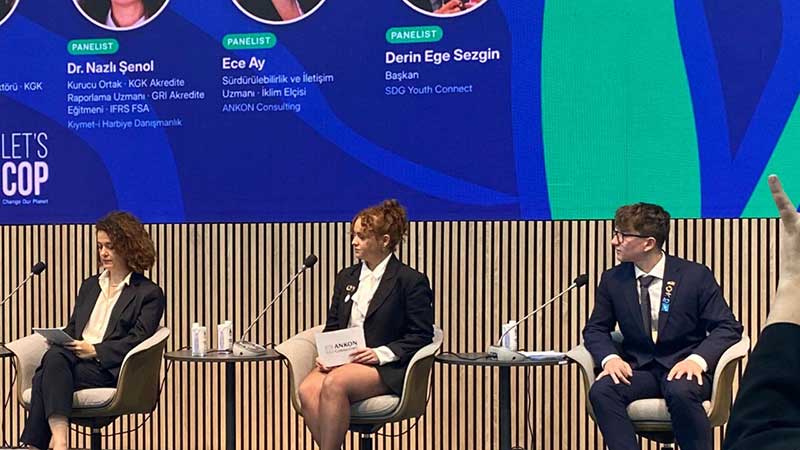
At COP31 in Antalya, I had the opportunity to participate in discussions surrounding youth leadership, sustainability, and practical climate action, including our panel titled “Youth Networks: One Waste Problem, One Ask.”
The two Sustainable Development Goals most directly connected to our discussion were SDG 12 (Responsible Consumption and Production) and SDG 13 (Climate Action).
SDG 12 was particularly central because we explored how our patterns of consumption and waste generation contribute to broader environmental challenges and what young people can do to help address them.
We often discuss climate change in terms of energy production, transportation, and emissions, but we sometimes overlook the environmental consequences of the things we buy, consume, and throw away every day. This connects directly to SDG 13, because reducing waste, particularly food waste, can also significantly reduce greenhouse gas emissions.
Our discussion also related to SDG 17 (Partnerships for the Goals), as the panel brought together international youth networks and organizations to explore how we can collaborate rather than working independently.
For me, one of the most important messages was that young people shouldn't simply be encouraged to adopt more sustainable habits individually. We should also be involved in shaping the policies, institutions, and systems that determine how resources are produced, consumed, and managed.
Ultimately, sustainability requires both individual responsibility and systemic change, and young people have an important role to play in both.
4. Tell us about the impact of waste on global warming.
I think one of the biggest misconceptions about waste is that it only becomes an environmental problem once something reaches a landfill.
In reality, waste has a climate impact throughout its entire life cycle, from the extraction of raw materials and manufacturing of products to transportation, consumption, and disposal.
Food waste is a particularly important example. According to the United Nations Environment Programme (UNEP), food loss and waste account for approximately 8–10% of global greenhouse gas emissions. That's an enormous contribution to climate change from food that, in many cases, isn't even consumed.
When organic waste decomposes in landfills without sufficient oxygen, it also produces methane, a particularly powerful greenhouse gas.
However, there's another dimension to this problem that deserves more attention. Every time we throw away food, we're also wasting the water, energy, land, labor, and other resources that went into producing it.
That's why I believe we need to move beyond simply thinking about recycling and focus more broadly on circularity. A circular economy is about designing systems that prevent waste in the first place, keep materials and products in use for longer, and recover resources wherever possible.
Individual actions certainly matter, whether that's reducing food waste at home or choosing reusable products. However, we also need governments and businesses to develop the infrastructure, policies, and incentives that make sustainable choices accessible and affordable.
Waste isn't just a pollution problem. It's also a climate problem, a resource-management problem, and ultimately a sustainable development problem.
5. Tell us about the key COP31 initiatives and launches of the Zero Waste Foundation.
One of the most interesting aspects of the Zero Waste Foundation's work at COP31 was its effort to move the conversation beyond awareness and toward practical, internationally coordinated action.
There were several particularly notable initiatives.
First was the launch of the Zero Waste Museum, which highlights Türkiye's experience with the Zero Waste Movement and demonstrates how the principles of waste prevention, recycling, and resource efficiency can be communicated to a broader audience.
Another important development was Zero Waste Generation, a global youth volunteer and ambassador movement designed to engage young people in environmental projects and circular economy initiatives within their own communities.
I was particularly interested in this initiative because it aligns closely with what we're trying to accomplish at SDG Youth Connect: connecting young people across borders and providing meaningful opportunities for them to translate their sustainability commitments into action.
The Foundation also developed a Digital Coordination Center to help connect organizations, institutions, and individuals interested in contributing ideas and developing partnerships around COP31.
Additionally, there was the announcement of an international documentary initiative highlighting Türkiye's zero waste experience and bringing that story to audiences around the world.
What connects all these initiatives, in my view, is the recognition that sustainable development requires much more than a single conference or a set of international commitments. We need education, public engagement, international partnerships, and, most importantly, implementation at the community level.
6. Tell us about the launch of the Zero Waste Museum.
The launch of the Zero Waste Museum was a particularly interesting initiative because it demonstrated how sustainability can be communicated in a way that's accessible, engaging, and relevant to people's everyday lives.
The museum was inaugurated during COP31 by Türkiye's First Lady, Emine Erdoğan, who has played an important role in advancing the country's Zero Waste Movement since its launch in 2017.
What I find especially meaningful about the concept is that it connects environmental awareness with practical action.
Rather than presenting waste as simply something that needs to be disposed of, the museum explores how materials can be reused, resources can be conserved, and our consumption habits can become more sustainable. It also incorporates interactive elements, which I think are particularly valuable when engaging younger generations.
For me, education is one of the foundations of sustainable development. Before people can meaningfully contribute to solving environmental challenges, they need opportunities to understand those challenges and recognize what they can do about them.
Initiatives like the Zero Waste Museum can help make sustainability feel less like an abstract international objective and more like something people can incorporate into their everyday lives.
7. Tell us about the global youth volunteer movement mobilizing young delegates to drive grassroots circularity and climate action.
This is actually one of the initiatives that resonates most strongly with my own work.
During COP31, the Zero Waste Foundation launched Zero Waste Generation, a global youth volunteer and ambassador movement intended to connect young people across countries and support environmental action within their communities.
The initiative focuses on areas including responsible consumption, food waste, sustainable cities, environmental protection, and climate action.
What I find particularly promising is the emphasis on moving from awareness to implementation.
One of the challenges with youth engagement at international conferences is that young people are often invited to participate in discussions but aren't always given the resources, opportunities, or institutional support necessary to turn their ideas into action.
At SDG Youth Connect, that's something we've been working to address through our international youth network and initiatives that connect education, advocacy, innovation, and practical problem-solving.
I believe global volunteer movements can be incredibly effective when they combine international coordination with local leadership.
A young person in Türkiye might be working on food waste, while someone in Kenya is developing a community recycling initiative, and another young person in the United States is advocating for more sustainable consumption policies.
Their local challenges may be different, but there is enormous value in connecting their experiences, sharing solutions, and building collective momentum.
Ultimately, young people shouldn't just be participants in the sustainability movement. They should be helping lead it. I would certainly welcome opportunities for SDG Youth Connect to explore potential collaboration with initiatives like Zero Waste Generation in the future.
8. Tell us about the 193-country documentary highlighting waste management challenges and scalable circular solutions across UN member states. Will you be part of this documentary?
I think the documentary is a very interesting initiative because one of the greatest challenges in advancing sustainable development is making successful ideas and experiences accessible to people around the world.
As I understand it, the Zero Waste Foundation announced plans for a documentary, developed in cooperation with Türk Telekom, highlighting Türkiye's experience with the Zero Waste Movement, with the goal of distributing it internationally across 193 countries.
I believe storytelling can be an incredibly powerful tool for sustainability advocacy.
We often discuss environmental problems through statistics, policy documents, and international agreements, which are certainly important. However, showing people concrete examples of how communities, businesses, and institutions are addressing these challenges can make the solutions much more understandable and relatable.
One thing I would particularly love to see is the inclusion of young people's perspectives, because youth-led solutions and community initiatives are an important part of the broader sustainability story.
As for my own participation, I haven't confirmed any involvement in the documentary at this stage, but I would certainly be interested in contributing, particularly by sharing the perspectives and experiences of young people working on sustainable development across our international network.
I think it could be a great opportunity to demonstrate that meaningful environmental action is taking place not just at the international level, but also in local communities around the world.
9. Tell us about the COP31 Digital Coordination Center to manage international partnerships, events, and real-time summit programming.
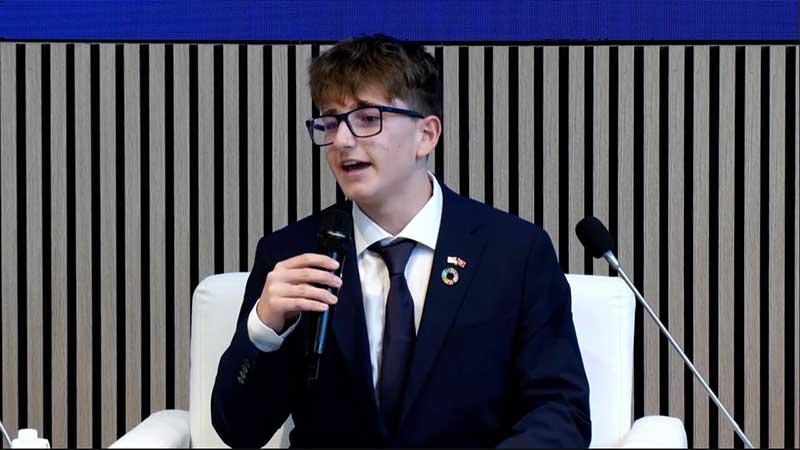
I think the Digital Coordination Center represents a particularly interesting intersection between technology, international cooperation, and sustainability, which are three areas I'm very passionate about.
The Center was developed by the Zero Waste Foundation to provide a digital platform where organizations, institutions, and individuals could learn about COP31, submit ideas, and explore opportunities to participate in partnerships and collaborative initiatives.
One of the features I find particularly interesting is the opportunity for stakeholders to submit their own ideas and proposals.
When we talk about international climate governance, we often focus on governments and major institutions. However, civil society organizations, young people, researchers, and local communities also have valuable perspectives and solutions to contribute.
Digital platforms can help make those contributions more accessible and connect people who might otherwise never have the opportunity to collaborate.
As someone who is particularly interested in artificial intelligence governance and the responsible use of emerging technologies, I think there's a broader lesson here. Technology can be extremely valuable for advancing the Sustainable Development Goals, but only when it's designed to support genuine participation, transparency, accessibility, and measurable outcomes.
A platform is ultimately only as effective as what it enables people to accomplish.
I believe the real measure of success for initiatives like the Digital Coordination Center will be whether the connections and proposals generated through the platform translate into sustained partnerships and concrete environmental action after COP31.
10. Anything else you would like to add?
The one message I'd really like to leave people with is that young people are often described as the leaders of tomorrow, but I believe we also have an important role to play in the decisions being made today.
That became particularly clear to me during COP31.
Being surrounded by policymakers, international organizations, civil society leaders, and fellow youth advocates reinforced just how important international cooperation is in addressing challenges like climate change.
However, it also reinforced something else: there is still a considerable gap between the commitments we make at international conferences and the tangible changes that people experience in their everyday lives. I believe bridging that gap needs to be one of our biggest priorities.
For young people, especially those experiencing climate anxiety, I think it's important to recognize that you don't need to solve the entire climate crisis on your own to make a meaningful contribution. You can start by identifying a challenge in your community, connecting with others who share your concerns, and finding practical ways to contribute.
At the same time, governments, businesses, and international institutions have a responsibility to ensure that young people have meaningful opportunities to participate in decision-making.
Youth inclusion should not end with giving young people a seat at the table. It should extend to giving them the resources, partnerships, and opportunities to turn their ideas into real-world solutions.
We also need to remember that sustainable development isn't only about protecting the environment. It's about creating a more equitable, inclusive, and prosperous future for everyone.
On a personal level, having the opportunity to contribute to these conversations at COP31 in Türkiye, a country with which I have a strong personal and cultural connection, made the experience particularly meaningful to me.
I hope that the momentum generated at COP31 doesn't end with the conference itself, but instead translates into lasting international collaboration, greater institutional accountability, and measurable progress toward the Sustainable Development Goals.
11. How can people reach you?
I would absolutely welcome anyone interested in learning more about our work or exploring opportunities to collaborate to get in touch.
- SDG Youth Connect: https://sdgyouthconnect.org
- Personal website: https://derinsezgin.com
- Email: derin@sdgyouthconnect.org
- LinkedIn: Derin Ege Sezgin
I regularly share updates about our initiatives, international engagements, and opportunities for young people to participate in sustainable development and AI governance.
I would particularly encourage young people who are passionate about sustainability, technology, or international cooperation to reach out. One of the most rewarding parts of this journey has been connecting with people from different countries who share a commitment to making a difference.
We're always excited to build new relationships and explore opportunities for meaningful collaboration.
Glossary Terms:
Selva Ozelli Esq, CPA is a legal and finance executive with diversified experience dealing with highly complex issues in the field of international taxation and related matters within the banking, securities, Fintech, alternative and traditional investment funds. Her first of its kind legal analyses involving tax laws, Foreign Corrupt Practices Act (FCPA), blockchain technology, solar technology and the environment and have been published in journals, books and by the OECD. Her writings have been translated into 15 languages.
