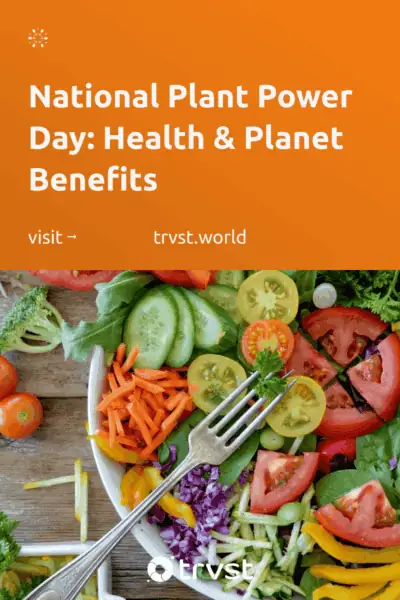
National Plant Power Day: Health & Planet Benefits

National Plant Power Day happens on March 7 every year. Alpro teamed up with BOSH! chefs back in 2018 to get this thing started. The day pushes plant-based eating and helps the environment, too.
More communities join in each year as people find easier plant-focused choices.
This connects what you eat with a bigger environmental impact. Thousands worldwide share photos and join local events. The movement focuses on small, practical steps rather than on huge lifestyle overhauls.
Key Info: National Plant Power Day
- When is National Plant Power Day?
Occurs annually on the 7th of March - This Year (2026):
Saturday, March 7, 2026 (date has passed) -
Future Dates
- Sunday, March 7, 2027
- Tuesday, March 7, 2028
- Wednesday, March 7, 2029
- Thursday, March 7, 2030
-
Additional Details
- Observed By: Educational institutions, botanical gardens, health organizations, and sustainability advocates
- Where Is It Observed: International
- Primary Theme: Plant-Based Nutrition and Environmental Sustainability
- Hashtags: #NationalPlantPowerDay #PlantPower #PlantBased #SustainableEating #PlantNutrition #EcoFriendly #GreenEating
Quick Links: National Plant Power Day
Why National Plant Power Day Matters

Plant-based diets show real health benefits across major diseases. Research by Wang et al. (2023) found that higher plant-based eating reduces the risk of type 2 diabetes, heart disease, cancer, and early death[1]. Environmental data backs this up just as strongly.
Vegan diets create only 25.1% of greenhouse gases compared to heavy meat-eating diets. This comes from Scarborough et al.'s study of 55,504 UK people[2]. Your daily food choices connect to actual climate results when millions make similar decisions.
But how do scattered individual efforts become visible social change?
Awareness days focus attention on specific dates, turning personal tries into community movements. Schools and workplaces create supportive spaces for food exploration. The day builds momentum through shared participation rather than solo lifestyle changes.
Timeline: National Plant Power Day Development
| Year | Milestone |
|---|---|
| 2018 | Global growth, digital campaigns, and worldwide community events |
| 2019 | Spread across European workplaces and schools |
| 2020-2024 | Global growth, digital campaigns, worldwide community events |
How to Celebrate National Plant Power Day

Try plant-based meals - Test one plant-focused dish on March 7. Share photos using #PlantPowerDay and #NationalPlantPowerDay. This links your personal try with global awareness.
Join community challenges - Many groups coordinate activities during the week around March 7. Local restaurants feature special plant menus; community gardens host learning events.
Organize workplace efforts - Set up office potlucks with plant-based dishes. Share recipes through company emails. Some companies do cafeteria specials or lunch sessions.
Educational programs - Schools and libraries create activities that explore plant nutrition and environmental connections. Cooking demos work well for hands-on learning.
Social media connection - Connect with thousands of people worldwide through official hashtags. Share your plant-power stories and practical tips. Digital sharing amplifies local action into broader awareness.
Resource exploration - Download toolkits from organizing partners. These provide recipe collections, conversation starters, and planning templates for larger events.
Beyond this, community connection turns individual food experiments into shared exploration. This social element keeps engagement going beyond one day.
Distinguishing National Plant Power Day from Similar Events
National Plant Power Day differs from Fascination of Plants Day, which the European Plant Science Organisation started in 2012. Fascination of Plants Day focuses on plant science research and academic advancement.
National Plant Power Day emphasizes sustainable eating and accessible food choices for regular people.
The March 7 event concentrates on practical food applications rather than scientific research methods. This distinction helps people understand which resources and activities match their interests.
Several plant-related awareness dates occur throughout the year; each serves a different educational purpose. Check out World Vegan Day and World Plant Milk Day to start.
Understanding these differences prevents confusion when searching for ways to join.
Key Themes and Messages
Access drives the core message around National Plant Power Day. Plant-based options exist across cultures, budgets, and cooking skills. This welcoming approach encourages exploration rather than demanding a complete lifestyle transformation.
Environmental care through food connects individual choices with group impact. People learn how food choices influence land use, water use, and greenhouse gas emissions.
Community building creates supportive spaces where food exploration feels encouraged rather than judged.
These themes apply across years and cultural contexts; organizers develop consistent messages for different audiences. The focus remains on empowerment through informed choice rather than restrictive food rules.
Conclusion
Mark March 7 for National Plant Power Day action. Explore community events in your area or organize simple workplace efforts.
And connect with the growing movement through social media using official hashtags.
This awareness day opens the door to year-round plant-based community connection. Local groups often maintain ongoing activities beyond single-day events. Consider hosting your own event to bring neighbors together around shared environmental and health interests.
Small steps.
Be part of collective action, turning individual food choices into community-wide awareness.
Resources:
FAQs (Frequently Asked Questions)
National Plant Power Day brings people together on March 7. When thousands participate at once, your food choices connect with a bigger movement. Beyond this, the shared hashtags and local events create visible change that eating alone can't match. The collective action makes individual impact stronger.
Yes. This day welcomes everyone, regardless of current diet. You don't need to overhaul everything - just try one plant-focused meal or swap one animal product. This approach lets people explore without pressure. And that accessibility is the point.
Track your plant-based meals for the day. Research points to each one cutting dietary greenhouse gas emissions roughly in half compared to meat alternatives. You can also monitor food waste reduction. Studies indicate even one day of plant-based eating contributes measurably to environmental and personal wellness goals.
Start your own. Organize workplace potlucks, share recipes with neighbors, or host kitchen experiments with friends. Download official toolkits from event organizers for planning help. Use #PlantPowerDay hashtags to connect globally. Many successful events started as individual efforts that grew into community traditions.
Use March 7 as your starting point for gradual changes. Join local plant-based groups or follow participants you connected with on social media. Many communities maintain year-round meetups and recipe-sharing groups. These often started from National Plant Power Day connections.
Sources & References
- [1]
- Wang, Y., Liu, B., Han, H., et al. (2023). Associations between plant-based dietary patterns and risks of type 2 diabetes, cardiovascular disease, cancer, and mortality – a systematic review and meta-analysis. Nutrition Journal, 22, 46.
↩ - [2]
- Scarborough, P., Clark, M., Cobiac, L., et al. (2023). Vegans, vegetarians, fish-eaters and meat-eaters in the UK show discrepant environmental impacts. Nature Food, 4, 565–574.
↩
Barbara is a former journalist who is passionate about translating important causes into engaging narratives. She combines communication expertise with an environmental science background to create accessible, fact-driven content.