What is Jute Fabric? Sustainability, Pros and Cons

We've all encountered a scratchy burlap bag at the grocery store. You know the one holding coffee beans or potatoes. That rough, golden-brown material is jute fabric. Most of us touch jute products every week without realizing it. We see it in trendy home decor, garden supplies, and packaging materials.
In this article, we'll explore what jute fabric really is. You'll discover why it's having a moment in sustainable fashion. And, we'll honestly examine whether it lives up to its eco-friendly reputation.
TABLE OF CONTENTS:
So, What Exactly Are Jute Fibers?

Jute fibers come from the stems of two specific plants. These plants thrive in warm, humid climates with plenty of rainfall. India and Bangladesh completely dominate global jute production. According to the Food and Agriculture Organization, about 95% of the world's jute grows in these two South Asian countries.
The jute plant produces long, soft, shiny fibers. These natural fibers have a distinctive golden or light brown color. People often call jute the "golden fiber" for this reason. The fibers come from the plant's outer skin and inner stem.
You might know cotton, wool, or linen already. Jute belongs to this family of natural plant fibers. However, jute fibers are coarser than cotton or linen. They're also stronger than many other plant-based fibers. This combination makes jute perfect for specific industrial uses.
Tossa vs White Jute

Tossa Jute: The Stronger Sibling
Scientifically known as Corchorus olitorius, Tossa jute (pictured above), dominates the jute market. This variety produces fibers of better quality than its cousin1. The fibers are finer, softer, while also stronger, and more lustrous. This jute has that characteristic golden-brown appearance we associate with burlap.
Manufacturers prefer this jute for most commercial applications. Its superior strength makes it ideal for industrial textiles. The natural luster gives products a more appealing finish. You'll find this jute in everything from rugs to twine.
White Jute: The Softer Alternative
White jute, or Corchorus capsularis, offers different characteristics. This variety produces fibers with an off white appearance. The fibers are generally less strong than tossa jute. However, white jute has its own unique advantages.
White forms of jute work better for certain decorative applications. The lighter color accepts dyes more readily. Some manufacturers blend white and tossa jute together. This combination balances strength with workability.
How Jute Production Actually Works (It's Surprisingly Low-Tech)
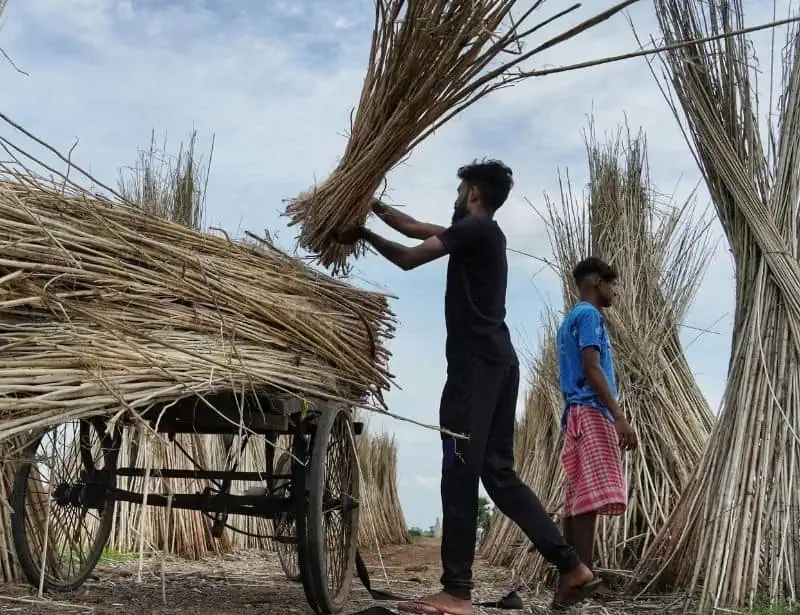
Jute production starts with tiny seeds in prepared fields. Farmers plant these during the annual monsoon season. The jute plant grows incredibly fast in warm areas. Plants reach harvest height in just four to six months.
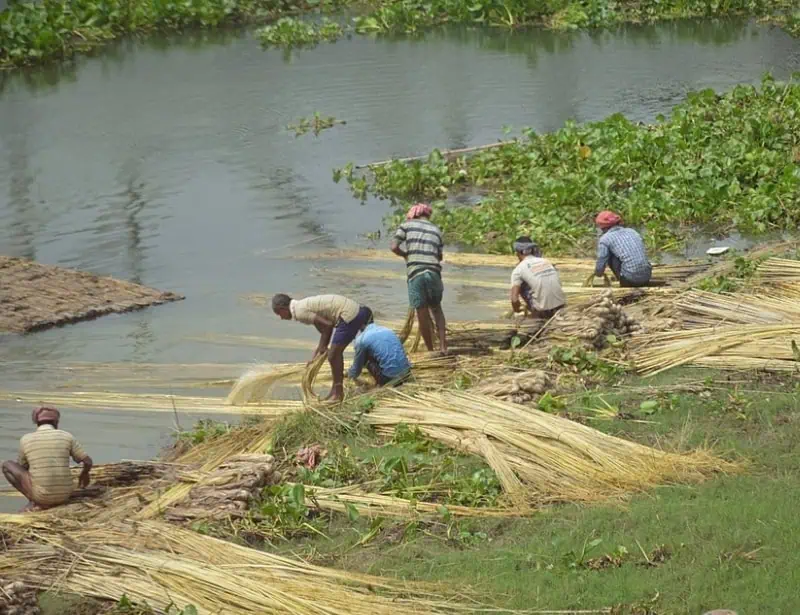
The harvesting process remains largely traditional and manual. Farmers cut the jute stalks close to the ground. Then, workers submerge the cut stalks in water for weeks. Natural bacteria break down the tissues holding fibers together.
After retting, workers extract the jute fibers by hand. They strip the fibers from the rotted jute stalk. These long strings of fiber get washed and dried. The dried fibers are then spun into jute yarn.
Jute is a rain-fed crop with little need for fertilizers. It rarely requires pesticides during growth. Yields reach about 2 tonnes of dry fiber per hectare. This traditional, low-input process contributes to jute's sustainability credentials.
if you're wondering where the jute leaves go, they end up in Middle Eastern, African, and Southeast Asian dishes.
What Makes Natural Jute Special?
Natural jute stands out for being highly breathable. Air flows freely through jute fabric and textiles. This breathability prevents moisture buildup in stored agricultural products. Your jute shopping bag won't trap odors either.
Jute fibers possess remarkable strength for a plant fiber. They can support heavy loads without tearing. The cellulose content gives jute its structural integrity. This durability makes jute perfect for industrial purposes.
The fabric naturally absorbs and releases moisture from the air. Jute can absorb up to 23% of its weight in water. Yet it dries quickly when exposed to air. This property helps regulate temperature in jute-based products.
You might notice that jute feels rough compared to cotton. This texture comes from the fiber's natural structure. The coarseness actually benefits many industrial use cases. Jute's grip makes it excellent for packaging materials.
Where You'll Find Jute Fabric in Your Daily Life

Around Your Home
Jute rugs have become incredibly popular in modern homes. Their natural texture adds warmth to any room. You'll also find jute in curtains and chair covers. These products bring an organic, earthy aesthetic indoors.
Storage solutions often incorporate jute fabric these days. Baskets, bins, and organizers use woven jute extensively. Decorative items like wall hangings feature jute's natural beauty. Even furniture uses jute webbing for support structures.
Industrial and Agricultural Applications
Burlap sacks remain jute's most recognized industrial application. These bags transport coffee, cocoa, and other agricultural goods worldwide. The breathable fabric keeps produce fresh during shipping. Industrial textiles use jute for backing and reinforcement.
Jute twine and rope serve countless agricultural applications. Farmers use them for tying plants and bundling crops. The biodegradable nature means no plastic pollution. Construction sites use jute for erosion control. Landscapers wrap sapling roots in jute cloth.
The Environmental Impact: Is Jute Really That Eco-Friendly?
Food and Agriculture Organization confirms jute fabric is 100% biodegradable and recyclable. This makes it genuinely environmentally friendly. A hectare of jute plants consumes about 15 tonnes of carbon dioxide. The same area releases 11 tonnes of oxygen. These numbers show jute's positive environmental impact.
Water usage for jute remains relatively modest. Jute requires about 50 cm of water for growth and development. The Indian government reports only 15% of the jute area needs irrigation. The remaining fields rely entirely on rainfall.
Jute geotextile degrades in 1 to 2 years. Compare this to synthetic materials lasting centuries. The decomposition enriches soil with organic matter. No microfibers remain to pollute ecosystems.
Modern jute processing sometimes involves the use of chemicals for special treatments. Enzyme treatment and other modifications can improve fiber properties. However, these remain minimal compared to synthetic fiber production. Most jute production uses traditional, low-impact methods.
The Honest Pros of Choosing Jute Fabric
Complete Biodegradability Without Environmental Harm
Jute's complete biodegradability tops its list of advantages. You can compost jute products at life's end. The natural fibers break down into organic matter within months. Unlike chemical fibers that persist for centuries, jute enriches soil. The decomposition process releases nutrients back to the earth. No microplastics pollute water systems or food chains.
Minimal Chemical Input During Production
The minimal use of pesticides and fertilizers reduces agricultural pollution. Farmers rarely need chemical inputs for healthy jute plant growth. The crop naturally resists most pests and diseases. This low-input farming protects groundwater from chemical contamination. Jute production avoids the heavy chemical treatments that synthetic textiles require.
Economic Lifeline for Rural Communities
Jute provides livelihoods for millions of farmers and industrial workers. Bangladesh alone employs millions in jute-related industries. These jobs support entire rural communities through jute production and manufacturing. The industry preserves traditional farming knowledge and skills. Women often run small-scale jute product businesses from home. Raw jute trading creates additional employment throughout the supply chain.
Active Carbon Sequestration During Growth
The carbon absorption during growth significantly benefits our atmosphere. Jute fields act as temporary carbon sinks throughout cultivation. Each hectare removes a substantial amount of CO₂ from the air. The plant's rapid growth rate maximizes carbon capture. Even after harvest, root systems continue storing carbon underground.
Versatility Across Multiple Applications
The versatility of jute spans from craft projects to industrial uses. Artists weave jute into decorative pieces and sculptures. Industrial use cases include geotextiles, composites, and technical textiles. Jute yarn works for everything from macramé to heavy-duty rope. The fiber adapts to both traditional and innovative uses.
Affordability Compared to Other Sustainable Options
Affordability makes natural jute accessible compared to other sustainable options. Organic cotton costs significantly more than jute fabric. Hemp products often carry premium price tags. Jute remains budget-friendly while delivering environmental benefits. This accessibility helps more people choose sustainable plant-based fiber products.
The Cons We Need to Talk About
Limited Comfort for Clothing Applications
Jute lacks the softness needed for comfortable clothing. The rough texture limits its use in apparel manufacturing. Some people find jute fibers too scratchy for direct skin contact. This restricts jute mainly to accessories and outerwear. Even processed jute yarn retains its coarse nature. Blending with other natural fibers only partially improves comfort.
High Susceptibility to Moisture Damage
Moisture can seriously damage untreated jute-based products. Wet jute becomes weak and begins to decompose rapidly. Mold and mildew grow easily on damp jute fabric. You must keep jute-based products dry for longevity. Humidity alone can weaken the plant fibers over time. Special chemical processes can add water resistance but increase environmental impact.
Restricted Color and Design Options
Color options remain limited with natural jute. The golden brown or off white limits design possibilities. Dyeing jute often requires chemical processes to achieve vibrant colors. Even then, colors may fade faster than on other fibers. The hessian cloth texture shows through most dye applications. Printed designs don't adhere well to jute's rough surface.
Shorter Product Lifespan Than Synthetics
Jute items typically have shorter lifespans than synthetic alternatives. Heavy use wears down jute fibers relatively quickly. Outdoor applications expose woven jute to accelerated weather damage. Regular replacement may offset some environmental benefits. Industrial fabrics made from jute need more frequent updating. The biodegradable nature means jute stalk fibers naturally break down faster.
Jute vs Other Fibers: How Does It Stack Up?

Let's compare jute with cotton, the world's favorite natural fiber. Cotton production emits 2446 kg of CO₂ per ton. Jute only produces 294 kg of carbon dioxide for the same amount2. That's over eight times less carbon emissions.
Synthetic fibers create permanent environmental damage through microplastics. Jute completely biodegrades without leaving harmful residues. However, synthetics last longer and resist moisture better. Each fiber type has its appropriate applications.
Jute covers about 80% of global bast fiber production3. This dominance among bast fibers shows jute's importance. Hemp and flax (linen) offer similar environmental benefits. But jute remains more affordable and widely available.
The Cultural Significance of Jute You Might Not Know
Jute shaped the economies of Bengal for centuries. The fiber funded independence movements in South Asia. British colonial trade centered heavily on jute exports. This "golden fiber" built fortunes and fueled political change.
The annual global jute production generates farm value of around US$2.3 billion4. This economic impact supports millions of families. Rural communities depend on jute for their survival. The industry preserves traditional agricultural knowledge.
Modern sustainable fashion has rediscovered jute's potential. Designers incorporate jute into sustainable collections. The United Nations promotes jute for Sustainable Development Goals. UNESCO recognizes traditional jute processing as cultural heritage.
Young farmers now see jute as a viable career option. Technology improves processing while maintaining traditional methods. The cultural significance extends beyond economics to identity. Jute represents resilience and sustainability for producing nations.
Conclusion
We've explored jute fabric from field to finished product. This ancient fiber offers genuine environmental benefits despite some limitations. Jute excels in specific applications where durability and biodegradability matter most. You won't wear a jute shirt, but your jute rug helps the planet.
Understanding both benefits and drawbacks helps you make informed choices. Your purchases of natural jute-based products support sustainable agriculture. They provide livelihoods for millions while reducing carbon emissions. Look for jute in packaging, home goods, and garden supplies. Share this knowledge to help others discover sustainable fiber alternatives. Together, we can balance practicality with environmental responsibility in our daily choices.
Glossary Terms:
| 1 | Islam, M. M., Ali, N. M., Bhuiyan, M., Rahman, M. M., & Yahiya, A. S. M. (2009). Genetic variability, correlation and path analysis in tossa jute (Corchorus olitorius L.) germplasm.Sher-e-Bangla Agri. University, 2(2): 94-98. |
| 2 | Vitale, G. S., Iacuzzi, N., Zingale, S., Lombardo, S., Tuttolomondo, T., & Guarnaccia, P. (2025). Environmental Sustainability of Cotton: a Systematic Literature Review of Life Cycle Assessments. Journal of Agriculture and Food Research, 22, 102069. |
| 3 | Islam, M., Saito, J., Emdad, E. et al. Comparative genomics of two jute species and insight into fibre biogenesis. Nature Plants 3, 16223 (2017). |
| 4 | Islam, M., Saito, J., Emdad, E. et al. Comparative genomics of two jute species and insight into fibre biogenesis. Nature Plants 3, 16223 (2017). |
Jen’s a passionate environmentalist and sustainability expert. With a science degree from Babcock University Jen loves applying her research skills to craft editorial that connects with our global changemaker and readership audiences centered around topics including zero waste, sustainability, climate change, and biodiversity.
Elsewhere Jen’s interests include the role that future technology and data have in helping us solve some of the planet’s biggest challenges.
Fact Checked By:
Isabela Sedano, BEng.