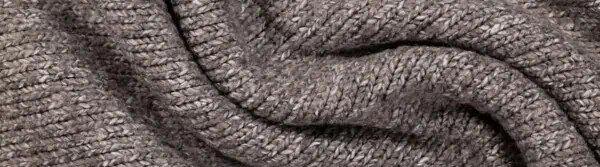
What Is Cashmere? Sustainability, Pros, and Cons

Cashmere wool, also called the golden fleece or king's fiber, is considered a luxury. Cashmere sweaters, shawls, and scarves are prized fashion items. Originating from the Indian subcontinent, its silky softness has won hearts worldwide. What's more, it is organic!
However, the material is not all sunshine and flowers. Cashmere's demand outweighs its supply, and such pressure on animal fibers leads to many environmental and ethical issues.
Is cashmere ethical or sustainable? Should you buy cashmere? We answer those questions and more in this article.
TABLE OF CONTENTS:
What is cashmere?

Cashmere is a type of wool derived from cashmere goats. A cashmere goat or hircus blythi goat grows two coats of hair: coarse guard hair and soft undercoat hair. The undercoat serves as insulation from the biting winter cold. The goats naturally shed their downy undercoats in spring when farmers collect the fiber.
Cashmere wool is expensive for three reasons:
- They harvest the fibers by hand.
- The goats produce little cashmere; a goat will yield half a kilogram yearly.
- The cashmere goat only produces its precious winter coat under specific environmental conditions.
A pair of pure cashmere socks costs between 15 to 200 USD, depending on the brand, thickness, color, size, and quality. Manufacturers often blend cashmere with sheep’s wool, camel wool, synthetics, and other fibers to lower costs.
Where does it come from?
China and Mongolia supply the vast majority of the world’s cashmere. China is the largest producer of raw cashmere3, providing 60% of the world's demand.
However, the best cashmere comes from Mongolia and Inner Mongolia, and the Gobi Desert is the ideal environment for cashmere goats.
Other countries that produce cashmere wool include Tibet, Kyrgyzstan, Afghanistan, Turkey, and Iran.
Related Read: What Is Polyester?
Types of cashmere

The textile industry categorizes cashmere regarding quality, fiber blends, and sourcing practices.
Fiber quality
Grade A - the highest quality cashmere, with a fiber length of around 3 cm and average diameters of 14 to 19 microns. It's costly.
Grade B - mid-grade cashmere with fibers averaging 19 microns. It may have a slightly rough feel but is much cheaper than grade A.
Grade C - the lowest quality of cashmere, with fibers of around 30 microns. It's the roughest and thickest but also the cheapest.
Fiber blends
Perino - a type of cashmere combined with the fur of Australian possums. Cotton, merino, and silk mixed with the possum’s fur are also called perino.
Sourcing practice
Pulled cashmere - a fiber obtained by pulling out the soft undercoat of slaughtered cashmere goats.
Pashmina - a cashmere from goats that live at altitudes of over 14,000 feet in the Himalayan Mountains. The harsh Himalayan winters make the goats produce extremely fine cashmere.
Cashgora - a fiber obtained from breeding feral cashmere goats with Angora goats in Australia and New Zealand.
How is cashmere fabric made?
Cashmere goats undergo a molting season during which their downy undercoat can be combed out by hand. Some herders may opt to shear the entire fleece. Completely hand-combing a goat takes at least two weeks.
Next comes the cleaning process. Raw cashmere is greasy and contains dirt, debris, and other impurities. After cleaning, cashmere may be dyed.
Lastly, the fibers are spun into yarn. The yarn may be woven into fabric or knitted immediately into a final product.
Qualities of cashmere

If you find sheep wool itchy, then you'll enjoy cashmere’s airy feel. It has many other properties that make it a sought-after fiber. Let's look at a few of them.
Soft, fine fibers
Cashmere's fine hair is thinner than human hair and ultra-soft. According to U.S. regulations, a cashmere wool product must not exceed an average diameter of 19 microns. It cannot have more than 3% of fibers exceeding 30 microns.
Insulating and breathable
Cashmere wool is about eight times warmer than sheep wool. It also has moisture-wicking properties, keeping you as toasty as the goats high up in the Himalayas without making you sweat.
Lightweight and durable
Cashmere fibers are hollow, producing less bulky garments, unlike other wool types. However, lightweight doesn't mean weak. A high-quality cashmere jumper will last for years with proper care.
Natural colors
Cashmere hairs naturally have pleasing-to-the-eye colors, ranging from gray to tan to white and black. White fleece is most preferred because it is easy to dye and allows for a broader range of colors.
Is cashmere sustainable?
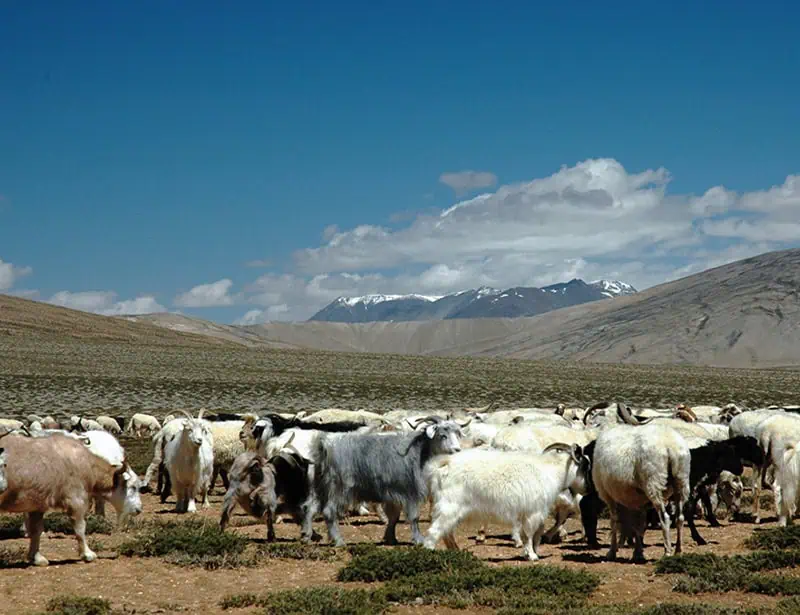
Like all fibers, cashmere has pros and cons. We examine its impact at all stages to ascertain whether it is ethical and sustainable.
It is biodegradable
Cashmere is a natural fiber; as far as fibers go, natural is a yes-yes. That means you don't have to worry about microplastics while washing your garments. When the material reaches its end of life, it'll decompose into organic matter. You can compost cashmere in a backyard compost bin.
However, certain additives can impede the biodegradability of cashmere. Cashmere blends with synthetic materials and chemicals may not biodegrade properly. If a garment is not 100% pure cashmere, you can't really bank on biodegradability.
Renewable
Cashmere wool is a renewable resource. The goats just have to grow out their coats, and another harvest is ready. Those animals can live for about twelve years and produce high-quality fiber for most of their natural lifespan.
However, the natural pace of cashmere production cannot meet global demand. Current industry practices are not sustainable. Water resources, vegetation, native animals, goats, and herders are all under extreme pressure.
Waste
The cashmere industry isn't so wasteful. Because there is barely enough cashmere, every fiber counts. When they shear a goat, coarse hair is used for non-apparel purposes, like rugs, blankets, and throws.
Many brands opt to collect and recycle waste yarn and fabric from cashmere wool production. For example, Reformation claimed that its 90% recycled cashmere and organic cotton blend garments save 96% on CO2 emissions compared to the traditional ones.
Currently, recycled cashmere uses primarily pre-consumer waste. If the industry can set up a system to collect worn cashmere clothing in large quantities, there is an opportunity to increase recycling.
High-pressure land use
The demand for cashmere is constantly growing, but the supply is limited. Cashmere goats will only grow their winter undercoat under specific conditions that are accessible within a limited area on the planet. So, to keep up with demand, nomadic herders are forced to expand their herds.
More goats means more grazing. Cashmere goats are aggressive foragers. They consume a wide variety of plants, roots, and all. Their sharp hooves damage the topsoil and further reduce the chances of natural regrowth. Overgrazing has degraded 70% of Mongolia’s once biodiverse grasslands.
Cashmere production has also endangered many native species. Herders encroach on wildlife habitats and attack native predators to protect their livestock. Let's remember that methane from livestock significantly contributes to climate change.
Animal welfare
Most cashmere goats live free range and are combed only once a year at the time they naturally molt. It would seem like the cashmere industry ticks all the boxes for animal rights.
However, a closer reveals an unpleasant reality. Cashmere goats suffer through a distressing combing process with sharp-toothed metal combs digging into their fur. Try combing through one year of matted hair and see how much it hurts.
Also, some goats may not be molting or have completed the process, so harvesters just pull out their hair from the roots. An investigation showed that the animals were being slaughtered once they no longer produced satisfactory fibers.
In most cashmere-producing countries, there are practically no laws protecting goats from cruelty, so the situation will likely worsen.
Unfair trade
The cashmere industry is worth over 3.33 billion USD, but that wealth doesn't trickle down to the goat herders1. Many herders live in poverty, neck-deep in debt. Although cashmere wool is expensive, most of the profits go to middlemen, manufacturers, and fashion brands.
Cashmere production is the primary source of income for one-third of Mongolians4. However, they export a lot of it to China and other countries for processing. There is barely any institutional or industrial infrastructure designed to help the herders have a say in the market price of cashmere wool.
Environmental degradation and economic collapse make it difficult for most herders to establish additional income sources. So they depend on loans and herd expansion instead.
Transport emissions
Cashmere can only be generated in specific locations in Asia. William-Louis Ternaux, with the support of the French government, made a grand attempt in 1818 that failed. Europe, Canada, and the U.S. are the largest consumers of cashmere, but local production is impossible.
Most countries that generate cashmere lack the industrial capacity to process it. They ship it to mills in China or Europe to be cleaned, spun, knitted, etc. Then, retailers move the finished products to stores worldwide. The emissions from the global cashmere supply chain contribute to climate change.
Can cashmere become sustainable?

Cashmere is in the black book of most sustainability organizations, and some fashion brands avoid them entirely. However, if everyone stopped using cashmere, it would throw millions of herders into an economic crisis. A better solution would be to find ways to make the material environmentally friendly.
According to a national report, it's possible to restore Mongolia’s degraded grasslands within ten years2. However, now is the right time to take action; it may be too late in another five to ten years.
Below are some notable efforts geared toward sustainable cashmere
Related Read: A Complete Guide to Sustainable and Ethical Fabric.
The South Gobi Cashmere Project
In 2014, fashion conglomerate Kering, Rio Tinto mining company, Wildlife Conservation Society, NASA, and Stanford University initiated an intervention. At first, they called it the Sustainable Cashmere Project, but it's now known as the South Gobi Cashmere Project.
The project has helped herders improve livestock care and cashmere harvesting. It has also helped herders profit from cheese, milk, and other goat products, so they are not entirely dependent on cashmere.
The Mongolian Society for Rangeland Management
This society creates and supports various projects aimed at improving the welfare of herders and protecting the environment.
They work with international organizations, the government, herders, and other stakeholders. They develop policies, provide training, and conduct research. One of their projects involves helping herders diversify their livestock by including animals like yaks or camels that promise high revenue with less environmental impact.
Sustainable Fibre Alliance
The Sustainable Fibre Alliance (SFA) is an international nonprofit organization promoting sustainability at all cashmere production levels. It works with herders in Mongolia and China and fosters profitable connections with global retailers.
According to the organization, SFA-certified cashmere is environmentally responsible, ethical, and top quality.
Should you buy cashmere clothing?

The most important step in making cashmere sustainable is reducing its demand. So consider forgoing cashmere garments entirely or buying one garment every other year. Sustainable alternatives to cashmere include recycled sheep wool or alpaca.
However, if you must, it is possible to buy sustainable cashmere. Here are a few things to consider
Buy recycled.
Many clothing companies opt for recycled cashmere to provide their customers with luxury clothing with a smaller carbon footprint. Most brands mix in some virgin cashmere, so be sure to check that it's 100% recycled material.
Buy good quality garments.
You should treat cashmere as a lifetime investment. A high-quality cashmere garment will be 2-ply, that is, double yarn strands knitted together rather than a single yarn. It should be well constructed and not so thin that it's sheer.
Look out for certifications.
The Global Recycled Standard (GRS) certifies recycled textiles that meet the highest social and environmental standards. The Sustainable Fibre Alliance (SFA) certifies cashmere products that consider animal welfare and pastureland preservation.
How to care for your cashmere

The most expensive cashmere sweater will only last if you take good care of it. Here are some maintenance tips to keep in mind.
- It is best to hand wash cashmere with a gentle detergent. If you use a washing machine, use the gentle cycle for no longer than 30 minutes.
- Always wash it with cool water.
- Do not hang it when air drying or in storage; otherwise, they will sag. Instead, lay them flat.
- Never use direct heat on your garment. For machine drying, use the spin-dry option and a pressing cloth divider when ironing.
- Never use bleach or any harsh chemicals.
Conclusion
Cashmere wool is the de-haired undercoat of selected goats. It is renewable and biodegradable, but other factors that make it unsustainable.
Although organizations are working to shift towards better practices, it takes time and effort. If you cannot access eco-friendly certified cashmere, your best bet is to avoid the material entirely.
Glossary Terms:
| 1 | Murphy, D. J. (2018). “We’re Living from Loan-to-Loan”: Pastoral Vulnerability and the cashmere-debt Cycle in Mongolia. In Research in economic anthropology (pp. 7–30). |
| 2 | Densambuu, B., S. Sainnemekh, B. Bestelmeyer, U. Budbaatar. 2018. National report on the rangeland health of Mongolia: Second Assessment. Green Gold-Animal health project, SDC. Ulaanbaatar. |
| 3 | Rysbyek, M., & Lei, S. (2022). Economic impact of Mongolia’s cashmere export. Modern Economy, 13(02), 130–143. |
| 4 | Rysbyek, M., & Lei, S. (2022). Economic impact of Mongolia’s cashmere export. Modern Economy, 13(02), 130–143. |
Jen’s a passionate environmentalist and sustainability expert. With a science degree from Babcock University Jen loves applying her research skills to craft editorial that connects with our global changemaker and readership audiences centered around topics including zero waste, sustainability, climate change, and biodiversity.
Elsewhere Jen’s interests include the role that future technology and data have in helping us solve some of the planet’s biggest challenges.
Fact Checked By:
Isabela Sedano, BEng.
