National Clean Energy Week: Advancing Energy Independence

National Clean Energy Week happens every September, running lately during the second workweek. It's become America's biggest bipartisan push for clean energy policies and energy independence.
Washington, D.C., hosts the federal policy talks. State governors issue proclamations. Federal officials, business leaders, and advocates participate nationwide. POLITICO calls it "a veritable who's who of the Clean Energy World."
The week focuses on practical solutions that actually work. Energy security drives much of the conversation, but economic benefits get equal attention alongside environmental considerations. Citizens for Responsible Energy Solutions established this week back in 2017.
Key Info: National Clean Energy Week
- When is National Clean Energy Week?
Occurs in the 2nd week of September - This Year (2026):
Monday 14th - Friday 18th September 2026 (date has passed) - Official Website: National Clean Energy Week
-
Future Dates
- Monday 13th - Friday 17th September 2027
- Monday 11th - Friday 15th September 2028
- Monday 10th - Friday 14th September 2029
- Monday 9th - Friday 13th September 2030
-
Additional Details
- Observed By: Bipartisan officials, federal representatives, business leaders, advocates, investors, trade associations
- Where Is It Observed: United States
- Primary Theme: Clean Energy Policy And Innovation
- Hashtags: #NationalCleanEnergyWeek #CleanEnergy #EnergyIndependence #CleanEnergyPolicy #RenewableEnergy #EnergyInnovation
Quick Links: National Clean Energy Week
Why National Clean Energy Week Drives American Energy Leadership
Clean energy awareness shapes where America's economy goes next. The manufacturing sector adds $31 billion to U.S. GDP annually while supporting 216,000 American jobs.
Manufacturing workers in clean energy earn $30,000 more than the national median wage. Why does this matter? Domestic manufacturing cuts dependence on foreign supply chains.
Over 300 primary manufacturing plants currently contribute to America's clean energy infrastructure, with at least one facility in every state. Republican and Democratic governors alike issue proclamations during the week.
This bipartisan recognition reflects economic reality, not political positioning.
Who Organizes and Participates in National Clean Energy Week
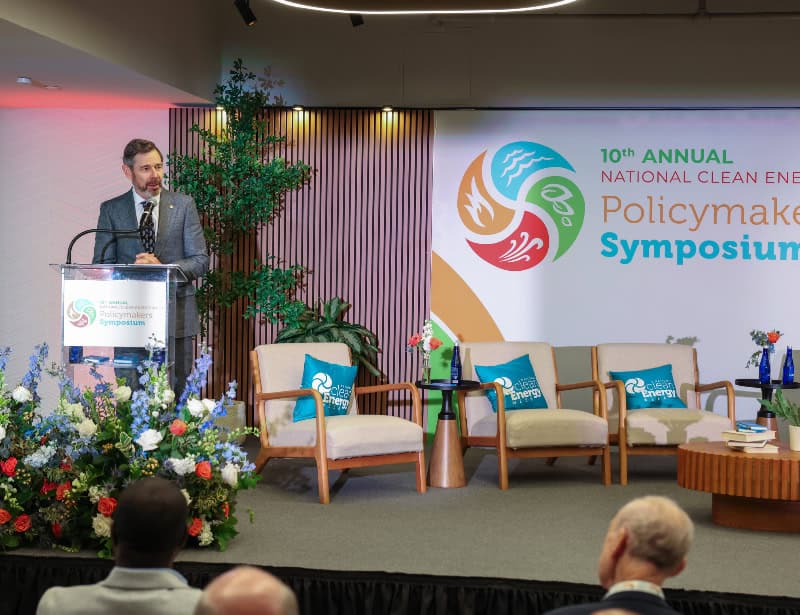
Citizens for Responsible Energy Solutions coordinates everything through nationalcleanenergyweek.org. Heather Reams serves as NCEW chair and CRES president. The organization got this platform started in 2017.
Officials participate across multiple agencies. The Department of Energy, the Environmental Protection Agency, and the Department of Transportation lead federal engagement.
Congressional representatives from the Senate Energy and Natural Resources Committee and House Energy and Commerce Committee contribute to policy discussions.
Since 2017, state governors have issued proclamations recognizing the week. In recent years, 25 gubernatorial proclamations have been issued, spanning both parties. Business leaders from trade associations attend programming events alongside clean energy investors and advocates.
The participant base shows clean energy's broad appeal across political lines.
Important Policy Focus Areas and Programming
Policy discussions center on implementation challenges that determine real outcomes. The Conrad Hotel in Washington, D.C., hosts in-person programming; virtual participation expands access nationwide.
Core focus areas include:
- Permitting reform - Streamlining approval processes for energy infrastructure projects
- Clean energy tax credits - Supporting domestic manufacturing and deployment incentives
- Rural community development - Connecting clean energy opportunities with agricultural regions
- Offshore wind advancement - Developing America's project pipeline by installing floating offshore wind
- Transmission infrastructure - Addressing constraints that could save consumers billions of dollars
- Liquid fuels innovation - Advancing sustainable transportation fuel alternatives
How to Participate in National Clean Energy Week
Participation options work for different audiences while advancing shared energy goals. Each approach offers clear value for building clean energy momentum.
For Policymakers:
- Attend Conrad Hotel programming in Washington, D.C.
- Request gubernatorial proclamations recognizing the week in your state
- Host policy roundtables connecting local stakeholders with federal initiatives
- Engage directly with federal agency representatives during programming
For Business Leaders:
- Join trade association programming events and networking sessions
- Connect with clean energy investors exploring manufacturing opportunities
- Showcase local manufacturing capabilities and job creation potential
- Participate in supply chain development discussions shaping industry growth
For Advocates and Educators:
- Access virtual programming content through nationalcleanenergyweek.org
- Organize community awareness events highlighting local economic benefits
- Share manufacturing and job data with local media outlets
- Connect with federal resources supporting clean energy education initiatives
National Clean Energy Week Impact and Future Outlook
State recognition expands each year as economic benefits become clear. Recent observances brought 25 gubernatorial proclamations spanning Republican and Democratic leadership.
This demonstrates growing awareness of clean energy's economic importance beyond partisan considerations.
Beyond this, federal policy discussions generate concrete agency coordination improvements. Industry connections facilitate collaboration extending beyond September programming.
For related events, also join the International Day of Clean Energy and Global Wind Day.
Resources:
FAQs (Frequently Asked Questions)
Citizens for Responsible Energy Solutions launched this in 2017. Today it draws speakers from both parties—conservative leaders and Democratic lawmakers alike. The 2026 gathering marks the 10th anniversary, but what's the real scope? Multiple governors now issue proclamations for the week. Growth metrics like attendance numbers and sponsor counts stay private though.
This operates as celebration and dialogue, not a commitment machine. The National Clean Energy Week organization runs panel discussions and speeches across the political spectrum. Does bipartisan dialogue on clean tech happen? Absolutely. But formal outcomes don't emerge consistently—that's not really the point here.
State approaches reflect what they've got locally. Oklahoma talks wind generation statistics—makes sense given their resources. Indiana highlights manufacturing jobs while coastal states push offshore wind development. This connects to each state's existing energy portfolio, but how do rural areas differ? They emphasize agricultural community benefits. All gubernatorial proclamations mention economic benefits and energy independence.
research
Success shows up in new connections and federal resource access. Manufacturing companies gain supply chain partnerships and insights into clean energy tax credits. And what about ongoing benefits? Businesses track follow-up meetings with federal reps, new investor connections, and policy insights that shape strategic planning. Many join trade networks established during the week for year-round collaboration.
Barbara is a former journalist who is passionate about translating important causes into engaging narratives. She combines communication expertise with an environmental science background to create accessible, fact-driven content.