
How do Wind Turbines Work & Harness the Wind for Clean Energy
Wind turbines stand tall, transforming wind into electricity. These towering structures are a staple in the renewable energy landscape, offering a powerful substitute for fossil fuels. How do wind turbines work? - By capturing wind's kinetic power, they turn it into a form we can use: clean, sustainable electricity.
Humans have harnessed wind energy for as long as history remembers. Wind power isn't new to civilization, from propelling boats to milling grains. Modern wind turbines, however, began their ascent in the latter part of the 1900s. Since their inception, improvements have been significant.
Now, we're looking at wind energy as a heavyweight champion in the fight against climate change. Case in point: the Global Wind Energy Council reported a whopping 1.2 billion tonnes of CO2 evaded due to wind power in 2022 alone. Talk about impact!
What Is A Wind Turbine?
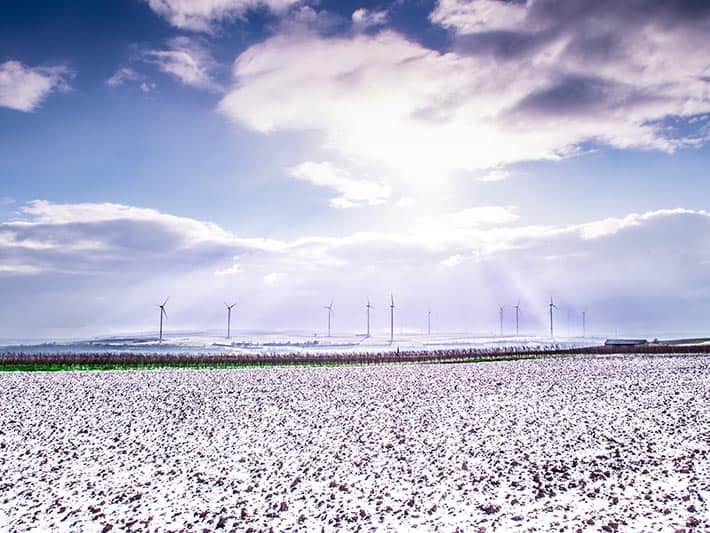
Let's break down a wind turbine to its core:
- Blades
- Rotor
- Nacelle
- Tower
- Foundation
Every piece has a job in wrangling wind energy and turning it into electric current. It all starts with the wind nudging the blades into motion and kick-starting the energy transformation process.
A key trait of wind turbines is their ability to produce sustainable power and avoid greenhouse gas emissions. This trait alone puts them at the forefront of the world's shift to greener energy technologies.
On the horizon, wind energy is seeing a surge. The International Energy Agency has forecast wind power capacity to jump 60% from 2020 to 20256.
Join us as we walk through the nuts and bolts of wind turbines, from the fundamentals to the bleeding-edge advancements – how they turn a breeze into a powerful force, the parts they're made of, and the next wave of innovations steering the wind power industry.
Wind Turbines Convert Kinetic Energy into Electrical Power through Aerodynamic and Electromagnetic Principles
How do wind turbines convert wind into electricity? Imagine the blowing wind—it's not just moving air. It has power. Wind turbines change moving air into electrical power. This happens in three steps:
- Wind energy becomes mechanical energy
- Mechanical energy turns into rotational energy
- Rotational energy changes to electrical energy
Firstly, the blades snag the wind energy and morph it into mechanical energy. The blades are like the strong arms of the turbine, wrestling the wind to spin a rotor. The rotor's connected to a low-speed shaft inside the nacelle—that's the housing at the tower's top.
This is where it gets interesting. A gearbox hooked to our low-speed shaft cranks up its spin rate. Why? Because we need that turbo speed to produce electric power. The magic happens in the high-speed shaft coming out of the gearbox—it drives the generator.
The Role of Electromagnetic Induction
Generators whip up an electric current using spinning magnets and wire coils. As magnets move past wire coils, they create an electric current.
Key components in this process include:
- Blades - They're the horsepower, harnessing the wind.
- Hub - This is the central point where blades connect.
- Main shaft - The transit system for rotational energy.
- Gearbox - It's the turbocharger, kicking rotation into high gear.
- Generator - The heart of the operation, switching from spin to power.
- Yaw drive - Consider this the turbine's 'neck,' ensuring it always faces the wind for maximum energy.
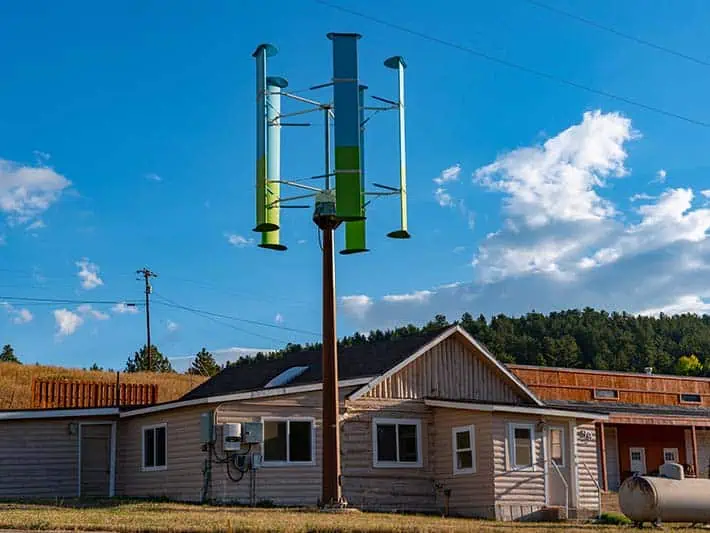
Turbines come in two flavors: horizontal axis wind turbines (HAWT) and vertical axis wind turbines (VAWT).
| Feature | HAWT | VAWT |
| Blade position | Faces wind | Stands up |
| Efficiency | Higher (20-40%) | Lower (15-25%) |
| Wind direction | Needs to turn | Works all ways |
| Generator place | Top of tower | Ground level |
| Main use | Big power plants | Small, city use |
Wind is fickle, right? The stronger it blows, the more a turbine can pump out—up to eight times more power when the wind speed doubles. Finding the perfect spot for both onshore and offshore wind farms is a big deal.
Today's turbines are efficiency champions, converting up to 50% of wind's push into electricity. That's a solid score, and it's why wind power is becoming a serious player in energy markets.
Blade Aerodynamics and Airfoil Shapes Optimize Energy Capture in Varying Wind Conditions

What role does the rotor play in wind energy conversion?
Meet the rotor: the vital player in a wind turbine that turns wind into motion. It's all about the blades, crafted with aerodynamics to harness wind power at its best8.
Blade design focuses on two fundamental forces: lift and drag. Lift is the force that hoists the blade, while drag is the resistance that holds it back. Harmonizing these forces is key to efficient energy capture.
Now, let's talk shape – the right airfoil shape, to be exact. Blades flaunt profiles like the NACA or NREL S-series to slice through the air with ease. It boils down to pressure differences over the curve that spin the rotor with gusto (a bit like an airplane wing does).
Blade Design Factors
The recipe for effective blades? It's a mix that includes:
- Length: Longer blades catch more wind
- Width: Changes along the blade for top performance
- Twist: Maintains the ideal angle to the wind
- Material: Strong yet light
- Surface: Smooth to cut air resistance
The angle of attack is vital. It's how the blade meets the wind, affecting its ability to create lift. Designers carefully adjust this angle along the blade's length.
Tip speed ratio also matters for efficiency. It compares blade tip speed to wind speed. For three-bladed rotors, the ideal tip speed ratio is 6 to 8. This range allows the rotor to extract the most power from the wind7.
Advanced Design Techniques
Modern blade design uses computational fluid dynamics (CFD). This technology simulates airflow around blades. It helps engineers optimize shapes for better performance.
Designers also consider the boundary layer. This thin layer of air close to the blade surface affects performance. Managing it well can boost efficiency and reduce noise.
Wind shear impacts blade design too. It refers to how wind speed changes at different heights. Designers account for this to ensure the rotor works well in varying conditions.
New materials are improving blade designs. Carbon fiber blades, for example, are lighter and stronger than older models. This allows for longer blades that capture more wind energy.
Real-World Application
Take the Haliade-X offshore turbine. Its giant 107-meter blades generate electricity at up to 14 MW. One churn of those blades keeps the lights on in approximately 16,000 European homes.
As we forge ahead with blade tech, turbines get smarter and can handle more wind conditions.
The Nacelle Houses Critical Components that Transform Rotational Energy into Grid-Compatible Electricity

What is the function of the nacelle in a wind turbine? Think of the nacelle as the command center of a wind turbine. Nested at the tower's very top, it protects the essential machinery inside from the elements and converts wind into electrical energy.
From Rotation to Electricity
The magic starts in the nacelle with a low-speed shaft. Attached to the rotor, this shaft turns at the wind's pace. It feeds into the gearbox. The gearbox is key in most turbines, cranking up the turning speed from a leisurely 15 revolutions per minute to a brisk 1,500. This step-up is crucial for generating power efficiently.
Next is a high-speed shaft leading to the generator. This technology captures kinetic energy and transforms it into electricity thanks to the principles of electromagnetic induction.
Generator Types and Efficiency
Let's talk about generator types. We have:
- Synchronous generators
- Asynchronous generators
- Permanent magnet generators
The standout? Permanent magnet generators. They outshine the rest with an efficiency peak of 98%3.
Cutting-edge turbines ditch the gearbox altogether. They go for a direct drive from the rotor to the generator, minimizing maintenance and wear and tear.
Power Electronics and Grid Integration
Nacelles are also the home of power electronics, which tweak the electricity produced to meet grid requirements. Inverters take DC electricity and turn it into AC. Converters make sure the output has the right frequency and voltage.
Components like IGBTs (Insulated Gate Bipolar Transistors) and thyristors manage the flow and quality of this power, which is vital for a stable connection to the grid.
Transformers in the nacelle or at the base increase voltage for long-distance transmission. This step helps ensure efficient power delivery to the grid over distance.
Cooling and Positioning
Nacelles pack in cooling systems to beat the heat. They use fans or liquid coolants to keep temperatures in check.
Then there's the yaw system. It swivels the nacelle so it's always facing the wind squarely, maxing out energy capture.
Emerging Technologies
Wind turbines are getting smarter and more efficient. We're seeing superconducting generators that could shrink in size yet boost efficiency. Intelligent sensors and AI are improving performance monitoring and upkeep.
These new tech pieces are set to lift wind turbines to new heights of efficiency and reliability, underpinning their role in our energy future.
Gearbox Systems and Direct Drive Alternatives Optimize Rotor Speed for Maximum Power Generation
How do gearboxes optimize wind turbine performance?
Gearboxes are the unsung heroes of wind turbine efficiency. It's their job to ramp up the leisurely spinning of rotor blades—anywhere from 5 to 20 times a minute—to the rapid rotations our generators crave. Imagine your generator waiting 1000-1800 spins per minute to churn out power. That's quite a leap, and gearboxes make it happen.
The types of gearboxes tucked inside wind turbines include:
- Planetary gearboxes
- Parallel shaft gearboxes
- Compound gearboxes (a mix of planetary and parallel)
Planetary types are compact and thrive under the massive torque of colossal turbines. Parallel shaft models are straightforward and have fewer complexities, making maintenance easy. Compound gearboxes bring the best of both worlds, tailoring to various uses.
The gear ratio is pivotal. You're looking at a range from 1:50 to 1:100. This is all about the fast-shifting shaft outpacing the rotor by up to a hundredfold. The payoff? Generators can be smaller and lighter. The catch? You may be signing up for more wear and tear and treks up the turbine for maintenance.
Despite their benefits, gearboxes aren't without issues. Think of them as elaborate, hefty, and maintenance-hungry beasts. Ribrant and Bertling (2007) pinpoint gearbox hiccups as a significant cause of turbine timeouts1. Regular oil changes every year and a half and significant overhauls every five years are par for the course.
Direct Drive Systems: A Gearless Alternative
Direct drive systems offer an alternative approach. They connect the rotor straight to the generator, eliminating the gearbox. This design simplifies the turbine structure and reduces maintenance needs.
Geared versus direct drive—let's contrast:
- Geared systems:
- Reach 97% efficiency at full thrust
- Generators cost less
- Complexity? Higher.
- Maintenance? More frequent.
- • Direct drive systems:
- Maintain 98% efficiency no matter the power output
- Design is more straightforward
- Simpler means less fiddling and fixing
- Hardier in the long run
- Generators beef up in weight
You've got two roads. Geared gets you a short, sharp burst of top efficiency, while direct drive paces itself for the long haul, reliable with a steady need for fewer pit stops.
Innovation is still in progress. Smarter lubricants are stretching gearbox lifespans. Magnetic marvels are bolstering direct drives. And the horizon promises wonders like superconducting generators, which could redefine efficiency for direct drives.
Swinging the choice between geared and direct drives depends on the turbine's build, home turf, and the cost of keeping it spinning. Thanks to their robustness in the face of coastal tantrums, direct drives are getting the thumbs up for offshore wind turbines.
Regarding environmental concerns, direct drives use lubricants, lessening the risk of spills. Yet they do hunger for more rare earth minerals.
Advanced Control Systems Ensure Optimal Performance, Safety, and Efficiency Across Wind Speed Classes
How do wind turbines adjust to changing wind conditions?
Let's walk through how wind turbines tweak their settings for capricious winds smartly. They accommodate changes to maximize what they do: produce energy, stay safe, and push for better performance.
Now, the control room of a turbine has a trio of leading actors:
- Pitch control — it's like setting sails at the right angle to seize the wind's power.
- Yaw control — imagine it turning the whole top to kiss the face of the wind squarely.
- Brake systems — come into play when the machine needs to rest for repairs or to avoid a storm.
Wind turbines are picky about the wind they harness:
- Cut-in speed: They start their magic at a gentle 3-4 m/s.
- Rated speed: They hit their peak performance at a brisk 12-15 m/s.
- Cut-out speed: At a blustery 25 m/s, they take a bow to sidestep harm.
Supervisory Control and Data Acquisition (SCADA) systems monitor and control modern wind turbines. These systems collect real-time data on wind speed, direction, and turbine performance.
Pitch and Yaw
Advanced control strategies, such as individual pitch control, cut fatigue loads by 30% compared to collective pitch control. This improvement extends turbine life and increases overall efficiency5.
Yawing is not a one-trick pony; it has two types: active and passive. The active system muscles the nacelle to face the wind, while the passive system relies on wind pressure.
For pitch hydraulic or electric systems deftly pivot blades for prime load and energy.
The tech is ever-advancing:
- Throw in LIDAR tech, and turbines grab more energy while easing their load.
- Model predictive control is next-level oversight, slashing structural strain by up to 30%.
Watching and predicting hiccups in yaw and pitch equipment slashes repair times and costs.
Wind turbines are classified based on their design wind speeds:
- Class I: They're the high-speed dancers.
- Class II: These are your mid-tempo groovers.
- Class III: They sway to the mellow breezes.
This classification ensures turbines match specific site conditions.
Yaw and Pitch Control Mechanisms Maximize Energy Capture and Ensure Safe Operation in High Winds
How does a wind turbine's pitch control system work?
Wind turbines rely on systems known as yaw and pitch control. These systems boost the energy they capture and safeguard the turbine.
Yaw control's role? It pivots the turbine to face oncoming winds directly. It employs a yaw bearing, a motor, and even a brake. As for pitch control, it's about precision. It tweaks each blade's angle on its own. Hand in hand, these systems fine-tune the turbine's performance and its safety.
Key functions include:
- Aligning with wind direction
- Adjusting blades for peak energy capture
- Controlling rotor speed
- Protecting in high winds
- Distributing loads evenly
Let's talk speed and accuracy. That's where pitch control shines, steering blades using either hydraulics or electrics. These actuators respond in a snap to any blustery changes. Pitching each blade individually can slash stress on the turbine by up to 30%, leading to a longer operational lifespan.
Face extreme winds? Pitch control steps in. It angles the blades to "feather," diminishing the turbine's burden. When necessary, this system can halt the turbine outright.
Today's turbines bridge yaw and pitch control with clever sensors. This combo adapts actions in real-time. As wind direction sensors provide data, the yaw system thinks on its feet to find an ideal stance.
Then, there's smart software featuring advanced control algorithms. These brains predict the whims of the wind to make moves ahead of time. The payoff? An energy capture boost of 5-10%4.
Environmental Considerations and Technological Innovations Shape Modern Wind Turbine Design
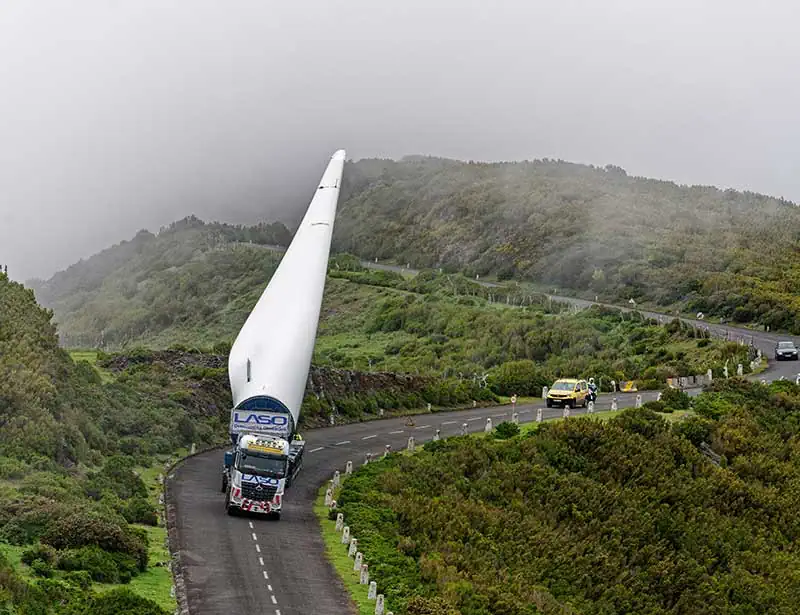
What are the latest advancements in wind turbine technology?
One major area is noise reduction. New blade technology reduces noise by 2-3 decibels without sacrificing power, a major win for community relations. Some blades draw inspiration from owls for silent flight.
Wildlife safety is also getting a boost. Painting one blade black can slash bird deaths by 70%2. Ultrasonic technology and radar systems protect bats and birds, respectively.
Let's talk about offshore wind farms. Thanks to floating turbines, we can harness winds over 60-900 meters deep, tapping into more powerful and consistent winds at sea.
Here are a few eye-catching innovations:
- Bigger turbines with up to 14 MW capacity
- Advanced materials make blades lighter and stronger, trimming their weight by 20%
- Vertical axis turbines fit right into urban areas
They help tackle significant challenges related to wind power while improving the environmental impact of wind energy installation, upping the energy ante.
Conclusion
Wind turbines are feats of human ingenuity. Their role? Simple. They turn the wind into electricity that powers our lives. Imagine this: blades reaching out to the breeze, rotors turning in tandem, and generators humming with new energy. Together, they form an efficient team essential for a greener tomorrow.
Wind energy isn't just a slice of our clean energy pie; it's on its way to being the foundation. With its growth and forthcoming innovations, wind power is gearing up to steer us firmly into an era of sustainable, pollution-free power generation.
Sources and References
Glossary Terms:
| 1 | Ribrant, J., & Bertling, L. M. (2007). Survey of Failures in Wind Power Systems With Focus on Swedish Wind Power Plants During 1997–2005. IEEE Transactions on Energy Conversion, 22(1), 167–173. |
| 2 | May, R., Nygård, T., Falkdalen, U., Åström, J., Hamre, Ø., & Stokke, B. G. (2020). Paint it black: Efficacy of increased wind turbine rotor blade visibility to reduce avian fatalities. Ecology and Evolution, 10(16), 8927-8935. |
| 3 | Zhang, Z., Matveev, A. S., Sigurd Ovrebo, Nilssen, R., & Arne Nysveen. (2011). State of the art in generator technology for offshore wind energy conversion systems. |
| 4 | Barlas, T., & Van Kuik, G. (2010). Review of state of the art in smart rotor control research for wind turbines. Progress in Aerospace Sciences, 46(1), 1-27. |
| 5 | Bossanyi, E. A. (2003). Individual Blade Pitch Control for Load Reduction. Wind Energy, 6(2), 119-128. |
| 6 | International Energy Agency. (2020). Renewables 2020: Analysis and forecast to 2025. |
| 7 | Tummala, A., Velamati, R. K., Sinha, D. K., Indraja, V., & Krishna, V. H. (2016). A review on small scale wind turbines. Renewable and Sustainable Energy Reviews, 56, 1351-1371. |
| 8 | Schubel, P. J., & Crossley, R. J. (2012). Wind Turbine Blade Design. Energies, 5(9), 3425-3449. |
