
World Mosquito Day: Fighting Disease Through Education

World Mosquito Day arrives on August 20th each year. The observance honors Sir Ronald Ross's groundbreaking 1897 malaria discovery in Secunderabad, India. Ross proved that female Anopheles mosquitoes transmit malaria between humans.
This single recognition day focuses global attention on mosquito-borne disease awareness and education. The discovery transformed medical understanding. Communities worldwide now recognize vector control as important public health practice.
The Discovery That Changed Medicine
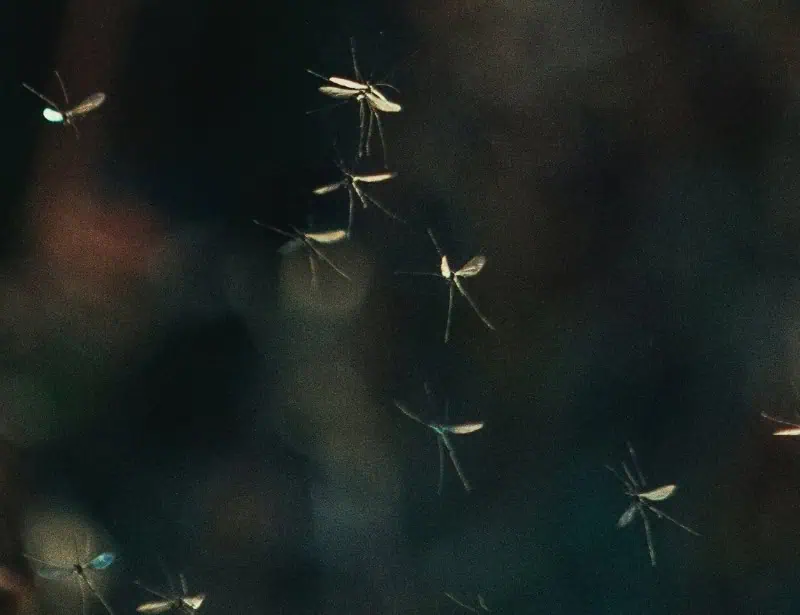
Sir Ronald Ross spent months in a cramped laboratory in the Begumpet area during the intense Indian summer heat. The London School of Hygiene and Tropical Medicine researcher faced skeptical colleagues who doubted mosquito transmission theories.
On August 20, 1897, Ross confirmed malarial parasites inside a "dappled-wing" mosquito gut, later identified as Anopheles species. The breakthrough required careful dissection work under primitive microscopes. Ross's persistence paid off when clear evidence emerged; his findings immediately changed disease prevention strategies across tropical regions.
The Nobel Prize in Physiology followed in 1902. Modern medicine still builds on Ross's foundation work.
Timeline
Sir Ronald Ross discovers malaria transmission mechanism in Secunderabad, India
Ross awarded Nobel Prize in Physiology for malaria research
Early mosquito control awareness campaigns begin
American Mosquito Control Association formalizes World Mosquito Day promotion
WHO and global health organizations adopt annual recognition
Mosquito-Borne Diseases by the Numbers Today
Mosquitoes kill over one million people annually. They infect 700 million individuals—affecting nearly one in ten people globally.
The World Health Organization documented 249 million malaria cases and 608,000 deaths across 85 countries in 2022. Africa shoulders 94% of malaria cases and 95% of deaths worldwide. Children under five account for 80% of malaria deaths.
Dengue cases have exploded with the Pan American Health Organization reporting 283% increases compared to previous years. What drives these ongoing high numbers despite decades of prevention efforts?
Climate change expands mosquito habitat ranges. It creates favorable breeding conditions in previously unaffected regions. Economic costs exceed billions annually, and progress remains uneven across regions despite advances in vector control technology.
Core Awareness Themes and Messaging
World Mosquito Day emphasizes vector control education as the primary prevention method. Community awareness campaigns teach pract protect strategies using proven techniques.
Research advancement receives annual attention through fundraising and institutional support efforts. Modern prevention connects directly to Ross's original insights about mosquito behavior patterns. Family health education programs have demonstrated odds ratios of 5.27 for protective behavior adoption.
This suggests emerging threats need attention too. Climate adaptation strategies now feature prominently in annual messaging.
How to Participate in World Mosquito Day

Individual and community participation creates meaningful awareness effect. Organizations coordinate educational efforts while supporting research initiatives.
Host community prevention workshops focusing on standing water elimination and protective clothing education. Organize social media campaigns sharing prevention tips using #WorldMosquitoDay hashtags. Support research fundraising through donations to malaria elimination organizations.
Coordinate school education programs teaching children about mosquito life cycles and protection methods. Participate in local vector control initiatives including neighborhood cleanup drives targeting breeding sites. Share historical content about Ross's discovery and ongoing prevention success stories.
But community participation drives lasting behavior change. Healthcare facilities coordinate screening events, but real change happens at home.
Leading Organizations and Their Roles
The American Mosquito Control Association leads World Mosquito Day promotion efforts since formalizing recognition in the 1970s. The World Health Organization provides global coordination through surveillance data and prevention strategy development—having certified 45 countries and 1 territory as malaria-free as of 2025.
Regional health departments implement localized awareness campaigns designed for specific disease transmission patterns. The London School of Hygiene and Tropical Medicine maintains Ross's legacy through annual academic events. They've served as primary historical guardians since the 1930s.
The RBM Partnership to End Malaria coordinates over 500 partner organizations worldwide. Academic institutions contribute research breakthroughs. Training tomorrow's vector control specialists.
Recently these organizations create the foundation for gen progress against mosquito-borne diseases. Their combined efforts points to ongoing awareness building and clear connect between research and community action. Which matters most.
Resources:
FAQs (Frequently Asked Questions)
Climate change has already shifted where mosquitoes spread diseases. Research in Environmental Health Perspectives shows these insects now thrive in places that were once too cold or high in elevation. Rising temperatures have opened new territories for mosquitoes across temperate zones, Arctic regions, and tropical highlands. Marcia Caldas de Castro at Harvard points to a troubling effect - areas that couldn't support disease transmission before are now at risk. Studies from Frontiers in Microbiology tracked malaria moving up to higher ground in Africa, Colombia and Ethiopia with alarming speed. This relates directly to warmer weather and changed rainfall patterns creating perfect breeding conditions where mosquitoes can multiply rapidly.
Smart tech and AI now lead the fight against mosquitoes. Today's surveillance systems use computer vision to identify specific mosquito species as they fly by - a practical protection measure backed by recent PubMed research. The EPA has been pushing forward with genetic approaches that show real promise in field tests. These include releasing modified male mosquitoes that prevent female offspring from reaching adulthood, along with Wolbachia-infected mosquitoes that disrupt disease transmission in targeted areas. Beyond this, physical control methods are gaining ground with 24 new patents filed just this year. Drones now help track mosquito hotspots, while new ultrasonic devices attempt to repel the insects without chemicals. Journal of Mosquito Research suggests these alternatives might help reduce our dependence on traditional pesticides that lose effectiveness over time.
The financial drain from mosquito diseases is enormous and growing. BMJ Global Health research shows just one disease - chikungunya - cost nearly $50 billion between 2011-2020 through direct and indirect expenses. Recent data paints an even worse picture for developing economies. Global Health Now reports dengue and related viruses drain $3.1 billion yearly from global resources, with dengue cases doubling to over 14 million in 2024 alone. The burden falls hardest on developing countries where healthcare systems already struggle with limited funding. When these nations face high medical costs and lost workdays from mosquito illnesses, their economies struggle to grow at sustainable rates. This creates a cycle where disease maintains poverty, and poverty makes disease control harder to implement effectively.
Community programs work 3-4 times better than top-down approaches according to comparative studies. When local people join the effort, mosquito control sticks beyond the initial intervention phase. The best programs blend neighborhood knowledge with scientific methods to create sustainable systems. Since people who live with the problem understand their surroundings, they often spot breeding sites experts might miss during brief assessments. This suggests community ownership matters more than fancy technology for long-term success in reducing mosquito populations. Sometimes a single dedicated neighborhood group achieves more than large government campaigns that lack local buy-in. In practice, sustainable reduction in disease transmission happens when residents consistently participate in monitoring and elimination efforts rather than relying on outside intervention.
Mosquitoes have outsmarted our old chemical playbook through genetic adaptations. The CDC and WHO now recommend Integrated Mosquito Management instead of relying on single products that quickly lose effectiveness. Today's approach rotates different insecticide classes throughout the season, with 78% of control districts now implementing this strategy to prevent resistance from developing. Annual resistance testing has become standard practice among professional control organizations worldwide. When tests show mosquitoes surviving treatments that once killed them, managers quickly switch tactics to maintain control effectiveness. This relates to a key shift in thinking about insecticide use patterns. We now preserve chemical effectiveness through strategic application rather than maximum coverage. Research points to logical sequencing as our best defense, treating these tools as limited resources that need protection through careful management.
Barbara is a former journalist who is passionate about translating important causes into engaging narratives. She combines communication expertise with an environmental science background to create accessible, fact-driven content.
