34 Positive Words Ending In 'id': Vivid Language Terms
Have you noticed how many positive words ending in id can brighten our language? These words are both common and powerful. Think about how 'splendid' lifts your mood or how 'valid' affirms your thoughts. Such words can truly enhance your vocabulary and potentially shift your outlook.
These id-ending words aren't just for personal use, though. They show up in talks about nature, daily chats, and even deep emotional discussions. From describing a 'placid' lake to feeling 'avid' about a new hobby, these words help us share our thoughts and feelings clearly. So, are you ready to explore these 'id' words and see how they might freshen up your speech and writing?
How many common positive words end in "id"?
At least 10 common positive words end in "id":
1. Splendid
2. Valid
3. Candid
4. Vivid
5. Lucid
6. Placid
7. Avid
8. Fluid
9. Solid
10. Rapid
These adjectives can enhance your writing by adding clarity and impact to descriptions.
Quick Links to our Selection of Positive Words Ending in "id":
34 Positive Words Ending In "Id"
Empowering "id" Words to Boost Your Mindset
Words build our mindset and drive our growth. Adding positive "id" words to your vocabulary creates a solid base for clear thinking. As an avid learner, you can tap into lucid thoughts and vivid ideas. These words work as tools for boosting confidence and sparking motivation. Use them in your daily self-talk and chats. A candid "I feel valid" or a rapid "That's a splendid idea!" can shift your outlook. You're shaping a more positive, action-oriented life by actively choosing empowering words.
| Words Ending In Id (synonyms) | Definition | Example Usage |
|---|---|---|
| Avid(Enthusiastic, passionate, eager) | Showing great enthusiasm and commitment to a pursuit or interest | The avid environmentalist dedicated her life to protecting endangered species, inspiring a new generation of conservationists. |
| Candid(Honest, frank, sincere) | Expressing oneself openly and truthfully without reservation | Her candid feedback during the team meeting led to innovative solutions and stronger workplace relationships. |
| Lucid(Clear, coherent, intelligible) | Easily understood; characterized by clear and logical thinking | The professor's lucid explanation of complex theories made quantum physics accessible to all students. |
| Rapid(Swift, quick, speedy) | Happening or developing quickly or at a fast pace | The startup's rapid growth was fueled by its innovative approach to sustainable energy solutions. |
| Solid(Firm, stable, reliable) | Having a firm shape or structure; dependable and substantial | Their solid friendship, built on trust and mutual respect, weathered life's toughest challenges. |
| Splendid(Magnificent, excellent, brilliant) | Impressive and grand; exceptionally good or admirable | The charity gala was a splendid success, raising millions for children's education in underprivileged communities. |
| Valid(Legitimate, sound, well-grounded) | Logically or factually sound; acceptable as cogent | Her valid arguments for renewable energy policies convinced the city council to implement eco-friendly initiatives. |
| Vivid(Bright, intense, lively) | Producing powerful feelings or strong, clear images in the mind | The artist's vivid portrayal of nature's beauty inspired viewers to appreciate and protect the environment. |
Nature-Inspired "id" Terms for Environmental Awareness
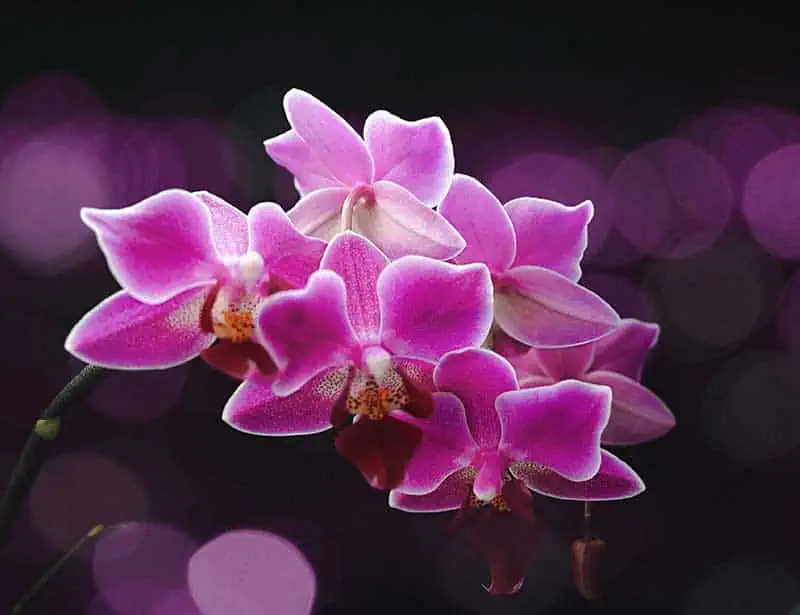
Nature has its own vocabulary, and these "id" words help us understand it better. Fluid ecosystems adapt constantly, while hybrid species show nature's creativity. Orchids bloom in placid forests, showcasing Earth's diversity. These terms create clear images of our planet's marvels. Using them boosts our grasp of nature's intricacy.
| Words Ending In Id (synonyms) | Definition | Example Usage |
|---|---|---|
| Fluid(Adaptable, flexible, flowing) | Capable of flowing or easily changing shape; smooth and graceful | The fluid movements of the river taught us about nature's resilience and adaptability in the face of obstacles. |
| Hybrid(Composite, mixed, blended) | Combining two or more different elements to create something unique | The hybrid energy system, utilizing both solar and wind power, revolutionized sustainable living in remote communities. |
| Orchid(Exotic, delicate, elegant) | A diverse and colorful flowering plant known for its beauty and complexity | The rare orchid species discovered in the rainforest highlighted the importance of preserving biodiversity hotspots. |
| Arid(Dry, parched, barren) | Lacking sufficient water or rainfall; extremely dry | Despite its arid climate, the desert ecosystem thrived with uniquely adapted plants and animals, showcasing nature's ingenuity. |
| Druid((Ancient Celtic priest, nature sage, eco-guardian)) | A member of an ancient Celtic order known for their reverence for nature and spiritual practices | The modern-day druid dedicated her life to teaching others about the interconnectedness of all living things and the importance of environmental stewardship. |
| Placid(Calm, tranquil, serene) | Peaceful and undisturbed; free from disturbance or interruption | The placid lake reflected the surrounding mountains, offering a moment of tranquility and connection with nature for all who visited. |
| Squid(Cephalopod, mollusk, sea creature) | A marine animal with elongated bodies, eight arms, and two longer tentacles | Observing the bioluminescent squid in its natural habitat reminded us of the ocean's vast and mysterious wonders yet to be discovered. |
Everyday "id" Words for Mindful Communication
Simple words often make the most impact in our talks. "Did," "kid," and "bid" are short but mighty "id" words we use daily. They help us connect when used with care. "What did you think?" shows real interest. "Hey, kid!" can be a warm hello. Even "I'll bid you farewell" adds a touch of charm.
| Words Ending In Id (synonyms) | Definition | Example Usage |
|---|---|---|
| Did(Performed, accomplished, executed) | Past tense of "do"; completed or carried out an action | She did her part in the community cleanup, inspiring others to take action for a cleaner environment. |
| Kid(Child, youngster, youth) | A young person; to speak or act in a playful manner | The enthusiastic kid led his school's recycling program, showing that age is no barrier to making a positive impact. |
| Lid(Cover, top, cap) | A removable or hinged cover for a container | By always using a lid on her reusable coffee cup, she significantly reduced her daily plastic waste. |
| Mid(Middle, center, halfway) | At or near the center; halfway through | In the mid stages of her career, she discovered her passion for sustainable architecture and pivoted to make a difference. |
| Rid(Remove, eliminate, discard) | To free or clear of something undesirable | The team worked tirelessly to rid the beach of pollution, restoring its natural beauty for all to enjoy. |
| Bid(Offer, proposal, attempt) | To make an offer or attempt to achieve something | Her bid to introduce eco-friendly practices in the workplace was met with enthusiasm and support from colleagues. |
| Grid(Network, matrix, framework) | A network of lines that cross each other to form a series of squares or rectangles | The smart power grid efficiently distributed renewable energy, marking a significant step towards a sustainable future. |
Reflective "id" Adjectives for Emotional Intelligence
Feeling languid or timid? These "id" words help us name our inner states. They're tools for boosting emotional intelligence and self-awareness.
| Words Ending In Id (synonyms) | Definition | Example Usage |
|---|---|---|
| Languid(Relaxed, leisurely, lethargic) | Pleasantly slow and calm, often due to warmth or comfort | The languid afternoon sun invited everyone to unwind and savor the peaceful moment. |
| Rigid(Inflexible, unyielding, firm) | Unwavering in structure or mindset, providing stability | Her rigid daily routine helped her maintain focus and achieve her long-term goals. |
| Timid(Shy, reserved, hesitant) | Lacking confidence or boldness, often in social situations | The timid artist found her voice through her breathtaking paintings, expressing emotions she couldn't verbalize. |
| Torrid(Passionate, intense, fervent) | Characterized by strong emotions or enthusiasm | Their torrid debate on environmental issues sparked innovative solutions and a renewed commitment to sustainability. |
| Acid(Sharp, biting, caustic) | Intensely critical or sarcastic in a thought-provoking way | Her acid wit cut through pretense, revealing truths that inspired positive change in the organization. |
More "id" Words to Expand Your Conscious Vocabulary
Expanding your vocabulary goes beyond adding positive words. It's about growing your mind's range. Terms like "acrid" or "rancid" might seem negative, but they're useful for naming specific problems. Even "stupid" has value – recognizing flawed thinking can lead to better choices.
| Words Ending In Id (synonyms) | Definition | Example Usage |
|---|---|---|
| Acrid(Pungent, bitter, harsh) | Sharply unpleasant to the senses, often motivating change | The acrid smell of smoke prompted the community to implement stricter fire safety measures, ultimately creating a safer environment for all. |
| Aphid(Greenfly, plant louse, bug) | Tiny sap-sucking insects that challenge gardeners to find eco-friendly solutions | The presence of aphids in her garden inspired Sarah to research and implement natural pest control methods, deepening her connection with nature. |
| Id(Instinct, impulse, drive) | In psychology, the primitive part of the psyche that houses basic desires and drives | Understanding the id helped Tom recognize his core motivations, leading to more mindful decision-making in his daily life. |
| Putrid(Rotten, decaying, fetid) | Extremely unpleasant smell or taste, often signaling a need for cleansing | The putrid odor from the river galvanized the community to launch a successful clean-up campaign, restoring the waterway's natural beauty. |
| Rabid(Extreme, fanatical, zealous) | Intensely enthusiastic or passionate about a cause or idea | Her rabid dedication to environmental conservation inspired an entire generation to take action against climate change. |
| Rancid(Stale, rank, sour) | Having an unpleasant smell or taste due to decomposition, prompting freshness | The rancid oil in the restaurant kitchen led to a complete overhaul of their food storage practices, ensuring top-quality meals for customers. |
| Stupid(Foolish, absurd, ridiculous) | Lacking intelligence or common sense, often used to describe actions rather than people | What seemed like a stupid mistake turned into a valuable learning opportunity, propelling the team towards innovative problem-solving techniques. |
Other Lists of Positive Words Ending in "id"
10 Common Positive Words Ending in "id": Everyday Language with Uplifting Connotations
From "splendid" occasions to "valid" ideas, these terms pop up in our talks more than we might realize. Ten common words like "candid," "vivid," and "lucid" add a positive spin to our speech.
- Splendid - Commonly used to describe something magnificent or excellent, often in formal or literary contexts.
- Valid - Frequently employed to affirm the soundness or acceptability of an argument, point, or action.
- Candid - Valued in communication, describing honest and straightforward speech or behavior.
- Vivid - Often used to praise vibrant, clear, or lifelike descriptions, especially in writing or art.
- Lucid - Prized in explanations or thinking, denoting clarity and easy understanding.
- Placid - Desirable quality in environments or personalities, indicating calmness and serenity.
- Avid - Describes enthusiastic interest or participation, often used positively in hobbies or learning.
- Fluid - Appreciated in movement or processes, suggesting smooth and effortless progression.
- Solid - Commonly used to describe reliable performance, stable relationships, or sound arguments.
- Rapid - Often positive in contexts of progress or efficiency, indicating quick and effective action.
6 Fascinating Facts About Words Ending in "id" That Will Surprise You
The "id" words in our vocabulary often hide intriguing backstories. These six facts reveal unexpected twists in their meanings. Did you know "vapid" first described flat wine? Or that "rigid" in physics refers to an impossible ideal? This quick look at word history offers fresh insights into the language we use every day.
- Acid - The term "acid" was coined by alchemist Albertus Magnus in the 13th century, derived from the Latin "acidus" meaning sour.
- Humid - The word "humid" comes from the Latin "humidus," meaning moist. While it shares a root with "humus" (earth), they have distinct meanings in modern usage.
- Timid - Despite its meaning, "timid" comes from the Latin "timidus," which is derived from "timere," a rather forceful verb meaning "to fear.".
- Morbid - Originally, "morbid" meant simply "relating to disease," without the modern connotations of glumness or obsession with death.
- Rigid - In physics, a "rigid body" is an idealization that doesn't exist in reality, as all objects deform to some degree under force.
- Vapid - "Vapid" originally described flat wine that had lost its flavor, before extending to describe anything lacking liveliness or interest.
5 Historical Uses of Positive Words Ending in "id": A Journey Through Time
How did our ancestors use the "id" words we often say? Let's explore five examples that shaped history. These terms colored views from bold explorers to clear-thinking philosophers. We'll find them in old poems, taste them in food reviews, and hear them in powerful speeches. What's your favorite "id" ending word, and do you know its past?
Accounts of voyages frequently described explorers as intrepid, highlighting their fearless approach to venturing into unknown territories and facing numerous dangers.
The term limpid gained popularity in Romantic poetry, often used to describe clear streams or pure emotions, as seen in works by poets like William Wordsworth and Samuel Taylor Coleridge.
Scientific and philosophical writings of the time often strived for pellucid explanations of complex phenomena, reflecting the era's emphasis on clarity and reason in intellectual discourse.
The rise of food criticism and culinary literature saw increased use of the term sapid to describe flavorful and palatable dishes, reflecting a growing sophistication in food appreciation.
Political speeches, particularly during times of national crisis, often employed fervid rhetoric to inspire passion and unity among citizens, as seen in various wartime addresses by leaders across different nations.
8 Intriguing Words Ending in "id" That Unveil Nature's Wonders
These words ending in "id" bridge everyday speech and scientific discovery, making Earth's marvels more accessible. Each word in this list unveils a unique aspect of our planet - like how "gelid" waters host fish with natural antifreeze, or how "fetid" scents help rare flowers thrive.
- Gelid - In the gelid waters of polar regions, some fish species have evolved antifreeze proteins in their blood. This remarkable adaptation allows these creatures to survive in temperatures that typically crystallize most organisms' blood, showcasing nature's ingenuity in extreme environments.
- Torrid - During the torrid summer of 1936, North America experienced unprecedented heatwaves. The scorching temperatures broke numerous records, reshaped agricultural practices, and sparked innovations in climate control technologies that influenced future developments in managing extreme heat.
- Gravid - Marine biologists are always excited to encounter gravid female coelacanths, the "living fossil" fish once thought extinct until 1938. Studying these pregnant specimens provides valuable insights into the reproductive cycle of these ancient creatures, bridging millions of years of evolutionary history.
- Turbid - When clear waters become turbid due to pollution, their murky appearance signals an ecosystem in distress. Community-led efforts to restore such water bodies to their pristine state often become inspiring models for environmental rehabilitation projects worldwide.
- Flaccid - Botanists studying the Venus flytrap observe how its traps become flaccid during periods of inactivity. This energy-saving mechanism allows the plant to conserve resources, showcasing one of nature's many ingenious adaptations to nutrient-poor environments.
- Acrid - The acrid smell of sulfur often leads volcanologists to active fumaroles in volcanic regions. These findings not only expand our understanding of geothermal activity but also provide new opportunities for research into sustainable energy sources.
- Fetid - In the fetid swamps of Southeast Asia, the corpse flower releases a pungent odor mimicking rotting flesh. This powerful scent attracts carrion insects for pollination, demonstrating the fascinating diversity of plant survival strategies in challenging environments.
- Pallid - The pallid appearance of deep-sea creatures reveals the stark realities of life in the abyssal zone. These ghostly organisms have evolved unique adaptations to thrive in an environment devoid of sunlight, challenging our perceptions of life's limits in extreme conditions.
More Words Ending In Id
Neutral Words Ending In Id
Words ending in "id" aren't always positive or negative - and that's fine! These neutral words are key players in our daily talks and writing. They keep our language flowing smoothly without drawing too much attention.
| Words Ending In Id (synonyms) | Definition | Example Usage |
|---|---|---|
| Amid(Among, Surrounded by, Amidst) | Situated in the middle or center of | The hikers found themselves amid a dense forest, unsure of which direction to take. |
| Arid(Dry, Parched, Barren) | Lacking moisture, especially having insufficient rainfall | The cactus thrived in the arid desert landscape where few other plants could survive. |
| Fluid(Liquid, Flowing, Adaptable) | Able to flow freely and change shape easily | The dancer's movements were fluid, gracefully transitioning from one pose to another. |
| Hybrid(Crossbreed, Blend, Composite) | Combining elements from different sources | The new hybrid car model boasted both electric and gasoline power sources. |
| Insipid(Bland, Dull, Flavorless) | Lacking taste, excitement, or interest | The critic described the movie as insipid, failing to engage the audience on any level. |
| Intrepid(Fearless, Brave, Daring) | Courageously resolute in the face of danger or difficulty | The intrepid explorer ventured into uncharted territories, driven by an insatiable curiosity. |
| Lipid(Fat, Oil, Grease) | Organic compound insoluble in water but soluble in nonpolar solvents | The nutritionist explained how lipid molecules play a crucial role in cell membrane structure. |
| Livid(Furious, Enraged, Irate) | Extremely angry or pale with anger | The customer was livid when he discovered his new phone was damaged straight out of the box. |
| Lucid(Clear, Coherent, Intelligible) | Easily understood; characterized by clear perception | During her lucid moments, the elderly patient recalled vivid details from her youth. |
| Morbid(Gloomy, Macabre, Gruesome) | Characterized by an abnormal and unhealthy interest in disturbing subjects | The detective's morbid fascination with crime scenes often unsettled his colleagues. |
| Placid(Calm, Tranquil, Serene) | Peacefully quiet and free from disturbance | The placid lake surface mirrored the surrounding mountains like a giant looking glass. |
| Rapid(Swift, Quick, Speedy) | Happening in a short time or at a fast pace | The startup experienced rapid growth, expanding from five employees to five hundred in just two years. |
| Rigid(Stiff, Inflexible, Unyielding) | Unable to bend or be forced out of shape; not adaptable | The company's rigid policies made it difficult for employees to maintain a work-life balance. |
| Solid(Firm, Hard, Substantial) | Having a definite shape and volume; not liquid or gaseous | The ancient temple was built with solid stone blocks, enabling it to withstand centuries of weathering. |
| Splendid(Magnificent, Glorious, Brilliant) | Impressive and grand in appearance or style | The royal ball was a splendid affair, with guests adorned in glittering jewels and luxurious gowns. |
| Tepid(Lukewarm, Unenthusiastic, Half-hearted) | Moderately warm; lacking enthusiasm | The audience's tepid applause suggested that the performance had failed to impress. |
| Timid(Shy, Fearful, Hesitant) | Lacking confidence or courage | The timid kitten hid under the sofa, too scared to explore its new home. |
| Torrid(Scorching, Passionate, Intense) | Extremely hot; characterized by intense emotion | Their torrid love affair was the talk of the town, scandalizing the conservative community. |
| Valid(Legitimate, Sound, Acceptable) | Legally or officially binding; logically correct | The lawyer presented a valid argument that swayed the jury's opinion in favor of her client. |
| Vivid(Bright, Intense, Graphic) | Producing powerful feelings or strong, clear images in the mind | The novelist's vivid descriptions transported readers to the bustling streets of 19th-century London. |
Negative Words Ending In Id
Not all "id" words bring joy to our ears. Some, like "acrid," "horrid," and "putrid," help us express strong negative feelings or describe unpleasant things. These words play a big role in making our language rich and expressive. They're especially useful in writing and speech when we need to make a point clearly.
I remember using "livid" to describe my mood after a tough day. It felt right - more fitting than just saying I was angry. The trick is knowing when to use them. Too many can overwhelm, but the right one at the right time can really drive a point home.
| Words Ending In Id (synonyms) | Definition | Example Usage |
|---|---|---|
| Acrid(Harsh, caustic, biting) | Unpleasantly sharp or bitter in taste or smell | The acrid smoke from the chemical fire made breathing difficult and eyes water. |
| Fetid(Foul, malodorous, putrid) | Having an extremely offensive smell | The explorers recoiled at the fetid odor emanating from the swamp's stagnant waters. |
| Horrid(Dreadful, abominable, repulsive) | Extremely unpleasant or disagreeable | The horrid screeching of rusty metal against metal set everyone's teeth on edge. |
| Insipid(Bland, dull, flavorless) | Lacking taste, excitement, or interest | The critic described the movie as an insipid attempt at comedy that failed to elicit even a single laugh. |
| Livid(Furious, enraged, incensed) | Extremely angry or infuriated | The customer was livid when he discovered his new car had been scratched during delivery. |
| Morbid(Gloomy, macabre, gruesome) | Characterized by an unhealthy preoccupation with disturbing subjects | The artist's morbid fascination with death was evident in his dark and unsettling paintings. |
| Putrid(Rotten, decaying, foul) | In a state of decomposition, typically having a foul odor | The putrid smell of spoiled food filled the abandoned refrigerator, making the cleanup crew gag. |
| Rancid(Rank, spoiled, stale) | Having an unpleasant smell or taste due to decomposition | The rancid butter left out overnight ruined the entire batch of cookies. |
| Sordid(Sleazy, vile, depraved) | Morally degraded or ignoble | The tabloid exposed the politician's sordid affair, leading to a public scandal and resignation. |
| Stupid(Foolish, idiotic, moronic) | Lacking intelligence or common sense | It was a stupid decision to go swimming in the storm-tossed sea, endangering the lives of the rescue team. |
| Tepid(Lukewarm, unenthusiastic, halfhearted) | Lacking enthusiasm or energy | The audience's tepid applause at the end of the performance left the actors feeling deflated. |
| Timid(Shy, meek, fearful) | Lacking in courage or confidence | The timid kitten hid under the sofa, too scared to explore its new home. |
| Torpid(Lethargic, sluggish, inactive) | Mentally or physically inactive; lethargic | The oppressive summer heat left everyone feeling torpid and unwilling to move. |
| Turbid(Muddy, cloudy, opaque) | Cloudy, opaque, or thick with suspended matter | The turbid waters of the flooded river made it impossible to see what lay beneath the surface. |
| Vapid(Insipid, banal, trite) | Offering nothing that is stimulating or challenging | The critic dismissed the pop star's latest album as vapid and lacking any artistic merit or originality. |
Conclusion
Words ending in 'id' help us boost our outlook, talk about nature, improve everyday chats, and ponder our feelings. They're tools for clear, engaging talks. Using words like 'splendid' or 'lucid,' we can speak more clearly about our lives and connect better with others.
Glossary Terms:
Llana’s a linguist by training and a storyteller at heart. With a degree in linguistics and a passion for the environment, she weaves together the art of language with the urgency of climate action.