Vale Synonyms & Meaning | Positive Thesaurus
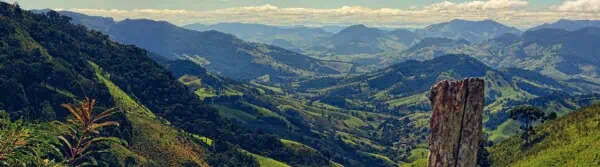
Vale, from Latin "vallis," names valleys and low areas in our landscapes. Its synonyms - like dell, hollow, and glen - bring to mind quiet, green spaces where nature thrives. Using "vale" and its vale synonyms can deepen our talks about the environment, helping us feel more connected to the earth's gentle folds and hidden nooks.
Quick Links: Vale Synonyms & Meaning
What Does "Vale" Mean?
"Vale" primarily means:
- A wide valley, often with a river running through it.
- (Poetic or literary) A farewell or goodbye.
- (Archaic) The world or earthly life, especially when viewed as a place of sorrow.
Cite this definition
"Vale." TRVST Positive Word Thesaurus, Synonyms, Meaning, Positive Usage. https://www.trvst.world/mind-body/positive-words/vale/. Accessed loading....
How Do You Pronounce "Vale"
/veɪl/
"Vale" sounds like "veil" or "vale". The "a" is long, like in "cake". The "e" at the end is silent.
Some people might say it like "val-ee", but that's not common. The one-syllable version is more widely used. In British English, it might sound a bit softer, almost like "vail".
What Part of Speech Does "Vale" Belong To?
- noun
"Vale" is primarily used as a noun. It's an old-fashioned or poetic word for a valley. There aren't common derivatives of "vale" in modern English usage. The word is often seen in literary contexts or place names.
Synonyms for "Vale"
Looking for fresh ways to say goodbye? Vale synonyms give you many options to express farewells. From cheerful to thoughtful, these words can add new flavor to your writing and speech. How might you use them in your daily life?
| Vale Synonyms | Definition | Example Usage |
|---|---|---|
| Valley(Noun) | A low area between hills or mountains | The valley bloomed with wildflowers, creating a colorful carpet that stretched as far as the eye could see. |
| Dell(Noun) | A small, secluded hollow or vale | Children's laughter echoed through the dell as they played hide-and-seek among the ancient oak trees. |
| Glen(Noun) | A narrow, secluded valley | The hidden glen revealed a pristine waterfall, its mist creating rainbows in the dappled sunlight. |
| Hollow(Noun) | A small valley or basin | Fireflies danced in the twilight, illuminating the peaceful hollow with their gentle, pulsing light. |
| Ravine(Noun) | A deep, narrow gorge | Hikers marveled at the lush vegetation clinging to the sides of the ravine, creating a vertical garden of biodiversity. |
| Gully(Noun) | A deep ditch or channel caused by water erosion | After the spring rains, the once-dry gully transformed into a vibrant ecosystem teeming with new life. |
| Combe(Noun) | A short valley or hollow on a hillside | The quaint village nestled in the combe, its thatched roofs peeking out from the embrace of rolling hills. |
| Dale(Noun) | An open valley in a hilly area | Sheep grazed contentedly in the verdant dale, their soft bleating carried on the gentle breeze. |
| Dingle(Noun) | A deep, shady dell or hollow | The dingle provided a cool refuge on hot summer days, its canopy of leaves creating a natural air conditioning. |
| Basin(Noun) | A wide, bowl-shaped valley | The fertile basin supported a thriving agricultural community, its fields a patchwork of golden wheat and emerald vegetables. |
Antonyms for "Vale"
Looking at Vale antonyms gives us a new way to understand this word. These opposite terms not only grow our word choices but also help us see both low and high points in nature and our lives. Plus, they tie into how we think about our environment and personal growth.
| Vale Antonyms | Definition | Example Usage |
|---|---|---|
| Mountain(Noun) | A large natural elevation of the Earth's surface | The hikers marveled at the majestic mountain towering before them, its snow-capped peak reaching towards the sky. |
| Peak(Noun) | The highest point or summit | As they reached the peak, the climbers felt a sense of accomplishment and awe at the breathtaking panorama surrounding them. |
| Highland(Noun) | An elevated or mountainous land | The Scottish highland stretched out before them, a rugged landscape of heather-covered hills and misty lochs. |
| Upland(Noun) | High or elevated ground | The farmer's sheep grazed contentedly on the lush grass of the upland pastures, far above the bustling village below. |
| Summit(Noun) | The highest point of a hill or mountain | Standing atop the summit, the adventurers felt as if they were on top of the world, with endless possibilities stretching out in every direction. |
Positive Connotations
Think of a cozy green valley with hills all around. Saying 'vale' has a nice, safe ring to it, doesn't it? It's as if nature has wrapped us up in a quiet, strong hug. When we picture a vale, it can make us feel more chilled out and happy.
If we let our minds roam to these calm places, we might just get up and find real spots like that to relax in. Valleys kind of show us that life's got its ups and downs. They help us get tough and ready for anything tough. Have you got a favorite chill place? Whether it's out there for real or just in your thoughts, think 'vale' and it might nudge you to take care of our earth and your own self, too.
Positive Usages Of The Word "Vale" - Example Sentences
- The peaceful vale offered a perfect spot for our mindfulness retreat.
- Walking through the lush vale, I felt my worries melt away with each step.
- In the quiet vale, we found strength to face our challenges head-on.
- The vale's natural beauty inspired us to become better stewards of the Earth.
- Our team bonding exercise in the vale helped build trust and resilience.
- The vale's serene atmosphere encouraged deep reflection and personal growth.
- Exploring the hidden vale reminded us of life's simple joys and wonders.
- In the heart of the vale, we discovered a renewed sense of purpose and connection.
- The vale's gentle streams and rustling leaves taught us the power of going with the flow.
- Our eco-friendly community project aims to preserve the vale for future generations.
The Origin Story of Vale (Etymology)
"Vale" traces its roots to Latin. It stems from the word "vallis" or "valles," meaning "valley."
The term entered English in the 14th century through Old French "val." Initially, it referred to a wide river valley or dale.
Over time, "vale" took on poetic and literary uses. It became associated with pastoral scenes and figurative expressions, like "vale of tears" to describe earthly life.
Interestingly, the word shares its origin with "valley," both descending from the same Latin root.
Fun Facts About Vale You Might Not Know
- Vale is often used in poetry to describe a peaceful, idyllic landscape.
- The term "vale of tears" refers to the sorrows of life on Earth in Christian tradition.
- Vales are important ecological habitats, supporting diverse plant and animal species.
- In geology, a vale is formed by glacial or river erosion over thousands of years.
- The Vale of Tempe in Greece was considered a favorite haunt of Apollo and the Muses.
- Many place names in England include "vale," such as the Vale of York and Vale of Clwyd.
- Vales often have rich, fertile soil, making them ideal for agriculture.
- The word "vale" appears in the titles of numerous books, films, and TV shows.
- In some contexts, "vale" can mean "farewell," as in the Latin phrase "vale et valete."
- Vales play a significant role in many mythologies and folklore traditions worldwide.
Terms Related to Vale
Vale In Different Languages: 20 Translations
| Language | Translation | Language | Translation |
|---|---|---|---|
| Spanish | Vale | French | Au revoir |
| German | Lebe wohl | Italian | Addio |
| Portuguese | Adeus | Russian | Прощай (Proshchay) |
| Chinese | 再见 (Zàijiàn) | Japanese | さようなら (Sayōnara) |
| Korean | 안녕 (Annyeong) | Arabic | وداعا (Wadaeaan) |
| Hindi | अलविदा (Alavida) | Turkish | Hoşça kal |
| Dutch | Vaarwel | Swedish | Farväl |
| Polish | Żegnaj | Greek | Αντίο (Antío) |
| Thai | ลาก่อน (La kon) | Vietnamese | Tạm biệt |
| Hebrew | להתראות (Lehitraot) | Finnish | Hyvästi |
Translation Notes:
- In Spanish, "Vale" is used as both a farewell and an agreement, showing its versatility.
- The Japanese "Sayōnara" implies a long-term or permanent goodbye, unlike casual farewells.
- The Hebrew "Lehitraot" literally means "to see each other again," expressing hope for future meetings.
- In many Asian languages, the concept of "goodbye" often includes wishes for peace or well-being.
- Some languages, like German's "Lebe wohl," directly translate to "live well," focusing on the well-being of the person leaving.
"Vale" Images and Visual Representations
Coming Soon
FAQS
Vales, as peaceful valleys, can inspire calm and reflection. Picturing a serene vale during meditation can boost relaxation and connection with nature. This mental image helps ground your thoughts and promotes a sense of peace.
Yes, vales play a crucial role in ecosystems. They often contain diverse plant and animal life. Vales also help with water management, reducing erosion and flooding. Protecting vales is key to maintaining biodiversity and environmental balance.
While both terms refer to low areas between hills, "vale" is often used more poetically. Vales typically describe smaller, more intimate spaces. Valleys can be any size, from small to vast. "Vale" often carries a sense of tranquility or beauty that "valley" might not always imply.
Living near a vale can positively impact well-being. The natural beauty and peaceful setting can reduce stress and improve mood. Access to green spaces like vales has been linked to better mental health. It can also encourage outdoor activities, boosting physical health.