
National Women And Girls HIV/AIDS Awareness Day Guide

National Women and Girls HIV/AIDS Awareness Day happens on March 10 every year. The Office on Women's Health created this observance almost 20 years ago. Why? Women and girls face different HIV challenges than men do.
This nationwide push raises awareness and cuts stigma. It also connects people to testing. Your part matters more than you might think. When you share content or wear that red ribbon, you're helping tear down barriers that keep women from getting care.
Key Info: National Women and Girls HIV/AIDS Awareness Day
- When is National Women and Girls HIV/AIDS Awareness Day?
Occurs annually on the 10th of March - This Year (2026):
Tuesday, March 10, 2026 (date has passed) - Official Website: Office on Women's Health
-
Future Dates
- Wednesday, March 10, 2027
- Friday, March 10, 2028
- Saturday, March 10, 2029
- Sunday, March 10, 2030
-
Additional Details
- Observed By: Federal agencies, state organizations, community groups, and advocacy organizations
- Where Is It Observed: United States
- Primary Theme: Health Equity And HIV Prevention For Women And Girls
- Hashtags: #NWGHAAD #WomenAndHIV #HIVAwareness #WomensHealth #HIVPrevention
Quick Links: National Women and Girls HIV/AIDS Awareness Day
Why This Awareness Day Matters
Women need their own focus day because their HIV story looks different. Geographic gaps hit hard. So do insurance problems and the kind of stigma that stacks up in layers.
Research shows that internalized stigma, perceived community stigma, and fear of disclosure create significant barriers to antiretroviral therapy adherence among women living with HIV. Rural areas get hit worse. Income inequality and enacted stigma directly connect to HIV suppression rates there.
But here's what gets me—we have tools that work. PrEP prevents HIV 99% of the time. The problem isn't medicine anymore. It's awareness.
Important Facts About the Observance
The Office on Women's Health runs this through the U.S. Department of Health and Human Services. Federal designation means everyone participates: agencies, state health departments, community groups, advocacy organizations.
The red ribbon is the official symbol connecting your local action to national recognition.
Community health centers and schools coordinate March programming using standard resources, but they adapt everything to local needs and barriers.
Timeline and Themes
National Women and Girls HIV/AIDS Awareness Day is first observed on March 10, creating a national focus on HIV prevention, testing, treatment, and care for women and girls
“The Best Defense is a Good Offense” emphasizes proactive HIV prevention and encourages women and girls to take action to protect their health
“HIV Prevention Starts with Me” puts personal responsibility and collective action at the center of HIV prevention, reinforcing that everyone has a role in ending the epidemic
“HIV Prevention Starts With Me: Ending the HIV Epidemic Together” expands the message from individual prevention to a shared national effort involving women, communities, healthcare professionals, and people living with HIV
“You. Me. WE. Changing the Face of HIV” emphasizes collective participation and the need to address inequities affecting women and girls, particularly women of color and transgender women
“Prevention and Testing at Every Age. Care and Treatment at Every Stage.” shifts attention toward HIV prevention and testing across the lifespan while emphasizing continuous access to care and treatment
“Hope, Health, and Healing: Overcoming Barriers to HIV/AIDS Treatment for Women and Girls” focuses on reducing barriers to treatment and improving access to care for women and girls living with HIV
“Prevention, Care, and Confidence: Supporting Women’s HIV Health” takes a whole-person, woman-centered approach, emphasizing prevention, routine testing, PrEP, quality care, education, and informed health decisions
How to Observe and Participate
Individual Actions
- Share educational content using #NWGHAAD on social platforms
- Wear the red ribbon through March
- Schedule HIV testing through local providers or community events
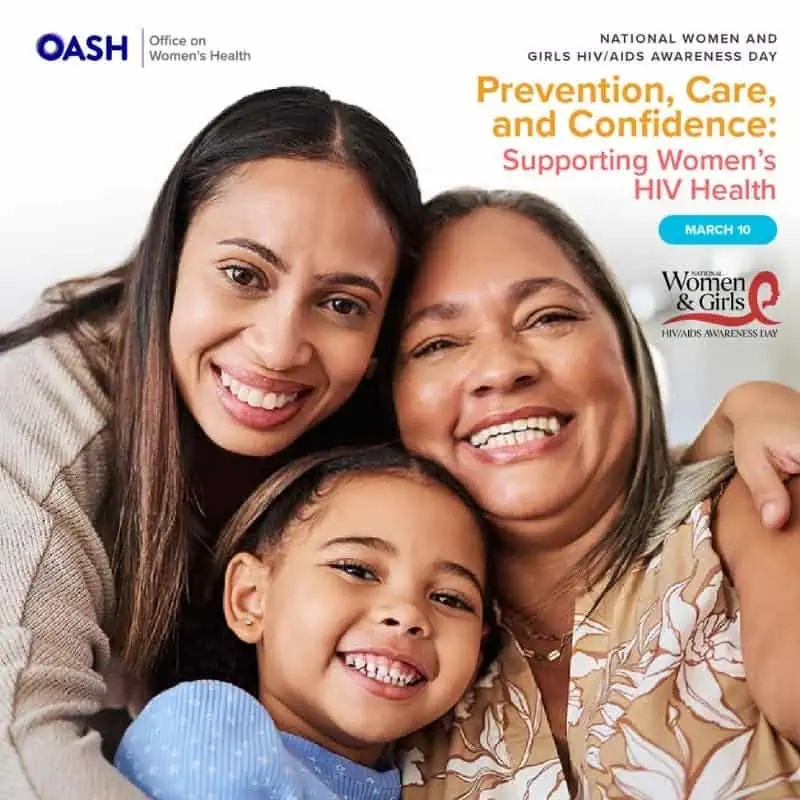
- Get educational and social media materials, like the image above, from womenshealth.gov/nwghaad.
Organizational Participation
- Host educational events on women-specific HIV prevention and treatment
- Set up on-site testing through healthcare partnerships
- Include awareness materials in workplace wellness programs
- Use conversation guides for workplace discussions
Community Engagement
- Partner with health departments on community campaigns
- Support advocacy groups through volunteer work or resources
- Start neighborhood conversations about stigma and healthcare access
Next Steps
March 10 anchors the observance, but awareness runs through March nationwide. Find community events to connect with local actions. Get campaign toolkits for workplace discussions or community presentations. Engage with #NWGHAAD social campaigns and wear that red ribbon consistently.
According to Dr. Robyn Neblett Fanfair, Director of CDC's Division of HIV Prevention, tackling "system problems and long-standing inequities" requires ongoing community work. Your participation matters. Supporting women and girls affected by HIV/AIDS demands year-round advocacy and action, not just one day in March.
Support other demographics that have HIV/AIDS by joining National HIV/AIDS and Aging Awareness Day and National Black HIV/AIDS Awareness Day.
Resources:
FAQs (Frequently Asked Questions)
Women face different HIV risks than men do. The impact hits harder in certain communities. Black women get infected at rates 10 times higher than white women, according to health officials. Beyond this, women deal with unique barriers - insurance gaps, partner violence, geographic isolation from care. About 23% of people with HIV are women, but their needs often get overlooked in general campaigns. This targeted approach makes practical sense. It connects women to prevention methods that actually work for their situations.
Since 2005, HIV diagnoses among women dropped 36% through 2019. That's real progress, though it varies widely. The awareness day helped establish testing protocols now standard in women's healthcare. Provider training expanded too - doctors now screen for partner violence alongside HIV testing. Community health centers see March testing spikes among women each year. But here's the reality check: Black women still make up 58% of new HIV cases among women despite being just 12% of the female population. The day's campaigns did normalize HIV conversations in communities where stigma once prevented women from seeking care.
Start with your county's HIV data through the state health department. Look for female diagnosis rates and late-stage detection numbers. High late-stage diagnoses among women? That points to awareness gaps. Contact local Planned Parenthood or community health centers - ask about March testing volumes versus other months. Rural areas with few OB-GYN services typically show greater need. Check what HIV education your local schools offer. Many still use outdated materials that don't address female-specific prevention. And if your area lacks women-led HIV groups or support services, that indicates clear unmet need requiring grassroots efforts.
Start online with womenshealth.gov resources you can share through social media. Groups like The Well Project offer virtual support and advocacy opportunities beyond geographic limits. Many rural areas partner with mobile testing units during March - your state health department has scheduling details. In conservative communities, lead with general health advocacy language rather than HIV-specific messaging initially. Partner with existing women's groups, libraries, or faith organizations to introduce broader health conversations. This approach maintains your safety while extending impact through online campaigns that reach beyond local limitations.
Young women ages 13-24 face the highest new infection rates, making them a key focus. This connects to delayed healthcare access and limited prevention education. Women over 50 represent another priority group - they're often diagnosed later because doctors don't always consider HIV in older patients. Recent data shows infection rates rising among women in their 30s and 40s, particularly in suburban areas where awareness campaigns traditionally focused elsewhere. The day addresses these age-specific patterns through targeted messaging. Each group needs different prevention strategies and faces distinct barriers to care.
Barbara is a former journalist who is passionate about translating important causes into engaging narratives. She combines communication expertise with an environmental science background to create accessible, fact-driven content.
