
National Patient Safety Awareness Week: Why It Matters

National Patient Safety Awareness Week transforms healthcare facilities across the globe every second week of March. The Institute for Healthcare Improvement launched this observance in 2002, though patient advocates drove the initial vision after experiencing preventable medical errors firsthand.
This week creates awareness among providers, patients, and families. Healthcare organizations use this time to recommit to safety protocols. The observance now spans hospitals, surgical centers, and international healthcare facilities worldwide.
Key Info: National Patient Safety Awareness Week
- When is National Patient Safety Awareness Week?
Occurs in the 2nd week of March - This Year (2026):
Sunday 8th - Saturday 14th March 2026 (date has passed) -
Future Dates
- Sunday 14th - Saturday 20th March 2027
- Sunday 12th - Saturday 18th March 2028
- Sunday 11th - Saturday 17th March 2029
- Sunday 10th - Saturday 16th March 2030
-
Additional Details
- Observed By: Healthcare organizations, hospitals, surgical facilities, and healthcare providers globally
- Where Is It Observed: International
- Primary Theme: Patient Safety Through Healthcare Collaboration
- Hashtags: #PatientSafetyWeek #PatientSafety #HealthcareSafety #SafeCare #IHI
Quick Links: National Patient Safety Awareness Week
Why National Patient Safety Awareness Week Matters
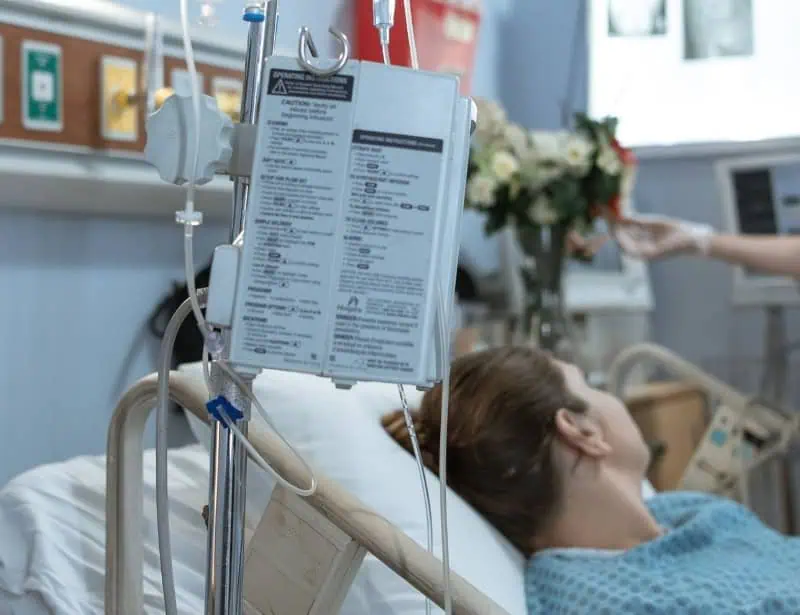
Preventable medical errors represent one of healthcare's most pressing global challenges. According to the World Health Organization's Global Patient Safety Report 2024, more than 1 in 20 patients experience preventable harm in medical care settings.
Here are some statistics in the United States compiled by the report:
- The indirect cost of patient harm approaches US$ 1 trillion annually
- Hospital-reported medical errors in children ranged from 1.81 to 2.96 per 100 discharges
- 5% of adults are affected by diagnostic errors
- One in 31 hospital patients and one in 43 nursing home residents have a health care-associated infection
What makes this week different from typical safety initiatives? Patient Safety Awareness Week serves as a powerful catalyst for culture change. Healthcare organizations use this dedicated time to audit current practices, then implement proven improvements.
Since 2002, participation has grown from a handful of hospitals to thousands of facilities worldwide. The week transforms passive awareness into active safety commitments that protect real patients every day.
As Leah Binder, President and CEO of The Leapfrog Group, emphasizes: "The patient safety problem is not impossible to solve. We know how to prevent these errors."
Key Participation and Effect Data
The observance demonstrates remarkable global reach with measurable safety improvements. Thousands of hospitals, surgical centers, and international healthcare facilities now participate annually across six continents; organizations using structured communication tools report significant results.
The Agency for Healthcare Research and Quality's Making Healthcare Safer IV series shows that the I-PASS communication framework achieved particularly strong outcomes. Researchers observed a 47% decline in adverse events following implementation across 32 diverse hospitals. Nearly half. That's the kind of number that gets administrators' attention and saves actual lives.
Here's an overview of the I-PASS methodology:
- I - Illness Severity
- P - Patient Summary
- A - Action List
- S - Situation Awareness & Contingency Planning
- S - Synthesis by Receiver
Timeline of Patient Safety Awareness Movement
Institute of Medicine begins systematic patient safety research—but progress remained slow
IOM publishes "To Err Is Human" report highlighting preventable deaths
IHI launches first Patient Safety Awareness Week
WHO launches World Alliance for Patient Safety
Partnership expansion with AHA and Center for Patient Safety
Virtual observance adaptations during pandemic
How to Observe National Patient Safety Awareness Week

Effective participation requires 4-6 weeks of advance preparation. How can your organization convert awareness into sustained improvement?
Healthcare Facilities
Start planning in January with safety audit reviews. Schedule facility-wide training sessions focusing on proven interventions like I-PASS communication protocols. Organize team collaboration exercises. Host patient safety rounds with leadership visibility.
Create measurement frameworks to track protocol adoption rates and communication effectiveness scores beyond the observance week.
Healthcare Providers
Practice structured communication tools like SBAR during team meetings. Engage in collaborative planning sessions with other disciplines.
Review patient interaction approaches. Identify communication enhancement opportunities.
Patients and Families
Prepare safety questions before appointments and engage actively in care decisions. Provide feedback on communication effectiveness.
Patient advisory councils often expand engagement during this week.
Track engagement metrics and post-week sustainability indicators that demonstrate lasting safety culture improvements.
Annual Themes and Focus Areas
The observance uses rotating themes to address evolving safety priorities. Themes typically rotate between medication safety, infection prevention, healthcare communication protocols, and team approaches.
Theme selection aligns with sponsoring organizations' research priorities and current healthcare challenges.
But organizations adapt themes to their specific safety improvement needs rather than following restrictive mandates. This flexible approach allows healthcare facilities to align activities with ongoing quality improvement initiatives. Some focus intensively on medication reconciliation while others emphasize surgical safety protocols.
This relates to using themes as organizational alignment frameworks that support sustained safety culture development.
Official Resources and Participation Support
The Institute for Healthcare Improvement coordinates primary observance activities following its 2017 merger with the National Patient Safety Foundation. The Center for Patient Safety and American Hospital Association provide specialized implementation support.
Official toolkits include planning templates, staff training materials, patient engagement guides, and promotional assets. Implementation guides provide step-by-step approaches for facilities of different sizes and specialties.
Healthcare organizations can access downloadable materials and measurement tools through official websites.
Most resources require minimal customization for immediate facility use. The materials emphasize practical application rather than theoretical concepts.
Conclusion
National Patient Safety Awareness Week offers healthcare organizations an actionable opportunity for key safety culture transformation. The path forward involves accessing official resources, planning comprehensive facility participation, and engaging entire care teams in sustained improvement efforts.
This observance succeeds when organizations convert week-long awareness into measurable ongoing safety improvements.
The tools exist. Implementation shapes the outcomes that protect patients every day beyond this single week.
Advocate for the same cause by also joining World Patient Safety Day on September 17 and National Healthcare Decisions Day on April 16.
Resources:
FAQs (Frequently Asked Questions)
Start planning in January for the March event. Run your baseline safety audits first. What are your current weak spots? Schedule training sessions by early February and order materials 2-3 weeks out. This relates to your existing quality programs - don't make it separate. The Center for Patient Safety data shows facilities starting 4-6 weeks ahead report better staff buy-in. When you rush the timeline, participation drops by 40%. Smart planning beats last-minute scrambling.
Track both immediate and long-term changes. During the week, measure training attendance and how many staff actually use new safety protocols. Beyond this, watch your incident reporting numbers - they should go up initially as people report more. Patient satisfaction scores around communication typically improve within 30 days. The American Hospital Association found organizations tracking metrics for 90 days post-week see lasting culture shifts. But here's the key insight - baseline measurements before the week determine if you're actually improving or just feeling good about participation.
The Center for Patient Safety provides free official toolkits each year. They partner with the Institute for Healthcare Improvement (IHI) on materials. Download everything directly from their site. The American Hospital Association offers additional resources that complement the official toolkit. EMS agencies get specialized community-focused materials through these same sources. Most organizations don't realize these resources include implementation guides, not just posters and flyers.
Pick 2-3 focused activities instead of trying everything. Implement SBAR communication with your whole team during the week. Create simple patient education displays about medication safety. Run brief daily huddles to discuss one safety improvement each day. Partner with larger networks to share resources - many offer free access during the week. Small practices often see bigger improvements than large systems because changes happen faster. Focus beats scope when resources are limited.
Make week activities permanent. Turn training sessions into monthly requirements with competency checks. Transform communication protocols into standard procedures. Run quarterly safety culture surveys - the data drives continued engagement. Create year-round patient feedback systems, not just week-long efforts. Recent research from IHI points to safety champions as the difference maker. They maintain momentum through regular follow-up and celebrate wins. Treat the week as a culture change catalyst, not an annual box to check.
Barbara is a former journalist who is passionate about translating important causes into engaging narratives. She combines communication expertise with an environmental science background to create accessible, fact-driven content.
