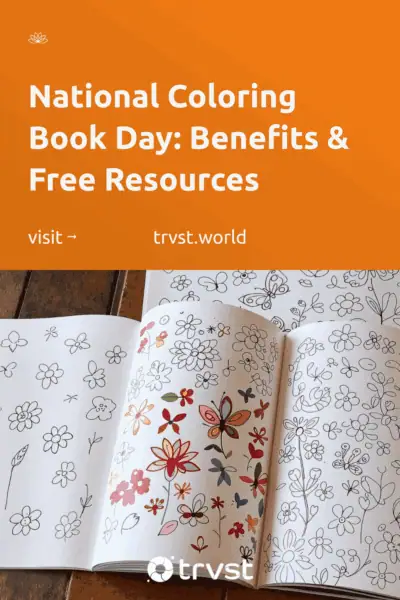
National Coloring Book Day: Benefits & Free Resources

National Coloring Book Day hits August 2nd every year. Dover Publications kicked off this celebration back in 2015. The day honors both kids' creative growth and—here's what surprised me—adult stress relief in ways that actually matter.
Coloring delivers universal calm without needing artistic talent. Anyone who grabs colored pencils and feels better immediately. This simple access makes the practice incredibly powerful for mental health support.
Dover Publications launched this special day because stress levels kept climbing across all age groups. The company spotted coloring's therapeutic potential as accessible art therapy.
Today, the celebration spans international communities; people connect through shared creative expression.
What transforms basic coloring into a measurable wellness practice?
Key Info: National Coloring Book Day
- When is National Coloring Book Day?
Occurs annually on the 2nd of August - This Year (2026):
Sunday, August 2, 2026 (date has passed) - Official Website: Coloring Book Day
-
Future Dates
- Monday, August 2, 2027
- Wednesday, August 2, 2028
- Thursday, August 2, 2029
- Friday, August 2, 2030
-
Additional Details
- Observed By: Art enthusiasts, children, adults seeking mindfulness activities, educators, and art therapists
- Where Is It Observed: United States
- Primary Theme: Creative Arts and Wellness
- Hashtags: #NationalColoringBookDay #ColoringBookDay #ColoringDay #ColorTherapy #ColoringForMindfulness
Quick Links: National Coloring Book Day
The Science Behind Coloring Therapy

Dover Publications established National Coloring Book Day, addressing a real societal problem. Stress levels were rising, requiring accessible solutions that didn't break the bank. Coloring emerged as a surprisingly effective therapy.
Neurological research reveals fascinating mechanisms behind the benefits. Erin Maynard, president of PTSD Survivors of America, explains, "coloring actually reduces the activity of the amygdala, so that's part of the reason that it helps calm you down."
University of Otago research involving 115 young women showed measurable improvements over seven days. Participants doing coloring exercises experienced significant reductions in depression and anxiety symptoms.
Puzzle exercises? No similar benefits occurred; this specificity points to coloring's unique therapeutic properties.
Emergency department studies confirm clinical applications across healthcare settings. Patients assigned coloring interventions showed 3.7-point decreases in anxiety scores compared to 0.3-point reductions in control groups—immediate and measurable therapeutic effects.
Curry and Kasser's foundational research shows that mandala coloring for twenty minutes produced greater anxiety reduction compared to free-form activities. Anxiety levels actually dropped below baseline measures.
Dover Publications Legacy and Growth
Dover Publications holds a unique market position as both founder and premier coloring book publisher. The company pioneered adult coloring books in 1970 with their "Antique Automobiles" edition—decades before mainstream popularity hit.
Their Creative Haven series launched in 2012, becoming the industry benchmark. Market data reveals explosive expansion during the mid-2010s; adult coloring book sales increased from one million copies in 2014 to twelve million in 2015.
Dover's bestselling mandala coloring book exemplifies this surge. Sales jumped from 9,600 copies during January-May 2014 to 46,200 copies in the same 2015 period. Nearly five-fold growth.
The official website coloringbookday.com serves as the central resource hub connecting communities worldwide. What began as US corporate initiative now spans international grassroots movements across all continents.
Timeline:
Dover Publications establishes National Coloring Book Day
First community library partnerships formed
Adult coloring therapy programs launch in wellness centers
Virtual coloring sessions surge during pandemic isolation
Educational institutions adopt therapeutic coloring curricula
Age-Specific Celebration Strategies

Different demographics benefit from targeted celebration approaches—each age group experiences distinct advantages from structured coloring activities.
Children (Ages 4+)
Creative development takes priority for younger participants. Organize color-by-number challenges building numerical recognition alongside artistic skills.
Set up collaborative murals where multiple children contribute sections. Activities like these develop fine motor skills essential for academic success.
Adults (Working Age)
Stress relief emphasis resonates most effectively with this demographic. Host workplace coloring breaks during lunch hours featuring mandala designs—research shows these patterns produce better anxiety reduction compared to free-form coloring.
Seniors (65+)
Cognitive benefits drive engagement for older participants. Select moderately complex designs that challenge without frustrating people.
Group sessions in community centers provide social interaction while supporting memory function and fine motor maintenance.
Families & Communities
Bonding activities work best when spanning multiple generations. Libraries host drop-in coloring hours with materials provided.
Schools integrate therapeutic coloring into student stress management programs; this approach builds connections through shared creative wellness.
Creating Year-Round Mindful Coloring Practice
National Coloring Book Day serves as a gateway to an ongoing wellness practice rather than a single-day celebration. Multiple market research studies indicate that the global adult coloring book market is projected to grow in the next decade.
This expansion reflects coloring's integration with broader mindfulness movements. Dr. Christianne Strang, president of the American Art Therapy Association, emphasizes coloring's role in creative reconnection: "What happens is people grow up and they think they're not creative, and so they cut themselves off from this really powerful way of expressing themselves."
In practice, habit formation strategies support long-term adoption. Keep coloring materials readily accessible in living spaces—set specific times for practice just like exercise schedules.
Track mood changes before and after sessions to reinforce positive associations.
Daily stress management becomes achievable when creative expression requires no special skills. This accessibility makes therapeutic coloring particularly valuable for sustained mental health support.
Official Resources and Community Connection
Coloringbookday.com offers comprehensive celebration resources, including downloadable pages and event planning guides. Social media engagement amplifies individual participation through shared experiences using official hashtags.
Recently, local community events have extended celebration benefits beyond solo practice; libraries often host special programming while wellness centers incorporate themed sessions into regular offerings.
Art therapy professionals note important distinctions about their specialized training. Coloring serves as an accessible entry point for creative wellness that anyone can adopt immediately.
Sustained engagement develops through ongoing community connections—sharing therapeutic benefits with others who understand the practice's value.
Celebrate causes similar to this day by saving National Live Creative Day and World Sauntering Day to your calendar.
Resources:
FAQs (Frequently Asked Questions)
Adult coloring books generate between $1.5-2.5 billion today, with steady growth expected through 2033. Data Insights Market values the industry at $1.5 billion with a 5% yearly growth rate. Verified Market Reports sees things differently, placing the 2024 value at $2.5 billion with a faster 8.5% growth rate. What makes these numbers so stable? The lasting appeal of coloring as a stress-relief activity keeps sales strong even as other hobby trends come and go. This effect on the market creates pract protect for retailers in an otherwise unpredictable hobby sector.
Schools now use color-based methods to boost memory retention, especially in mixed learning settings. A 2022 study in the Journal of Medical Education showed this works well for medical students taking humanities courses. Students remember more when they connect information with visual elements. Some critics think too much coloring takes time from core subjects. But the research points to clear benefits when teachers add these activities in the right places and amounts. Gen progress happens when visual learning supplements traditional methods.
National Coloring Book Day now spans both paper and screen formats. Today's celebration includes downloadable pages, online coloring groups, and hashtag challenges across social platforms. Many color-lovers use tablets and apps while still connecting with traditional materials. This suggests a hybrid approach works best for most participants. Since 2021, digital participation has grown while in-person events maintain their distinct appeal. The day shapes how people think about art accessibility.
Stores can join in by offering deals on coloring supplies, running in-store coloring sessions, or creating their own branded pages. Art shops often hold workshops that bring in new customers. Cafes and bookstores find success with coloring social events too. Beyond this, digital platforms can create special coloring content or add features to their apps. The best business approaches combine immediate sales with community building that generates long-term customer loyalty. Clear connect between brand values and creative expression matters most.
Hospitals run structured coloring therapy programs where nursing staff guide patients through art sessions right in the wards. A PMC-published study of 88 anxiety disorder patients found that healthcare teams get good results when they pair coloring with standard treatments. Does this help with multiple symptoms? The research shows improvements in anxiety, depression, and overall emotional health. These programs create quiet spaces where patients express themselves through art as part of their complete treatment plan. The simple act of coloring fits easily into existing hospital routines.
Barbara is a former journalist who is passionate about translating important causes into engaging narratives. She combines communication expertise with an environmental science background to create accessible, fact-driven content.