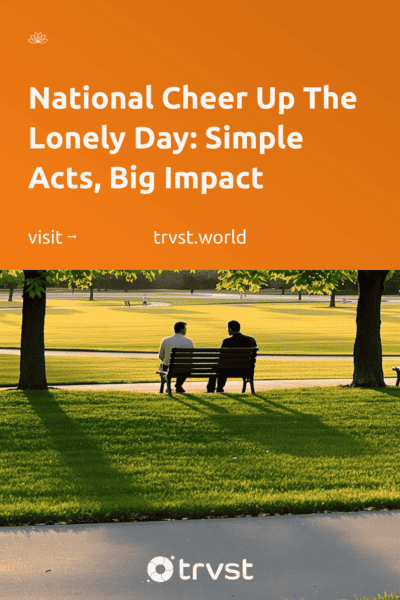
National Cheer Up The Lonely Day: Simple Acts, Big Impact

July 11 marks National Cheer Up The Lonely Day each year. People use this day to spot isolation and reach out with simple acts of kindness. This grassroots observance grew without big organizations or commercial backing. Its goal? Notice those suffering quietly around us.
Loneliness has become a serious health concern affecting millions worldwide. A recent global prevalence study reported that one in four (26%) are going through it[2].
Human connection builds the foundation for physical and emotional health across all age groups. Small gestures can—and often do—transform isolated lives.
Key Info: National Cheer Up The Lonely Day
- When is National Cheer Up The Lonely Day?
Occurs annually on the 11th of July - This Year (2026):
Saturday, July 11, 2026 (date has passed) -
Future Dates
- Sunday, July 11, 2027
- Tuesday, July 11, 2028
- Wednesday, July 11, 2029
- Thursday, July 11, 2030
-
Additional Details
- Observed By: Individuals, community groups, and organizations focused on social welfare and mental health support
- Where Is It Observed: International
- Primary Theme: Social Connection and Mental Wellbeing
- Hashtags: #CheerUpTheLonelyDay #EndLoneliness #ReachOut #SpreadKindness #MentalHealthAwareness
Quick Links: National Cheer Up The Lonely Day
The Story Behind the Day

Francis Pesek from Detroit saw neglect among vulnerable folks in his community. His daughter described him as "quiet, kind, wonderful" with real empathy for others. He established this day in 2001, choosing his own birthday—July 11—as a lasting gift of compassion.
Today's digital world creates a strange disconnect. We're more linked than ever, yet further apart. Studies connect social isolation with worse mental health across many different groups. The US Surgeon General recently called loneliness "an epidemic," hurting both personal and public health[1].
For someone feeling alone, even brief contact brings relief. This day reminds us that hidden suffering exists right next door.
The Hard Facts About Loneliness
Loneliness hurts physical health just as much as emotional well-being. Research shows some troubling patterns[1]:
- Heart disease and stroke risk jump 29% and 32% respectively, in chronically lonely people
- Death rates increase by 26% and 29% with ongoing loneliness and social isolation, respectively, equal to smoking 15 cigarettes daily
- Dementia, anxiety, and depression risk rise with isolation
- During pandemic conditions, social network size declined by 16%
Ways to Make Someone's Day Brighter
Quick solo actions create instant connections. Send a text telling someone why they matter to you. Make an unexpected phone call to a friend living alone. Mail an actual card—yes, with a stamp—mentioning specific memories you share. Include a photo from better times.
In-person visits offer deeper contact points. Bring homemade treats to elderly neighbors or help with their errands. Ask a withdrawn coworker to grab coffee. Take seasonal flowers to nursing home residents who rarely get visitors. Then listen—really listen—to their stories and insights.
Community efforts multiply your impact. Start neighborhood gatherings that welcome newcomers and solitary folks. Get volunteers together for assisted living visits with planned activities. Set up "friendship benches" in local parks that invite strangers to talk.
Virtual options work across any distance. Schedule video calls with far-away family who might feel cut off. Send digital gift cards for meal delivery to someone living alone. Create online groups based on shared interests. Technology should connect people, not replace them.
Approaching With Care

Loneliness carries unfair shame in our achievement-focused world. Many lonely people hide their feelings behind upbeat masks. Watch for friends who stop joining activities they once enjoyed or who keep declining invitations. These might signal growing isolation.
Start conversations with "I've been thinking about you" rather than assumptions about their situation. Don't use language that suggests weakness—instead, point out qualities you genuinely appreciate.
And remember—consistency matters more than grand gestures. Regular check-ins beat occasional big efforts. As social-connectedness expert Julianne Holt-Lunstad notes, "Needing others is viewed as a weakness rather than a conceptualization of interdependence—that we can rely on others and they can rely on us."
The Heart of This Day
Connection forms the base of human well-being across cultures. The day highlights universal needs through several key themes. Kindness transforms isolation into belonging through deliberate actions. Mental health awareness grows when communities see loneliness as real suffering, not a character flaw.
Social networks strengthen when relationship maintenance becomes priority work rather than an afterthought. These themes go beyond any single observance day. They point to ongoing human needs that deserve attention year-round.
Beyond a Single Day
One-time actions help temporarily. For lasting change, we need—no, we must create—regular approaches to connection with a community.
Since 2020, many communities have developed new models that blend online and in-person options. This suggests we're adapting to recognize isolation more effectively.
Businesses can develop ongoing volunteer projects focused on isolated groups. Individuals might set up weekly routines checking on elderly neighbors—being consistent beats being intense once in a while. Local organizations benefit from creating regular gatherings with low social barriers. The practical approach works better than sporadic outreach.
Lasting impact comes from forming habits, not just occasional awareness. This day works best as a starting point, not an endpoint.
Final Thoughts
National Cheer Up The Lonely Day offers a first step toward meaningful connection. Your small gestures create ripples extending beyond what you can see right away. Begin today with just one act of reaching out; tomorrow, make it a regular practice.
But the difference you make matters more than you realize. Simple kindness changes lives. Your effort counts—it really, really counts.
Resources:
FAQs (Frequently Asked Questions)
Start with clear boundaries and solid policies. Keep these points in mind: Create group activities rather than one-on-one outreach. Stick to regular communication channels you already use. Show you care but maintain professional distance—this matters. Write down what you're doing through proper channels. When working with vulnerable people, what rules does your organization have? Follow them.
Watch for sudden changes. When someone pulls away from things they normally do, that's your first clue. Listen for hopeless talk. Sleep and eating patterns that shift dramatically point to deeper issues. They stop enjoying their favorite activities. And most serious—any talk about self-harm. What should you do when you notice these signs? Keep a supportive connection while helping them find a mental health professional.
Culture shapes how people feel alone. The BBC Loneliness Experiment found higher loneliness rates in places where individual achievement matters most, especially among younger men. This suggests something interesting about our social structures. People from family-centered cultures often feel lonely when separated from their communities. Support needs to match the context. In Western settings, focus on personal growth and fulfillment. For community-based cultures, strengthen family and group connections instead.
The Gerontologist published findings that regular video calls make a real difference for older adults. Their mental outlook improves. Since 2019, tracking these connections shows concrete emotional health gains. This suggests that simple National Cheer Up The Lonely Day activities work when done consistently. Beyond this, look for small behavior changes—more social engagement, better sleep patterns, and improved self-care routines. These practical protective measures provide clear evidence of progress.
Sources & References
- [1]
- Office of the Surgeon General. (2023). Our Epidemic of Loneliness and Isolation. U.S. Department of Health and Human Services.
↩ - [2]
- Sri Susanty, et al., (2024). Overview of the prevalence of loneliness and associated risk factors among older adults across six continents: A meta-analysis. Archives of Gerontology and Geriatrics, 128, 105627–105627.
↩
Barbara is a former journalist who is passionate about translating important causes into engaging narratives. She combines communication expertise with an environmental science background to create accessible, fact-driven content.