
International Universal Health Coverage Day: Why It Matters

December 12 marks International Universal Health Coverage Day. The UN set up this observance in 2017. But here's what makes this date remarkable — every UN member state unanimously endorsed universal health coverage as a global priority back in 2012.
Universal health coverage means access to quality health services. No financial hardship. This covers prevention, treatment, rehabilitation, and palliative care throughout life; the World Health Organization coordinates this mission.
Right now, 4.5 billion people lack adequate health services. Another 2 billion face financial hardship from healthcare costs. This crisis affects families across every continent.
And International Universal Health Coverage Day? It transforms awareness into advocacy for the billions still waiting.
Key Info: International Universal Health Coverage Day
- When is International Universal Health Coverage Day?
Occurs annually on the 12th of December - This Year (2026):
Saturday, December 12, 2026 - Official Website: Universal Health Coverage Day
-
Future Dates
- Sunday, December 12, 2027
- Tuesday, December 12, 2028
- Wednesday, December 12, 2029
-
Additional Details
- Observed By: UN member states, international health organizations, civil society groups, healthcare advocacy organizations, and government health ministries globally
- Where Is It Observed: International
- Primary Theme: Universal Health Coverage and Health for All
- Hashtags: #UniversalHealthCoverage #UHCDay #HealthForAll #UHC2030 #WHO #GlobalHealth #HealthcareAccess
Quick Links: International Universal Health Coverage Day
Why This Day Demands Global Attention

Healthcare remains a luxury for more than half our global population. The human cost is staggering. Around 1.3 billion people fall into poverty because of health costs. Another 344 million sink into extreme poverty.
Financial protection crumbles under medical bills. Between 2000 and 2019, catastrophic out-of-pocket health spending jumped from 9.6 percent to 13.5 percent globally.
Over 1 billion people now sacrifice more than 10 percent of household income for direct health payments.
COVID-19 shattered health services in 92% of countries during 2021. These disruptions hit vulnerable populations hardest. People whose healthcare access was already limited faced complete service collapse.
Should medical care bankrupt families? International Universal Health Coverage Day channels global outrage toward policy changes that protect both health and financial survival.
Important Facts About the Coverage Crisis
Progress toward universal health coverage has basically stopped. The UHC Service Coverage Index crawled from 45 to 68 between 2000 and 2021. Growth slowed to just 3 points between 2015 and 2021.
No improvement since 2019.
WHO analysis reveals troubling patterns in government health spending[1]. Average per capita government spending on health dropped in 2022 following pandemic increases. Out-of-pocket spending dominates health financing in 30 low- and lower middle-income countries — patients pay more than half of total health costs in 20 countries.
This suggests future constraints ahead. World Bank data indicates government and donor health spending will decline in around 80 percent of low-income countries by 2030.
Development assistance cuts would erase any growth in government spending.
These statistics represent real families choosing between medicine and meals.
Timeline
UN General Assembly unanimous resolution establishing UHC principles
Official proclamation of International Universal Health Coverage Day
First coordinated global campaign launch
"Health: It's on the government!" theme emphasizing state responsibility
Take Action on Universal Health Coverage Day
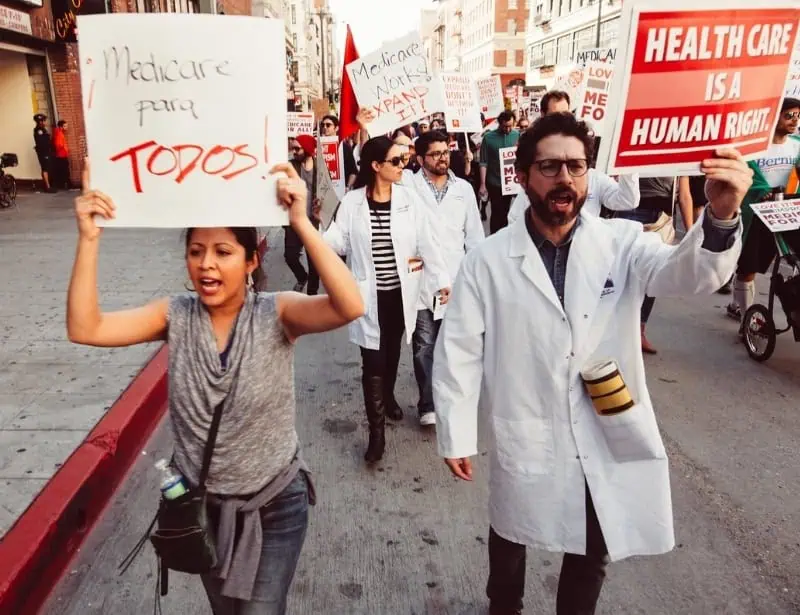
Participation creates real political pressure. The 2024 campaign theme "Health: It's on the Government!" sparked health system announcements from 30 countries — double the previous year's response.
WHO Director-General Tedros Adhanom Ghebreyesus captured the paradox: "While access to health services has been improving globally, using those services is driving more and more people into financial hardship or poverty."
Direct advocacy actions:
- Engage with WHO campaigns through universalhealthcoverageday.org for official toolkits and resources
- Amplify social media pressure using #HealthForAll and #UHCDay hashtags with local healthcare statistics
- Connect with organizations like UHC2030 alliance for partnership opportunities
- Pressure elected representatives with specific universal health coverage policy recommendations
- Share personal healthcare stories that expose access barriers in your community
- Organize local accountability events featuring healthcare professionals and policy experts
- Support advocacy organizations working on health equity through donations or volunteer time
Each action contributes to sustained political pressure on governments. In practice, countries respond when citizens demand healthcare accountability from their leaders.
The evidence shows advocacy works. Government announcements cluster around December 12 when global attention peaks.
Campaign Themes That Drive Change
Yearly themes concentrate global advocacy power. WHO coordinates these messages through the UHC2030 alliance — this ensures consistent communication across countries and organizations.
Official resources distribute through universalhealthcoverageday.org, reaching healthcare advocates worldwide.
Recent themes demonstrate evolution toward direct accountability. Early campaigns emphasized awareness about universal health coverage principles. But current themes? They challenge government responsibility for healthcare access head-on.
Campaign coordination produces real political outcomes. Government announcements, policy commitments, and funding pledges cluster around December 12 each year. This pattern shows coordinated advocacy creates pressure that generates actual responses.
Beyond this, the most effective campaigns connect global themes with local healthcare battles. Communities adapt universal messages to address specific regional barriers. This approach creates both local relevance and international solidarity.
Beyond December 12th — Sustained Impact
Single-day awareness transforms into year-round advocacy momentum through smart follow-up. Policy monitoring opportunities emerge as governments make December commitments requiring accountability throughout the following year.
The United Nations High-Level Meeting commitments from 2019 and 2023 created specific benchmarks for tracking progress.
Sustained pressure maintains UHC movement momentum between annual observances. Healthcare access goals demand relentless attention beyond symbolic dates. This ongoing engagement creates the political environment necessary for policy breakthroughs.
Actually, advocacy continuity depends on clear next steps extending well beyond the December 12th observance.
If you have more medical advocacies, check out these dates: World Contraception Day and World Health Day.
Resources:
FAQs (Frequently Asked Questions)
The WHO campaign page has downloadable materials ready to go. Beyond this, universalhealthcoverageday.org works as the main resource hub. You'll find advocacy toolkits, social media frames, and materials you can customize. Most organizations grab what they need from these 2 spots.
Strong campaigns connect real patient stories with clear policy asks. Data points to 3 key factors: timing advocacy around December 12 creates momentum, partnering with local health groups amplifies reach, and using WHO's research gives credibility. The most effective efforts focus on specific, measurable policy goals rather than broad awareness. Success often shapes future healthcare funding decisions at both local and national levels.
Most hospitals start with staff education sessions featuring current UHC statistics. Patient story events generate real engagement. Many coordinate with local advocacy groups for community forums. Since 2019, social media campaigns by staff have become standard practice. Internal displays in patient areas work well too. Some organizations use December 12 to review their own accessibility policies - practical and timely.
The EU-WHO partnership stands out with their EUR 40 million commitment through 2028. This funding reaches over 115 countries for health system strengthening. The UN's 2025 campaign centers on unaffordable health costs globally. This points to widespread commitment from member nations. Recent data shows European countries lead in concrete financial pledges, while developing nations focus more on policy framework commitments.
UHC2030 runs the coordination through their multi-stakeholder group. This brings together Member States, organizations, civil society, private sector, and academia. After the UN General Assembly designated December 12 in 2017, structured partnerships formed quickly. The coordination framework connects diverse stakeholders around shared health goals. Today, this approach transforms December 12 into a genuine global rallying point for UHC advancement worldwide.
Sources & References
- [1]
- WHO Global Health Expenditure Report 2024
↩
Barbara is a former journalist who is passionate about translating important causes into engaging narratives. She combines communication expertise with an environmental science background to create accessible, fact-driven content.
