Interview: Okan Ürker, Conservation Ecologist & Social Environmentalist
COP31 President Murat Kurum (Türkiye's Minister of Environment, Urbanization and Climate Change) and Australian Climate Minister Chris Bowen have structured the summit around an "Action Agenda" and negotiation priorities aimed at closing the gap between climate pledges and real-world execution. Wildfires are a central driver behind discussions on climate adaptation, public health, forest conservation, and carbon market integrity. Hosted in a Mediterranean region acutely affected by recent blazes, the summit treats wildfires both as an urgent symptom of a "super-El Niño" warming year and as a direct threat to global emissions targets.
Key Wildfire Priorities at COP31
While wildfires are not the single headline theme of the presidency, they directly intersect with several discussions at the summit:
- Backdrop of Extreme Weather. COP31 opened immediately following a year of severe climate disasters, including devastating forest fires in Canada, Indonesia, and Brazil that impacted millions of people, adding urgency to calls for faster emissions cuts and adaptation funding.
- Super Pollutants and Air Quality. Reducing black carbon and air pollution from forest fires and agricultural burning is part of side-event and national planning discussions, such as Cambodia's integration of fire prevention and El Niño preparedness into its updated national climate plan.
- Conservation Funding and Forest Protection. Implementing existing 2030 targets to halt and reverse forest destruction remains a core expectation of the summit. At the same time, ongoing forest fires—such as the burning of over 200,000 hectares in Indonesia earlier in 2026—have complicated some nations' bids for international forest conservation funding.
- Climate Vulnerability and Loss and Damage. Intensifying wildfires and prolonged droughts are central to debates over how to allocate limited adaptation finance and how the U.N. Fund for Responding to Loss and Damage can better support countries hit by escalating climate shocks.
Key Research Areas
His scientific publications and advocacy focus on several environmental topics:
- Anatolian Sweetgum Forests. He extensively studies the endangered Oriental sweetgum (Liquidambar orientalis) ecosystems in southwestern Turkey, examining their biodiversity, wildlife integrity, and plantation areas.
- Fire Ecology & Management. He researches how extreme heat, wind, low humidity, and human infrastructure impact forest fire risks.
- Wildlife & Biodiversity. His work includes assessing forest bat (Chiroptera) activity, herpetofauna, bird species, and wetland habitats.
- Environmental Ethics & Policy. He writes and teaches on conservation philosophy, bioethics, and combating biopiracy.
1. Tell us about your educational and professional journey to become an ecologist.
My journey into ecology began with curiosity about life itself. Even before entering university, I was fascinated by the relationships between living organisms, their environments, and the remarkable processes that sustain life on Earth. I eventually realized that ecology offered something particularly meaningful to me: a scientific discipline through which I could explore life from a remarkably broad perspective, connecting biological processes with the larger systems that shape our planet.
Interestingly, one of the defining moments in my career occurred before I had even started my undergraduate education. I remember reading a full-page article in a national newspaper about a sea turtle research and conservation project conducted by a dedicated team from the Department of Biology at Hacettepe University. That article had a profound influence on my decision to study biology there.
I enrolled in Hacettepe University's Biology Department in 2001 and graduated in 2006. During my undergraduate years, I discovered that ecology was not simply about studying individual species. It was about understanding relationships, interactions, change, adaptation, and the interconnectedness of life.
With the encouragement of academics at Hacettepe University, my research interests gradually shifted toward fire ecology. My master's research, completed in 2009, examined how different post-fire forest regeneration practices influenced plant communities in the Mediterranean landscapes of Marmaris.
This experience fundamentally changed the way I understood forest fires. I began to recognize that fire was not necessarily an ecological catastrophe in itself. In many ecosystems, it is a natural disturbance that has helped shape biodiversity, vegetation dynamics, and evolutionary adaptations over thousands of years. The real challenge lies in understanding when and why fire becomes destructive, particularly under increasing human pressure and climate change.
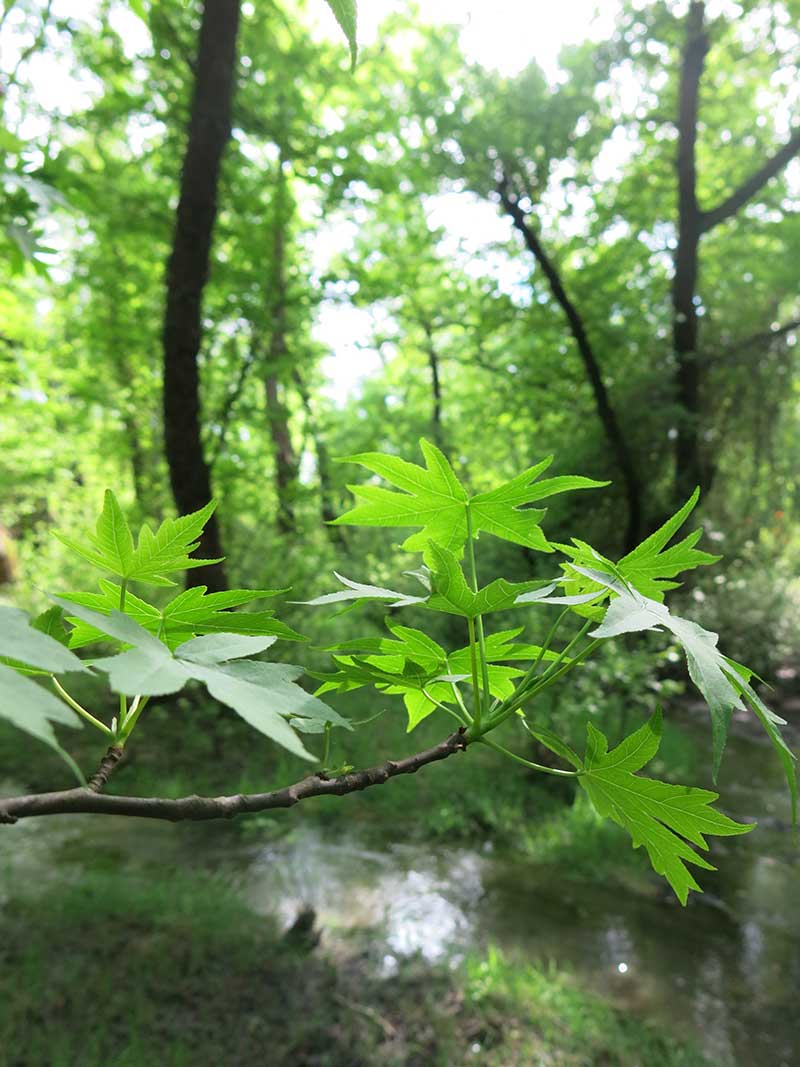
My academic journey subsequently expanded beyond conventional ecological research. I completed my PhD in Social Environmental Sciences at Ankara University in 2014, focusing on environmental ethics and the conservation of Anatolian sweetgum forests (Liquidambar orientalis). This interdisciplinary experience helped me recognize that ecological problems cannot be adequately understood without considering human behavior, cultural values, economic interests, and the ethical dimensions of conservation.
Alongside my academic development, I worked with environmental consultancies, private-sector organizations, and nature conservation NGOs. These experiences allowed me to encounter environmental challenges beyond university laboratories and academic publications, including biodiversity conservation, environmental impact assessment, protected areas, and community-based conservation.
My involvement with the NATURA Nature and Culture Conservation Association became particularly important (which I founded this NGO with my colleagues in 2015). Through NATURA, I have worked to connect scientific research with practical conservation, local livelihoods, traditional ecological knowledge, and environmental advocacy.
Another important stage was my research experience in wildlife ecology, including studies of bats and their habitat use, which further strengthened my understanding of biodiversity and ecosystem functioning.
I subsequently joined Çankırı Karatekin University in 2019, where my academic responsibilities expanded into teaching, supervising research, and developing interdisciplinary conservation projects.
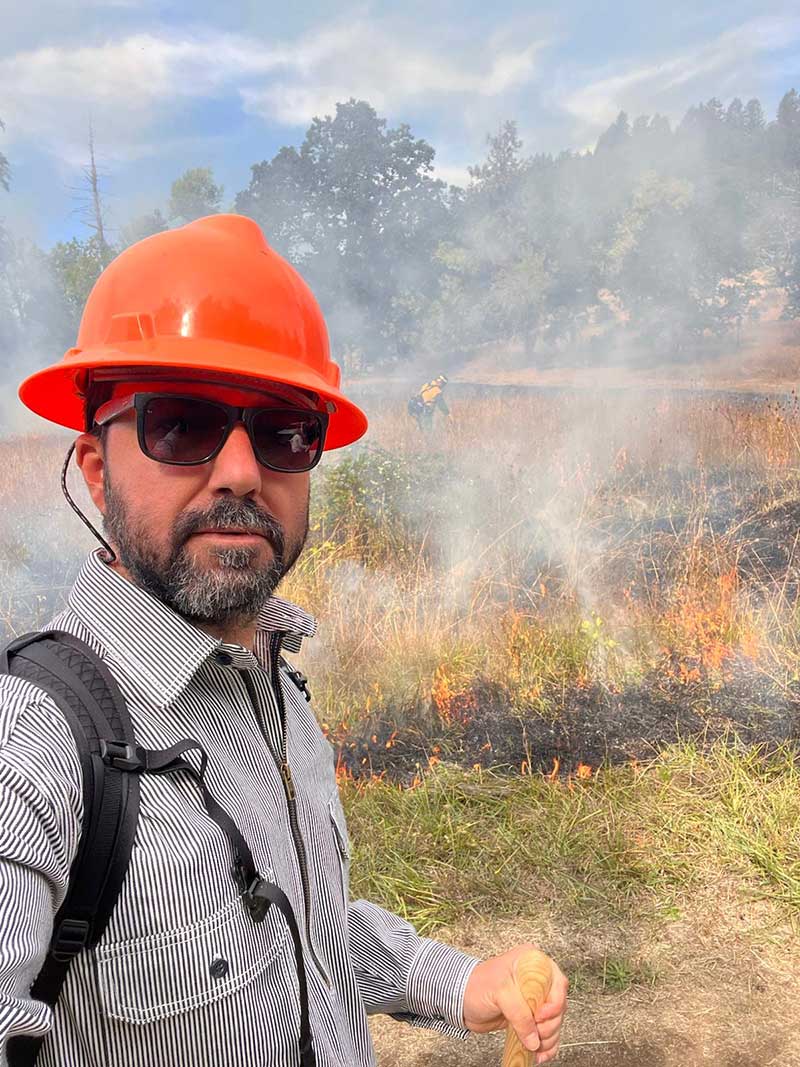
In 2024, I undertook postdoctoral research at Oregon State University's College of Forestry, particularly within the Department of Forest Ecosystems and Society. My principal motivation was to examine wildfire management from a broader international perspective, comparing experiences from Türkiye's Mediterranean landscapes with those of the Pacific Northwest of the United States.
The Pacific Northwest offered an exceptional opportunity to explore how fire ecology, environmental ethics, climate change, forest governance, and social perceptions of wildfire intersect. It also helped me deepen my interest in integrated, or holistic, fire management.
Today, my work focuses increasingly on an essential question: How can humanity learn to coexist with fire rather than attempting to eliminate it entirely?
Through international scientific collaboration, post-fire restoration projects, wildlife research, and engagement with local communities, I am trying to demonstrate that living with fire is not only possible but increasingly necessary in a changing climate.
2. Did you have any role models in guiding your career choice?
I would not say that my career was shaped by one particular role model. Instead, it developed through a continuous process of reading, researching, questioning, and discovering new possibilities.
At different stages of my life, I deliberately tried to create opportunities rather than simply wait for them to appear. Whenever several possible paths emerged, I generally chose the one that offered the greatest opportunity for intellectual growth, meaningful experience, and personal development at that particular moment.
The sea turtle conservation project I encountered in the newspaper before entering Hacettepe University was certainly an important initial inspiration. However, it was the scientific environment of the university, the guidance of dedicated academics, and my growing curiosity about ecology that gradually shaped my career.
Throughout this journey, I have been fortunate to meet many remarkable scientists, conservation practitioners, and people working closely with nature. Each contributed something different to my understanding of the world.
Nevertheless, I have never regarded an academic career as a predetermined road toward a particular title or position.
For me, becoming a scientist has always meant learning how to ask better questions, challenging my existing assumptions, and remaining open to unexpected discoveries.
This philosophy also explains why my work has moved across several interconnected fields, from plant ecology and wildfire research to environmental ethics, wildlife conservation, and social-ecological resilience.
My experience in the United States was another example of this approach. I did not go to Oregon simply to strengthen my academic résumé. I wanted to encounter different scientific traditions, reconsider some of my assumptions about wildfire management, and understand how other societies respond to similar ecological challenges.
I believe that our professional identities are shaped not only by the people we admire but also by the questions we choose to pursue and the opportunities we are willing to create.
In that sense, curiosity has probably been my most consistent role model.
3. Tell us about Çankırı Province in north-central Türkiye, its archaeological and historical heritage, and the Çankırı Archaeological Museum.
Although archaeology is not my primary field of expertise, I find Çankırı fascinating precisely because its landscapes contain extraordinary records of both natural and human history.
Located in north-central Anatolia, Çankırı occupies a geographical transition zone influenced by different climatic, geological, and ecological conditions. Such transitional landscapes are particularly interesting to ecologists because they often reveal how environmental conditions have changed over time.
Historically, the region formed part of ancient Paphlagonia, and the city was known as Gangra. Its cultural heritage reflects numerous periods of settlement and transformation, from prehistoric communities and Bronze Age civilizations to the Hellenistic, Roman, Byzantine, Seljuk, and Ottoman periods.
The Çankırı Museum offers an excellent introduction to this layered history. What makes the museum particularly interesting to me is that it brings together natural history, archaeology, and ethnography.
Visitors can explore fossil remains of prehistoric animals, archaeological artifacts from different civilizations, and cultural objects illustrating the region's more recent history.
From an ecological perspective, this creates an opportunity to understand that landscapes are never static. The region we see today is the result of millions of years of geological processes, climatic fluctuations, ecological transformations, and human activities.
I believe Çankırı has considerable potential for integrating natural history, cultural heritage, and environmental education.
Understanding a landscape's past can help us appreciate its present biodiversity and make more informed decisions about its future.
4. Tell us about the Çorakyerler fossil locality and its Late Miocene discoveries, including saber-toothed cats and ancient relatives of giraffes, horses, and elephants.
Çorakyerler is one of the most remarkable natural history sites in central Anatolia. Located close to Çankırı's city center, it contains fossil evidence dating back approximately 8–9 million years, to the Late Miocene.
The site has yielded an extraordinarily diverse assemblage of fossil mammals, including ancient horses, giraffids, rhinoceroses, elephant relatives, and large carnivores.
Among the most spectacular discoveries are remains of a saber-toothed cat identified as closely resembling Machairodus aphanistus, including exceptionally well-preserved cranial material.
However, as an ecologist, what interests me most is not simply the discovery of individual extinct animals but what their remains reveal about the ecosystems in which they lived.
Imagine a landscape in central Anatolia millions of years ago, supporting large herbivores, formidable predators, wooded habitats, watercourses, and more open vegetation.
The fossil assemblage suggests a complex environmental mosaic, potentially including substantial woodland and relatively well-watered habitats alongside open areas. This differs considerably from the landscapes we associate with much of central Anatolia today.
The presence of predators and numerous large herbivores also provides clues about ancient food webs, ecological interactions, and habitat productivity.
Çorakyerler has additionally attracted international scientific attention through the discovery of fossil ape remains, including material described as Anadoluvius turkae. These discoveries have contributed to scientific debates about the evolutionary history and geographic distribution of ancient apes, although broader interpretations remain under discussion.
To me, Çorakyerler represents something much more profound than a collection of fossils.
It reminds us that biodiversity, ecosystems, and even the geographical distribution of species are constantly changing over evolutionary time.
Understanding these transformations provides an invaluable perspective on the environmental changes occurring today, particularly those accelerated by human activities and climate change.
5. Tell us about İnandıktepe, its significance, how it was destroyed, and the nearby UNESCO World Heritage Site of Hattusha.
İnandıktepe is an important archaeological site associated with the Old Hittite period, located in Çankırı Province.
It is particularly famous for the discovery of the İnandık Vase, a remarkable ceremonial vessel dating to approximately the 17th–16th centuries BCE.
The vase is decorated with elaborate relief scenes depicting people, musicians, animals, and ceremonial activities. These scenes provide valuable insights into the religious practices, social organization, and cultural traditions of the Hittites.
The vessel is generally interpreted in connection with religious ceremonies, including a possible sacred marriage ritual, and is now exhibited at the Museum of Anatolian Civilizations in Ankara.
Excavations at İnandıktepe also revealed evidence that an important Hittite religious building was destroyed by fire and subsequently abandoned. However, the precise cause of that ancient fire cannot be established simply from the existence of burnt archaeological remains.
As a fire ecologist, I find this distinction particularly meaningful. Fire has accompanied human civilization for millennia, but not every ancient fire should be interpreted through the framework of modern landscape wildfires.
Nearby Hattusha, located in present-day Çorum Province, offers another extraordinary perspective on Anatolian civilization.
As the capital of the Hittite Empire, Hattusha was one of the major political, religious, and cultural centers of the ancient Near East. Its impressive fortifications, temples, monumental gates, and the Yazılıkaya rock sanctuary illustrate the sophistication of Hittite society.
The site was inscribed on the UNESCO World Heritage List in 1986.
I also find the connection you draw between the Epic of Gilgamesh, ancient symbolism, and modern Earth sciences particularly thought-provoking.
Fragments and versions of the Gilgamesh tradition were indeed discovered at Hattusha, demonstrating how stories and ideas circulated across ancient civilizations.
The Tree of Life and the Bull of Heaven can be interpreted as powerful cultural expressions of humanity's relationship with nature, its forces, and the unknown.
Of course, mythology and modern scientific explanations of plate tectonics belong to different forms of knowledge. Nevertheless, artistic interpretations can create meaningful bridges between them by showing how humans have always tried to understand the Earth.
From my perspective, such connections also remind us that environmental awareness has deep cultural roots.
Long before modern ecology emerged as a scientific discipline, human societies were already expressing their observations, fears, dependencies, and responsibilities toward nature through stories, rituals, and symbolic representations.
6. Tell us about Çankırı Castle (Gangra), its historical significance, and whether it is on the UNESCO World Heritage List.
Çankırı Castle is another remarkable landmark reflecting the region's layered history.
Situated on a prominent hill overlooking the city, the fortress occupies an ancient settlement and defensive location associated with historic Gangra.
The surrounding area reflects successive phases of occupation and transformation, including Paphlagonian and Hellenistic traditions, Roman and Byzantine influences, and later Turkish-Islamic periods.
Although much of the original fortress has disappeared, surviving sections of medieval walls and other archaeological features provide valuable evidence of its historical importance.
The castle area also contains Roman-period rock-cut tombs and the tomb of Karatekin, an important figure associated with the Turkish conquest of Çankırı.
Çankırı Castle is not currently inscribed on the UNESCO World Heritage List. Nevertheless, its historical and cultural significance should not be underestimated.
As an ecologist, I believe heritage conservation should extend beyond the protection of individual monuments.
Historical structures are embedded within landscapes that have been shaped by centuries of interactions among geology, vegetation, water resources, settlement patterns, and human activities.
Protecting these landscapes together with their archaeological remains can help preserve a much richer understanding of the relationship between people and their environment.
7. Tell us how Türkiye was affected by wildfires during the summer and early autumn of 2026.
The 2026 wildfire season once again demonstrated the increasing vulnerability of Mediterranean landscapes to extreme fire weather conditions.
Across the Mediterranean region, combinations of high temperatures, prolonged dry periods, low relative humidity, and strong winds created conditions in which wildfires could spread rapidly and become difficult to control.
Türkiye experienced significant wildfire activity in different regions, including parts of its Mediterranean and Aegean landscapes.
According to the European Forest Fire Information System (EFFIS), approximately 63,500 hectares had burned across Türkiye by early November 2026. Türkiye's General Directorate of Forestry, meanwhile, reported approximately 24,500 hectares of affected forest land in its 2026 assessment.
These figures measure different categories of burned land and should not be interpreted as directly equivalent.
Although the officially reported forest area burned in 2026 was substantially lower than in 2025, this does not diminish the ecological, social, and economic consequences of individual fires.
For communities directly affected by wildfire, statistics cannot fully capture the loss of homes, livelihoods, agricultural production, cultural landscapes, wildlife habitats, or the psychological consequences of evacuation and uncertainty.
From my scientific perspective, we need to distinguish between the occurrence of fire as a natural ecological process and the increasingly dangerous circumstances under which fires develop.
Climate change is intensifying fire weather in many regions by increasing heat and atmospheric dryness and, in some circumstances, prolonging the periods during which vegetation is sufficiently dry to burn.
However, climate change alone does not explain wildfire disasters.
Land-use change, the expansion of settlements into fire-prone landscapes, the abandonment of traditional rural activities, changes in vegetation and fuel continuity, and inadequate consideration of ecological processes in land management can all influence wildfire risk.
This is precisely why I advocate integrated or holistic fire management.
For decades, wildfire policy in many countries has been dominated by an understandable emphasis on suppression capacity: more aircraft, more equipment, and faster emergency response.
These capabilities remain essential, especially for protecting human lives.
However, we cannot build long-term resilience through suppression alone.
We must invest equally in landscape-scale fuel management, community preparedness, strategic land-use planning, ecosystem-based restoration, and stronger relationships between scientists, forest managers, and local communities.
Our research and field projects in southwestern Türkiye, particularly in landscapes affected by the catastrophic 2021 megafires, have repeatedly reinforced this conclusion.
A burned forest is not necessarily an ecologically dead forest. Many Mediterranean ecosystems possess remarkable regenerative capacities, and management decisions after fire can be as important as those made before it.
We should therefore move beyond measuring success exclusively by how quickly a fire is extinguished or how many hectares are planted afterward.
The more important question is whether our landscapes, ecosystems, and communities are becoming more resilient to the fires of the future.
8. Tell us about the air pollution impacts of wildfires and the events you have prepared for COP31.
Wildfire smoke represents one of the most serious, yet frequently underestimated, public health dimensions of the global wildfire problem.
When vegetation and other materials burn, they release a complex mixture of gases and airborne particles, including fine particulate matter known as PM2.5, carbon monoxide, and various organic compounds. Wildfire emissions also contribute to atmospheric chemistry and climate-related processes, including through black carbon and other pollutants.
Fine particles are particularly concerning because they can penetrate deeply into the respiratory system and are associated with adverse cardiovascular and respiratory effects.
Children, older adults, people with pre-existing heart or respiratory diseases, and outdoor workers may face particularly serious risks.
Another important consideration is that wildfire smoke does not respect administrative or national borders. Atmospheric circulation can transport pollutants hundreds or even thousands of kilometers away from the original fire.
Consequently, wildfire management is not merely a forestry or biodiversity conservation issue. It is increasingly a public health, climate adaptation, and environmental justice issue.
We urgently need integrated approaches that connect wildfire risk management with air-quality monitoring, public health preparedness, early-warning systems, and effective communication with vulnerable communities.
My participation in COP31 focuses primarily on highlighting the importance of ecosystem-based and socially inclusive approaches to wildfire adaptation and post-fire restoration.
On November 17, I will present our project, "Mega-Fire Areas Become Honey Forests: Nature-Based Regeneration for Mediterranean Landscapes," in the COP31 Green Zone.
This initiative, developed through NATURA Nature and Culture Conservation Association and our scientific and conservation partnerships (such as Çankırı Karatekin University, Muğla Sıtkı Koçman University, General Directorate of Forestry, etc.) focuses on fire-affected landscapes in southwestern Türkiye, particularly the Marmaris region.
Rather than treating burned forests simply as areas requiring immediate replanting, we examine how ecological regeneration can be integrated with biodiversity conservation, sustainable beekeeping, traditional knowledge, and rural livelihoods.
One particularly interesting component involves the identification and conservation of traditional stone apiaries, which represent an important element of the region's cultural landscape.
We also investigate habitat regeneration, nectar-producing native vegetation, wildlife activity, and the relationships between beekeepers and large mammals such as brown bears.
Our objective is to demonstrate that post-fire restoration can simultaneously support ecosystem recovery, cultural heritage, wildlife conservation, and local economic resilience.
This represents a nature-based adaptation approach in which healthy ecosystems and local communities are understood as mutually dependent.
For COP31, I hope this project will contribute to a broader international conversation about the need to rethink how societies respond to large wildfires.
We should not focus exclusively on the moment when flames threaten our forests.
We must also consider the decades before and after a fire: how landscapes are managed, how communities prepare, how ecosystems regenerate, and how recovery investments influence future vulnerability.
In this sense, my message at COP31 is that meaningful wildfire adaptation requires us to connect climate science with ecology, public health, cultural heritage, and the everyday lives of people who depend on these landscapes.
9. Anything else you would like to add?
I would like to emphasize one message that I consider particularly important for the future of environmental conservation:
We cannot create a fire-free planet, but we can work toward societies and landscapes that are better prepared to live with fire.
Fire has been part of Earth's ecological history for millions of years. In many ecosystems, it contributes to natural renewal, nutrient cycling, habitat dynamics, and biodiversity.
The challenge is that human activities and climate change are increasingly altering fire regimes, sometimes pushing them beyond the conditions to which ecosystems and communities have adapted.
Our responsibility is not to treat every fire as an enemy of nature but to understand the ecological role of fire while preventing avoidable disasters.
This requires scientific knowledge, sound governance, public participation, and respect for the people whose livelihoods are closely connected to the land.
It also requires a change in how we define restoration.
Restoration should not simply mean planting trees after a wildfire. It should mean understanding the ecosystem's natural regenerative capacity, protecting wildlife, restoring ecological functions where needed, and creating conditions in which local communities can thrive.
I believe collaboration between scientists, policymakers, conservation organizations, rural communities, and the younger generation will be essential.
Ultimately, the most important question is not whether we can defeat fire.
It is whether we can develop the ecological knowledge, collective responsibility, and social imagination necessary to coexist with it.
Living with fire is possible, but only if we learn to live more responsibly with nature.
10. How can people reach you?
I welcome opportunities for scientific collaboration, interdisciplinary research, conservation partnerships, and discussions about wildfire ecology, integrated fire management, biodiversity, and nature-based climate adaptation.
I can be contacted through my institutional email address:
okanurker@karatekin.edu.tr
Associate Professor Dr. Okan Ürker
Çankırı Karatekin University, Türkiye
I would be delighted to connect with researchers, conservation practitioners, journalists, and organizations interested in building more resilient relationships between people, ecosystems, and fire.
Glossary Terms:
Selva Ozelli Esq, CPA is a legal and finance executive with diversified experience dealing with highly complex issues in the field of international taxation and related matters within the banking, securities, Fintech, alternative and traditional investment funds. Her first of its kind legal analyses involving tax laws, Foreign Corrupt Practices Act (FCPA), blockchain technology, solar technology and the environment and have been published in journals, books and by the OECD. Her writings have been translated into 15 languages.
