
Interview: İpek Yeğinsü, Contemporary Artist, Curator, and Researcher
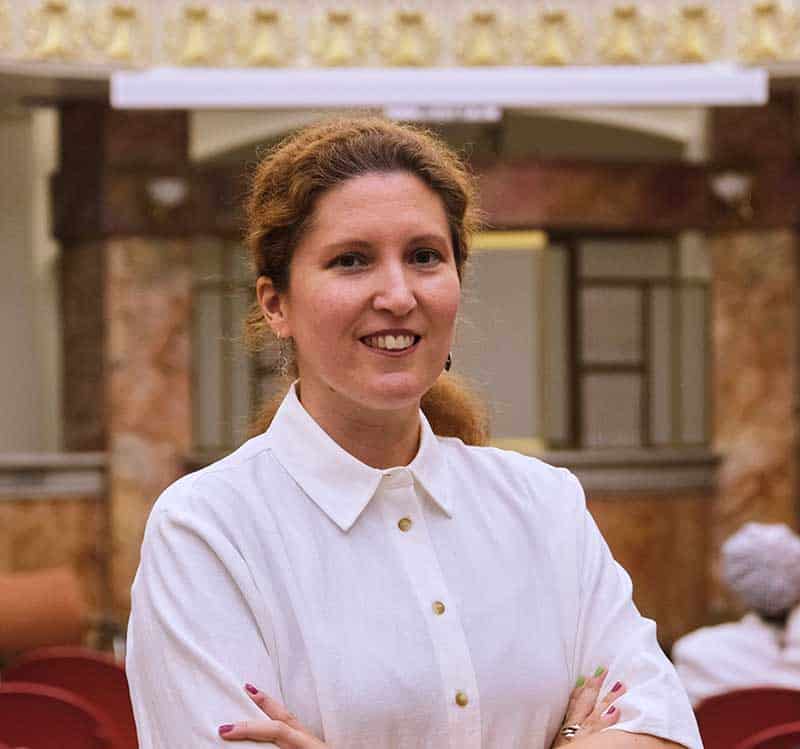
İpek Yeğinsü is a Turkish contemporary artist, curator, and researcher based in Istanbul. Her work spans multiple disciplines ranging from photography and painting to multimedia installation and interactive performance. Her academic research focuses on media arts and the impact of emerging technologies on artistic professions and curatorial practices. She serves as the Vice-Chair of the Association of Museum Professionals Türkiye for the 2025-2027 term.
Background & Education
Yeğinsü graduated from the prestigious I.M.I. Özel İtalyan Lisesi (Italian High School) in Istanbul before pursuing higher education. She earned her Bachelor's degree in International Relations from Koç University in 2004, followed by a Master's degree in Anatolian Civilizations and Cultural Heritage Management from the same institution in 2007. Driven by her growing curiosity in the social dynamics of the new media art territory, she earned a PhD in Design, Technology and Society at Özyeğin University in 2021.
Artistic Practice & Vision
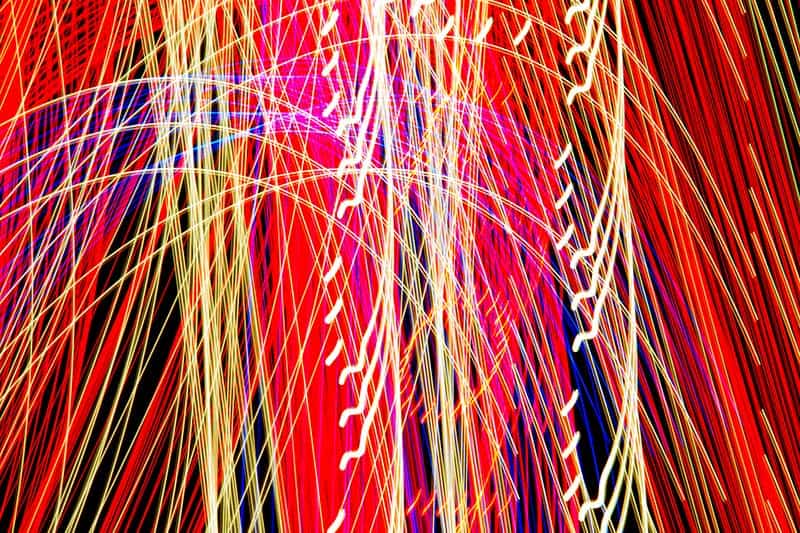
Yeğinsü’s art centers around color, composition, abstraction and the exploration of the subconscious. Her style frequently infuses personal autobiographical narratives with philosophy and social critique. Key elements of her work include:
- "Painting with the Camera": In notable projects like her Istanbul City Lights Series, she utilizes the camera as a paintbrush and raw light as paint to execute abstract expressionist gestures.
- Spontaneous Thought Flows: In projects like her Doodle series, she employs real-time, unplanned ink drawings to capture automatic thought processes on canvas and paper.
- Media Diversity: Her portfolio expands across multimedia installations, performances, collage, and digital photography.
Curatorial & Institutional Career
Before shifting to independent curation in 2013, Yeğinsü spent years helping construct Istanbul’s contemporary art infrastructure. Between 2007 and 2013, she worked within the Borusan corporate art umbrella, taking on critical roles as an Art Collection director, manager for ArtCenter, exhibition coordinator for the Borusan Music House, and as a core member of the founding team for Borusan Contemporary.
As an independent curator and active member of AICA Turkey (International Association of Art Critics), she has curated exhibitions for major regional cultural entities, including the Istanbul Metropolitan Municipality (İBB), Bilsart, Anna Laudel, Labirent Sanat, and Galeri Bu. You can follow her current exhibitions and project updates directly via her official website (under renovation until early 2027) or through her Instagram and LinkedIn profile.
1. Tell us about your journey to becoming an artist and curator in the new media era.
Art has been an integral part of my life since early childhood. I grew up painting, writing poetry, and creating short stories. This is why I like to introduce myself as a “storyteller.” I deeply enjoy telling stories through any medium at my disposal, whether an artwork, an exhibition, an academic research article, or a lecture. My passion for art and creativity is the thread that ties all these different narrative forms together.
I engage more deeply with new media as a researcher, adopting a post-media perspective in my curatorial practice that does not privilege one artistic medium over another. It is also worth mentioning that I am a cultural heritage professional with a background in museum studies. I see museums as ideal spaces for sharing stories with diverse audiences, including narratives that can raise awareness about climate action and foster greater ecological sensitivity. In the 21st century, community participation is also indispensable, as stories become more meaningful when diverse voices can contribute to shaping them.
2. Tell us about your artistic vision, articulation, and your environmental art series.
My artistic practice is quite diverse, ranging from experiments with color, form, and movement to more personal expressions of my thoughts and emotions. In my paintings and drawings, I often start with improvisation and let chance guide the process, but at some point, I step in and make more deliberate decisions to bring balance to the composition. With photography, I tend to embrace randomness, ambiguity, and fluidity more freely.
My participatory performances, on the other hand, are more research-oriented, exploring the connections between personal and collective memory, cultural heritage and the stories we construct together. My background in museum studies and my work as a cultural heritage professional have also shaped the way I approach storytelling.
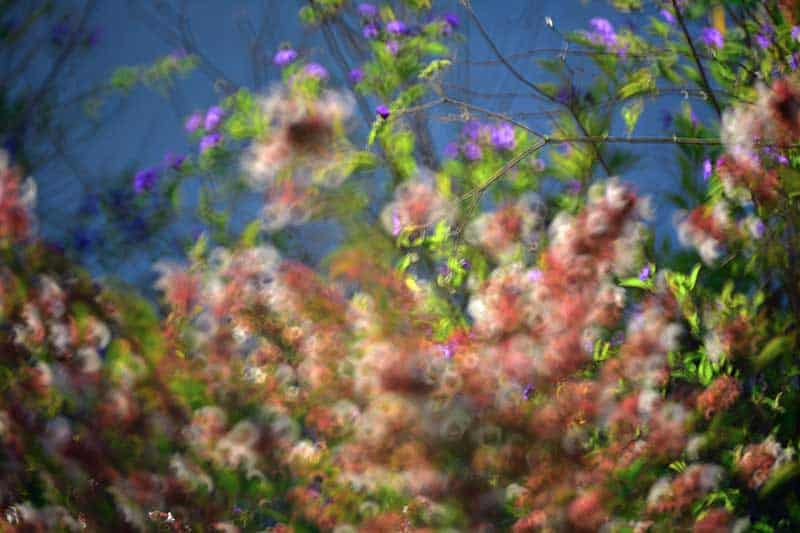
In terms of environmental art, I can mention a few photographic series I have been working on for several years. For instance, Nature Out of Focus (2022-) explores the traces of nature that are gradually fading away and how the ecosystem becomes perceptible only from a distance, much like our awareness of the environment and the impact we have on it.
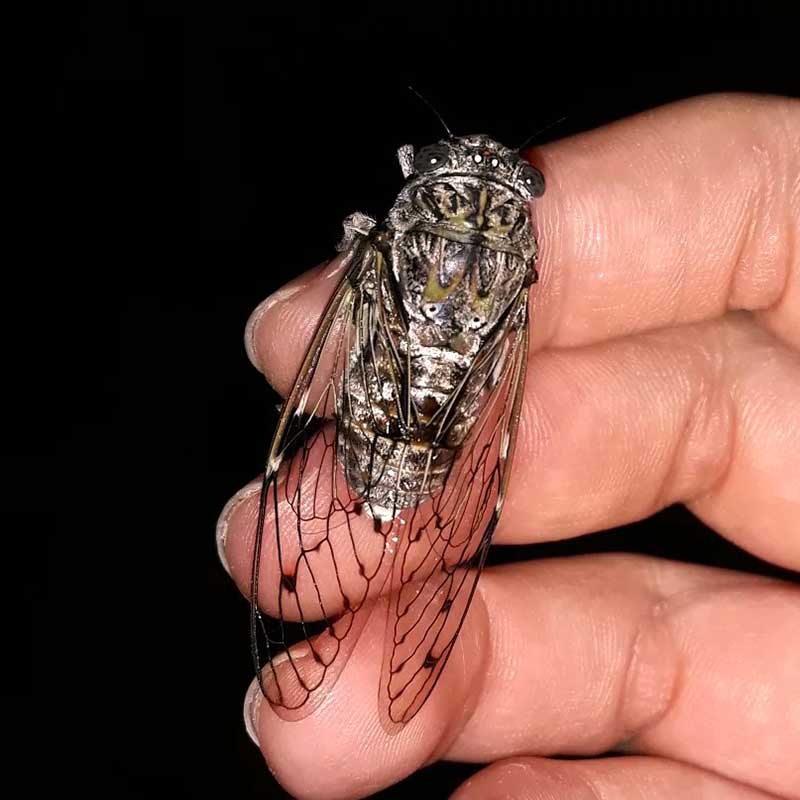
I also have two Instagram series dedicated to animals, probably my second greatest passion after art. I find indescribable joy in interacting with them, and I’m not just talking about cats and dogs. One of these series, Microcosmos, focuses on insects. I gently pick them up, let them walk on my hand, interact with them, and even try to establish eye contact. And believe me, they eventually relax, seem to feel safe, and connect with you. I find deep poetry in these encounters.
I also have a series titled Meows from the Hood, in which I interact with the stray cats in my neighborhood and document aspects of their everyday lives that often go unnoticed. I believe all species have a right to live on this planet, perhaps even more so than we do. After all, each species has something to contribute to the ecosystem, and none causes harm on the scale that humans do.
3. Why is new media effective in articulating environmental messages?
Digital media are not confined to physical spaces or geographical and temporal boundaries, allowing them to reach audiences across the world. Photography and video are particularly well suited to documenting the Anthropocene. Some forms of new media art, on the other hand, especially bio art, engage directly with ecological issues, often drawing on scientific methods and experiments involving biological materials. I think these approaches can help audiences develop a deeper understanding of the consequences of human activity on the environment.
4. You serve as the Vice-Chair of the Association of Museum Professionals Türkiye. Can you tell us more about the association’s mission and activities?
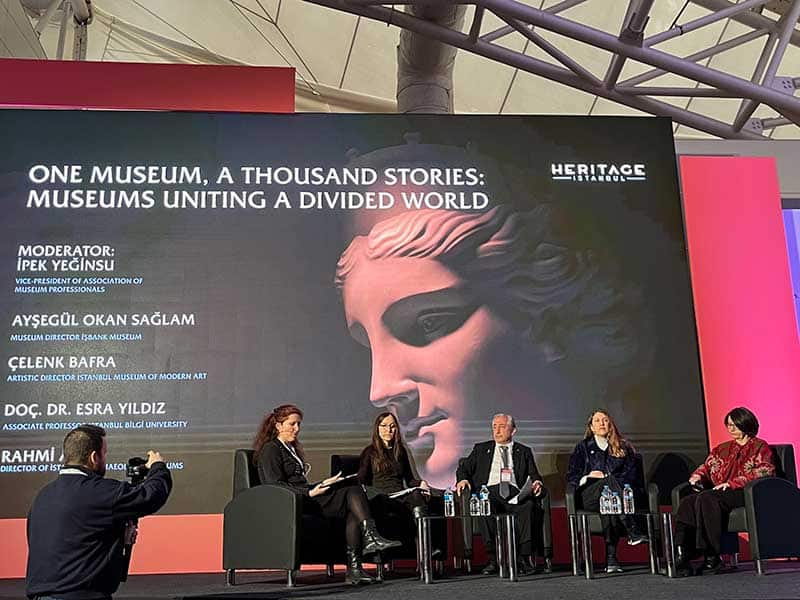
The Association of Museum Professionals (MMKD) is dedicated to supporting museum professionals, academics, and specialists working in the museum sector in Türkiye. It promotes the development of museums as contemporary cultural institutions in accordance with the museum definition established by the International Council of Museums (ICOM) and supports the recognition and advancement of museum work as a profession in line with ICOM’s professional standards and ethical principles.
The Association also plays an active role in the professional development of museum practitioners, fosters social and cultural connections and solidarity among museum professionals, and works to identify challenges facing the profession, develop solutions, and take initiatives to address them. Through its activities, it aims to strengthen communication, collaboration, and solidarity across the museum community in Türkiye. To this end, we organize in-person and online panel discussions with colleagues and specialists from Türkiye and abroad, arrange regular visits to museums and archaeological sites, and collaborate with local and international NGOs to raise awareness of issues affecting museums and professionals working in the cultural heritage sector.
5. What programs have you prepared for COP31?
At MMKD, we are running an Instagram awareness campaign in connection with COP31 featuring excerpts from the panel “Climate Crisis and Museums,” which we organized in 2024 as part of Heritage Istanbul Fair. The speakers included our current chair, archaeologist Dr. Gül Pulhan, Assoc. Prof. Dr. Aslı Gökçe Kılıç from Istanbul University, a conservator and museum specialist, Dr. Emek Yılmaz, a museologist and climate activist, Climate Action Network Europe’s Climate and Energy Policy Coordinator Özlem Katısöz, and conservator and restorer Fırat Buzlu.
I am representing the Association at Culture at COP31 in Antalya. I will be giving a presentation at the special side event, “Culture is Climate Action, ‘Imece’ for Implementation: Celebrating the Actors of Culture at COP,” which will take place at the Koç University Suna & İnan Kıraç Research Center for Mediterranean Civilizations (AKMED). In my presentation, I will discuss the association’s activities in more detail and explore recent developments regarding museums and climate change.
6. The issue of Zero Waste has been included in the COP31 agenda for the first time. Are you addressing this as well?
Yes. In my presentation, I will also address these issues by highlighting examples of museums and cultural institutions around the world that have adopted circular economy principles and recycling practices. This approach is often referred to as “Circular Culture,” and it encourages cultural institutions to rethink how they use resources, reduce waste, and adopt more sustainable practices in their everyday operations. It goes beyond recycling, encompassing everything from reusing exhibition materials and reducing energy consumption to developing more environmentally responsible approaches to exhibition design and production. I will also look at the other side of the issue: the impact of climate change on museums and their collections, which threatens the future of our shared cultural heritage.
7. The relationship between artificial intelligence and energy consumption has emerged as a central pillar of the COP31 United Nations Climate Change Conference in Antalya, Türkiye. As the host nation, the Turkish COP31 Presidency has officially introduced the Antalya Artificial Intelligence Pledge, which addresses the duality of AI as both a tool for accelerating climate solutions and a significant driver of global electricity demand. As a new media art researcher, how do you address this topic?
This is an extremely important issue that needs to be addressed as soon as possible. Data centers consume enormous amounts of water and energy. In a world where many communities struggle to access clean, fresh water, AI should not be an industry in which natural resources are consumed so freely. I therefore think it is a very important and timely decision to bring this issue to the agenda at COP31.
8. Anything else you would like to add?
We only have one planet, and it is so beautiful! It is a living organism of which we are just a small part. We have to protect it and keep it healthy for all forms of life. We have to heal it so that it can heal all of us.
9. How can people reach you?
My website is currently being updated and should be back online in January 2027. In the meantime, people can connect with me through Instagram and LinkedIn.
Glossary Terms:
Selva Ozelli Esq, CPA is a legal and finance executive with diversified experience dealing with highly complex issues in the field of international taxation and related matters within the banking, securities, Fintech, alternative and traditional investment funds. Her first of its kind legal analyses involving tax laws, Foreign Corrupt Practices Act (FCPA), blockchain technology, solar technology and the environment and have been published in journals, books and by the OECD. Her writings have been translated into 15 languages.