
Interview: Dr. Michael Kaplan, Research Professor at the Lamont-Doherty Earth Observatory (LDEO) and Guggenheim Fellow
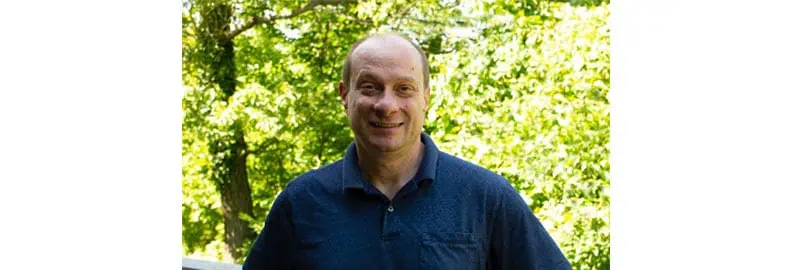
Dr. Michael Kaplan is a Lamont Research Professor at the Lamont-Doherty Earth Observatory (LDEO) of Columbia University, where he has been since 2006. He is a prominent geologist specializing in geochemistry and paleoclimate, focusing on how ice sheets, mountain glaciers, and landscapes have changed over geological time.
On May 4, 2026, Dr. Kaplan was named a 2026 Guggenheim Fellow, receiving the Kayden Guggenheim Fellowship in Climate Studies for his work reconstructing past glacial and climate changes, particularly in the Southern Hemisphere.
Dr. Kaplan’s work at LDEO focuses on natural climate variability over the last few thousand years, prior to human-induced 20th-century warming, by using geochemical and geological methods to understand Earth’s glacial history. He studies the expansion and retreat of glaciers in locations such as Patagonia, the Altiplano, and the North American Laurentide ice sheet, utilizing cosmogenic nuclide dating to determine when landforms were exposed by receding ice.
He compares past climate records across different regions—such as the Alps, Western U.S., and South America—to identify global versus regional patterns. And investigates how glacier changes interact with volcanic and hydrothermal activities to understand better how they influence each other.
Mike is a Principal Investigator in Dr. Joerg Schaefer's Cosmogenic Nuclide Lab and co-runs the LDEO summer undergraduate intern programs. He was elected a Fellow of the Geological Society of America (GSA) in 2019.
1. Tell us about your journey to becoming a Research Professor at the Lamont-Doherty Earth Observatory (LDEO) of Columbia University and a Guggenheim Fellow
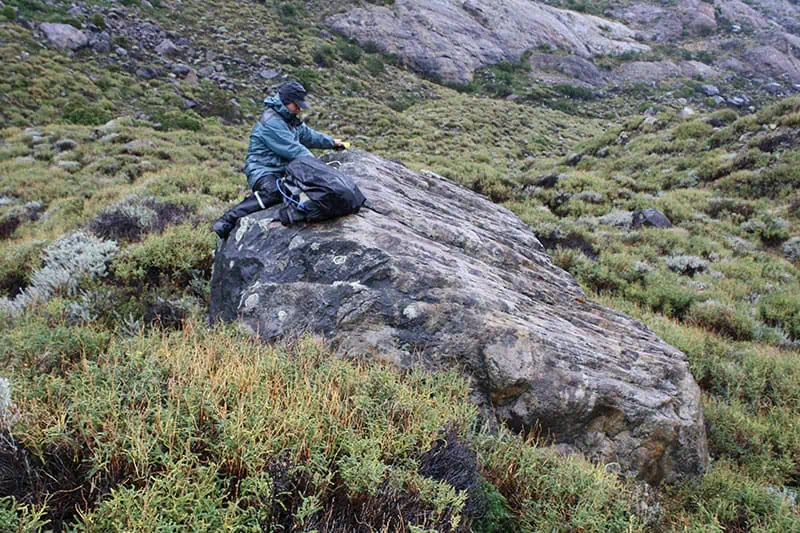
First, some descriptive stuff if helpful: After obtaining a Batchelor’s degree from SUNY Buffalo, I earned an M.Sc. at the University of Maine-Orono and a Ph.D. at the University of Colorado-Boulder. After a short stint as a Research Associate in Boulder, I was a Postdoctoral Scientist at the University of Wisconsin-Madison, University of Edinburgh, and at LDEO.
Since 2006, I have been at LDEO. I study a few things, but mainly how glaciers, climates, and landscapes changed in the past. With my colleagues here at LDEO, I have tried to stay at the cutting-edge in the methods we use. In terms of becoming a Guggenheim Fellow...well…I wrote about a project that I would focus on, which I assume they liked! But you would have to chase down others to ask them why they think I was awarded it….
2. Did you have any role models that steered you towards your professional destiny?
I do not remember calling people mentors or role models back in the last century, but when I was an undergraduate, yes, I had a few professors who were particularly influential in the paths I took. They gave me a lot of direction at the time I needed it. Also, I did not know anyone personally while growing up who followed a research path after going to graduate school, so these people were helpful in allowing me to see that as a career route. And, of course, after the college days, I had specific role models as a graduate student, postdoc, and then an early career researcher. This includes people that I still work with at LDEO who have been incredible role models.
3. What does it mean to become a Guggenheim Fellow to you?
For me, the Guggenheim Fellowship is a reward that reflects many years — decades — of hard work and perseverance. It is, in part, a reward or recognition despite many dead ends, rejections, and other difficulties we face “doing research” on a day-to-day level. In part, this includes because I am (what is known as) a “soft money” scientist. Also, I like to see it as a recognition that I’ve contributed scientifically to the disciplines in the Earth sciences that I focus on. Although I will focus on certain topics, it reflects my past efforts as well.
4. I noticed you received your PHD at the University of Colorado - Boulder, where I received my Law Degree. Tell us why you chose to study at CU?
[Call me simple/shallow, I chose CU over George Washington Law School and Emory Law School because the acceptance letter and the law school catalog had the photograph of the purple flatiron mountains on it, and it was at the time and still is recognized as a top-tier institution for environmental law, often ranked among the best in the U.S. for natural resources, energy, and environmental law. It features the Getches-Wilkinson Center, a specialized environmental clinic, and a robust curriculum tailored for sustainability, conservation, and policy.]
I recall I chose CU mainly because of the people I wanted to work with and the project I would work on. In the Geosciences, when going for a PhD, one typically follows directions you’re really interested in and people you want to work with for several years. Also, scientists at CU and their research programs were highly recommended to me, given my interests at the time. It was definitely a benefit that it was a nice place to live! But, I have to admit it was the people and the graduate research I would be doing. I was interested in the cross between disciplines known as glacial geology and glaciology, and scientists at CU, including my PhD advisor, were excellent in this context.
5. Did you also rock climb while in Boulder, CO, which offers top-tier, world-renowned bouldering and rock climbing venues such as: Eldorado Canyon State Park (multi-pitch/trad), The Flatirons (sandstone), and Flagstaff Mountain (bouldering)? [ if not, maybe I took the proverb “When in Rome, do as the Romans do” literally]
One of my most impressive achievements, to some I assume, is that I lived in Boulder for 6 years and never learned to rock climb. It was not necessarily because of a lack of interest. I signed up for a class twice in Eldorado Canyon State Park (I recall), and both times it was canceled due to rain. Perhaps I took that as an omen! I did take an indoors class and even bought the shoes. But, no, I did not learn to rock climb, amazingly enough. Perhaps some would think that not learning to rock climb while living in Boulder for 6 years is more impressive than getting a Guggenheim (a joke!).
6. I may never get the chance to interview a CU Alumni again, so pardon me for bombarding you with CU related questions. On the first day I arrived at CU Law, at the entrance to the CU Law Library, I noticed a Latin writing. I asked the librarian what the Latin writing said, and she answered “You are not in Kansas Anymore”. A certain calmness fell upon me when I heard her answer, as I knew I was not in Kansas; I had left NYC and moved to Boulder to study law. Did you have any similar experiences while studying at CU that you would like to share with us?
No problem! It was a great place to live for 6 years, and I tried to take advantage of hiking, backpacking, mountain biking, and seeing the western US in general. I did miss the lakes and ocean we have here in NY, but yes, living out west was unique.
7. How has the Americas fared in glacier changes during the past 250 years?

In most places, glaciers were relatively extensive until the end of the 19th century or even earliest 20th century. Part of this period is known as the Little Ice Age in some areas. There was some net retreat after, but accelerated retreat was generally underway at the end of the 20th century. Outside of Alaska, North America does not have much glacier ice to begin with, so it will disappear rather quickly. In South America, glaciers are disappearing also, but some places have more ice (as does Alaska), so it will take longer. But across the Americans glaciers are shrinking at least over the last few decades.
8. On June 5ththe United Nations World Environment Day, hosted by Azerbaijan, focuses on climate action and nature restoration, emphasizing the theme #NowForClimate. The campaign highlights urgent environmental signals like melting glaciers, rising seas, and heatwaves, urging immediate, concrete action to combat climate change, protect biodiversity, and secure a sustainable future. What are your messages for this day?
Major efforts or initiatives can happen at the local or regional level, specifically in states (here in the US) and cities. At local levels, some amazing things are happening by amazing people who are working very hard on these issues. We must encourage people to keep the momentum going, including at the local and regional level, which is really critical. I am thinking, for example, a place like lower New York where I live and work. Keep encouraging more awareness and those making such efforts.
9. In addition to being a prominent geologist, you are also an accomplished photographer. You will give a presentation at the Rockefeller State Park in Pleasantville, NY, on June 6th. Tell us about your presentation.
I would not say I am an accomplished photographer (thanks to those who think so!). I have been to some nice places, and perhaps they allow me to take nice photos! My presentation will be a typical scientific-type lecture where I discuss with the public what kind of clues geologists look for when studying the last Ice Age and the Ice Sheet that covered, for example, the NYC region.
I will take your word for it, others say that I am a prominent geologist – thanks :-).
10. How can people reach you?
My contact info is on the LDEO webpage. As a researcher, I am also occasionally on social media, as are many other scientists.
Glossary Terms:
Selva Ozelli Esq, CPA is a legal and finance executive with diversified experience dealing with highly complex issues in the field of international taxation and related matters within the banking, securities, Fintech, alternative and traditional investment funds. Her first of its kind legal analyses involving tax laws, Foreign Corrupt Practices Act (FCPA), blockchain technology, solar technology and the environment and have been published in journals, books and by the OECD. Her writings have been translated into 15 languages.
