Interview: Dr. Halil Mert Erdogan, Assistant Professor of Archaeology
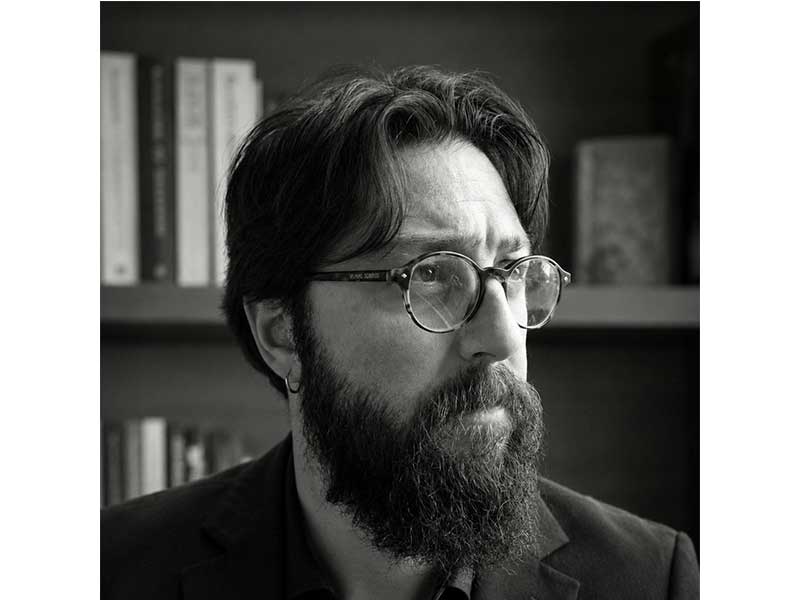
Dr. Halil Mert Erdogan is a faculty member in Antalya (affiliated with Belek and Akev universities) and an active field supervisor at the coastal ruins of Olympos.
His research focuses on Classical and Hellenistic urbanism, rural settlement patterns in Lykia, and stone-carving or architectural marble supply chains (including Prokonnesian quarry studies).
He writes and produces digital media examining Mediterranean maritime trade and Aegean-Anatolian transitions from the Bronze Age through antiquity. You can explore his ongoing essays via the Halil Mert Erdoğan Official website .
1. Tell us about your journey to becoming an archaeologist.
My late mother always wanted me to become an archaeologist. She encouraged me to read simplified versions of Homer’s epics for children. Thanks to her, I visited many ancient cities and archaeological museums during my childhood.
This journey began in childhood and continued through my university education. I took part in archaeological excavations at Rhodiapolis for four years and worked on the Beydağları archaeological survey for three years. I then served for eight years as a member of the scientific team at the excavations of Xanthos, a UNESCO World Heritage Site.
For the past five years, I have been serving as Assistant Director of the Olympos Excavations. For the past two years, I have also worked beyond Lycia as a researcher on the Prokonnesos archaeological survey, studying the archaeology of Marmara Island.
2. Did you have role models?
I’m sure many people have influenced me, although I cannot name one particular role model. Still, I believe it’s good to be original.
3. Tell us about the Olympos excavations in Antalya. How many layers of history are uncovered here? For how long have this site been a focus of archaeological discovery? Is this site a UNESCO World Heritage site?
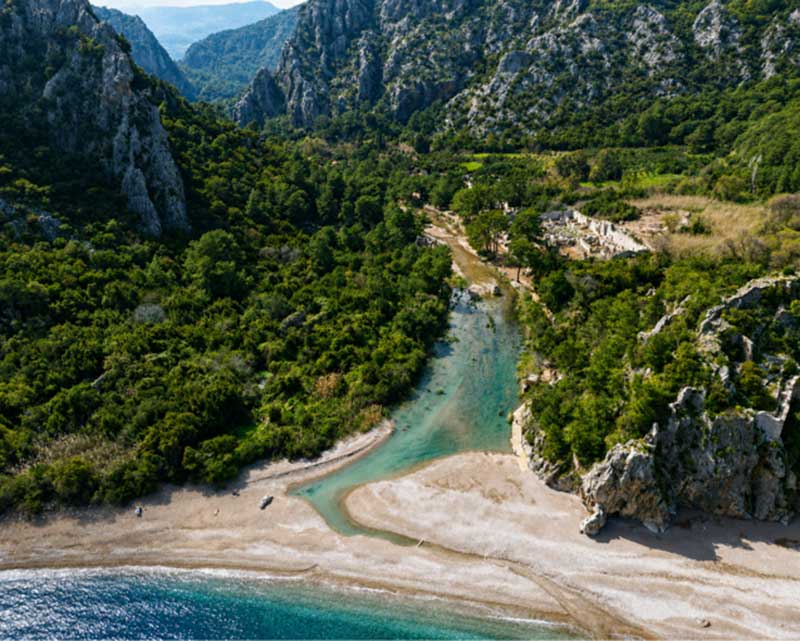
The first scientific studies at Olympos began in 1991, and excavations have continued without interruption since 2006.
We know that Olympos was an important city with three votes in the Lycian League. The archaeological remains on Musa Dağı probably belong to this period in the city’s history. One particularly interesting aspect is that Rome punished Olympos for supporting the pirate Zeniketes. Buildings dating from the Roman Imperial period, after this punishment came to an end, can be seen in the city center.
The Early Byzantine period at Olympos is particularly remarkable. Its distinctive Byzantine buildings shed light on the history of early Christianity in Lycia.
Olympos has been on the UNESCO World Heritage Tentative List since 2009, as part of the entry titled “Ancient Cities of Lycian Civilization.”
4. What are the recent discoveries at this site? Why are they important?
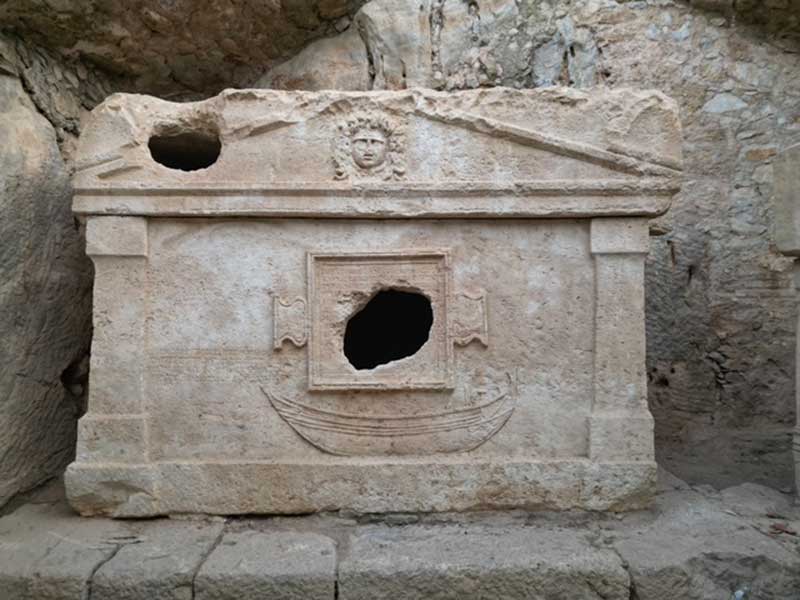
The newly uncovered tomb structures in the northern part of the city are particularly interesting. The mosaic remains discovered in the Episkopeion, the bishop’s residence, have also been very exciting for all of us.
In addition, we have identified a cult site on a mountain ridge south of the city as a Mithraeum, a sanctuary dedicated to Mithras. I have written an article about this discovery, which is expected to be published later this year.
5. Does Türkiye's Ministry of Culture and Tourism, under the "Heritage for the Future Project," operate year-round to map the city's necropolis, churches, baths, and harbor architecture to support this
Yes, Olympos receives support through this project, which allows us to carry out excavations throughout the year. Each year, we update our map of the ancient city to include the newly uncovered groups of buildings.
6. Tell us about your thoughts about the COP31 climate summit’s theme, which draws inspiration from Göbeklitepe as the "Zero Point of History", symbolizing civilization's roots and the core human principles of solidarity, balance, and harmony with nature.
First of all, our understanding of the chronology has changed, so our interpretations must also change. We now date the human transition to settled life to an earlier period. In addition, different groups coming together enriched our cultural DNA. When I look at Göbeklitepe, I see the Anatolian idea of “cem” (coming together as a community in unity and solidarity).
7. Göbekli Tepe in southeastern Turkey features monumental stone structures and artifacts built around 9,600 BCE, which predates the widespread invention of writing, pottery, metal tools, the wheel, and systematic agriculture, making it older than Stonehenge by over 6,000 years and the Egyptian pyramids by more than 7,000 years. The fact that a hunter-gatherer society invested in art, architecture, and symbolism says a lot about human nature. What are your thoughts in this regard? Why is Göbeklitepe important? What can we learn from this archaeological site?
Göbeklitepe continues to surprise us all. It is a place of great importance for world heritage and humanity, making it a very fitting choice. To me, the evidence uncovered at Göbeklitepe suggests that different groups of people came together. This offers a powerful message of peace and harmony—perhaps what the world and humanity need most right now.
8. COP31 declared “Zero Waste as Climate Action.” As Türkiye is the top destination for plastic waste exported from the European Union, it received a record 503,000 to 510,000 tons of EU plastic waste in 2025. The country is integrating its long-standing national Zero Waste Movement—spearheaded by First Lady Emine Erdoğan—directly into the official agenda for the global climate summit COP31 for the first time. How does plastic waste impact archaeological sites and heritage sites in Turkiye? What are your concerns about its impact on the archaeological and heritage sites in Turkiye, which serves as a primary destination for global plastic waste imports—much of which is concentrated in southern processing hubs like Adana, which is located on the Mediterranean coast like Antalya?
My field of expertise is archaeology, so I can speak about this issue from the perspective of cultural heritage conservation. At sites like Olympos, protecting the natural environment is an essential part of protecting archaeological heritage. Reducing waste, encouraging responsible visitor behaviour, and managing waste properly are all important. I believe our shared goal should be to preserve both cultural and natural heritage for future generations.
The long-running efforts to protect loggerhead sea turtles (Caretta caretta) at Olympos are an excellent example that could inspire similar work around the world.
9. Tell us about the events, cultural programs, and exhibitions you prepared for COP31.
I will give a talk at the Climate Heritage COP31 Antalya event on 15 November 2026, at Antalya Bilim University. My talk is titled “The Ancient City of Olympos in the Face of the Climate Crisis: Fire, Flood, and Drought.”
Like many ancient cities, Olympos is affected by the climate crisis. Its location and topography make these impacts particularly severe. We now face wildfires almost every summer, while flooding affects the ancient city in winter. A drought-related insect infestation has also damaged the pine trees at the site. We are working closely with Türkiye’s General Directorate of Forestry to address this problem.
My talk will focus on these challenges and our efforts to protect Olympos and its natural environment.
10. Anything else you would like to add?
Thank you for the opportunity to share my work and thoughts.
11. How can people reach you?
People can visit my website to find my Academia.edu page, email addresses, and social media accounts and get in touch with me easily.
Glossary Terms:
Selva Ozelli Esq, CPA is a legal and finance executive with diversified experience dealing with highly complex issues in the field of international taxation and related matters within the banking, securities, Fintech, alternative and traditional investment funds. Her first of its kind legal analyses involving tax laws, Foreign Corrupt Practices Act (FCPA), blockchain technology, solar technology and the environment and have been published in journals, books and by the OECD. Her writings have been translated into 15 languages.