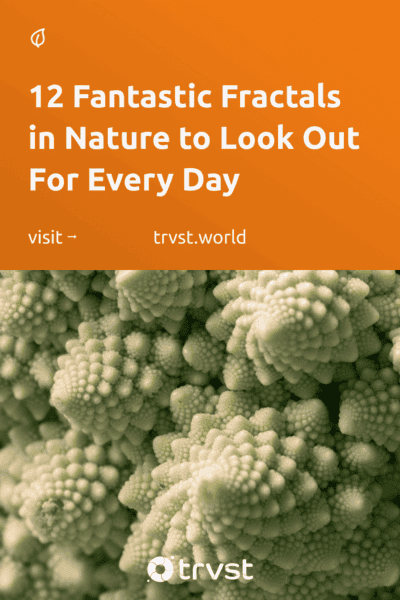
12 Fantastic Fractals in Nature to Look Out For Every Day

Have you ever noticed how a fern leaf looks like a tiny version of the entire fern? Or how clouds seem to have the same bumpy patterns whether you're looking at them from an airplane or standing on the ground? These aren't coincidences. They're examples of fractals in nature.
Fractals are patterns that repeat at different scales. They show up everywhere in the natural world, from the tiniest snowflake to massive mountain ranges. We can find these fascinating patterns in our own bodies, in the food we eat, and in the landscapes around us.
Jump to these links to marvel at each fractal nature wonder:
What Are Fractals?
Before we dive into specific examples, let's understand what makes something a fractal. A fractal is a shape or pattern that looks similar to itself when you zoom in or out. This property is called self-similarity.
The famous mathematician Benoit Mandelbrot coined the term "fractal" in the 1970s. He noticed that many natural shapes don't follow the smooth lines and perfect curves we learn about in basic geometry. Instead, they have rough, irregular edges that repeat at various levels.
Fractal geometry helps us understand these complex natural patterns. Unlike a straight line, which stays the same no matter how close you look, fractals reveal new details at every level of magnification. This never-ending pattern creates the beautiful complexity we see throughout nature.
12 Fractal Patterns in the Natural World
1. Snowflake Patterns

Every snowflake is unique, but they all share the same basic fractal structure. These famous fractal snowflake patterns form when water vapor freezes around tiny particles in clouds.
The six-sided symmetry of snowflakes creates branching patterns that repeat at multiple magnitudes. Each main branch has smaller branches, and those have even tinier branches. Scientists have found that snowflake patterns follow this geometry with specific mathematical properties1.
Computer-generated fractals like the Koch snowflake mirror these naturally occurring patterns. The Koch snowflake shows how simple rules can create incredibly complex shapes. This connection between natural fractals and digital graphics helps us understand how nature creates such intricate designs.
2. Trees

Trees are perfect examples of fractal structures in nature. The branching structures of trees repeat from the main trunk to the smallest twigs. This self-similar design helps trees maximize their surface area for photosynthesis.
Different tree species have different fractal dimensions. This means their branching patterns fill space very differently.
The fractal form of trees isn't just beautiful, it's practical. The branching structures help distribute nutrients and water throughout the tree. They also help the tree capture sunlight from different angles throughout the day.
3. Blood Vessels
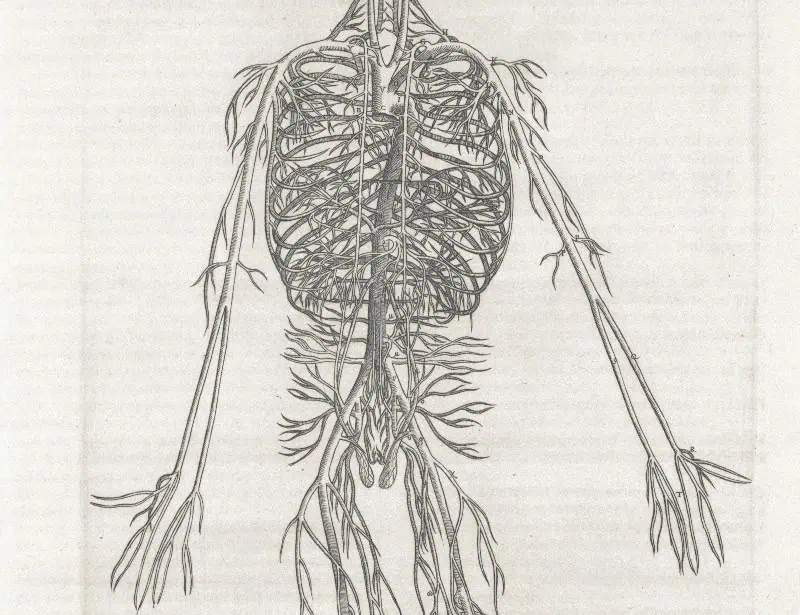
Our circulatory system is a marvel of fractal design. Blood vessels branch into smaller and smaller tubes, creating a fractal network that reaches every part of our body.
The retinal blood vessels in our eyes are particularly good illustrations of biological fractals. These vessels have a fractal dimension of around 1.7, which means they fill space more efficiently than a simple line but less than a flat surface5.
This fractal structure is crucial for our health. The branching structures allow blood to flow efficiently to all our tissues. When disease disrupts these fractal patterns, it can lead to serious health problems.
4. Nervous System
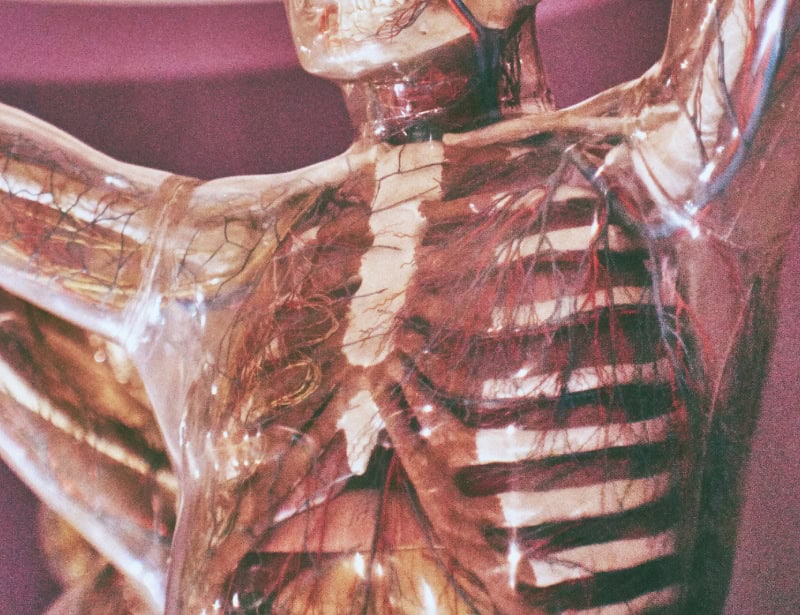
Our brain and neural system show remarkable fractal patterns. The surface of our brain, called the cerebral cortex, has a fractal dimension of approximately 2.52.
These fractal patterns help pack more brain tissue into the limited space inside our skull. The wrinkled, folded surface of the brain increases the surface area dramatically. This fractal design allows for more connections between brain cells.
Recent research in human neuroscience suggests that fractal patterns in the brain may be linked to consciousness and memory. The recurring patterns at different layers might help our brains process information more efficiently.
5. Clouds

When you look at clouds, you're seeing fractals in action. Cloud formations show self-similar patterns at varied dimensions. A small wisp of cloud has the same bumpy, irregular shape as a massive storm system.
Scientists have measured the fractal dimension of clouds to be around 1.364. These fractal patterns form because of the chaotic nature of air currents and water vapor. The same physical processes that create small cloud formations also create large weather systems. This is why weather patterns can be so difficult to predict; they're examples of nonlinear dynamics in nature.
Discover the answers to more curious cloud questions by visiting our articles on the formation of mammatus clouds and the science behind pink clouds.
6. Mountain Ranges
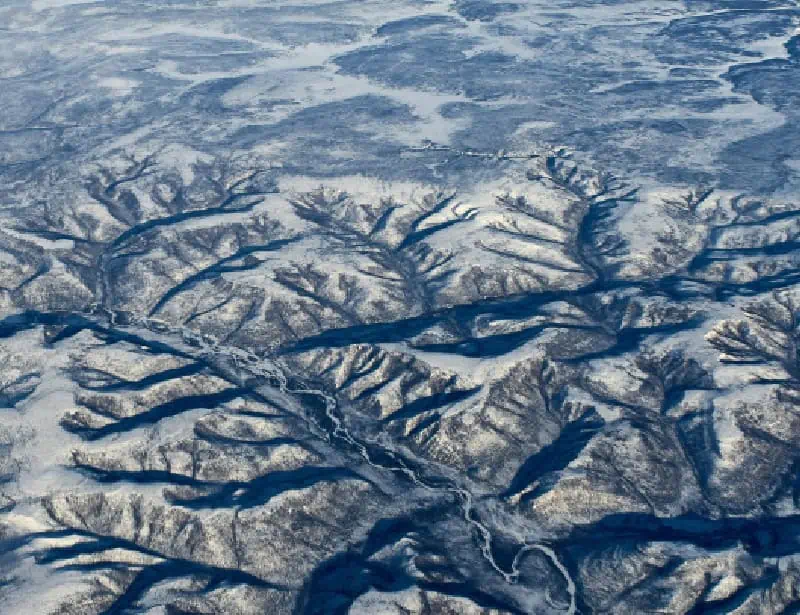
Mountains and coastlines are classic examples of fractals in nature. When you look at a mountain range from far away, you see jagged peaks and valleys. As you get closer, you notice that each peak has smaller peaks and valleys. This pattern continues down to the smallest rocks and pebbles.
The fractal dimension of a mountain range is typically around 2.323. This means mountains have a very complex, space-filling structure. The same processes that create large mountains, like erosion and tectonic activity, also create smaller features.
7. Nautilus Shells
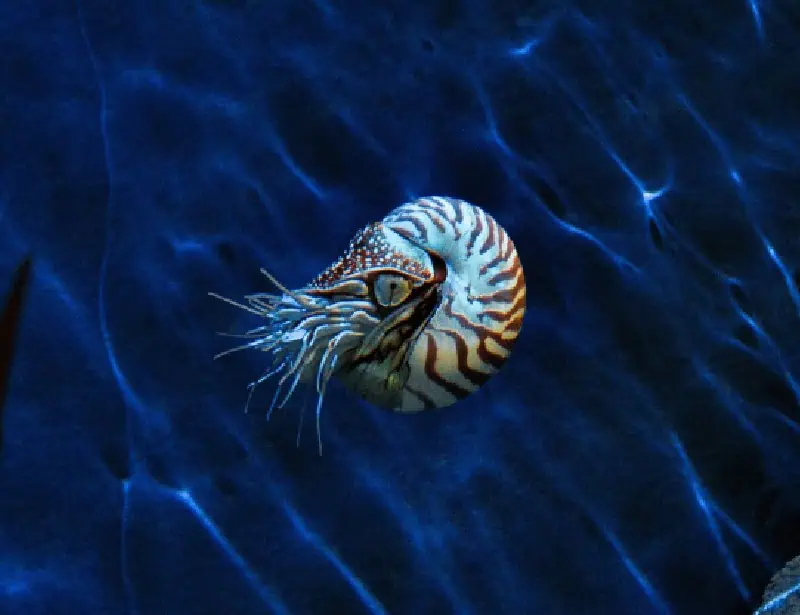
The nautilus shell is one of nature's most beautiful examples of a golden spiral. This ancient creature has been creating perfect logarithmic spirals for millions of years.
The golden spiral follows a specific mathematical rule where each turn is related to the golden ratio (approximately 1.618). This creates a spiral that maintains the same shape as it grows larger.
8. Pine Cones
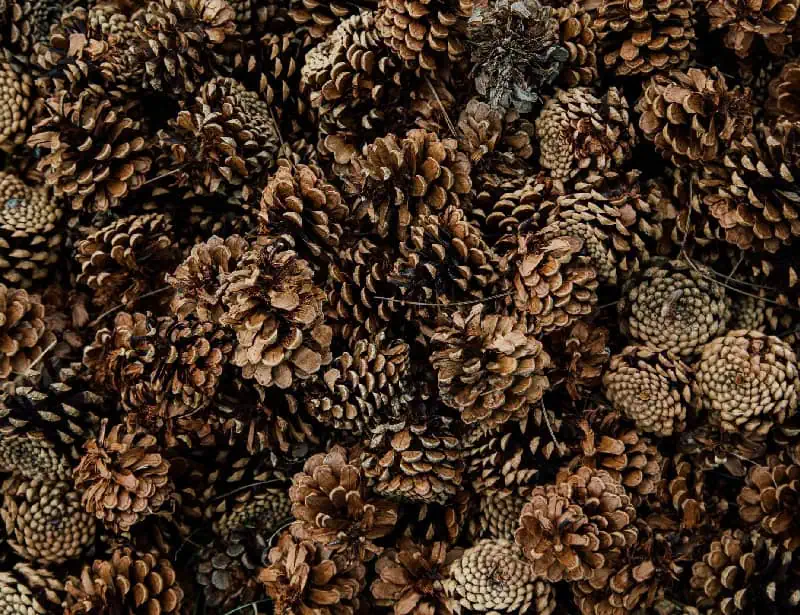
Pine cones demonstrate fractal patterns at multiple levels. The spiral arrangement of scales on a pine cone follows the Fibonacci sequence, which is closely related to the golden ratio.
These fractals appear throughout forest ecosystems. Pine cones, seeds, branches, and leaves all show recurring patterns across sizes. This fractal organization helps plants make the most efficient use of space and resources.
The spiral patterns in pine cones also help with seed dispersal. When the cone opens, the fractal arrangement ensures that seeds are distributed in the most effective pattern possible.
9. Romanesco Broccoli
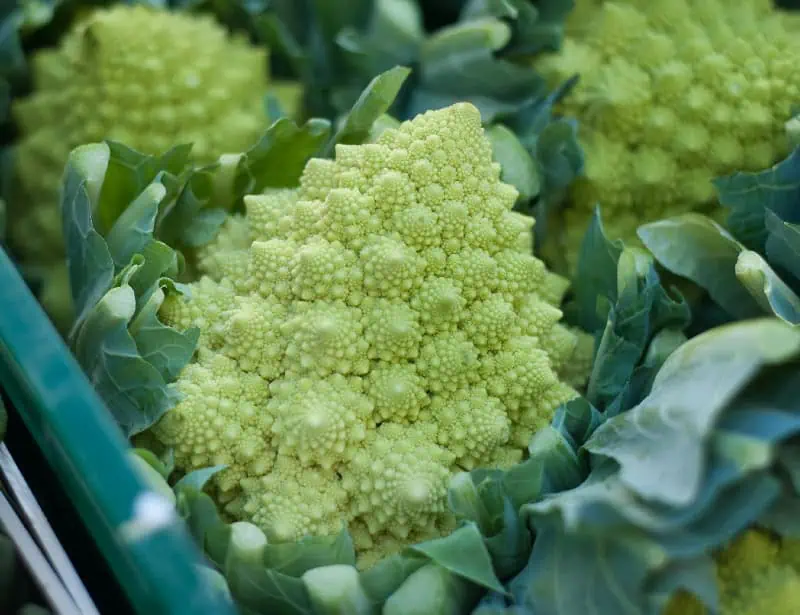
Romanesco broccoli is a stunning example of fractal food. This vegetable shows perfect self-similarity; each spiral is made up of smaller spirals that look exactly like the larger ones.
Its high fractal dimension means the vegetable has an incredibly complex structure that efficiently fills three-dimensional space.
This fractal form isn't just for show. The repeating patterns help the plant maximize its surface area for photosynthesis while using minimal energy to grow. It's a perfect example of how nature uses fractal-type geometry to solve practical problems.
10. Coastlines
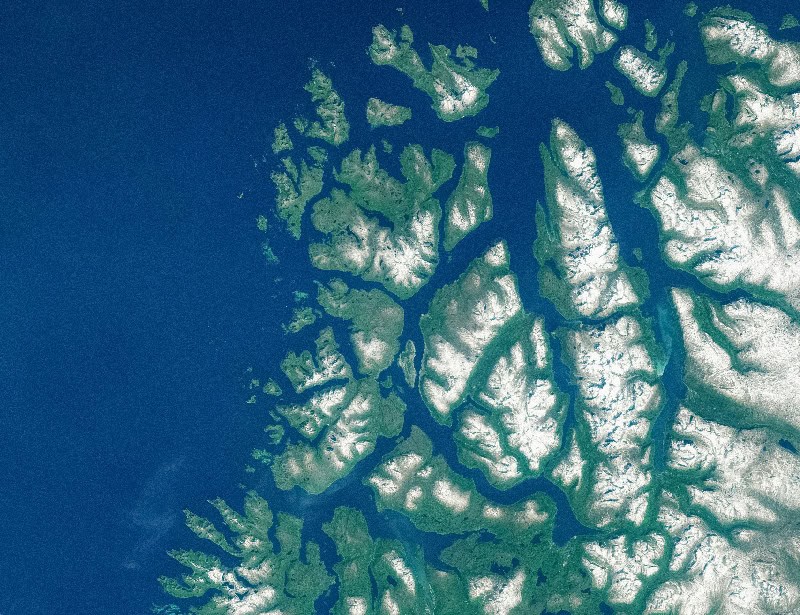
Coastlines are perhaps the most famous example of fractals in geography. The jagged, irregular shape of a coastline looks similar whether you're viewing it from space or walking along the beach.
Different coastlines have different fractal dimensions. Great Britain's coastline has a fractal dimension of about 1.25, while South Africa's coastline has a dimension of 1.026. These differences reflect the different geological processes that shaped each coastline.
The fractal form of coastlines creates the coastline paradox. The measured length of a coastline depends on the scale of your measurement. The more detailed your measurement, the longer the coastline becomes.
11. Ferns
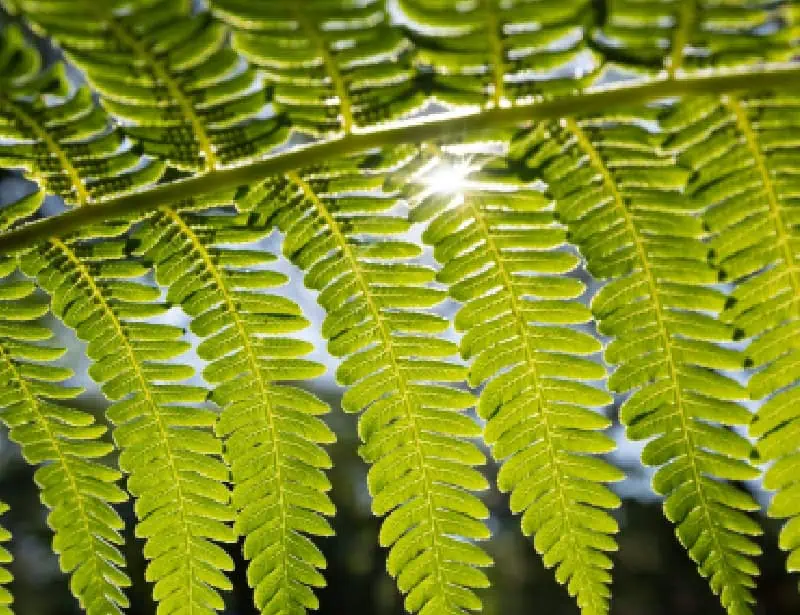
Ferns are classic examples of self-similarity in nature. Each frond is made up of smaller leaflets that look like miniature versions of the whole frond. This pattern repeats at multiple levels. The recurring patterns help the plant distribute water and nutrients efficiently throughout its structure.
Ferns have been using this fractal design for millions of years. Their success suggests that fractal patterns provide significant advantages for plant survival and growth.
12. Golden Spiral in Nature
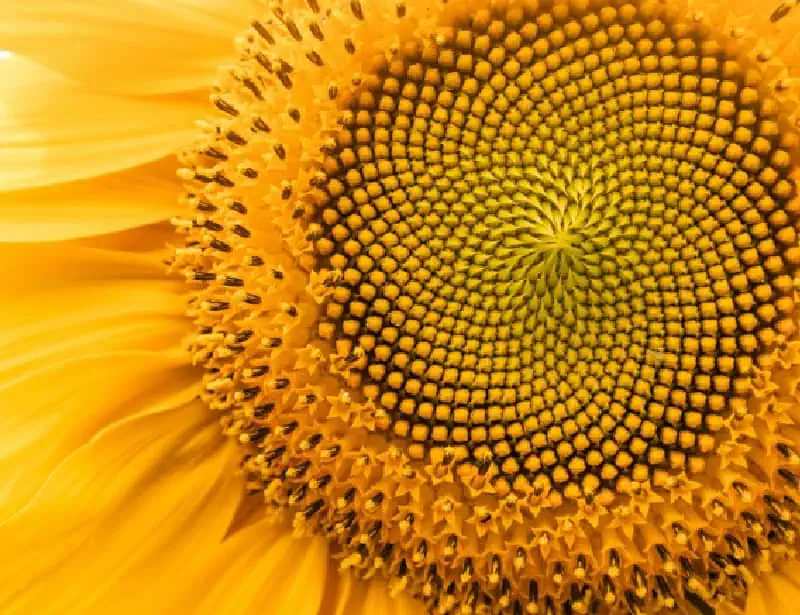
The golden spiral appears throughout the natural world, from the arrangement of seeds in a sunflower to the shape of galaxy arms. This logarithmic spiral maintains its shape as it grows, creating the same pattern at various levels.
The golden spiral is based on the golden ratio, which appears frequently in nature. Plants use this ratio to arrange their leaves and flowers in the most efficient way possible. This arrangement maximizes sunlight exposure while minimizing overlap.
You can find golden spirals in nautilus shells, hurricane formations, and even in the structure of our own ears. This widespread pattern suggests that the golden spiral represents a fundamental principle of natural organization.
The Science Behind Natural Fractals
Natural fractals form through simple processes that repeat over time. Whether it's the growth of a tree, the formation of a coastline, or the development of our circulatory system, the same basic principles apply.
These patterns emerge from what scientists call dynamic systems. Small changes can lead to big effects, and simple rules can create incredibly complex patterns. This is why we see similar fractal patterns in completely different natural phenomena.
The study of fractals has revolutionized our understanding of nature. Before fractal geometry, scientists struggled to describe the irregular shapes we see everywhere around us. Now we know that these "chaotic" patterns actually follow precise mathematical rules.
Computer Graphics and Fractal Art
The discovery of fractals has had a huge impact on computer visualization and digital art. Artists and programmers use fractal algorithms to create realistic-looking natural scenes.
The famous Mandelbrot set and Julia set are examples of mathematical fractals that create beautiful, complex images. These computer-generated fractals help us understand the mathematical principles behind naturally occurring patterns.
Modern movie special effects often use fractal algorithms to create realistic clouds, mountains, and other natural features. This technology allows filmmakers to create convincing natural environments that would be impossible to film in real life.
Fractals in Life Sciences
Fractal geometry has become an important tool in life sciences research. Scientists use fractal analysis to study everything from cancer cells to ecosystem dynamics.
The branching patterns of our lungs, blood vessels, and neural system all follow fractal principles. Understanding these patterns helps doctors diagnose diseases and develop new treatments.
Ecologists use fractal analysis to study forest patterns, animal behavior, and ecosystem health. The fractal structure of natural habitats affects how species interact and survive.
Conclusion
Fractals are everywhere in nature, from the food on our plates to the neurons in our brains. These repeating patterns at different scales represent one of nature's most elegant solutions to complex problems.
Glossary Terms:
| 1 | Stein, M., Westbrook, C. D., & Nicol, J. (2015). Fractal geometry of aggregate snowflakes revealed by triple-wavelength radar measurements. Geophysical Research Letters, 42(1), 176–183. |
| 2 | Wang, Y., Leiberg, K., Kindred, N., Madan, C. R., Poirier, C., Petkov, C. I., Taylor, P. N., & Mota, B. (2024). Neuro-evolutionary evidence for a universal fractal primate brain shape. ELife, 12. |
| 3 | Kolwankar, Kiran M, & Karle, N. N. (2014). A simple method to estimate fractal dimension of mountain surfaces. ArXiv (Cornell University). |
| 4 | Christensen, H. M., & Driver, O. G. A. (2021). The Fractal Nature of Clouds in Global Storm‐Resolving Models. Geophysical Research Letters, 48(23). |
| 5 | Yu, S., & Lakshminarayanan, V. (2021). Fractal Dimension and Retinal Pathology: A Meta-Analysis. Applied Sciences, 11(5), 2376. |
| 6 | Husain, A., Reddy, J., Bisht, D., & Sajid, M. (2021). Fractal dimension of coastline of Australia. Scientific Reports, 11(1), 6304. |
Jen’s a passionate environmentalist and sustainability expert. With a science degree from Babcock University Jen loves applying her research skills to craft editorial that connects with our global changemaker and readership audiences centered around topics including zero waste, sustainability, climate change, and biodiversity.
Elsewhere Jen’s interests include the role that future technology and data have in helping us solve some of the planet’s biggest challenges.
Fact Checked By:
Isabela Sedano, BEng.