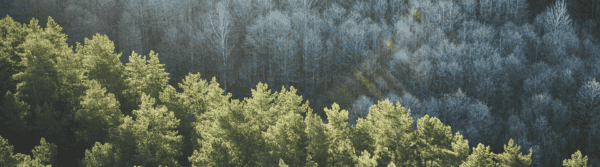
Forests and Earthquakes
What do forests and earthquakes have in common? Forests and earthquakes are linked through their interaction with the Earth's structure and environment, specifically how seismic activity impacts tree growth, carbon storage, and land stability. Earthquakes can stimulate tree growth by increasing groundwater infiltration, and forests can mitigate earthquake damage by scattering seismic waves.
This year, World Wildlife Day (March 3) and the International Day of Forests (March 21) share a central focus on the economic and livelihood-sustaining roles of nature, specifically emphasizing how natural resources support human health, heritage, and prosperity, highlighting that nature is an "economic powerhouse".
World Wildlife Day focuses on Medicinal and Aromatic Plants (MAPs) and their role in sustaining local livelihoods and traditional knowledge. International Day of Forests centers on "Forests and Economies," showcasing how forests drive economic prosperity. As forests are crucial for the planet, supporting 80% of terrestrial biodiversity and over 1.6 billion people. As "pharmacies," they provide the source for over 25% of modern medicines, a figure that rises to 70% for anti-cancer drugs.
Both days are explicitly linked to United Nations SDG 15 (Life on Land), promoting the conservation of terrestrial ecosystems and the halting of biodiversity loss, underscoring the medicinal value of these ecosystems to promote awareness and action with science and art during the U.S. Semiquincentennial - 250th anniversary of America.
World Wildlife Day by Selva Ozell
| Event | Date | 2026 Theme | Art Exhibition Venue | Exhibition Name |
| World Wildlife Day1 | March 3, 2026 | "Medicinal and Aromatic Plants: Conserving Health, Heritage and Livelihoods" | Lamont Doherty Earth Observatory of Columbia University (LDEO) | Flowers, Butterflies & Hummingbird Flag CCL |
| Havre de Grace Maritime Museum | Hydrangea Rose Flag CCL | |||
| Putnam History Museum | Rose Flag CCL | |||
| International Day of Forests2 | March 21, 2026 | "Forests and Economies" | LDEO | Tree of Life/ Tectonic Flag CCL |
[1] https://wildlifeday.org/en/events-list#eventId-568
[2] International Day of Forests 2025 events
Plate Tectonic Theory & Tree Ring Analysis
Tectonic plates act as the fundamental, long-term "geological engine" of Earth, creating, modifying, and destroying habitats that directly govern the distribution and evolution of forests and wildlife over millions of years. By controlling the configuration of continents, oceans, and topography, plate tectonics dictates environmental conditions, influencing biodiversity and forcing species to adapt or perish. Tectonic activity forms landscapes—mountains, valleys, and islands—that create diverse environments, and ecosystems with forests and wildlife evolving in response to these geological features.
Lamont-Doherty Earth Observatory, a renowned research institute of Columbia University, specializes in studying Earth's natural systems. LDEO’s ground-breaking research was pivotal in proving the theory of plate tectonics through key data, especially Walter Pitman's discovery of symmetrical magnetic patterns on the seafloor around mid-ocean ridges, confirming seafloor spreading.
LDEO scientist Lynn Sykes used seismic data to link these spreading centers with transform faults, providing crucial evidence for the moving lithospheric plates and revolutionized understanding of earthquakes, volcanoes, and mountain building.
Xavier Le Pichon provided early accounts of continental movement paths.
Marie Tharp and Bruce Heezen, who first identified the Mid-Atlantic Ridge rift valley, extensively mapped the seafloor and used a data-driven approach to provide the "smoking gun" for the plate tectonics theory. Dr. William B. F. Ryan, a prominent marine geologist known for his work on plate tectonics and the Black Sea deluge theory, explained
"Along with my colleague Walter Pitman, our measurements and analysis of magnetic anomalies on the ocean floor provided crucial evidence supporting the Morley–Vine–Matthews hypothesis, which explained the mechanism of seafloor spreading, a cornerstone of plate tectonic theory.
I used silly putty as an analogy for the behavior of rock in the Earth's asthenosphere in the context of plate tectonics to illustrate the viscoelastic properties of the Earth's mantle. Silly putty is a non-Newtonian fluid that exhibits both viscous (flow like a liquid over time) and elastic (bounce like a solid when rapidly stressed) behaviors. Therefore, it made an excellent analogy for the rock in the asthenosphere, located deep within the Earth. Under immense heat and pressure over geological timescales, the rock in this layer flows very slowly like a viscous fluid, allowing the rigid tectonic plates (lithosphere) above it to move across the surface.
The Movement of tectonic plates are the primary cause of earthquakes. They are a result of these massive, slow-moving plates colliding, spreading apart, or sliding past one another, as friction locks their edges. When the buildup of stress exceeds the friction, the plates suddenly break or slip, releasing energy as seismic waves that shake the ground. Movement of tectonic plates also helps cycle nutrients through volcanic activity and erosion, which enriches soil, supporting forest growth. The positioning of continents, driven by tectonics, influences ocean currents and global climates, defining the distribution of forests and their dependent species.”
Most earthquakes occur along plate boundaries (convergent, divergent, and transform). Researchers from LDEO’s Tree Ring Lab have conducted studies on trees near fault lines, including the San Andreas Fault. Their findings identified clear signatures of the 1906 San Francisco earthquake in local redwood trees, with observations ranging from discoloration to missing growth rings, demonstrating a stress response to the seismic event.
Dr. Edward Cook, Director of LDEOs Tree Ring Lab, explained that trees are organic recording devices that reveal thousands of years of past climate, drought patterns, and ecological history. He explained
The 1988 study by Dr. Gordon C. Jacoby, Paul R. Sheppard, and Kerry E. Sieh (referenced as Irregular Recurrence of Large Earthquakes Along the San Andreas Fault: Evidence from Trees1) is a landmark contribution to paleo seismology, as it demonstrated that tree rings can be used to identify, date, and locate previously unknown or poorly documented seismic ruptures, rather than merely validating historical events like 1906.
While historical records from 1812 suggested earthquakes in Southern California, the exact location and extent of the rupture were unknown. Jacoby, Sheppard, and Sieh identified clear signs of trauma in trees, indicating that a major earthquake occurred in the fall or winter of 1812-1813.
The research team found trees with consistent growth anomalies (missing rings, cambial trauma, and dramatic reduction in growth) along a 12-kilometer (approx. 7.5-mile) stretch of the San Andreas Fault near Wrightwood, California.
The exactly dated tree-ring evidence provided the necessary precision to attribute this 1812 event to the Mojave segment of the San Andreas Fault, rather than just offshore coastal faults.
The study demonstrated that this section of the fault, which had not been known to have ruptured in 1812, did indeed break, providing crucial data on the spatial variability of large earthquakes.
The 1812 event occurred only 44 years before the great 1857 earthquake, showing that large ruptures on this section of the San Andreas fault are not perfectly periodic, but rather have irregular recurrence intervals.
The trees (Jeffrey pines) showed trauma beginning in 1813, suggesting the shaking happened after the 1812 growing season ended (typically September) but before the 1813 growth began, supporting a late-1812 event. The trauma likely resulted from roots being sheared, branches broken, or the tree being partially buried during surface rupture.
This study was a major leap forward in using living organisms to study prehistoric, or in this case, unrecorded historical hazards."
The LDEO played a foundational role in the 20th-century revolution of Earth Science, transforming the once-dismissed theory of continental drift into the accepted reality of plate tectonics and pioneering the use of tree rings to reconstruct past climates and environmental changes. By utilizing a data-first philosophy, LDEO scientists provided the evidence needed to validate that Earth's lithosphere is composed of moving plates and that Earth's climate and environmental systems are highly sensitive, volatile, and capable of rapid change, providing evidence for dating past geological and ecological events.
To celebrate their achievement on the 250th anniversary of America, I designed the Tree of Life/Tectonic Flag CCL by featuring the Tree of Life symbol from the Epic of Gilgamesh (ca. 2700 BCE, specifically Tablet VI), where the Bull of Heaven - a massive supernatural bull that supported the Earth on his head, often causing earthquakes by shifting its head from one horn to another is sent to destroy the city of Uruk that resulted in the destruction of Gilgamesh’s palace making him realize that physical immortality is impossible and that a person's lasting impact lies in their deeds and legacy that represents the foundational, symbolic narrative for modern science.
I attempted to bridge the gap between ancient mythology and LDEO scientists’ discoveries by incorporating the magical plant of rejuvenation/ the Tree of Life in my flag that is found at the bottom of the sea in the Epic of Gilgamesh (Tablet XI), a location that mirrors where our modern understanding of plate tectonics truly began, through the mapping of the seafloor and the discovery of mid-ocean ridges.
My Flag CCL series has been endorsed by Freedom 250, which is a national initiative launched by President Donald Trump to lead the celebration of the 250th anniversary of American independence on July 4, 2026. It is a public-private partnership aimed at honoring U.S. history, preserving historic sites, fostering patriotism, and highlighting innovation.
Tree of Life/Tectonic Flag CCL by Selva Ozelli
Professor Steven Goldstein, the Interim Director at LDEO, who instituted a science-art initiative, noted that:
The LDEO has a core mission focused on fundamental Earth science research and strong educational outreach. I have encouraged using science and art together to communicate to the broad public the critical role of geoscience in our understanding of tectonic plates, in shaping Earth's ecosystems, tree rings for dating past geological and ecological events to help bridge the gap between complex geological data and public’s understanding. Science must serve as the basis for promoting the conservation of ecosystems and the halting of biodiversity loss.”
Glossary Terms:
| 1 | Jacoby GC Jr, Sheppard PR, Sieh KE. Irregular recurrence of large earthquakes along the san andreas fault: evidence from trees. Science. 1988 Jul 8;241(4862):196-9. doi: 10.1126/science.241.4862.196. PMID: 17841050. |
Selva Ozelli Esq, CPA is a legal and finance executive with diversified experience dealing with highly complex issues in the field of international taxation and related matters within the banking, securities, Fintech, alternative and traditional investment funds. Her first of its kind legal analyses involving tax laws, Foreign Corrupt Practices Act (FCPA), blockchain technology, solar technology and the environment and have been published in journals, books and by the OECD. Her writings have been translated into 15 languages.
