
The Alarming Effect of Agriculture on Biodiversity

Ever wondered why you see fewer butterflies than you did as a child? You're not imagining things. Agriculture’s effect on biodiversity has reached a critical point, with up to 1 million species facing extinction1, many within decades.
We're about to explore exactly how agricultural production impacts the web of life around us, but here's the good news: we can transform our food systems to work with nature instead of against it.
Quick Links To The Effects of Agriculture on Biodiversity
Understanding Agricultural Biodiversity

Agricultural biodiversity encompasses all the variety found within our food and agriculture systems. It serves as nature's insurance policy for food security. At the genetic level, we're talking about diversity within crop plants and livestock breeds. Think about how many types of tomatoes or cattle breeds exist. Then at the species level, you've got variety in crops, farm animals, and all the wild species that share agricultural landscapes, from the beetles in the soil to the hawks overhead. And finally, agricultural ecosystems create unique habitats, whether that's hedgerows, farm ponds, or prairie strips between fields.
All these different levels work together to provide essential ecosystem services that farmers have relied on for thousands of years. Pollinators make sure crops produce food, and we're not just talking about honeybees. There are thousands of wild bee species, as well as butterflies, moths, beetles, and even bats, that pollinate our crops. Natural pest control saves farmers money because a healthy population of predators and parasitoids keeps pest populations in check, eliminating the need for spraying. Meanwhile, soil organisms are breaking down organic matter and cycling nutrients in ways that no fertilizer can truly replicate.
Yet we're losing this biological diversity at a rate that should terrify us all. Throughout human history, more than 6,000 plant species have been cultivated for food. However, today, fewer than 200 make significant contributions to global food production. Only nine crops provide 66% of everything we grow4, according to the Food and Agriculture Organization. Between 1900 and 2000, we managed to lose 75% of our crop diversity2, equivalent to discarding three-quarters of our agricultural heritage in just a century. This genetic erosion isn't just about losing quaint heirloom varieties. It threatens our ability to adapt to whatever challenges come next.
To combat the environmental threats below, we can protect biodiversity while still supplying our needs by practicing sustainable agriculture.
How Agriculture Affects Biodiversity: The Major Impacts
Habitat Loss and Land Conversion
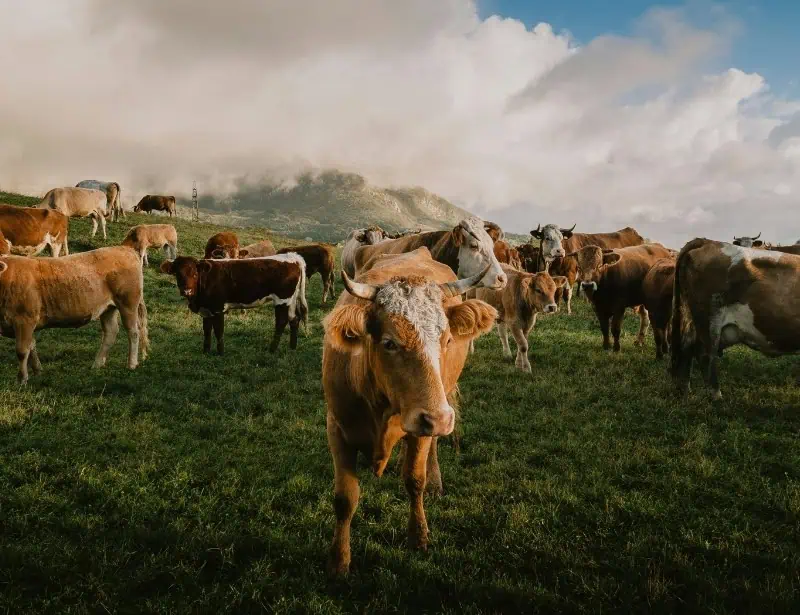
The single biggest blow to biodiversity comes from converting natural habitats into farmland, and the numbers are staggering. Agricultural expansion is responsible for 88.1% of global deforestation5, and every time we clear a forest, drain a wetland, or plow up a grassland, we eliminate homes for countless species. Based on current data from the IUCN’s Red List, agriculture poses a threat to almost 21,000 animal species. Farming pressure affects almost half of all extinct or endangered animals on the planet.
When you transform a diverse ecosystem into a monoculture, the change is absolute and devastating. Where hundreds of flora once grew together, supporting complex webs of life, you now have endless rows of a single crop. Animals don't just lose their homes. They lose their food sources, their nesting sites, and the corridors they need to move between different areas.
What makes this worse is that habitat destruction doesn't stop neatly at the farm border. Edge effects extend into remaining natural areas, altering temperature, humidity, and wind patterns. When you fragment habitats into smaller and smaller pieces, you create islands that are too small to maintain healthy populations, especially for larger grazing animals that need room to roam.
Genetic Diversity Collapse
Conventional agriculture's obsession with high-yielding varieties is causing a catastrophic loss of genetic diversity within our crops themselves. When farmers abandon traditional varieties grown for generations in favor of modern hybrids, we lose irreplaceable genetic resources. These local varieties, adapted to specific climates and conditions over centuries, contain genes for drought tolerance, disease resistance, and other traits we might desperately need in the future.
This genetic erosion makes our entire food system incredibly vulnerable. Growing the same variety everywhere means that a single disease or pest can wipe out production across whole regions. Climate change makes genomic diversity even more critical, as we need crops that can withstand new temperature extremes, changing rainfall patterns, and emerging pests. Without a diverse pool of plant genetic resources to draw from, plant breeders can't develop new varieties to meet these challenges, putting food security at risk for everyone.
The stories of loss are heartbreaking when you look at specific examples. In the Philippines, farmers once grew thousands of unique rice varieties, each adapted to local conditions, but now they grow fewer than 100. Mexico, the birthplace of corn, has lost 80% of its native maize varieties, and each one represents centuries of careful selection by farmers who knew their land intimately.
Soil Biodiversity and Its Degradation

Intensive agricultural practices are systematically destroying the incredible diversity of life in our soils. Most people have no idea how much life we're talking about. A single teaspoon of healthy soil contains more living organisms than there are people on Earth. You can find bacteria, fungi, protozoa, nematodes, and countless other creatures that create the foundation for all terrestrial life. However, when heavy machinery compacts the soil, it literally crushes this underground ecosystem, while continuous tillage rips apart the fungal networks that have taken decades to establish.
Chemical inputs make the situation even worse because synthetic fertilizers dramatically alter soil chemistry and pH, creating conditions where many soil organisms simply can't survive. Pesticides don't just kill pests above ground. They also eliminate beneficial soil organisms, while fungicides wipe out the mycorrhizal fungi that form partnerships with plant roots and help them absorb nutrients. When antibiotics from livestock operations leach into fields, they disrupt entire soil microbiomes, turning living soil into something closer to sterile dirt.
Soil degradation creates a cascade of problems that affect everything else. Without healthy soil biodiversity, nutrient cycling breaks down completely, forcing farmers to add more fertilizer to maintain yields continually. Water can't infiltrate properly through compacted, lifeless soil, leading to increased flooding during rains and worse droughts during dry periods. Erosion accelerates because nothing is holding the soil together, causing precious topsoil to be washed into waterways, where it becomes pollution instead of a valuable resource.
Water Systems Under Threat
Agricultural practices are wreaking havoc on aquatic biodiversity across entire watersheds, creating problems that extend far beyond individual farms. When fertilizer runs off fields, it creates massive dead zones in water bodies.
Wetland drainage for intensive agriculture is particularly devastating because these ecosystems support an incredible amount of biodiversity relative to their size. Wetlands are important natural resources. They don't just provide homes for thousands of species. They also filter water, control floods, provide nurseries for commercially important fish, and serve as crucial stopover points for migratory birds. But once you drain a wetland and convert it to cropland, restoration becomes nearly impossible. We've traded permanent ecosystem services for temporary agricultural production.
Chemical Warfare on Nature

Modern agriculture essentially wages chemical warfare on biodiversity every single day, and the collateral damage is enormous. When farmers spray chemical pesticides, they're not using precision weapons. These chemicals kill indiscriminately, wiping out beneficial species along with the target pests. A single insecticide application might eliminate the pest insects eating your crops, but it also kills the pollinators your crops need to produce food and the predatory insects that would have provided free pest management.
The impacts of pesticides and insecticides extend far beyond the fields where they're applied because they never stay put. They drift on the wind for miles, contaminating neighboring natural areas; they wash into streams with the rain, and many persist in the soil for years or even decades. Wildlife faces constant exposure to complex cocktails of chemicals that were never tested in combination. We're only beginning to understand the long-term effects of this chemical bombardment.
Let me give you a specific example of how this plays out with beneficial insects. When you spray a broad-spectrum insecticide, you might kill the aphids on your crops. You also eliminate all the ladybugs, lacewings, and parasitic wasps that were keeping those aphids under control naturally. Without these natural enemies, pest populations explode even faster than before, forcing farmers onto what we call the "pesticide treadmill," where they need to spray more and more just to stay even. Meanwhile, the ecosystem services these beneficial insects provide become increasingly scarce and expensive to replace.
Pollinators face particularly severe impacts from our chemical-intensive farming methods. Bees exposed to certain neonicotinoid pesticides lose their ability to navigate and can't find their way back to their hives. Basically, they are getting lost and dying in the field. Monarch butterfly populations have crashed by over 80% in just 20 years. Herbicides are the direct cause of the elimination of milkweed plants, which their caterpillars need to survive. When you lose pollinators, you're not just losing pretty insects. You're losing a fundamental ecosystem service that our food production depends on.
Climate Change Multiplier Effect
Climate change acts like a multiplier for every other impact agriculture has on biodiversity, making bad situations catastrophic. As greenhouse gas emissions fill the earth and temperatures rise, species get pushed beyond the conditions they evolved to handle. And when rainfall patterns change, it disrupts breeding cycles and growing seasons that organisms have relied on for millennia.
Agricultural areas actually intensify climate impacts through a series of feedback loops that make everything worse. When you clear forests for farmland, that land absorbs more heat and loses its ability to store carbon. The degraded soils release stored carbon back into the atmosphere instead of holding onto it. As biodiversity declines, ecosystems become less resilient to climate stresses, creating a vicious cycle where climate change drives biodiversity loss. It then reduces the landscape's ability to buffer against climate change.
Invasive Species and Disease Spread
Many farming practices create perfect conditions for invasive species to add another layer of pressure on native biodiversity. Global trade in agricultural products moves pests and diseases around the world at unprecedented speeds. Monoculture or monocropping provides unlimited food sources for specialized pests that can explode in numbers. When you combine reduced biodiversity (meaning fewer natural enemies) with disturbed soils that give invasive plants competitive advantages, you create conditions where invasives can completely take over.
Disease transmission between domestic animals and wildlife has become a major concern near agricultural areas. Livestock can share pathogens with wild species, and when wild populations are already stressed, they become much more susceptible to disease. The high density of animals in industrial agriculture amplifies disease spread, while the widespread use of antibiotics creates resistant bacteria that threaten both human and animal health.
Loss of Traditional Ecological Knowledge

As industrial agriculture spreads across the globe, it's not just replacing diverse traditional farming systems; it's erasing thousands of years of accumulated ecological knowledge. Indigenous and traditional farmers developed sophisticated practices that maintained incredible agricultural biodiversity while producing food. However, this knowledge disappears when elderly farmers pass away without teaching the younger generation. Young people often don't see a future in traditional farming, so they don't learn which varieties grow best in local conditions, which plants attract beneficial insects, or how to read seasonal patterns.
Sustainable agricultural systems were experiments in biodiversity conservation that lasted centuries. Small farmers might grow dozens of crop varieties in the same field, each with different strengths and weaknesses that provided insurance against crop failure. They knew exactly which wild plants to encourage because they attracted predators of crop pests, and they understood the complex seasonal patterns that told them when to plant, when to expect certain pests, and how to work with natural cycles instead of against them. When modern monocultures replace these systems, we lose both biological diversity and the cultural knowledge of how to maintain it.
Food Web Collapse
When you add up all these impacts, what you get is a complete food web collapse across agricultural regions, and it happens in predictable stages. First, plant diversity crashes as crops replace native vegetation and herbicides eliminate any plants farmers don't want. With fewer flora, insect diversity plummets because most insects are specialists that need specific host plants. Bird populations will crash next. In Europe, farmland birds have declined by nearly 60% in just 40 years, mainly due to the loss of both their habitat and the insects they need to feed their young3.
Conclusion
Agriculture's impact on biodiversity represents one of our greatest challenges, threatening Earth's natural resources through habitat destruction, genetic erosion, and chemical contamination.
The current trajectory leads nowhere good for farmers, wildlife, and future generations inheriting this world. Yet, abundant proof shows agricultural sustainability can work harmoniously with nature. With organic farms and regenerative operations rebuilding soil fertility, farmers worldwide demonstrate a better path forward.
Whether you farm, garden, or simply eat, you're part of this story. We can benefit biodiversity while still maintaining the global food system. Support biodiverse farms and advocate for sustainable food systems. Every meal votes for the agricultural system we need.
Glossary Terms:
| 1 | Watson, R., Baste, I., Larigauderie, A., Leadley, P., Pascual, U., Baptiste, B., … & Fischer, M. (2019). Summary for policymakers of the global assessment report on biodiversity and ecosystem services of the Intergovernmental Science-Policy Platform on Biodiversity and Ecosystem Services. IPBES Secretariat: Bonn, Germany, 22-47. |
| 2 | FAO 2010. The Second Report on the State of the World’s Plant Genetic Resources for Food and Agriculture. Rome |
| 3 | Rigal, S., Dakos, V., Alonso, H., Auniņš, A., Benkő, Z., Brotons, L., Chodkiewicz, T., Chylarecki, P., de Carli, E., Del Moral, J. C., Domşa, C., Escandell, V., Fontaine, B., Foppen, R., Gregory, R., Harris, S., Herrando, S., Husby, M., Ieronymidou, C., & Jiguet, F. (2023). Farmland practices are driving bird population decline across Europe. Proceedings of the National Academy of Sciences of the United States of America, 120(21), e2216573120. |
| 4 | FAO. 2019. The State of the World’s Biodiversity for Food and Agriculture, J. Bélanger & D. Pilling (eds.). FAO Commission on Genetic Resources for Food and Agriculture Assessments. Rome. 572 pp. Licence: CC BY-NC-SA 3.0 IGO. |
| 5 | FAO. 2022. FRA 2020 Remote Sensing Survey. FAO Forestry Paper, No. 186. Rome. |
Jen’s a passionate environmentalist and sustainability expert. With a science degree from Babcock University Jen loves applying her research skills to craft editorial that connects with our global changemaker and readership audiences centered around topics including zero waste, sustainability, climate change, and biodiversity.
Elsewhere Jen’s interests include the role that future technology and data have in helping us solve some of the planet’s biggest challenges.
Fact Checked By:
Isabela Sedano, BEng.
