
Earth's Rotation Day: See Foucault's Proof In Action

Our planet spins beneath our feet at 1,000 miles per hour. We never feel it.
Earth completes one full rotation every day while we go about our lives completely unaware.
Earth's Rotation Day happens each January 8th. This grassroots movement honors physicist Leon Foucault's groundbreaking 1851 pendulum demonstration. His experiment gave us the first laboratory proof that our world actually rotates—something scientists suspected but couldn't definitively show until then.
Key Info: Earth's Rotation Day
- When is Earth's Rotation Day?
Occurs annually on the 8th of January - This Year (2026):
Thursday, January 8, 2026 (date has passed) -
Future Dates
- Friday, January 8, 2027
- Saturday, January 8, 2028
- Monday, January 8, 2029
- Tuesday, January 8, 2030
-
Additional Details
- Observed By: Science museums, observatories, universities, planetariums, and physics educators
- Where Is It Observed: International
- Primary Theme: Earth's Rotational Physics
- Hashtags: #EarthsRotationDay #FoucaultPendulum #PhysicsEducation #EarthScience #Astronomy #ScienceMuseums #Physics
Quick Links: Earth's Rotation Day
The Revolutionary Science Behind the Day
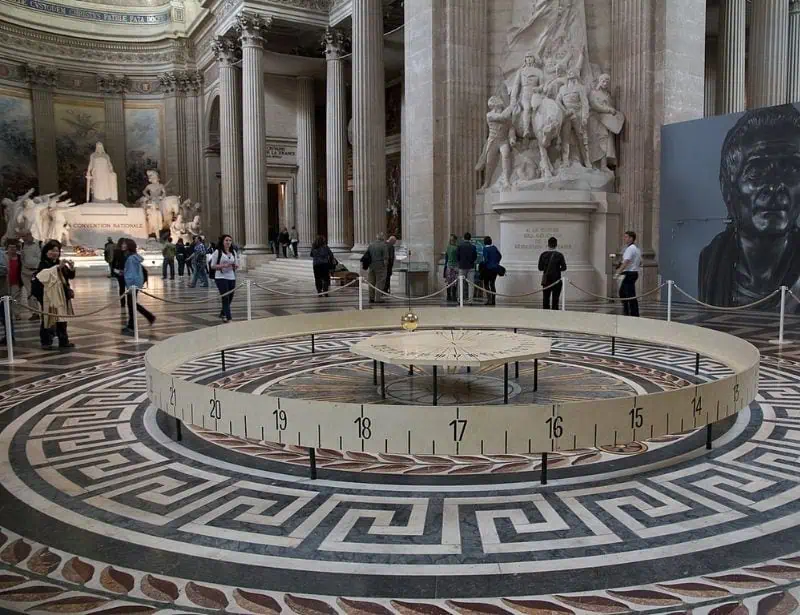
Leon Foucault made a bold promise on February 3, 1851: "You are invited to see the Earth turn." Pretty ambitious claim for the 1800s.
The breakthrough came at Paris's Panthéon on March 31, 1851. Foucault suspended a 28-kilogram brass sphere from the dome using 67 meters of steel wire. The pendulum traced patterns in sand below, appearing to rotate clockwise at 11.3 degrees per hour.
But here's the thing—the pendulum stayed in the same plane. Earth rotated beneath it.
This experiment made invisible physics visible. This relates to something bigger; it sparked widespread public fascination with astronomy. What seemed impossible became undeniable proof of our spinning planet.
Hands-On Ways to Experience Earth's Rotation
Science centers around the world house approximately 300 operating Foucault pendulums. These installations turn abstract concepts into something you can actually watch.
You can experience rotation through:
- Foucault pendulum observations at science centers
- Simple pendulum experiments using a string and a weight
- Planetarium rotation demonstrations
- Astronomy club stargazing sessions
- Educational social media participation with #EarthRotationDay
The Houston Museum of Natural Science operates a 60-foot pendulum that completes 180-degree precession daily. Interactive exhibits with hands-on learning help students learn way more than static displays.
Why do these work so well? They connect abstract physics to visible motion. Research shows interactive demonstrations produce learning gains of 31-50% compared to traditional instruction methods. That's real progress in science education.
Global Educational Movement and Community
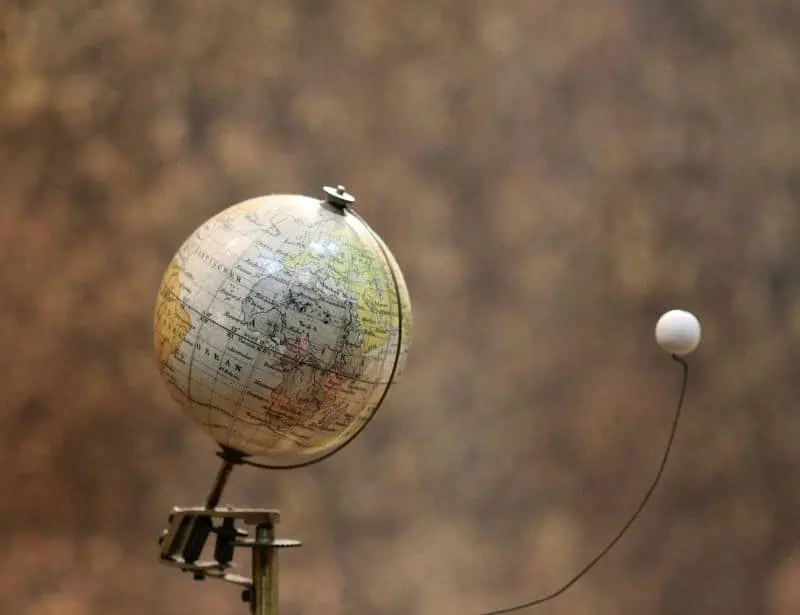
Museums, observatories, and educators worldwide drive this initiative—no central organization runs it. The science community created Earth's Rotation Day to promote understanding of our rotating planet through grassroots passion.
Schools from universities to planetariums participate annually. Science teachers use January 8th to introduce physics concepts through historical discovery. This community-driven approach makes scientific knowledge accessible across different cultures and age groups.
Social media amplifies local demonstrations. This creates worldwide conversations about Earth's rotation and Foucault's legacy.
Why This Invisible Force Matters Today
Earth's rotation creates our day-night cycle. This spinning motion influences weather patterns, ocean currents, and air movement—pretty much everything about our planet's behavior.
The Foucault pendulum serves as a gateway to deeper astronomical appreciation. Students who witness Earth's rotation through pendulum motion often develop a lasting interest in physics and astronomy. That connection between seeing and understanding can't be replicated through textbooks.
This invisible force shapes every moment.
Earth's Rotation Day reminds us that science makes the invisible visible—and that's powerful.
Resources:
FAQs (Frequently Asked Questions)
Earth spins at different speeds depending where you stand. The equator moves fastest at 1,037 mph. Head to Minneapolis or Milan at 45° latitude? You're moving 733 mph. The poles barely budge - they just pivot slowly in place. Why the big difference? Earth's circumference shrinks toward the poles, but the 24-hour rotation stays the same. This speed variation drives the Coriolis effect, which gets stronger as you move north or south.
We move with Earth at constant speed, so there's no sensation. Think about cruising in a smooth airplane - same principle applies here. Our inner ear never evolved to detect this motion since Earth's been spinning steadily throughout human development. We only notice movement when speed changes or direction shifts. Since Earth maintains its steady spin, our bodies register nothing.
Millersville University found teachers can build working pendulums at home. These foot-long versions show rotation as their swing pattern shifts beneath them. Beyond this approach, Princeton University created tabletop experiments using ferrite cylinders. The cylinders generate electrical currents from Earth's rotation through magnetic fields. Both methods prove you can observe planetary motion without massive equipment. Modern physics makes these demonstrations increasingly compact and practical.
Jupiter wins the speed contest with 9.8-hour days, despite being 11 times wider than Earth. Venus crawls along backward, taking 243 Earth days per rotation. Mars nearly matches us at 24.6 hours. Gas giants generally spin much faster than rocky planets - they kept more angular momentum when forming. Earth's rotation rate creates stable weather patterns and moderate temperature swings.
Instant stoppage would trigger catastrophic effects. Everything loose would keep moving eastward at 1,000 mph, creating massive winds and tsunamis. Each day and night would last six months, causing extreme temperature swings. Ocean currents would die, reshaping global climate completely. In practice, Earth naturally slows about 2 milliseconds per century due to tidal friction. This gradual change poses zero threat to life.
Barbara is a former journalist who is passionate about translating important causes into engaging narratives. She combines communication expertise with an environmental science background to create accessible, fact-driven content.
