
Biggest Threats to the Amazon Rainforest We Should Overcome

Situated in South America, an emerald canopy has been a pillar of the global economy and Earth’s climate system for generations. Unfortunately, unprecedented threats to the Amazon forest have also been looming in the past decades, from deforestation, climate change, and industrial exploitation.
As agricultural expansion, illegal logging, mining activities, and policy failures escalate, the Amazon nears a tipping point with dire consequences for biodiversity and climate stability.
This article examines the urgent challenges facing the Amazon rainforest and the devastating consequences we will face if we fail to safeguard the “Lungs of the Earth.”
Here are the common threats to the Amazon Rainforest. Click the link to know more about each.
What is the Amazon rainforest?
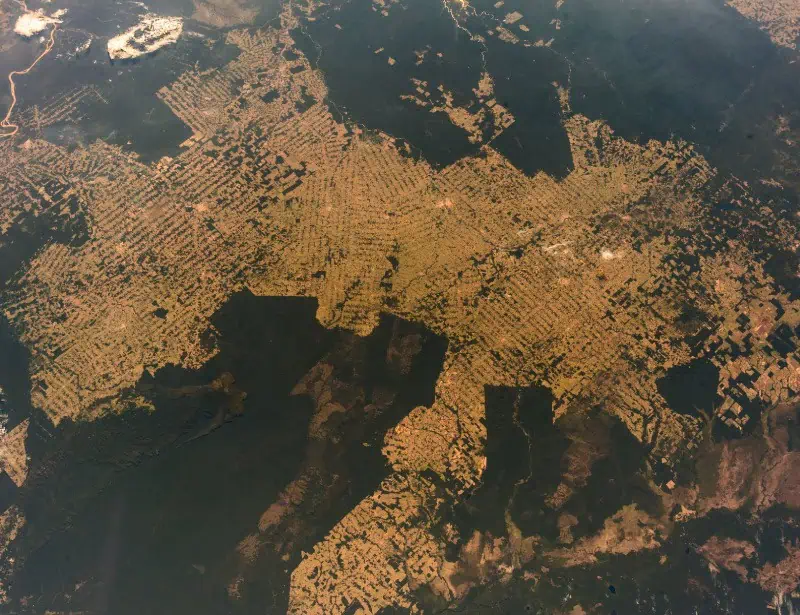
The Amazon rainforest is the largest tropical forest in the world, covering 2,300,000 square miles (6,000,000 square kilometers) of land and about 40% of South America. It spans nine countries, with 60% in Brazil, 13% in Peru, 10% in Colombia, and minor forest areas in Bolivia, Ecuador, French Guiana, Guyana, Suriname, and Venezuela.
Bounded to the north by the Guiana Highlands, to the west by the Andes Mountains, to the east by the Atlantic Ocean, and to the south by the Brazilian central plateau, the Amazon region is the most biodiverse ecological area. It is filled with countless species of animals, plants, insects, and other life forms yet to be recorded by science.
It contains about 10% of the world’s plant and animal species, including more primate species than any other rainforest ecosystem. Home to approximately 200 Indigenous communities, it is inhabited by around 2.2 million people. The Brazilian Amazon is home to 21 million people, equivalent to the populations of London, New York, and Los Angeles.
The Amazon basin holds ¼ of the world’s freshwater and 48 billion tons of carbon dioxide. This makes the Amazon River the largest in any rainforest ecosystem. It is five times more voluminous than the Congo River and twelve times more than the Mississippi. The river flows 125 miles out before mixing with the Atlantic Ocean. One of five fish populations lives in the Amazon River.
The Amazon rainforest is vital because it produces 20% of the world’s oxygen through photosynthesis, earning the forest the title of the Lungs of the Earth. It is so big that it generates its own weather systems and even influences rainfall patterns across South America.
The Amazon biome also produces 25% of modern medicine and holds potential cures yet to be discovered.
Learn more about this vital rainforest in our Amazon facts collection.
Most Prominent Threats to the Amazon Forest
1. Deforestation
Deforestation is the leading threat causing the loss of Indigenous lands, animal species, and fauna. It is intentionally cutting down trees and clearing land in the environment. Although it isn’t common in our modern age, it is the most common way to clear land to make space for agriculture and animal grazing.
The clearing of forested areas has greatly altered the Earth. Over 2,000 years ago, 80% of Western Europe was covered with plants and trees; now, only 34% is forested. From the 1600s to the 1870s, over half of the forests in North America were destroyed for timber and agriculture.
Over 4,000 years ago, China had a large expanse of forested areas. Now, it has reduced to over 20%. Most current deforestation occurs in tropical rainforests, especially in the Amazon rainforest.
Amazon deforestation is deadly because we lose about 5 million hectares of forest annually. While the Amazon rainforest spreads across nine countries, most deforestation occurs in the Brazilian Amazon. According to statistics, a third of global deforestation rates are in South America. The Brazilian Amazon alone loses 1.7 million hectares yearly.
Deforestation in the Amazon rainforest occurs for various reasons: land clearing for agricultural expansion, cattle ranching for beef production, gold mining, logging, and infrastructure development.
Deforestation in the Amazon also occurs naturally due to forest fires. However, it is difficult to tell when a forest fire in the Brazilian Amazon rainforest is natural because humans intentionally set fire to some parts of the forest to clear it or hunt for animals. In most cases, the fires get out of hand or are expanded by heavy winds.
Let’s explore some causes driving deforestation in the world’s largest rainforest.
Cattle Ranching
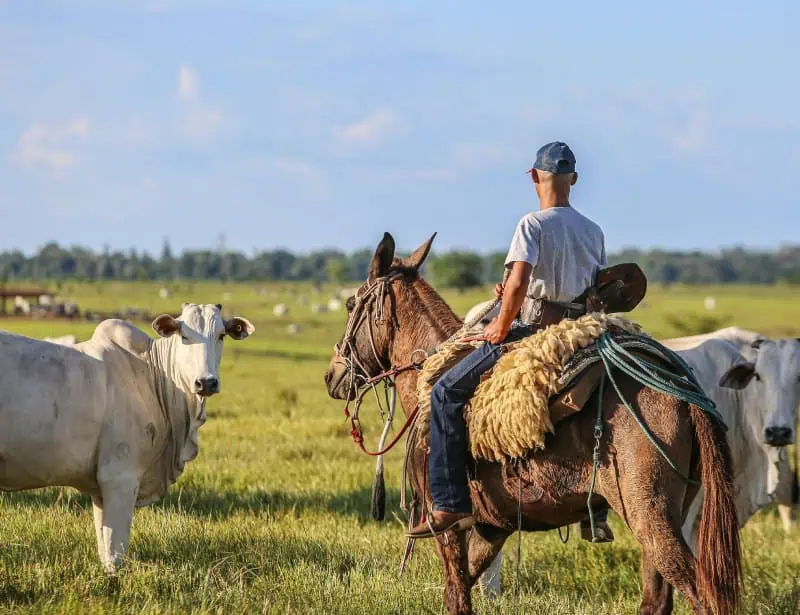
Cattle ranching raises cows for meat consumption and other cow-based products like dairy and leather. Americans have a high demand for meat, leading to increased cattle rearing to meet that demand. Cattle ranching is the leading cause of deforestation in the Amazon rainforest, specifically in the Colombian and Brazilian Amazon.
We have lost about 780,000 square kilometers of the Brazilian Amazon to cattle pastures. Americans are responsible for this, given that they are the second-largest consumers of Brazilian beef, buying over 320 million pounds of meat.
According to an article in the Washington Post, JBS, the world’s largest beef producer, bought cattle from ranchers responsible for deforestation in Brazil. About 114 of JBS’s supply chain ranchers are responsible for Brazil’s forest loss.
In Colombia, cows have more land than indigenous peoples. According to the IUCN, between 2005 and 2015, we lost about 50% of the Colombian Amazon rainforest to cattle ranchers. Cattle ranching takes up 36.6% of Columbia’s useable land, with large-scale ranches taking up to 3.5 hectares.
2017 saw the highest deforestation rates in the Colombian Amazon, as we lost over 183 hectares to cattle ranching. Deforestation in the Amazon basin uses the slash-and-burn technique, where farmers cut plants, let them dry, and set them on fire to clear space.
Agricultural Expansion (Soybean Plantation)
Agricultural expansion, on the other hand, is another human activity responsible for the high Amazonian deforestation rates.
From 2001 to 2015, 8.2 million hectares of forest were cleared for soy globally. In Brazil, 48% of soy-driven deforestation occurred in the Amazon. This places Amazon as a major center of agriculture-related forest loss, especially from soy expansion.
Brazil is one of the biggest exporters of agricultural produce, especially soybean oil and meal. The demand for these two by-products of soybeans is primarily used in high-protein animal feed and as refined cooking oil. It is the most essential harvested crop since the 1990s.
In 2019, the United Kingdom imported about 3.5 million tonnes of soy, mostly from Brazil, Argentina, and the United States. Over 75% of this soy was used for animal feed.
Brazil’s soybean plantations grew to 13.9 million hectares in 2000 and reached a whopping 24.2 million hectares in 20109. Farmers use fertilizers as a nutrient source and pesticides to control diseases, insects, and weeds. Sometimes, they switch out soybeans to plant rice and corn, but the farmers primarily practice soy monoculture.
Legal and Illegal Logging

Logging is another activity responsible for the large deforested areas in the Amazon rainforest. Both legal and illegal logging involve the removal of trees from forests, often for industrial purposes. And it is usually fueled by a high demand for timber products. it
Some laws legalize logging in some parts of Brazil; however, most of it is illegal. Research indicates that 80% of logging conducted in the Amazon basin of Brazil in the late 1990s was unlawful1.
Illegal logging is characterized by the use of forged logging permits and the cutting of commercially valuable trees. This includes those protected by the Brazilian government, and exceeding authorized quotas. It also includes stealing timber from protected areas and indigenous territories.
Logging activities started at the edge of the Amazon rainforest and moved towards the Amazon biome's core. The Amazon Institute of Man and the Environment (IMAZON) revealed that logging activities cleared approximately 1.15 million acres of the Brazilian Amazon in a single year.
It also showed that illegal logging occurred in protected areas and around Indigenous territories. Illegal loggers are also responsible for some of the deforestation in the Colombian Amazon. In Brazil, the police seized about 226,000 cubic meters of illicit wood in March 2021.
The study by Imazon showed that illegal logging in the Amazon occurred on 61,445 acres of protected areas meant for Indigenous communities. All this logging occurs without plans to replace the cut trees, which reduces the Amazon’s ability to store carbon dioxide and provide shelter for various animal species.
Infrastructure Projects
Building infrastructure like roads, highways, and hydropower dams is a big part of human civilization. The building of infrastructure in the Amazon rainforest is due to the growing workforce in various industries, such as agriculture and mining.
These industries need to build a network of roads and other infrastructure to facilitate transportation within their supply chains. To create these infrastructures, they cut down trees and vegetation to clear land space, facilitating habitat destruction and displacing various animals and insects.
It also creates an opening for other industries to exploit the forests and their resources. Building new roads or repairing old ones provides access to the remote areas of the forests and increases the range of land-grabbing and exploitation.
Apart from building a network of roads and highways, dams also disrupt the sanctity of the rainforest, especially the Amazon River. Dam construction significantly disrupts river connectivity by altering the natural flow patterns of the water, its sediments, and nutrients.
As of March 2025, we are witnessing how infrastructure projects are detrimental to the Amazon rainforest. A four-lane highway is being constructed, cutting through tens of thousands of acres of protected areas in the Amazon rainforest.
Brazil is facilitating this construction in anticipation of the COP30 climate summit in Belem, Brazil. The government is building the highways to reduce traffic during the summit, which could host over 50,000 people. However, indigenous peoples are outraged by the construction because of the deforestation it facilitated.
Disrupting the environment defeats the purpose of a climate summit, which promotes sustainable development. Locals have lost access to vegetation and the harvest meant to be their source of income. The road fragments the ecosystem and disrupts the movement of wildlife through what used to be their habitat. Furthermore, the construction has injured several animals, like sloths.
Mining Operations

Illegal mining operations within Indigenous territories are another threat, causing deforestation in the Amazon rainforest. A study showed that mining caused almost 10% of the deforestation in the Amazon area in Brazil between 2005 and 20154. Mining-induced deforestation caused the loss of 11,670 square kilometers.
Mining activities are rampant in the Amazon rainforest because it contains minerals like gold, tin, iron ore, copper, nickel, bauxite, and manganese. Mining organizations cut down trees and vegetation to set up their bases. For instance, a report by MapBiomas showed that illegal miners operate about 320 airstrips in local communities.
Another survey conducted by the World Wildlife Fund Brasil, at the request of the Amazon Cooperation Treaty Organisation (ACTO), showed the presence of 4,114 illegal mining sites in the Amazon rainforest5.
According to the Earth Journalism Network, illegal mining activities caused the Venezuelan Amazon to lose 5,266 square kilometers of vegetation between 2011 and 2015. Illegal miners cause irreparable damage to indigenous communities and destroy critical habitats.
An example is the destruction of 632 kilometers of rivers within the local communities of Munduruku and Sai Cinza in the Brazilian state of Pará in 2021. In 2022, miners dumped a mining by-product known as tailings into the Tapajos River, causing the waters in front of Alter do Chão to change color.
Furthermore, illegal gold mining and mercury dumping harm all forms of life in surrounding areas. Research shows that miners have pumped 2,300 tons of mercury into the Amazon River6, which has passed through Brazil since 1994.
Further study shows Brazil’s fish species have the highest mercury concentrations, measuring 8.71 ppm7. Mercury enters the food chain and is consumed by local communities, causing major health issues that affect the lungs, kidneys, immune system, digestive tract, and nervous system.
Weak enforcement of government policies and environmental regulations
Deforestation in the Amazon rainforest increased significantly in 2019 during former president Jair Bolsonaro's tenure because he prioritized the profit streams of companies instead of the well-being of indigenous peoples.
He created policies that systematically undermined environmental protections set in place to protect indigenous communities, their lands, and the wildlife inhabiting these areas. During Jair’s tenure, Amazon deforestation increased by 9.5% from the previous year, with the forest losing 11,088 square kilometers between August 2019 and July 2020.
During his tenure, illegal mining and deforestation became more rampant. Part of his 2018 campaign was to legalise mining activities in the Amazon, creating a pathway to exploit the earth’s largest rainforest.
Jair Bolsonaro slashed the budgets of environmental protection agencies and conservation organizations like national parks by 24%. He also weakened environmental laws on deforestation, making it easy for culprits to escape.
Another way Jair facilitated the further deforestation of the Amazon beyond its tipping point was through a provisional measure he introduced on December 10, 2019. The provisional measure allowed for legalized land claims for up to 1,500 hectares through the simple declaration of self-ownership2.
The provisional measure essentially legalized land grabbing in the Amazon, giving room for organized crime groups to exploit the forest's resources.
2. Illegal Wildlife Trade

Animal trafficking, the illegal trade of wildlife, is another major threat facing the Amazon rainforest. It is the second-biggest contributor to the declining rates of wildlife species in the Amazon after habitat destruction. Some animal species that are victims of animal trafficking include splash-backed poison frogs, river turtles, ornamental fish, wild meat, and jaguars.
Despite the regulation by the Convention on International Trade in Endangered Species of Wild Fauna and Flora (CITES), smuggling river turtle eggs is a booming trade in the Amazon. Traffickers sell them as decorative items, traditional medicine, pets, and food.
The global demand for trafficked ornamental fish species is relatively high. Over 30 species, including the Silver Arowana, Cardinal Tetra, Zebra Pelco, and Arapaima, were trafficked between 2012 and 2019.
Traffickers also kill wildlife to sell exotic meat across regional and international markets. There is a market for poached capybara, deer, paca, and tapir meat. They also poach jaguars for their body parts, including fangs, skin, meat, skulls, and paws. Since 2015, Brazilian enforcement officials have recovered jaguar body parts at least 30 times.
Bird species are also popular among the trafficking community and the international markets. About 400 bird species are trafficked from the Amazon rainforest. In 2015, about 3 million birds were registered through illegal and fraudulent practices to launder wild and trafficked birds8.
Environmental Impact of Deforestation
The Amazon rainforest is critical in regulating global climate change, but rampant deforestation threatens this delicate balance. When forests are cleared, the carbon stored in trees is released as greenhouse gas emissions, accelerating climate change.
Scientists warn that the Amazon is nearing a dangerous tipping point, where large-scale forest loss could trigger irreversible damage. If too much of the ecosystem is destroyed, the remaining forests may dry out, leading to a collapse in biodiversity and further intensifying climate change.
The Amazon stores an estimated 123 billion tons of carbon3. However, deforestation caused by cattle ranching, agricultural expansion, infrastructural projects, and mining activities is turning this vital carbon sink into a source of carbon emissions.
Now, the Amazon rainforest releases 1.1 billion tons of carbon annually because of deforestation and unsustainable land use. Given Amazon’s influence on weather patterns worldwide, especially across Latin America, environmental degradation could disrupt agriculture and water supplies for millions.
Without urgent action to protect these forests, the world risks losing one of its most powerful natural defenses against rising temperatures. Protecting the Amazon is not just about saving trees—it is about safeguarding the planet from the catastrophic effects of climate change.
Conclusion
The Amazon rainforest stands at a critical juncture where future deforestation could push it past irreversible tipping points. As this deep understanding reveals, the Amazon affects global climate systems, and its destruction would unleash catastrophic greenhouse gas emissions, accelerating climate change.
Immediate action—from stronger policies to sustainable practices—is vital to preserving this irreplaceable ecosystem. The choices made today will determine whether the Amazon rainforest continues to thrive or collapses, with dire consequences for the planet.
Glossary Terms:
| 1 | Viana, G. (1998). Report of the External Commission of the Chamber of Deputies Destined to Investigate the Acquisition of Wood, Lumber Mills, and Extensive Portions of Land in the Amazon by Asian Loggers. Brasilia, Brazil. |
| 2 | Ferrante, L., Andrade, M. B. T., & Fearnside, P. M. (2021). Land grabbing on Brazil’s Highway BR-319 as a spearhead for Amazonian deforestation. Land Use Policy, 108, 105559. |
| 3 | Gatti, L. V., Basso, L. S., Miller, J. B., Gloor, M., Domingues, L. G., Cassol, H. L. G., Tejada, G., Aragão, L. E. O. C., Nobre, C. A., Peters, W., Marani, L., Arai, E., Sanches, A., Corrêa, S. M., Anderson, L. O., Von Randow, C., Correia, C., Crispim, S. P., & Neves, R. A. (2021). Amazonia as a carbon source linked to deforestation and climate change. Nature, 595(7867), 388–393. |
| 4 | Sonter, L. J., Herrera, D., Barrett, D. J., Galford, G. L., Moran, C. J., & Soares-Filho, B. S. (2017). Mining drives extensive deforestation in the Brazilian Amazon. Nature Communications, 8(1). |
| 5 | da Costa, M. O. et al.,(2023). Technical Note: Mercury Contamination in the Amazon. WWF-Brazil. |
| 6 | da Costa, M. O. et al.,(2023). Technical Note: Mercury Contamination in the Amazon. WWF-Brazil. |
| 7 | da Costa, M. O. et al.,(2023). Technical Note: Mercury Contamination in the Amazon. WWF-Brazil. |
| 8 | Charity, S., Ferreira, J.M.(2020). Wildlife Trafficking in Brazil. TRAFFIC International, Cambridge, United Kingdom. |
| 9 | Boucher, D., Elias, P., Lininger, K., May-Tobin, C., Roquemore, S., & Saxon, E. (2011). Soybeans. JSTOR. |
Jen’s a passionate environmentalist and sustainability expert. With a science degree from Babcock University Jen loves applying her research skills to craft editorial that connects with our global changemaker and readership audiences centered around topics including zero waste, sustainability, climate change, and biodiversity.
Elsewhere Jen’s interests include the role that future technology and data have in helping us solve some of the planet’s biggest challenges.
Fact Checked By:
Isabela Sedano, BEng.
