
Interview: Sofia Fonseca - Where Archaeology Meets Sustainability

1. Tell us about your journey in becoming an archaeologist.
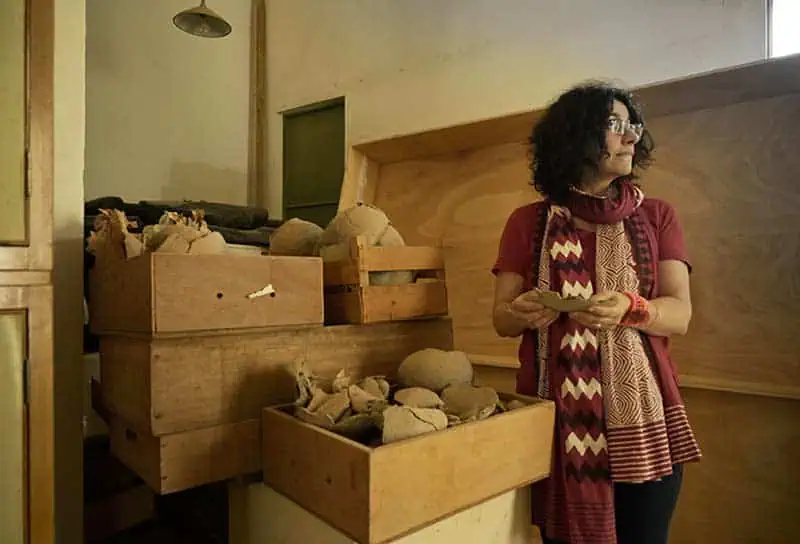
My journey began when I was 12 years old, sitting in a classroom in Portugal. My incredible history teacher, Mercia Bandeira, gave a lesson on Ancient Egypt—and I instantly knew I wanted to become an archaeologist. At that moment, everything clicked. There were no Egyptology programs in Portugal at the time, so as soon as I could, I went abroad to follow that calling.
After finishing my degree at Coimbra University, I moved to Barcelona, where I began studying Egyptology—and there, I encountered something that would change my life: the prehistory of Egypt, deeply rooted in Africa. It brought together two lifelong fascinations of mine—Egypt and Africa—and challenged the then-dominant view of Egypt as a purely Near Eastern civilization. Over the years, that perspective has evolved. Today, we increasingly recognize Ancient Egypt as a cultural crossroads, shaped by the convergence of Africa, the Near East, and the Mediterranean.
Although Egypt was my first love, Mauritania changed my life. It was there that I truly began to understand the deep connection between cultural heritage and the daily lives, stories, and resilience of local communities. In Mauritania, I moved from field excavations to cultural heritage management and capacity building, especially across North and West Africa, always working to reconnect heritage with local communities and broader development goals.
Today, I focus on collaborative projects that bridge archaeology with education, sustainability, and cultural resilience. But it all started in that classroom, with a story about the Nile and a teacher who believed in the power of the past to shape our future.
2. Tell us about the vision for the establishment of an association for all archaeologists of Europe (EAA) and its mission.
The European Association of Archaeologists (EAA) was founded in 1994 in Ljubljana, Slovenia, to create a platform for archaeologists across Europe to collaborate, share knowledge, and promote ethical and professional standards. It was later recognized by the Council of Europe in 1999. Its mission is to foster dialogue among archaeologists of all specializations and regions, engage with societal challenges, and ensure archaeology contributes meaningfully to contemporary issues.
I’ve been a proud member since 2018 and currently serve as Co-Chair of the Community on Archaeology and Tourism. In this role, I work to promote responsible and sustainable tourism practices grounded in heritage values, and to create spaces for reflection on archaeology's role in shaping more inclusive and resilient futures.
3. Tell us about the impact of climate change on archaeological sites and its consequences.

Climate change is not a distant threat—it’s a crisis unfolding now, and archaeology is already feeling its impact. Rising sea levels are endangering coastal sites; increased rainfall and flooding are weakening structures, washing away stratigraphy, and eroding the archaeological record; desertification is exposing once-buried features to wind erosion; and wildfires and extreme heat are affecting landscapes and organic materials. Sites made of fragile materials—like earth, wood, or plant fibers—are particularly at risk.
But the damage isn’t only physical. Climate change is also affecting how communities relate to their heritage. When people are displaced or their environment transforms, cultural landmarks can lose their context and meaning. This challenges us to rethink how we approach conservation—not just in terms of stabilizing structures, but in supporting communities, adapting heritage management plans, and ensuring that climate strategies include cultural dimensions. Archaeology, in this sense, becomes both a witness to change and a tool for resilience.
4. Which organizations does EAA collaborate with?
EAA collaborates with a wide range of organizations, including ICOMOS, Europa Nostra, the United Nations Educational, Scientific and Cultural Organization (UNESCO), and academic institutions across Europe. These partnerships strengthen our ability to address complex challenges in heritage protection and promote shared standards and values.
Within the Community on Archaeology and Tourism, which I co-chair, we also partner with local tourism stakeholders, heritage managers, and environmental initiatives to bring multidisciplinary perspectives into the conversation. Last year, during the EAA Annual Meeting in Rome, we organized a special visit to the archaeological site of Ostia Antica, supported by the EAA Special Support Fund. It brought together archaeologists, tour operators, site managers, and local actors to reflect collectively on sustainable and inclusive tourism models—a powerful example of how collaboration can spark meaningful dialogue and future-oriented thinking.
5. Tell us about the vision for the establishment of the International Council on Monuments and Sites (ICOMOS), its mission, and your responsibilities for this foundation.

ICOMOS was founded in 1965, following the adoption of the Venice Charter in 1964, to serve as a global network of heritage professionals dedicated to the conservation and protection of cultural heritage in all its forms. While I was not part of its foundation, I am proud to contribute to its mission today.
The organization plays a central role in advising UNESCO on World Heritage matters and brings together experts in architecture, archaeology, conservation, planning, and heritage management from around the world. Its mission is to promote the conservation of monuments and sites through international cooperation, knowledge exchange, and ethical practice.
Currently, I serve as Secretary-General of the International Cultural Tourism Committee (ICTC), one of ICOMOS’s scientific committees. At ICTC, we focus on the relationship between tourism and heritage, working to ensure that cultural tourism supports community wellbeing, sustainability, and the safeguarding of heritage values. Our main reference document is the ICOMOS International Charter for Cultural Heritage Tourism (2022), which sets out principles for responsible and inclusive tourism that respects local contexts and enhances heritage protection.
6. Tell us about how ICOMOS and artist Nicholas Roerich whose 150th birthday fell on the hottest year on record last year, are linked.
Nicholas Roerich was not only a visionary artist and thinker, but also a pioneer in the global movement to protect cultural heritage. His most influential legacy in this regard is the Roerich Pact, signed in 1935, which was the first international treaty focused exclusively on the protection of cultural property during both war and peace. It introduced the Banner of Peace, a symbol to identify and safeguard cultural sites—an idea that has strongly influenced heritage protection standards to this day.
While Roerich did not directly contribute to the founding of UNESCO or ICOMOS, his work laid the ethical and legal groundwork for both. The principles enshrined in the Roerich Pact helped inspire the 1954 Hague Convention, which in turn contributed to the creation of UNESCO in 1945 and later the founding of ICOMOS in 1965. Both institutions carry forward the belief in the universal value of culture and the responsibility to protect it.
In today’s context—when we are facing climate emergencies that put cultural heritage at unprecedented risk—Roerich’s call to safeguard cultural sites as symbols of peace and resilience feels more urgent than ever. His legacy continues to resonate with ICOMOS’s mission to conserve heritage not only as a memory of the past but as a resource for the future.
7. How many Monuments and Sites around the world has ICOMOS identified and is protecting at this time?
ICOMOS does not identify, inscribe, or directly protect monuments and sites. That is the responsibility of UNESCO, specifically through the World Heritage Committee, which oversees the implementation of the World Heritage Convention. As of 2024, there are 1,223 World Heritage Sites worldwide—including cultural, natural, and mixed properties—across 168 countries.
ICOMOS plays a central role as one of UNESCO’s official Advisory Bodies, providing independent, expert-based evaluations and recommendations for cultural and mixed heritage nominations. We contribute through desk reviews, technical assessments, field missions, and by advising on the state of conservation of already-inscribed properties. Our contributions ensure that each site is evaluated according to internationally agreed standards of cultural significance and conservation practice.
Founded in 1965, following the adoption of the Venice Charter in 1964, ICOMOS has been instrumental in shaping the doctrinal and philosophical frameworks for heritage conservation globally. Through our International Scientific Committees, National Committees, and Working Groups, we develop and promote standards of good practice, advocate for heritage protection, and bring together diverse expertise from around the world.
While we do not hold legal authority over sites, ICOMOS provides essential support to ensure that heritage conservation is carried out with professionalism, impartiality, cultural sensitivity, and long-term sustainability—always within the framework of the UNESCO World Heritage Convention.
8. Tell us about the impact of climate change on Monuments and sites and their consequences.

Climate change is a growing and often irreversible threat to cultural heritage. It accelerates the deterioration of monuments and sites through a range of processes: coastal erosion and rising sea levels threaten waterfront sites; increased rainfall, flooding, and humidity can lead to structural instability and biological growth; salt intrusion corrodes stone and metals; and desertification and high winds wear down exposed surfaces. Changes in temperature and precipitation patterns are also shifting the very environmental conditions many heritage sites were designed to withstand.
Earthen architecture and archaeological sites—often fragile and exposed—are especially vulnerable. In many cases, damage is happening faster than local conservation strategies can adapt, particularly in regions with limited resources.
Beyond the physical impact, climate change also disrupts the cultural and social relationships people hold with heritage places. Displacement, land degradation, and ecological shifts can detach communities from their heritage or change the way it is understood and used.
ICOMOS has been at the forefront of advocating for the inclusion of cultural heritage in global climate policy. Through initiatives like the Climate Heritage Network and tools such as the Climate Vulnerability Index (CVI), we help identify the specific risks climate change poses to heritage sites and support the development of context-sensitive adaptation and mitigation strategies. But the conversation is also shifting: from heritage as merely at risk, to heritage as a resource—offering knowledge, traditional practices, and values that can help communities respond to climate challenges more sustainably.
9. Which organizations does ICOMOS collaborate with?
ICOMOS collaborates closely with UNESCO, the International Centre for the Study of the Preservation and Restoration of Cultural Property (ICCROM), and the International Union for Conservation of Nature (IUCN), serving as one of the three official Advisory Bodies to the UNESCO World Heritage Committee. In addition, it works with a wide range of international, national, and regional institutions on issues related to conservation, sustainable development, risk preparedness, and the promotion of good heritage practices.
ICOMOS also actively engages with the Climate Heritage Network (CHN)—a global, cross-sectoral coalition that brings together arts, culture, and heritage organizations to support climate action. Through CHN and other initiatives, ICOMOS contributes to dialogues at the intersection of heritage and climate policy, providing cultural perspectives to global processes like the UNFCCC and the IPCC.
These collaborations enable ICOMOS to share technical expertise, advocate for the role of heritage in sustainable and resilient development, and promote inclusive strategies that center communities and cultural values.
10. Tell us about your vision to establish Teiduma and its mission.
I founded Teiduma in 2008 with a clear mission: to support local development through cultural heritage. The name Teiduma means baobab tree in Hassanya, the Mauritanian Arabic dialect. The baobab is a powerful symbol—of longevity, knowledge, rootedness, and adaptability—and it perfectly reflects the values and vision of the work we do.
Teiduma is a space where archaeology meets sustainability, education, and community engagement. Our work ranges from developing heritage-based tourism strategies across Africa and the Mediterranean to launching food waste reduction initiatives within the tourism sector. Each project is rooted in collaboration, cultural understanding, and the belief that heritage can be a tool for meaningful and transformative development.
More than a consultancy, Teiduma is a platform shaped by care, humility, and respect—for people, for place, and for the shared histories that connect them. We work across disciplines and geographies, always with the aim of co-creating grounded, future-oriented solutions inspired by culture and community wisdom.
11. Tell us about Teiduma's support for artists like photographer and filmmaker Alfons Rodriguez.
Teiduma began supporting Alfons Rodríguez’s work in 2023, at COP28 in Dubai, featuring its powerful visual essay The Melting Age. Since then, we’ve supported its international tour, including screenings for Earth Day 2025 that will take place on the 22nd April, across three continents. A major highlight was the projection of Alfons’s work in Times Square on March 25, 2025, as part of the first-ever International Day of Glaciers—a striking moment that brought climate narratives into one of the world’s most visible public spaces.
But my relationship with Alfons goes back much further. We’ve been friends since the early 2000s, when we worked together in Mauritania on the Walata-Tichitt project. Alfons was the author of the book Walata i Tichitt. Cor i ànima del desert maurità (Món-3, 2008), which beautifully captured the spirit of the people and landscapes we were engaging with. That collaboration planted a seed—my first real encounter with the power of visual storytelling in heritage work.
Supporting artists like Alfons, who blend culture, advocacy, and artistic excellence, is something I find deeply rewarding. This may have been the first formal collaboration between Teiduma and an artist, but it certainly won’t be the last. I believe in building networks around people who use their art to speak for our planet, our memory, and our shared future.
Related: Interview: Alfons Rodriguez - Photographer & Film Maker.
12. Which organizations does Teiduma collaborate with?
Teiduma has an international soul. From the start, we’ve believed in the power of cross-cultural and cross-sector collaboration to advance meaningful heritage and sustainability work. We have partnered with institutions such as the German Archaeological Institute, the Museum of West African Art (MOWAA) in Nigeria, as well as universities, museums, and local NGOs across Africa and Europe.
We also work closely with international networks, including ICOMOS, UNESCO-related programs, and environmental platforms, especially those focused on the intersection of culture and climate action. These partnerships allow us to remain flexible, interdisciplinary, and responsive—bringing together archaeologists, educators, artists, community leaders, and policy-makers to co-create initiatives grounded in care, knowledge, and local relevance.
13. Tell us about your membership at Climate Heritage Network and your mission.
As a member of the Climate Heritage Network (CHN), I advocate for the full recognition of cultural heritage as both a casualty and a solution in the climate crisis. CHN is a global, volunteer-driven network of arts, culture, and heritage actors committed to mobilizing the power of cultural heritage to support just, low-carbon, and climate-resilient futures.
My mission within this network is to help shift the narrative: heritage is not only vulnerable to climate change—it is also an invaluable resource. Traditional knowledge systems, vernacular architecture, cultural landscapes, and community-based practices offer tested, place-based responses to environmental challenges. These cultural assets can guide adaptation strategies that are rooted in identity, memory, and local relevance.
In my work, I’ve had the opportunity to contribute to initiatives that connect archaeology, sustainable tourism, and climate resilience, particularly in Africa and the Mediterranean region. From advocating for earthen architecture protection in Mauritania to developing food waste reducing strategies and approaches through heritage in Portugal, my focus is always on bridging knowledge systems—scientific, ancestral, and creative.
Through Teiduma and my roles in ICOMOS and the EAA, I aim to mainstream cultural heritage in climate dialogues and ensure communities are not just consulted but empowered in shaping heritage-based climate responses.
14. Anything else you would like to add?
Cultural heritage holds stories, skills, and perspectives that the world needs now more than ever. It teaches us how to live with the land, how to adapt, and how to value diversity—not just of culture, but of knowledge. Whether through education, collaboration, or policy, I remain committed to amplifying the voices of communities and using archaeology as a tool for justice, sustainability, and hope.
After more than two decades working across Africa, the Mediterranean, the Emirates, and beyond, I’ve seen that heritage can be a bridge—between generations, disciplines, and worldviews. My work is rooted in that belief: that through heritage, we can shape more resilient, inclusive, and imaginative futures.
15. How can people reach you?
You can reach me through my professional platform Teiduma (www.teiduma.com), LinkedIn (Sofia Fonseca), or by email at sofiafonseca@teiduma.com.
Glossary Terms:
Selva Ozelli Esq, CPA is a legal and finance executive with diversified experience dealing with highly complex issues in the field of international taxation and related matters within the banking, securities, Fintech, alternative and traditional investment funds. Her first of its kind legal analyses involving tax laws, Foreign Corrupt Practices Act (FCPA), blockchain technology, solar technology and the environment and have been published in journals, books and by the OECD. Her writings have been translated into 15 languages.
