Interview: Prof. Dr. Nesrin Çobanoğlu Yüksel, Physician & Bioethicist
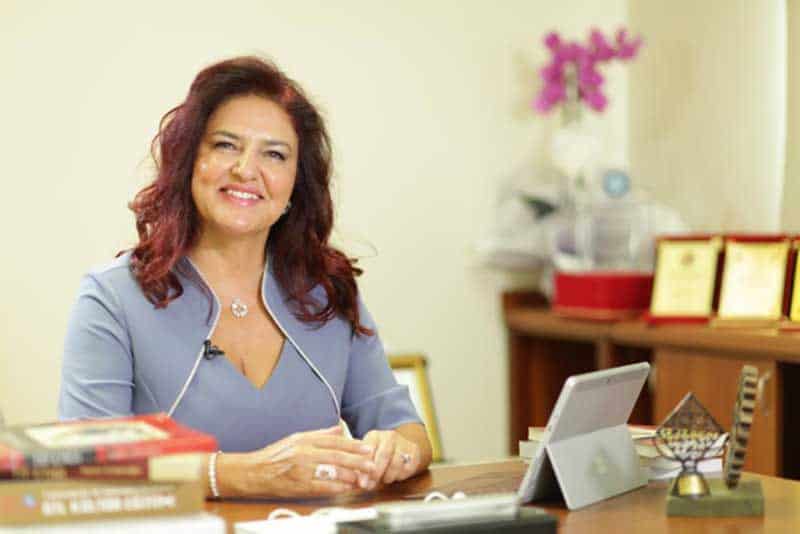
Prof. Dr. Nesrin Çobanoğlu Yüksel is a physician, bioethicist, and Chair of the Medical Ethics and History of Medicine Department at Gazi University. She has connected her academic background in bioethics and environmental ethics to the upcoming United Nations Climate Change Conference (COP31) climate summit through influential articles linking public health, cultural heritage preservation, and global environmental responsibility leading up to the summit.
- "Akdeniz'in sıcağından dünyanın vicdanına: COP31 Türkiye" (From the Heat of the Mediterranean to the World's Conscience): In this piece, she highlights Antalya as a potential host that bridges natural beauty and tourism with the deep ethical duties humanity owes to future generations. She positions the upcoming summit not merely as a clinical climate policy meeting, but as a test of global conscience and ethical responsibility.
- "Yaşamı korumak kimin sorumluluğu?" (Whose Responsibility is it to Protect Life?): Published right ahead of the summit, this article uses the analogy of intergenerational local knowledge—like a village elder passing seed-planting wisdom to a young girl—to frame climate action. She argues that evaluating environmental policy requires looking directly at the health of the community and ensuring scientific advancements move hand-in-hand with preserving cultural heritage.
Through her work, Dr. Çobanoğlu Yüksel argues that the climate crisis cannot be separated from bioethics, reinforcing that protecting ecosystems and cultural heritage are fundamental to safeguarding human health and survival. She approaches artificial intelligence and energy from a foundational ethical perspective, analyzing how technological advancements reshape human security and planetary boundaries:
- Ethical AI and Security Architectures: In her recent work, such as "Geleceğin Güvenlik Mimarisi ve Etik Yapay Zekâ, Hibrit Savaşlar ve İnsanlık Sınavı" (The Future Security Architecture and Ethical AI, Hybrid Warfare and the Test of Humanity), she explores how autonomous systems alter defense and societal infrastructures. She argues that without strict ethical boundaries, rapid AI integration poses a fundamental risk to human safety.
- The Energy-Security Nexus: Parallel to her AI ethics analysis, her research addresses energy vulnerabilities under frameworks like "Enerji Güvenliğinin Yeni Cephesi: Güneş Enerjisi ve Güvenlik" (The New Frontier of Energy Security: Solar Energy and Security). Here, she analyzes the transition to renewable energy assets not merely as a technical pivot, but as a critical requirement for geopolitical resilience and community survival.
- The Tipping Point of Innovation: Synthesizing these fields, her broader advocacy warns against treating AI as a "black box" or a limitless resource. As global AI operations drastically inflate carbon footprints and overwhelm power infrastructures, her bio-environmental framework stresses that technology must remain a cognitive tool subordinated to environmental balance and human-centric ethics
1. Tell us about your journey to becoming a physician, bioethicist, and department chair.
I graduated from Istanbul University’s Cerrahpaşa Faculty of Medicine in 1986. My postgraduate education in public administration at TODAİE, Institute of Public Administration for Turkey and the Middle East (Türkiye ve Orta Doğu Amme İdaresi Enstitüsü), and my doctorate in the history of medicine and medical ethics at Ankara University helped me connect medicine with institutions, social responsibility, and the values underlying decisions about human life.
In 2001, I began co-teaching doctoral courses in Environment, Ethics and Management with Prof. Dr. Ruşen Keleş in the Department of Social Environment at Ankara University’s Institute of Social Sciences. From 2004 onwards, I taught Environmental Ethics and Bioethics and Biopolitics independently.
The multidisciplinary nature of these courses gave me the opportunity to work on environmental questions with specialists from diverse professional backgrounds and to supervise theses in these fields. These exchanges enriched my environmental scholarship and broadened the perspective I brought to it as a physician, deepening my understanding of the connections between human health, society, and the environment.
Teaching doctoral students has also been a continuing learning experience for me. As I shared my knowledge, I learned a great deal from their questions and professional experiences. For me, this reciprocal process of learning is one of the greatest joys of academic life.
In 2004, I founded the Department of Medical Ethics and History of Medicine at Gazi University. Building a department also meant developing an educational approach: helping future physicians recognise ethical problems, listen to patients, and explain the reasons for their decisions.
My work now encompasses clinical ethics, research ethics, environmental bioethics, and the ethical implications of artificial intelligence. As Director of GÜKÇAM, Gazi University Women and Family Studies Research and Application Center (Gazi Üniversitesi Kadın ve Aile Çalışmaları Uygulama ve Araştırma Merkezi), I also bring questions of gender equality, cultural memory, and participation into this work. The connection is straightforward: protecting health requires attention to the social and environmental conditions in which people live.
2. Did you have any role models?
The qualities I value in a role model are intellectual honesty, compassion, independence of judgement, and the courage to take responsibility. I find inspiration in physicians who listen carefully to patients, educators who encourage questioning, and scholars who defend human dignity even when doing so is difficult.
I also value the contributions of women whose knowledge and labour have sustained education, care, and community life. Their achievements remind us that leadership includes making room for others to learn and contribute. These are the qualities I hope to encourage in my students.
3. What is bioethics?
Bioethics is the systematic examination of the values and responsibilities involved in decisions affecting life, health, and the living world. It asks whose interests are being considered, who may be harmed, whose voice is missing, and how a decision can be ethically justified.
In medicine, this includes informed consent, confidentiality, fair access to care, research involving human participants, and decisions at the end of life. Respect for autonomy, beneficence, non-maleficence, and justice help structure these discussions, alongside human rights, professional responsibilities, and attention to vulnerability.
Bioethics also extends to our relationships with other living beings, ecosystems, and future generations. A polluted river, an unsafe workplace, and unequal access to clean water raise ethical questions about health. This is why I see environmental responsibility as part of the duty to protect life.
4. Will you collaborate with Australian bioethics professionals for COP31?
I would welcome opportunities to collaborate with Australian colleagues in bioethics, public health, environmental ethics, and medical education. Türkiye’s hosting role and Australia’s leadership of the negotiations create a valuable setting for dialogue across different experiences of climate risk.
Shared areas of interest could include climate justice, the health consequences of extreme heat, ethical governance of AI, and the place of local and Indigenous knowledge in climate adaptation. Such exchanges should include affected communities as partners, with respect for their consent, knowledge, and priorities.
I would be interested in developing joint discussions, educational activities, or comparative research. Specific partnerships would need to be discussed and agreed with the colleagues and institutions concerned.
5. What is the impact of methane pollution on health, and how does this connect to zero waste?
The emphasis on zero waste offers an opportunity to connect climate policy with prevention and public health. Methane is an important part of that connection, especially when organic waste decomposes without oxygen in landfills.
Methane’s major population-health effects at ordinary outdoor concentrations are indirect. It contributes to the formation of ground-level ozone, which can irritate the airways, worsen asthma, and reduce lung function. Methane also drives global warming, adding to climate-related health risks. It should not be confused with carbon monoxide, which has a different mechanism of toxicity.
From a public-health perspective, prevention begins with reducing avoidable food loss and waste, separating organic waste, and managing it safely. Where methane is generated, controlling leaks and capturing emissions are important. Action must also address fossil-fuel systems and agriculture.
An ethical zero-waste policy should protect waste workers and communities living near disposal sites. Its success should be judged by reductions in waste, emissions, and harmful exposure, together with fair working conditions and meaningful community participation.
6. Tell us about your Ankara event on 25 October 2026 and your wider COP31-related work.
Our Ankara event was developed under the Culture at COP31 platform through GÜKÇAM. Its title was ‘Women’s Enduring Presence in the Transmission of Cultural Memory: A Bioethical and Biopolitical Perspective.’ The programme was dated 25 October 2026, at One Tower Business Club.
The central idea was to connect women’s roles in transmitting cultural heritage with traditional ecological knowledge, public health, and climate justice. My presentation, ‘The Cultural Layers of Bioethics and Biopolitics,’ examined both the values guiding our decisions and the institutions and power relations that shape whose needs receive attention.
The programme included five working tables: women and intergenerational cultural transmission; traditional and folkloric medical knowledge; traditional agriculture, local products, and biodiversity; climate justice and community resilience; and public health and future physicians. A student ‘Ethikathon’ was designed to give young people space to develop and discuss practical proposals.
Two principles are particularly important to me. Respect for traditional health knowledge must be accompanied by scientific assessment of safety and effectiveness. Recognition of women’s contributions must also support their freedom, participation, and fair sharing of care responsibilities.
For our wider COP31-related work, I see priorities in medical education, interdisciplinary dialogue, and public communication. These include connecting climate and health teaching with local experience, encouraging student participation, and exploring how cultural institutions and the arts can contribute to environmental responsibility.
7. How has Ankara’s air pollution changed, and what are the implications for public health?
Ankara’s experience illustrates how decisions about energy and urban infrastructure can change exposure to pollution. The city historically experienced serious winter pollution associated with coal-based heating, compounded by conditions that trapped polluted air. Research comparing air quality before and after the expansion of natural gas documented improvements in sulphur dioxide and particulate pollution.
These changes matter because particulate pollution contributes to cardiovascular and respiratory disease, while sulphur dioxide exposure is associated with asthma-related hospital admissions and emergency visits. Reducing exposure is therefore a public-health intervention. Estimating the specific number of illnesses prevented in Ankara would require dedicated epidemiological analysis.
The continuing goal should be cleaner air across every neighbourhood. Priorities include reliable monitoring, affordable clean heating, energy-efficient housing, accessible public transport, and control of traffic and industrial emissions.
Natural gas helped reduce some pollutants associated with coal combustion, but it remains a fossil fuel with climate impacts, including methane leakage. Ankara’s next steps should connect clean-air policy with decarbonisation and protection for households that struggle to afford adequate heating.
8. What ethical issues arise from AI’s energy demand and electricity infrastructure?
AI has a physical footprint. Its development and use depend on data centres, electricity networks, cooling systems, minerals, and equipment. These demands belong within any serious ethical assessment of the technology.
The International Energy Agency’s 2025 Energy and AI report projected, in its base case, that global data-centre electricity consumption would rise from about 415 terawatt-hours in 2024 to around 945 terawatt-hours in 2030. These figures cover all data centres; they should not be presented as electricity consumption by AI alone.
My ethical questions are practical: Does the application provide a meaningful social benefit? Could that benefit be achieved with fewer resources? Who gains, and who bears the local costs? Are energy use, water use, and emissions measured transparently?
AI can support medicine, energy efficiency, and climate adaptation, but benefits should be demonstrated and assessed alongside resource demands. Data-centre growth should be coordinated with additional clean electricity, suitable grid capacity, and protection of local water resources. Communities should have a voice in decisions affecting them.
Where rising electricity demand is met with additional natural gas, methane leakage becomes relevant as well. Responsible innovation requires attention to the full system, from energy supply and hardware production to operation and disposal.
9. Is there anything else you would like to add?
I would like climate action to be assessed through the lives it protects. Can a child breathe cleaner air? Can an older person stay safe during a heatwave? Can a farmer maintain a livelihood without exhausting local water resources? Do women and young people have a meaningful voice in the decisions?
Cultural heritage matters because communities carry knowledge about seasons, food, care, and cooperation. Preserving that knowledge requires respect for the people who hold it, including their consent, privacy, and freedom to decide how it is shared.
Universities can help connect scientific evidence with these lived experiences. For me, responsibility towards future generations begins with how we treat people, knowledge, and the environment today.
10. How can people reach you?
Readers and colleagues can contact me through my institutional email, nesrinc@gazi.edu.tr, or my Gazi University academic profile: https://avesis.gazi.edu.tr/nesrinc.
I welcome dialogue on bioethics, clinical ethics, environmental responsibility, medical education, women’s participation, and the ethical governance of AI.
Supporting sources
1. Academic education and contact. Gazi University, AVESİS: https://avesis.gazi.edu.tr/nesrinc and https://avesis.gazi.edu.tr/nesrinc/egitim
2. COP31 host and negotiation roles. UNFCCC, About COP31: https://unfccc.int/cop31/about
3. Zero waste and electrification priorities. UNFCCC, COP31 Presidency announces new targets: https://unfccc.int/news/cop31-presidency-announces-new-targets-on-global-electrification-cutting-waste-resilient-cities
4. Methane and ground-level ozone. European Environment Agency (2025), Methane, climate change and air quality in Europe: https://www.eea.europa.eu/en/analysis/publications/methane-climate-change-and-air-quality-in-europe-exploring-the-connections
5. Pollutants and health. WHO, Air quality, energy and health — types of pollutants: https://www.who.int/teams/environment-climate-change-and-health/air-quality-and-health/health-impacts/types-of-pollutants
6. Ankara’s fuel transition. Aydin CC, Karadavut S. The impact of increasing natural gas use on the environment and population in Ankara, Turkey. Fresenius Environmental Bulletin. 2009;18(9):1559–1566. Institutional record: https://research.hacettepe.edu.tr/tr/publications/the-impact-of-increasing-natural-gas-use-on-the-environment-and-p-2/
7. AI and electricity demand. IEA (2025), Energy and AI, chapter Energy demand from AI: https://www.iea.org/reports/energy-and-ai/energy-demand-from-aI
Glossary Terms:
Selva Ozelli Esq, CPA is a legal and finance executive with diversified experience dealing with highly complex issues in the field of international taxation and related matters within the banking, securities, Fintech, alternative and traditional investment funds. Her first of its kind legal analyses involving tax laws, Foreign Corrupt Practices Act (FCPA), blockchain technology, solar technology and the environment and have been published in journals, books and by the OECD. Her writings have been translated into 15 languages.