
Interview: Maya Lilly, Producer, Speaker, and Climate Storyteller
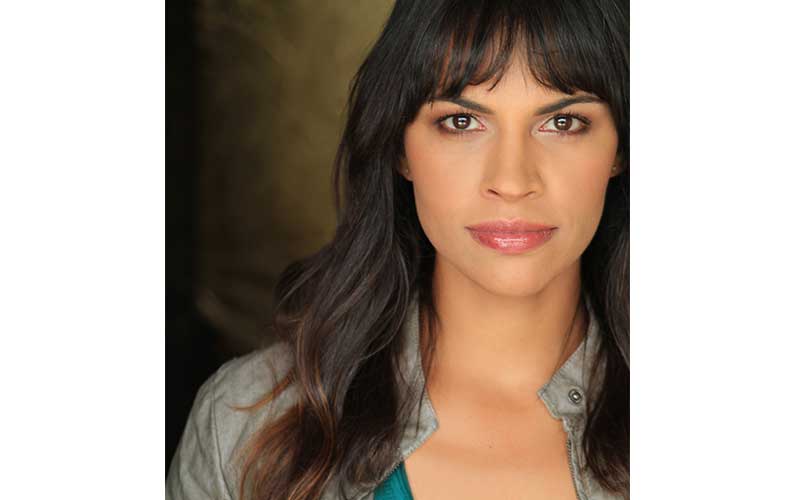
Years Project.
1. Tell us about your educational and professional journey that led you heading The Years Project.
My childhood was unique: I lucked out having interracial, still-married, loving parents who encouraged me to live spherically, in many directions at once. My mother was also a teacher, so I was raised in arts magnet schools and encouraged to do critical thinking. I had a wide lens on humanity and the earth from a young age, a bit of a Cassandra old soul that knew that Troy was going to burn.
When I became vegetarian in 1995, it was before Google or Whole Foods, so I had to be scrappy about it. That led me to, while training at Juilliard, understanding how interconnected humans' actions are to the non-human world. I became an environmentalist before it really got hot, in the late 1990s, literally and figuratively. For me, it was obvious: All you had to do was question the assumption that the Earth was created for human use. And then the dominoes fall.
While an undergrad at Juilliard's prestigious theatre program, I had an epiphany that aligned my environmentalism with the climate crisis: I understood that humans were not aligned with ecosystems or the principles that support life, and it was the greatest story never told. I surmissed that our actions would lead to a tipping point at just 18. But this was really before anyone was talking about it, especially not actors.
So I chose to leave and do an Environmental Studies degree, where I wrote my thesis on the arts as a means of environmental activism. And then I headed straight to Los Angeles to use that megaphone for environmental change. I became part of the spiritual and activist cinema circles, like with the team that brought smash success, The Secret, to the U.S.
Because Hollywood was really slow to understand the climate crisis, I had to work parallel to the issue, in feature docs like Generation Wealth (Amazon), and in unscripted tv series like Finding Justice (BET). I became an activist wrangler because networks were interested in action, so I worked with Black Lives Matter organizers fighting police brutality, undocumented immigrants fighting detention centers, and egregious actions of fossil fuel companies, like the BP Gulf oil spill. People trust me because they know I was a longtime activist first, not a fly in-fly out Producer extracting their story and doing it for ego and glory. Who cares about your IMDB starmeter on an uninhabitable planet?
But still, Hollywood en masse is a business that believes they can't tell audiences what to do and still be watchable, like what was needed with the climate crisis: A complete societal shift off of fossil fuels. So when a job opened with The YEARS Project, the only tv team that had made a tv series about climate that won the Emmy, I jumped at it. Al Gore had made An Inconvenient Truth in 2003, and then it was crickets... until this team.
In my staff position with Years, we've shifted the model that Hollywood uses, which is: *Film a story. Hold the license so only you can use the content. Feature a person but they don't own their content. And then don't align the outcome with community campigns.* Instead, we work to figure out: What does a community need in their climate fight, and how can we help with that, while combining it with best-in-class storytelling principles?
I produce all our original content with this in mind. I'm the origin of the idea of the story, usually in collaboration with frontline and BIPOC communities. I shoot with a high-level skilled crew on the ground. I work with editors, GFX artists, and Writer's Room to figure out the story. And I continually work with the communities to align the work with what is needed for them to win their campaigns.
I've been invited to Anishinaabe, Navajo, Hopi, indigenous Hawaiian, and Gwich'in lands. I've highlighted green rebuilding in black Detroit, and journalists fighting malfeasant utility companies in Florida. I've followed pipeline fights in Appalachia, youth climate strikers around the U.S, and black community fighting petrochemical expansion in Cancer Alley.
2. Tell us about the mission of The Years Project.

We are the go-to creative agency for the climate movement, which has a severe storytelling problem we are solving.
Our mission is to harness the power of storytelling to compel action on the climate crisis, and our purpose is to create a world in which addressing climate change is the top political, social, and economic issue. Storytelling changes culture.
One of our long-term goals is to empower frontline BIPOC climate justice organizations and accelerate their climate actions — because the stories of frontline leaders and communities reveal better than anything else the ways in which race, economics, and equity are inextricably tied to the climate crisis.
3. Tell us about Inside the Movement.
We realized a few years ago that a big problem with the climate crisis is that it feels really giant, unwieldy, and insurmountable for the average person who is not knee-deep in the movement. So if someone wants to help, they often won't know where to start. So then they just don't. Or they'll start from the ground floor, like changing light bulbs, instead of a bigger leverage point, like fighting for community solar.
Luckily, there are so many groups and coalitions who have been working on these issues for decades. Our weekly newsletter, Inside the Movement, highlights the biggest actions that groups like Stop the Money Pipeline are working on, so people can immediately support. And we also shout out important news stories of the week, like Trump admin abandoning global climate treaties.
4. Will you do a film project concerning Venezuela or Greenland?
We collaborated with CBS news on the melting ice in Greenland, but we have not yet done any projects on the incursion for oil, gas, and critical minerals, like what has very recently happened. It's a good idea that we are kicking around from a doc perspective. As a non-profit, I welcome any funders who want to work on this with us! Just reach out to info@theyearsproject.com.
5. How should one approach realistic and meaningful goal setting with the environment in mind?
Individual climate actions, while important for shifting norms and signaling demand, are never the best leverage point because the climate crisis is systemic. We need rapid, widespread systemic transformation: large-scale shifts in policy, infrastructure, and industry, not just consumer choice. Individual efforts alone can't overcome entrenched fossil fuel systems or meet the urgency of the crisis. And remember, it was BP that created the idea of a carbon footprint in the first place to shift blame away from fossil fuels.
Instead: Be strategic about what actions you can do that have the biggest impact the fastest. Vote in climate politicians, and sign up climate activists to vote. There is a huge group of environmentalists that don't vote, as the Environmental Voter Project has taught us. Support world interventions, like the UNFCCC COP climate talks.
Divest not only your home and car, but your town, electric grid, state, business, pension, country, means of travel, and wallet (bank) from fossil fuel money, like going to Bank for Good and stopping your money from supporting earth destruction.
Become more plant-based with your diet, and anytime you throw an event, make plant-based the default! And push or boycott companies that intentionally stall climate action or make profits off the destruction of non-human species. This list includes climate criminals like ExxonMobil, Chevron, Shell, BP, but also Chase Bank.
6. Did you attend COP30? What was your platform for COP30 — and what to watch for COP31?
We didn't, but we'll be supporting the next COP in Turkey with climate film content. A few years ago, we also did this video about fossil fuel incursion into the talks. (starring yours truly!)
7. Anything else you would like to add?
There are very few orgs connecting storytelling to climate like ours, but it is absolutely vital. It is through stories that we connect a viewers head to their heart, and move people to action. A good story has more mileage than a good fact. More funders need to realize that people aren't reading every page of a scientific study, they are watching The Bear. So please support orgs like ours.
8. How can people reach you?
Send us a note at info@theyearsproject.com, and follow us on all platforms @YearsofLiving or @TheYearsProject, and you can follow me @GunghoEco on all platforms.
IG: @yearsofliving and @GunghoEco
FB: @yearsofliving
TikTok: @theyearsproject
YT: @Years and @GunghoEco
LinkedIn: TheYearsProject
BlueSky: @theyearsproject.bsky.social and @mayalilly.bsky.social
Threads: @yearsofliving and @GunghoEco
X: @YearsofLiving @GunghoEco
Glossary Terms:
Selva Ozelli Esq, CPA is a legal and finance executive with diversified experience dealing with highly complex issues in the field of international taxation and related matters within the banking, securities, Fintech, alternative and traditional investment funds. Her first of its kind legal analyses involving tax laws, Foreign Corrupt Practices Act (FCPA), blockchain technology, solar technology and the environment and have been published in journals, books and by the OECD. Her writings have been translated into 15 languages.
