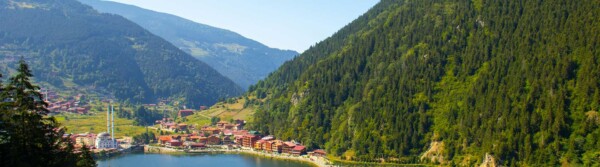
Interview: Dr. Tijen İğci, Transport and Climate Policy Professional at Turkiye's Ministry of Transport and Infrastructure
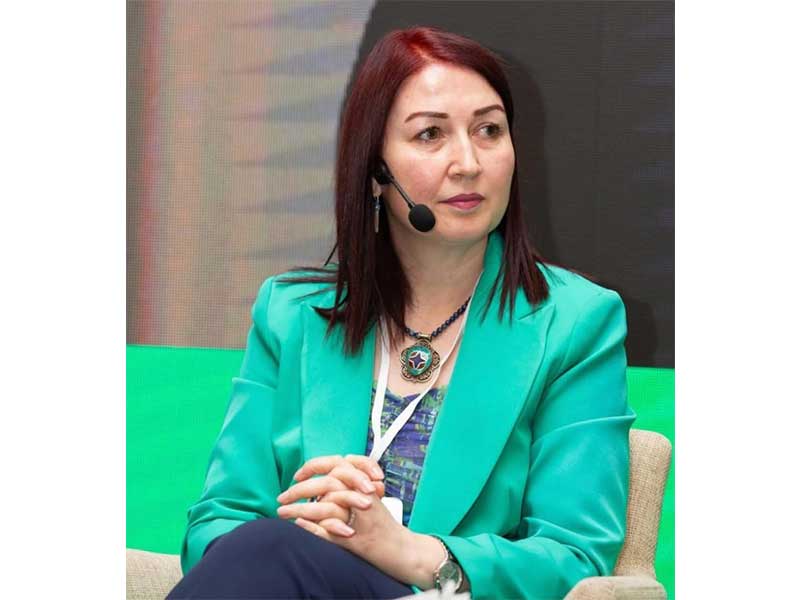
Credit: Courtesy of Tijen İğci. Event organised under the SKUp Türkiye project; photographer not identified.
Sustainable Transport in Türkiye: A Practitioner’s Perspective on Policy, Investment and Climate Justice
Dr Tijen İğci is an EU Expert at Türkiye’s Ministry of Transport and Infrastructure, with more than 20 years of professional experience in international cooperation, public policy, and EU financial assistance. From July 2022 to October 2025, she served as the Head of the Department for EU Investments and IPA Director, with management responsibility for an approximately €1 billion portfolio of EU-funded transport and infrastructure projects and around 40 staff across eight operational units.
She holds a PhD in Social Environmental Sciences from Ankara University. Her doctoral thesis, “Climate Ethics, Sustainability and Aviation,” critically examined CORSIA through climate ethics and climate justice. Her earlier postgraduate research explored the implications of EU and Turkish climate policies for industrial costs and competitiveness. Her experience includes UNFCCC technology-transfer negotiations, EU policy alignment, cross-border cooperation, sustainable urban mobility, and railway investment.
1. Tell us about your educational and professional journey to becoming a transport and climate policy professional.
I graduated from Ankara University’s Faculty of Political Sciences in International Relations, ranking first in both my department and the faculty. My master’s research examined climate policies in the EU and Türkiye through their implications for industrial costs and competitiveness. I later completed a PhD in Social Environmental Sciences, focusing on climate ethics, sustainability and aviation.
My career began in international trade in 2003. At the Ministry of Industry and Trade, I worked on EU environmental alignment, coordinated a Climate Change Working Group involving approximately 20 experts and participated in UN climate negotiations on technology transfer. These responsibilities taught me how to bring different institutional perspectives into a common position.
Professional experience and academic influences
At the Ministry for EU Affairs and subsequently the Directorate for EU Affairs, I worked on cross-border programmes, environmental and climate policy, and air and maritime transport. I was a member of Türkiye’s negotiation delegation for the Türkiye–EU Comprehensive Air Transport Agreement. My work also involved contributions to development plans, climate strategies, EU alignment action plans and draft legislation.
As the Head of Department and IPA Director, I led around 40 staff across eight units and oversaw an approximately €1 billion transport and infrastructure portfolio. My responsibilities covered project pipelines, procurement, contracts, financial control, risk monitoring and implementation reporting. I also supervised the revision of our management information system to improve the information available for portfolio decisions.
These experiences have shaped my approach to climate policy. I ask what a proposal will achieve, which institutions can deliver it, how it will be financed and how we will know whether it has worked. My research adds a further question: who benefits and who bears the costs?
2. Did you have any role models?
My doctoral supervisor, Professor Nesrin Çobanoğlu Yüksel, has been a particularly important role model. Her influence extends beyond the supervision of my thesis. She helped deepen my understanding of environmental issues as questions of ethics, responsibility and justice.
Her guidance encouraged me to look beyond technical feasibility and economic efficiency and ask whose knowledge informs a decision, whose interests are represented and who experiences its consequences. This perspective became central to my analysis of aviation climate policy.
I value her intellectual generosity and encouragement. Her example has influenced the way I connect academic research with public service and the responsibility I attach to sharing knowledge through teaching and professional discussion.
3. Tell us about Türkiye’s Net Zero Emission Target Transport Roadmap Project.
The project is intended to translate Türkiye’s 2053 net-zero objective into a strategic framework covering road, rail, aviation, maritime transport and urban mobility. Its end beneficiary is the Ministry’s Strategy Development Directorate. My involvement was on the programme-authority side during my tenure as the Head of the Department for EU Investments and IPA Director.
An important feature is the connection between policy development, capacity building, a pipeline of potential investments and a financing framework. From my programme-management experience, a roadmap becomes useful when it connects priorities with responsible institutions, feasible projects, funding and monitoring arrangements. Different modes need different solutions, but their investment decisions should contribute to a coherent transport transition.
Decarbonisation and urban mobility
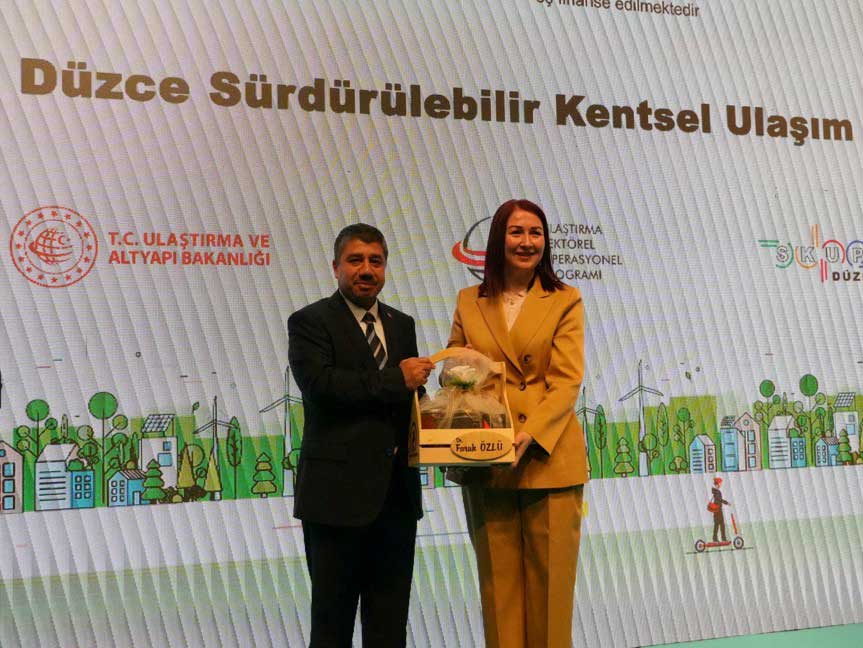
Credit: Düzce Municipality. Published in the municipality’s project news gallery; photographer not identified.
4. Which strategies is Türkiye pursuing to decarbonise transport, particularly through environmentally friendly solutions and electrification?
Türkiye’s approach includes railway investment and electrification, urban rail and public transport, electric mobility and charging infrastructure, intermodal logistics and cleaner fuels for modes that are more difficult to electrify. The updated 2026–2030 Green Deal Action Plan places sustainable transport within a wider agenda covering energy, industry, finance and a just transition.
My assessment is that electrification should be part of a wider change in how mobility is provided. Its benefits depend on the electricity supplying vehicles, the accessibility of infrastructure and the availability of affordable public transport. Cities also need safe walking and cycling connections, while businesses need reliable alternatives to road freight.
My experience in programming and investment oversight makes me attentive to the conditions for delivery. A technically attractive project still requires sound preparation, procurement, co-financing and management of implementation risks. Monitoring should distinguish money spent and infrastructure completed from actual changes in travel behaviour and emissions. This is how climate ambition can become an investment programme with assessable results.
5. Tell us about the Sustainable Urban Mobility Plans you have overseen, including SMART Ankara and Düzce.
Sustainable urban mobility projects formed part of the EU-funded portfolio under our department’s programme-management responsibilities. Our role involved coordination and oversight alongside the municipalities and technical teams responsible for local planning and delivery.
My responsibilities extended beyond Ankara and Düzce to projects in Kocaeli, Trabzon, İzmir, İstanbul and Gaziantep. In Gaziantep, I also managed an intelligent transport systems project on the programme-authority side. Working with different municipalities required me to adapt coordination and oversight to their institutional capacities, local priorities and implementation challenges. This experience strengthened my ability to connect national programme objectives with local needs and support cooperation between municipal teams, consultants and other public institutions.
SMART Ankara combined mobility planning with support for a smart bicycle-sharing system and municipal capacity development. Düzce developed an integrated package of measures and feasibility studies for proposed bus rapid transit corridors. The SKUp Türkiye umbrella project, with the Union of Municipalities of Türkiye as the end beneficiary and the Ministry as the contracting authority, also supported knowledge sharing and municipal capacity.
A significant part of my work was connecting the policy objective with implementation: bringing institutions together, following contractual and financial progress and addressing issues that could delay delivery. Municipalities have different capacities and local conditions, so effective coordination requires listening as well as applying programme requirements.
For me, a successful mobility plan makes daily journeys safer, more accessible and affordable. It should consider people who do not own cars, women, older people and people with disabilities. Preparing a plan is an important step; its long-term value depends on funded implementation and evidence of improved access and mobility.
Railway investment and intermodal transport
6. Tell us about your experience with international cooperation and investment programmes supporting railway and intermodal transport.
Two particularly important experiences were the U-IMT technical assistance project and the Çerkezköy–Kapıkule railway investment. I participated in their management and oversight on the programme-authority side.
The U-IMT, “Strengthening Intermodal Transport Services in the Turkish Railway Sector,” had the Ministry’s Strategy Development Directorate as its end beneficiary. It examined market demand, institutional and regulatory conditions, corridor planning and investment priorities for more competitive rail-based intermodal freight services. I participated in steering and stakeholder processes, including discussions on how technical outputs could support investment decisions.
The Çerkezköy–Kapıkule section of the Halkalı–Kapıkule railway line was a particularly significant part of my management experience. I chaired progress meetings and participated in site inspections with the EU, TCDD, consultants, contractors and relevant national authorities. These discussions covered physical and financial progress, implementation constraints, environmental matters and coordination needs. The section subsequently opened on 9 October 2026, after my tenure as the Head of Department had ended.
Large infrastructure projects require sustained attention to procurement, contract performance, risk and accountability. My wider portfolio responsibilities included complex contractual issues and dispute-resolution processes under FIDIC-based construction contracts. This experience reinforced the importance of early problem identification, clear documentation and constructive coordination between parties.
Rail investment and intermodal planning need to work together. Businesses require reliable services and efficient transfers between modes; passengers need useful connections. Climate benefits should therefore be assessed through actual use and modal shift, alongside construction progress. These projects also show how international financial cooperation can strengthen Türkiye’s connections with the European transport network.
Aviation and climate justice
7. How do you assess the green transformation of Türkiye’s aviation sector?
I see a transition with significant opportunities and difficult trade-offs. Türkiye’s 2053 national net-zero objective and ICAO’s collective global aspirational goal of net-zero carbon emissions from international aviation by 2050 have different scopes. They should be distinguished from individual airline commitments.
Türkiye’s sustainable aviation fuel (SAF) framework and the cooperation announced at COP31 between the Directorate General of Civil Aviation (SHGM), Boeing, Turkish Airlines and Istanbul Technical University are important developments. I would assess implementation through certified fuel availability, viable investment and verified lifecycle emissions reductions. SAF does not eliminate emissions at the aircraft’s exhaust.
Turkish airlines operate within several regulatory frameworks. The Carbon Offsetting and Reduction Scheme for International Aviation (CORSIA) addresses covered international aviation CO₂ emissions through eligible offsetting and fuels. The EU Emissions Trading System (EU ETS) requires allowances for emissions on covered routes. ReFuelEU Aviation increases SAF supply at covered Union airports and establishes related operator obligations. Compliance with one instrument does not automatically satisfy the others.
My experience in EU aviation policy and the Türkiye–EU air transport negotiations makes me attentive to these interfaces. Competitive impacts need to be examined by route and business model. A hub-based network carrier and a low-cost airline may face different commercial pressures. Analysis should consider the complete passenger journey, fuel availability, financing and the interaction of obligations.
My doctoral thesis adds a climate-justice perspective. I recognised the importance of global cooperation through CORSIA, but argued that offsetting should not become aviation’s primary response. It can allow carbon-intensive practices to continue while transferring the burden of compensating activities elsewhere. I examined concerns about land use, habitats and local communities affected by offset projects.
CORSIA’s rules have evolved since my thesis. For 2024–2035, its baseline is 85 per cent of covered 2019 emissions. Recognising such changes is essential, while continuing to ask whether the framework encourages sufficiently deep change within aviation and distributes responsibilities fairly.
Efficiency, cleaner fuels and operational improvements all matter. But lower emissions per passenger can coexist with higher total emissions when traffic grows. A credible transition must examine absolute emissions, consumption patterns and fairness alongside competitiveness.
Public engagement and personal perspective
8. Tell us about your contributions to the COP31 discussion.
My recent contribution to the wider COP31 discussion has included academic outreach on climate justice. On 25 October 2026, I delivered an invited opening talk at a preparatory workshop organised by Gazi University’s Women and Family Studies Research and Application Centre, GÜKÇAM. I explored climate justice, women’s knowledge and cultural memory, asking whose knowledge is recognised, who carries climate risks and whose voice is heard.
I also teach on sustainable transport and smart mobility in the context of the European Green Deal through Ankara University’s European Research Centre. With the session on 3 November 2026, I have delivered this training on five occasions. Teaching helps me translate complex policy and regulatory issues into material that participants can use in their own work.
These activities connect my research with practical policy experience. I want discussions about the transition to include fairness, participation and institutional capacity alongside technology and finance.
9. Is there anything else you would like to add?
Climate justice should be part of transport policy from the beginning. My research considers the responsibilities of governments, companies and individuals, including the distinction between frequent flying and essential connectivity. A fair approach should recognise isolated communities, tourism-dependent regions and geographically dispersed families, as well as people with limited transport choices.
My professional experience has also taught me that good intentions need capable institutions. Transparent procurement, reliable reporting, risk management and meaningful stakeholder participation influence whether public investment delivers its intended benefits. My earlier work on cross-border cooperation and environmental grant evaluation strengthened my appreciation of local knowledge and the need to assess proposals consistently and fairly.
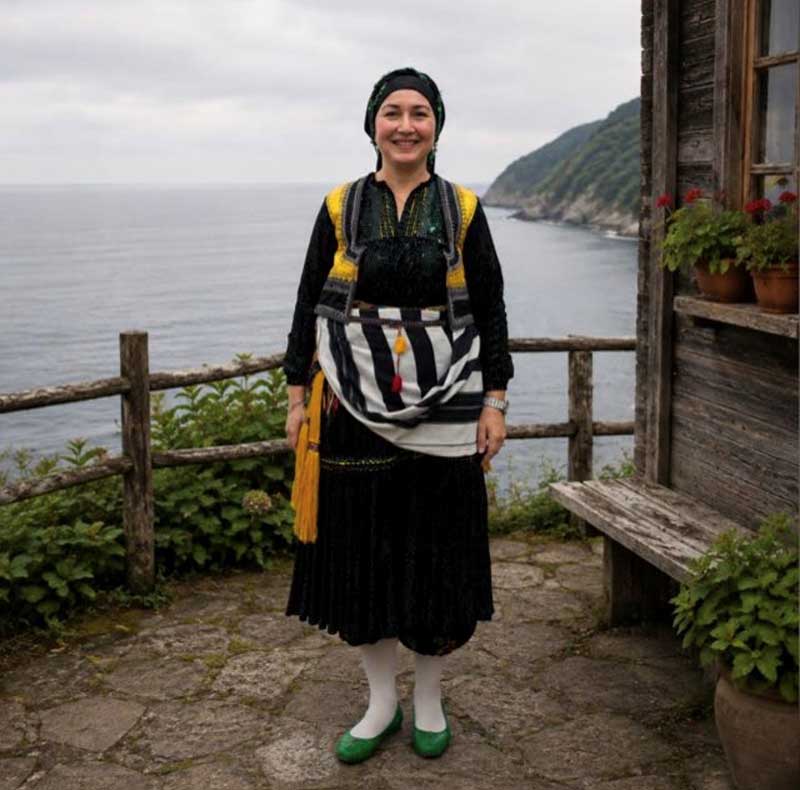
Credit: Courtesy of Tijen İğci. Personal photograph; photographer not identified.
On a personal note, I have a strong attachment to Trabzon and the culture of Türkiye’s Black Sea region. Its traditions, landscapes and sense of community are an important part of my life. I am also a Trabzonspor supporter. The photograph in traditional clothing, taken in Trabzon in August 2026, reflects that connection.
For me, cultural heritage and environmental responsibility are closely connected: both involve caring for places and ways of life that people value, and thinking about what we pass on to future generations.
10. How can people reach you?
For professional and academic enquiries, I can be reached at tijen.igci@uab.gov.tr.
Sources and References
- Transport net-zero roadmap project and its objectives
- Türkiye Green Deal Action Plan 2026–2030
- U-IMT project seventh Steering Committee meeting
- SAF roadmap cooperation announced at COP31
- ICAO CORSIA rules and baseline
- ReFuelEU Aviation
Research basis: İğci, T. (2022). İklim Etiği, Sürdürülebilirlik ve Havacılık. Doctoral thesis, Ankara University, Social Environmental Sciences. In particular, the conclusion and assessment, printed pp. 232–249. Professional information is based on Dr İğci’s CV and her updates for this interview.
Glossary Terms:
Selva Ozelli Esq, CPA is a legal and finance executive with diversified experience dealing with highly complex issues in the field of international taxation and related matters within the banking, securities, Fintech, alternative and traditional investment funds. Her first of its kind legal analyses involving tax laws, Foreign Corrupt Practices Act (FCPA), blockchain technology, solar technology and the environment and have been published in journals, books and by the OECD. Her writings have been translated into 15 languages.
