Interview: Dr. Dorothy Peteet, Senior Research Scientist
Dr. Dorothy M. Peteet has been working as a Senior Research Scientist and head of the Paleoecology Group of the New Core Lab at the Lamont-Doherty Earth Observatory of Columbia University (LDEO), and at the NASA Goddard Institute for Space Studies (GISS) since 1983. She directs the Paleoecology Group of the New Core Lab at LDEO and in collaboration with GISS climate modelers and LDEO geochemists to study the Late Pleistocene and Holocene archives of lakes and wetlands (peatlands, salt marshes, tidal freshwater marshes, bogs, fens).
Her research focuses on reconstructing ancient environments to understand past climate shifts and their implications for future global warming. Documenting past vegetational change using pollen and spores, plant and animal macrofossils, loss-on-ignition, carbon, and charcoal in conjunction with accelerator mass spectrometry (AMS) radiocarbon dating, her research provides local and regional records of vegetational and climate history and carbon sequestration.
Dr. Peteet uses sophisticated computer programs called General Circulation Models (GCMs) to simulate past climates, specifically the Last Glacial Maximum (LGM) and sudden warming events, to understand how Earth's climate system responded to big changes, testing theories about natural climate shifts and feedbacks that could help predict future abrupt warming, using paleoclimate data to validate these digital experiments.
She is interested in climate sensitivity from past climate changes and ecological shifts with future climate change. Particularly identifying ancient, intense droughts in the northeastern United States through the analysis of sediment cores.
1. Tell us about your journey that led you to become a Senior Research Scientist and head of the Paleoecology Division of the New Core Lab at the LDEO, and at the NASA Goddard Institute for Space Studies (GISS).
My interest in botany, wetlands, and ecology grew as I explored the outdoors and experienced a wide variety of stimulating botany classes at Duke University. Graduate work included a MS at New York University, where I discovered paleoecology and delved into the millennial history of the Hackensack Meadowlands.
It was during this time that I acquired an extensive seed collection, which enabled me to identify fossil plant macrofossils as well as pollen. A Ph.D followed, where I focused on paleoecology of the peatlands and forests surrounding the southeastern Alaskan coastline. My interest in geosciences grew, and in particular paleoclimate, and I took some classes at Columbia and then pursued postdoctoral research at Lamont Doherty Earth Observatory and then NASA/GISS.
2. What inspired you to pursue a career as a scientist specializing in paleoecology and paleoclimate?
My journey in science began with my love of botany, stimulated by the North Georgia Appalachian mountains, where my parents exposed us to wilderness, and plant biodiversity is highest in all of the United States. The beauty of the natural world, along with curiosity, continues to inspire me.
3. During your esteemed career, you worked for two globally important institutions, NASA and LDEO. Tell us how the research techniques, technology, the focus of each institution enhanced your multiscale understanding of wetlands, bridging global, high-tech perspectives with in-depth, ground-level ecological data.
The scientists and I met at Lamont, and NASA were key to my expansion of paleobotanical research into global paleoclimatic questions. Understanding the role of the latitudinal temperature gradient and how it changed during the last ice age led to my research with the NASA/GISS climate model and forcings for both gradual and abrupt climate shifts.
Wally Broecker and James Hansen, two outstanding scientists I had the privilege to work with, shaped my thinking and continue to influence my understanding of climate change both regionally and globally. Many other colleagues taught me usage of research techniques such as X-ray fluorescence and isotopic geochemistry. These techniques are complementary to the palynology and macrofossil studies I learned at NYU under another exceptional mentor, Calvin J. Heusser.
4. What is the role of northern peatlands and coastal marshes in the global carbon cycle?
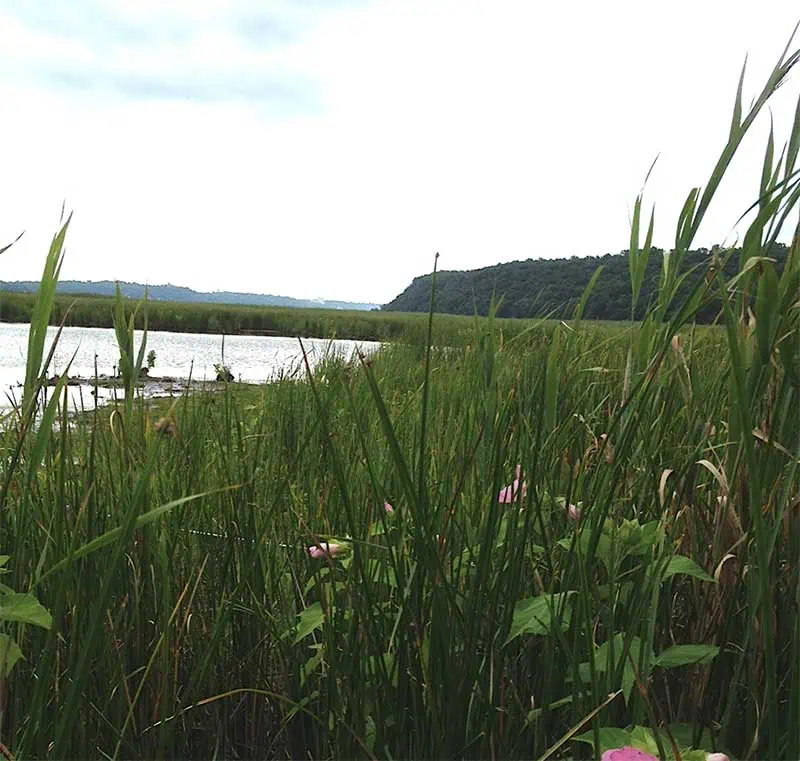
Northern peatlands have been a strong sink for atmospheric carbon since the last glaciation. In our recent paper, we estimate northern peatland carbon stocks to be 1,016 to 1,105 Gt, and this peat sink is consistent with ice core measurements of atmospheric CO2 concentration and δ13CO2 since the last deglaciation. Yet with climate change at higher latitudes, they are most likely to be affected by significant warming, and in recent years have experienced drying and, in some cases, fire in places not previously documented. They are also sources of methane, and are very sensitive to change. The outcome of northern peatland sinks through time depends on both hydrology and temperature.
Coastal marshes are a small fraction in area, they are extremely important due to their high rate of carbon sequestration, and significantly more important in sequestering carbon than forests because of this high storage rate. Their protection of shorelines from storms and hurricanes, nursery habitat for fisheries, water filtration, and biodiversity make them critical in the global carbon cycle. Yet we are losing them at a great rate due to human disturbance, development, and sea level rise.
5. Tell us about your most interesting research findings of the historical ecology, climate records, and modern vulnerability of wetlands within the Hudson River Estuary, focused on the past 250 years, since this year America is celebrating its 250th anniversary.
Piermont Marsh along the Hudson River contains a surprising record of the Medieval Warming affecting the New York region, with warmth, drought, and even fire playing a large role. It provides a message that future warming and drought can affect eastern North America in an important way, as NYC drinking water is vulnerable to drought.
This marsh contains a very deep (over 45 feet) peat, which records the European settlement and the Little Ice Age, and provides a clear record of the invasive species (cattail, common reed) which have crowded out local brackish marsh species (bulrushes). The industrial era is also clearly fingerprinted in the peat, as heavy metals such as lead, copper, and zinc are sequestered there and vulnerable for erosion into the estuary with sea level rise.
6. How is your research used in Wetland restoration projects? Can you provide us with examples of wetland restoration projects in the Hudson River Estuary that used different approaches to restore ecological functions lost to development?
Understanding the reasons why marshes are disappearing is important for developing methods for restoring them. Our research in Jamaica Bay showed that the marshes there are starved for sediment, as the coastal development reduced the stream sediment input due to hardening of the shorelines. Restoration projects utilizing thinlayer placement of sediment and the planting of salt marsh grasses has helped to restore the coastal protection, nursery benefit, and other marsh functions, but the economic cost is extremely high, and will continue to be high as sea level rises.
7. What are the benefits of integrating indigenous, local ancestral wisdom in sustaining and restoring wetlands, linking past practices with scientific stewardship?
Integrating indigenous local ancestral wisdom for wetland restoration and resilience is important because the perspectives of people who have a deep spiritual, cultural, and ecological resonance with the region are all critical to the science. Most indigenous culture is built around long-term investment in ecological balance, and the scientific methods and outcomes are dependent upon this wisdom.
8. LDEO has a science and art initiative Art Meets Science, to communicate to the broad public the critical role of geoscience in our understanding of how wetlands work, and you have curated an art show. Tell us about your upcoming science and art project, particularly around the USA 250 celebrations.

For many Lamont scientists, art is a major part of the reason we are involved in science. We are focusing on presenting the art treasures that we find in the wetlands, including both fossil plant and animal parts – tundra spores, fish scales, insect eyes, and foraminifera that are very ancient, but wetland research brings to light. We are also focusing on involving communities around NYC in the regional understanding of why these wetlands are so valuable, how beautiful they are, and how we can keep them. And we have some ongoing exhibits to celebrate, including Selva Ozelli and Ian Hutton’s Paradise.
9. Anything else you would like to add?
I hope everyone can feel the beauty and value of wetlands by experiencing them.
10. How can people get in touch with you?
My email is: peteet@ldeo.columbia.edu
Glossary Terms:
Selva Ozelli Esq, CPA is a legal and finance executive with diversified experience dealing with highly complex issues in the field of international taxation and related matters within the banking, securities, Fintech, alternative and traditional investment funds. Her first of its kind legal analyses involving tax laws, Foreign Corrupt Practices Act (FCPA), blockchain technology, solar technology and the environment and have been published in journals, books and by the OECD. Her writings have been translated into 15 languages.
