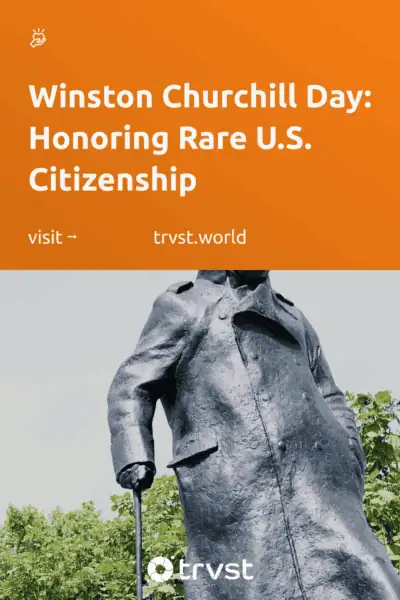
Winston Churchill Day: Honoring Rare U.S. Citizenship

April 9 marks Winston Churchill Day across America. The date honors Churchill's historic moment in 1963 when he became the first foreign national to receive honorary U.S. citizenship through Congress. President John F. Kennedy signed House Resolution 4374 into law at 2:45 PM that spring afternoon. This distinction is shared only with the Marquis de Lafayette.
The recognition spans both official proclamations and grassroots celebration. Government agencies authorize presidential acknowledgment while British institutions coordinate parallel events. Historical societies develop educational programming, museums craft specialized exhibitions that clearly connect Churchill's legacy with shared democratic values.
Key Info: Winston Churchill Day
- When is Winston Churchill Day?
Occurs annually on the 9th of April - This Year (2026):
Thursday, April 9, 2026 (date has passed) -
Future Dates
- Friday, April 9, 2027
- Sunday, April 9, 2028
- Monday, April 9, 2029
- Tuesday, April 9, 2030
-
Additional Details
- Observed By: Historical societies, educational institutions, and Churchill appreciation organizations in the U.S.
- Where Is It Observed: United States
- Primary Theme: Historical Commemoration and International Relations
- Hashtags: #WinstonChurchillDay #ChurchillDay #WinstonChurchill #USHistory #BritishAmerican
Quick Links: Winston Churchill Day
Why Winston Churchill Received This Honor

Kennedy's 1963 proclamation followed months of Congressional debate. And one determined advocate. Kay Halle, a Cleveland socialite turned journalist, championed the cause after initial complications during Suez Crisis tensions under Eisenhower. Senator Stephen M. Young of Ohio introduced the first bill in August 1962, describing Churchill as "the hero of two nations."
Churchill's wartime leadership earned this honor through protection of democratic courage. Kennedy emphasized how Churchill "mobilized the English language and sent it into battle" during Britain's darkest hours. This came when "most men save Englishmen despaired of England's life."
The Anglo-American alliance deepened through Churchill's strategic vision during 1940-1941 resistance efforts that shaped modern democracy.
A congressional resolution established an unprecedented legal framework. It's the first time Congress formally resolved that a president should proclaim honorary citizenship for another country's citizen. The White House Rose Garden ceremony drew over 250 guests, including diplomats, government officials, and personal friends like Bernard Baruch.
Churchill, aged 88 and declining in health, participated via the groundbreaking Telstar satellite from his London home while son Randolph represented him physically.
How Winston Churchill Day Is Observed Today
Schools and history groups organize varied commemoration events. These blend traditional remembrance with modern civic learning through several important approaches:
Museum exhibitions featuring Churchill artifacts, wartime correspondence, and interactive displays exploring Anglo-American wartime cooperation draw large crowds. Live webcasts from America's National Churchill Museum feature expert discussions with scholars like Allen Packwood OBE from Churchill Archives Centre at Cambridge.
Educational programs integrate Churchill's speeches into civics curricula. Documentary screenings at libraries and community centers often include historian-led discussions about leadership in democracy. Biographical readings organized by literary societies focus on Churchill's Nobel Prize-winning historical works and political writings.
Memorial visits to Churchill-related sites gain popularity, particularly the reconstructed Church of St. Mary the Virgin, moved stone by stone from bombed London.
Hillsdale College offers free downloads of Churchill's complete eight-volume official biography on Kindle. Churchill impersonator Randy Otto performs at campus events while the Winston Churchill Endowed Scholarship supports students demonstrating political and historical interests.
Core Themes of Annual Commemoration

Annual Churchill Day observances emphasize four interconnected themes that connect past and present. Wartime courage receives primary focus through examination of Britain's 1940-1941 resistance when democratic civilization faced existential threats.
Educational programs highlight Churchill's strategic decisions during the Battle of Britain. Museums display artifacts from the London Blitz period.
Literary achievements form another central theme, recognizing Churchill's intellectual depth beyond political accomplishments. His Nobel Prize in Literature acknowledged historical scholarship spanning six volumes on World War II. Academic discussions examine how his writing shaped public understanding of leadership under pressure.
The Iron Curtain speech legacy influences modern commemorations through its prescient Cold War predictions. Churchill's 1946 Fulton, Missouri address demonstrated strategic foresight about international relations that still applies today.
Educational programming explores continuities between wartime cooperation and current diplomatic relationships.
Democratic alliance strengthening provides the fourth theme connecting remembering history with present civic engagement. Historical societies examine Churchill's influence on NATO formation and European integration efforts while emphasizing enduring principles of democratic cooperation.
Ways to Honor Churchill on April 9
Individual participation transforms Churchill Day from institutional observance into personal democratic reflection. Visit local museums featuring World War II exhibits or Churchill-related materials during special April 9 programming. Many institutions coordinate guided tours focusing on wartime leadership examples.
Read Churchill's biographical works or historical writings for direct engagement with his strategic thinking. "The Gathering Storm" provides accessible entry into his crisis analysis, while his wartime speeches demonstrate rhetorical mastery under extreme pressure. These reveal democratic principles in action during humanity's darkest hours.
Watch historical documentaries exploring Churchill's political career during important moments. PBS and BBC productions offer thorough coverage of leadership during democratic crises.
Practice democratic principles Churchill championed through community engagement today. Participate in local political discussions about current challenges while volunteering for civic organizations promoting democratic participation.
This relates to Churchill's observation that democracy remains "the worst form of government except for all those others that have been tried."
Since 1963, Churchill Day has evolved beyond simple commemoration. It's become an annual reminder of democratic resilience under pressure.
Honor other people by also celebrating Medal of Honor Day and Buffalo Soldiers Day.
Resources:
FAQs (Frequently Asked Questions)
No, Winston Churchill Day isn't a federal holiday. April 9 marks when we remember Churchill's honorary U.S. citizenship. Government offices stay open. Schools run normal schedules. This relates to how we handle most commemorative days—they recognize important figures without shutting down daily life. Beyond this basic setup, many museums and historical groups do plan special events. Educational institutions often highlight Churchill's wartime leadership during these April programs.
The UK doesn't formally observe Winston Churchill Day on April 9. That date specifically honors his American citizenship award. Britain remembers Churchill differently—through Churchill Day events in November around his birth, plus the ongoing Churchill War Rooms museum in London. Recently, British schools have started using April 9 as a teaching moment about wartime alliances. This suggests growing interest in connecting Churchill's American recognition to British heritage education. Some British historical societies now coordinate with American institutions during April celebrations.
The State Department lists eight people total who've gotten this honor. Only three received it while alive—Churchill, Mother Teresa, and Raoul Wallenberg in 1981. What makes this interesting? The State Department stressed that honorary citizenship "should remain an extraordinary honor not lightly conferred." Since 1963, when Churchill received his, the government has been very selective. This points to how rare and significant the recognition really is. The complete list includes figures like Lafayette and others honored posthumously.
The National Churchill Museum creates lesson plans for different ages. Elementary students examine Churchill's life through photos and basic timelines. High school classes dive into his leadership during wartime crises. This relates to how educational institutions approach historical figures—start simple, build complexity. The International Churchill Society provides primary sources including Churchill's actual speeches and radio broadcasts. Since 2020, Hillsdale College has made all eight volumes of the official Churchill biography free during April celebrations. Teachers can access these materials year-round, but April programming gets the most attention.
Barbara is a former journalist who is passionate about translating important causes into engaging narratives. She combines communication expertise with an environmental science background to create accessible, fact-driven content.