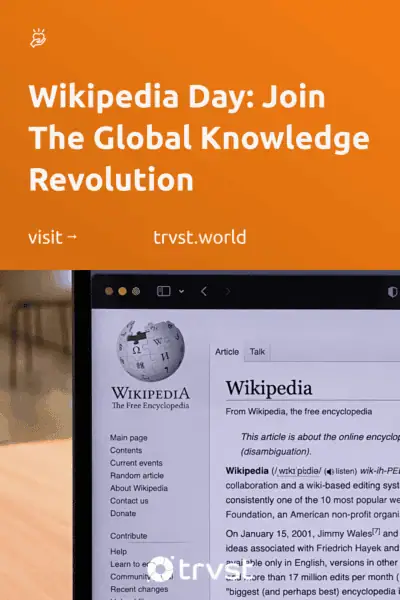
Wikipedia Day: Join The Global Knowledge Revolution

Wikipedia Day hits every January 15th. Jimmy Wales and Larry Sanger launched this thing back in 2001, and now we celebrate how it changed information sharing. That first "Hello, World!" test edit? It kicked off something massive.
As of writing, over 12.5 million users contribute to the English Wikipedia alone. The platform runs in more than 300 languages. Not bad for a side project that started with collaborative editing.
This day does two things. It celebrates volunteers who build free knowledge while pushing more people to jump in.
Wikipedia Day promotes access and literacy across communities worldwide; the Wikimedia Foundation coordinates events showing how collective wisdom creates reliable resources.
Key Info: Wikipedia Day
- When is Wikipedia Day?
Occurs annually on the 15th of January - This Year (2026):
Thursday, January 15, 2026 (date has passed) - Official Website: Wikimedia Foundation
-
Future Dates
- Friday, January 15, 2027
- Saturday, January 15, 2028
- Monday, January 15, 2029
- Tuesday, January 15, 2030
-
Additional Details
- Observed By: Wikipedia editors, contributors, knowledge enthusiasts, and digital literacy advocates worldwide
- Where Is It Observed: International
- Primary Theme: Free Knowledge And Global Accessibility
- Hashtags: #WikipediaDay #Wikipedia #FreeKnowledge #Wikimedia #OpenKnowledge #DigitalLiteracy
Quick Links: Wikipedia Day
Why Wikipedia Day Celebrates Knowledge Democracy and Access

Free information builds smarter societies. Wikipedia Day highlights this democratic approach—no paywalls, no restrictions. Commercial platforms lock content behind fees. Wikipedia tears down those barriers completely.
Volunteers create this incredible resource through rigorous fact-checking and neutral policies. Multiple editors verify sources before information goes live. The peer review process ensures accuracy through collaborative editing.
This model teaches information literacy. Users learn to evaluate sources and spot reliable data.
Wikipedia's transparent editing shows critical thinking in action. Anyone can examine how facts get verified.
Information inequality hits global communities hard. Wikipedia Day addresses these gaps by celebrating free access principles. The platform serves regions where commercial encyclopedias cost too much. Knowledge belongs to everyone.
The collaborative system creates real accountability. Volunteers police content quality through community oversight—this beats traditional publishing, where a single authority controls everything.
Collective wisdom often trumps individual expertise.
Complete Guide to Wikipedia Day Participation and Activities
Multiple ways exist to make Wikipedia Day meaningful. Organizations and individuals can contribute through various approaches.
For Individual Contributors
Start editing Wikipedia articles right now. Create your account and practice on sandbox pages first. Pick topics you actually understand. Make small improvements like fixing typos or adding recent info.
Review Wikipedia's five pillars policy before diving in.
Join edit-a-thon events. These social editing sessions combine community building with productive work. Local libraries and universities host beginner-friendly sessions where experienced editors provide guidance.
Contribute to the Wikimedia Foundation. Financial support maintains server costs and development work. Even small donations help maintain free access globally.
For Educators and Students
Organize Wikipedia assignments in coursework. Students develop information literacy through article creation or improvement projects.
Host campus editing workshops on your turf. Train students in Wikipedia policies and editing techniques. Focus on topics related to your curriculum or institutional expertise.
Start with stub articles needing expansion.
Create photo contributions through Wikimedia Commons. Upload freely licensed images to improve article quality. Visual content engages readers while supporting thorough coverage.
For Libraries and Cultural Institutions
Coordinate community editing events in your space. Libraries provide ideal venues for Wikipedia Day celebrations. Offer computer access and wifi for attendees.
Focus on local history or underrepresented topics.
Develop specialized content projects. The Art+Feminism edit-a-thons show this approach effectively. Since 2014, more than 10,000 people at over 800 events worldwide have participated, creating and improving more than 33,000 articles.
Provide newcomer training sessions for hesitant contributors. Many people want to help but feel intimidated by technical aspects.
How well does your community show up in Wikipedia's vast knowledge base?
Educational Impact and Community Building Through Wikipedia Day

Wikipedia editing assignments transform student learning experiences completely. Research shows solid improvements in knowledge, literacy, and critical thinking skills. Students report fundamental shifts in understanding how reliable information gets created and verified.
The collaborative editing process builds lasting communities beyond single events. New editors often continue contributing after initial Wikipedia Day involvement.
Regular contributors develop expertise in specific subject areas while maintaining broad interests.
Community building extends far beyond individual contributions. Wikipedia Day events create networks of knowledge advocates; participants share expertise and support newcomers through mentorship relationships.
Joining the Global Wikipedia Day Movement
Wikipedia Day represents more than an annual celebration—it embodies an ongoing commitment to knowledge equity and collaborative wisdom. Your participation extends far beyond January 15th activities.
The approaching 25th anniversary highlights Wikipedia's impressive growth path. From experimental wiki to essential global resource, Wikipedia proves collective action creates lasting change.
Every edit contributes to this expanding foundation of free knowledge.
Start small but think globally about your impact. Your local contributions serve readers worldwide. Wikipedia's influence grows through sustained volunteer engagement.
Beyond this single day, consider monthly editing sessions or specialized content projects.
Join the movement that believes knowledge should be freely accessible to all. Wikipedia Day participants help build a more informed and connected world.
And that matters.
Resources:
FAQs (Frequently Asked Questions)
Wikipedia stacks up better than most people think. A 2005 Nature study put Wikipedia head-to-head with Encyclopædia Britannica. The results? About 4 errors per Wikipedia article versus 3 in Britannica. Beyond this, a 2008 Reference Services Review study found Wikipedia hit 80% accuracy while established encyclopedias scored 95-96%. Multiple studies since then point to similar error rates between Wikipedia and professional sources. The main difference is structure—Wikipedia articles can feel uneven because different people write different sections.
Mistakes aren't a big deal. Other editors spot and fix small errors fast. You can also undo your own changes—just click "View history," find your edit, and hit "undo." For bigger problems, drop a note on the article's talk page explaining what went wrong. Wikipedia's community helps newcomers, especially during Wikipedia Day events where experienced editors stick around to guide people.
Yes, official support exists. The Wikipedia 25/Events page on Meta-Wiki shows that grants are available for Wikipedia Day celebrations. It explains how to apply. Local Wikimedia chapters can also provide resources and guidance for schools and libraries planning events.
This question appears incomplete and needs research to provide specific data about regional content coverage on Wikipedia.
No credentials required. Wikipedia values reliable sources over personal expertise. What matters is your ability to summarize published information without bias. Many valuable contributions are basic—fixing grammar, updating numbers, or adding citations. Specialized knowledge helps, but Wikipedia's strength comes from diverse contributors working together. Start with topics you understand well, then expand as you learn the ropes.
Barbara is a former journalist who is passionate about translating important causes into engaging narratives. She combines communication expertise with an environmental science background to create accessible, fact-driven content.