
St. Patrick's Day: Origins Of Ireland's Beloved Holiday

St. Patrick's Day falls on March 17 every year. This celebration honors Ireland's patron saint through religious observance and worldwide cultural events. An Irish religious tradition became a global cultural event. Today, millions join in, Irish ancestry or not. The day connects sacred tradition with modern community celebration.
And just so we're clear before you continue reading. It's "St. Paddy's Day," not "Patty."
Key Info: St. Patrick's Day
- When is St. Patrick's Day?
Occurs annually on the 17th of March - This Year (2026):
Tuesday, March 17, 2026 (date has passed) -
Future Dates
- Wednesday, March 17, 2027
- Friday, March 17, 2028
- Saturday, March 17, 2029
- Sunday, March 17, 2030
-
Additional Details
- Observed By: Irish communities, Irish diaspora, and broader cultural participants globally
- Where Is It Observed: International
- Primary Theme: Irish Heritage and Cultural Celebration
- Hashtags: #StPatricksDay #IrishHeritage #SaintPatrick #IrishCulture #March17 #WearingOfTheGreen #IrishPride
Quick Links: St. Patrick's Day
Who Was Saint Patrick and Why This Day
Saint Patrick lived during the fifth century as a missionary who brought Christianity to Ireland. He died March 17, around 461 CE—or so tradition tells us.
Here's what we actually know: modern scholarship finds limited solid evidence about Patrick's life. According to JSTOR Daily, only two authentic texts survive that Patrick likely wrote himself: the Confessio and Epistola. These documents give us our best look at his actual mission work.
Despite all that, Ireland still recognizes Patrick as its patron saint. His work focused on building Christian communities across the island. March 17 remembers his death and celebrates his lasting influence on Irish spiritual life.
When St. Patrick's Day Occurs
March 17 marks St. Patrick's Day each year with rare exceptions. The Catholic Church occasionally moves religious observance when Holy Week creates conflicts, in 1940, 2008, and next in 2160.
Ireland made this a public holiday in 1903 through the Bank Holiday (Ireland) Act. Irish MP James O'Mara introduced the legislation.
The United States doesn't recognize it as a federal holiday except in Suffolk County, Massachusetts, and Savannah, Georgia. American cities often schedule parades on weekends. Makes sense for attendance.
Timeline
| Year | What Happened |
|---|---|
| c. 461 | Traditional death date of Saint Patrick (March 17) |
| 1601 | First recorded St. Patrick's Day parade, St. Augustine, Florida |
| 1762 | New York City holds first major American parade |
| 1903 | Bank Holiday (Ireland) Act creates official public holiday in Ireland |
| 1940 | Catholic Church moves it to April 3 (Holy Week conflict) |
| 2008 | Catholic Church moves it to March 15 (Holy Week conflict) |
Traditional Symbols and Their Meanings
The shamrock connects directly to Saint Patrick's teaching methods. How did this teaching tool, a simple three-leaf plant, become so central to explaining the Holy Trinity concept to Irish audiences?
This teaching approach became the day's most recognizable symbol. Green represents modern Irish identity, not Patrick's original blue.
The shift happened during the 18th and 19th centuries as Irish national identity developed. Beyond this color change, other symbols entered the mix later.
Let's clear up some confusion here. "Paddy" comes from Pádraig, the Irish form of Patrick's name. "Patty" represents American misunderstanding. Leprechauns entered folklore later with no direct Patrick connection.
Celtic crosses and harps serve as secondary symbols. These represent broader Irish heritage rather than Patrick-specific traditions.
How to Celebrate St. Patrick's Day

Religious observance includes attending Mass and participating in special liturgies honoring Patrick's missionary work. Cultural traditions center on parades, which are an American innovation beginning in 1601.
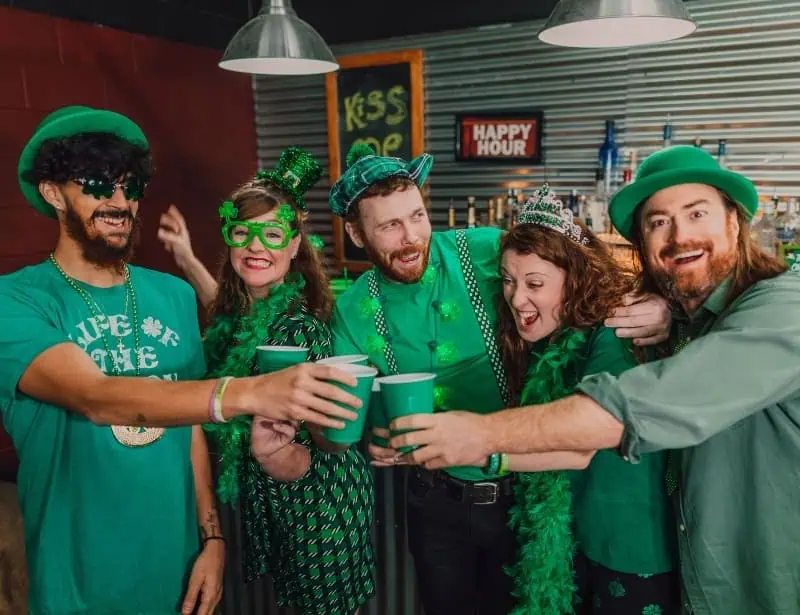
Irish immigrant communities developed this significantly over time. Wearing green clothing and displaying shamrocks became standard practices.
Food customs reflect Irish-American innovation rather than traditional Irish cuisine. Corned beef and cabbage developed in American communities, while Irish soda bread represents more authentic fare.
Recent practices include dyeing rivers green and hosting Irish music performances. Community gatherings foster cross-cultural connection.
Respectful participation involves learning authentic symbol meanings and supporting Irish heritage organizations. This approach honors genuine traditions while avoiding harmful stereotypes.
Geographic Observance Patterns
Ireland maintains official public holiday status as the origin point. Dublin's festival attracts over 500,000 people annually.
Since the 1800s, the United States has functioned as a major celebration hub. According to Mary J. Hickman, the Irish diaspora represents "one of history's most significant population movements," providing much of the manual labor for Britain and America's dominant economies.
This context indicates why celebration intensity runs so high in major American cities. Consumer spending reached $7.2 billion in 2024, according to the National Retail Federation, with over 60% of Americans participating.
Major parade cities include New York (1762), Boston, Chicago with its river dyeing tradition, and Savannah (1824).
And the celebration keeps spreading globally. Observance extends to Argentina, Japan, and Australia, showing how cultural celebration transcends ethnic boundaries.
Conclusion
March 17 brings an annual opportunity for meaningful participation. Saint Patrick's influence extends beyond Irish borders through respectful global celebration combining religious reverence with cultural appreciation.
Check local parade schedules and research meanings of authentic symbols. Consider supporting Irish heritage organizations preserving cultural traditions.
This balanced approach honors historical significance while embracing inclusive contemporary celebration.
For more related observances, save National Bible Week and National Religious Freedom Day in your calendars.
Resources:
FAQs (Frequently Asked Questions)
It's both, really. Catholics still attend special Mass on March 17 to honor Saint Patrick. But most celebrations today focus on Irish heritage - parades, music, that kind of thing. You'll find people wearing green who've never set foot in a church. And that's fine. Religious holidays often grow into something bigger. In practice, you pick your approach. Some people pray, others party, many do both.
Sure they can. The key is focusing on real Irish culture, not cartoon versions. Learn about Saint Patrick himself - he used shamrocks to teach about faith, not for luck. Support Irish businesses or heritage groups. Listen to traditional music. But skip the fake accents and "fighting Irish" nonsense. Those stereotypes get old fast. Beyond this, remember the day means something religious to many Irish families.
Today's celebrations reflect where Irish people settled and when. America turned it into a huge public festival because Irish immigrants needed to show their identity. Ireland itself? The day stayed more religious and family-centered. According to Axios research, American innovations like green beer and river dyeing never caught on back in Ireland. They prefer whiskey anyway. Countries like Japan developed their own parade styles based on local Irish communities. History shapes tradition.
Most popular traditions actually started in America. Real Irish customs include Mass, small shamrocks, quiet family meals with soda bread. Irish-Americans created the big parades (first one was in 1601), corned beef dinners, and green beer. Why corned beef? Irish immigrants couldn't find their usual bacon, so they adapted. Neither approach is wrong - they just reflect different experiences. This suggests how immigrant communities reshape traditions to fit new homes.
Those can cross into stereotype territory. "Kiss Me I'm Irish" treats Irish identity like a pickup line. Leprechaun costumes often push outdated caricatures that ignore Ireland's actual contributions - their writers, artists, thinkers. Better options? Simple green clothing, Celtic symbols, supporting Irish artists. And skip the costume version of Irish culture. The goal is appreciation, not entertainment. Ireland has given the world Joyce, Yeats, U2. Focus on that instead.
Barbara is a former journalist who is passionate about translating important causes into engaging narratives. She combines communication expertise with an environmental science background to create accessible, fact-driven content.
