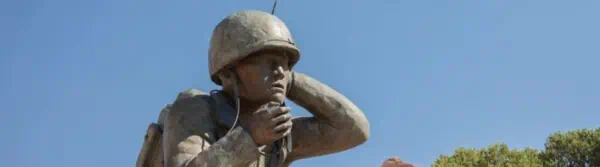
National Navajo Code Talkers Day

Navajo Marines transmitted bombing coordinates in minutes during World War II while enemy forces heard meaningless sounds. Japanese codebreakers never cracked it. Their sacred language became America's unbreakable weapon.
National Navajo Code Talkers Day honors these heroes every August 14. President Reagan established this through a proclamation in 1982. The day recognizes Native American military contributions across conflicts. Navajo warriors joined Cherokee, Choctaw, Comanche, and Hopi code talkers in securing victory.
What happens when suppressed languages save nations?
Key Info: National Navajo Code Talkers Day
- When is National Navajo Code Talkers Day?
Occurs annually on the 14th of August - This Year (2026):
Friday, August 14, 2026 (date has passed) -
Future Dates
- Saturday, August 14, 2027
- Monday, August 14, 2028
- Tuesday, August 14, 2029
- Wednesday, August 14, 2030
-
Additional Details
- Observed By: U.S. Military, Native American tribes, veterans' organizations, and general public
- Where Is It Observed: United States
- Primary Theme: Native American Military Service Recognition
- Hashtags: #NationalCodeTalkersDay #CodeTalkers #NavajoCodeTalkers #NativeAmericanHeritage #NativeAmericanVeterans
Quick Links: National Navajo Code Talkers Day
Reagan's Recognition and Military Effect
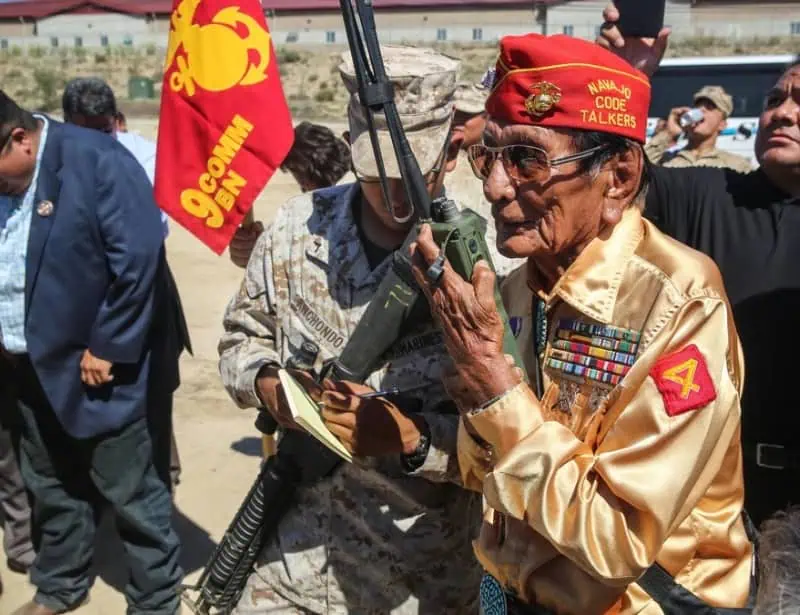
Reagan's July 1982 proclamation recognized tribal language warriors specifically. "Members of the Choctaw, Chippewa, Creek, Sioux, and other tribes used their tribal languages as effective battlefield codes," the president said. Philip Johnston started the Marine Corps program in 1942 after recognizing Navajo complexity.
Between 375 and 420 Navajo Marines served as Code Talkers during WWII operations. Twenty-nine original Code Talkers created a system with 411 words; the Japanese never broke their transmissions despite capturing Navajo prisoners from Army units.
Major Howard Connor provided the assessment after Iwo Jima: "Were it not for the Navajos, the Marines would never have taken Iwo Jima." Six Code Talkers sent over 800 encrypted messages during that battle. Not one error.
Timeline
Philip Johnston initiates Navajo code talkers program with U.S. Marines
President Reagan establishes National Navajo Code Talkers Day via presidential proclamation
Arizona designates August 14 as official state holiday
How Communities Observe National Navajo Code Talkers Day
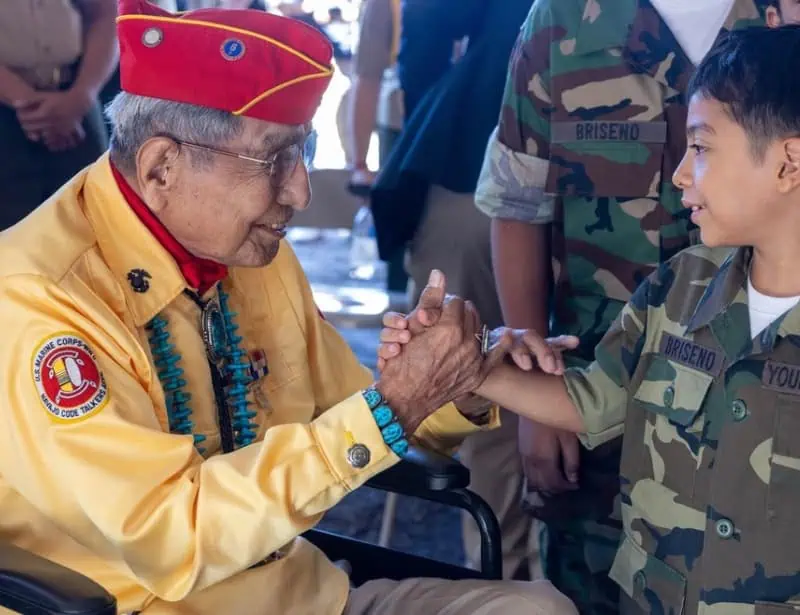
Military installations host ceremonies honoring veterans. Tribal organizations lead community programs throughout Indian Country while government agencies coordinate recognition nationwide.
This includes memorial services at VA national cemeteries housing 29 Code Talkers. Educational programs feature language preservation curriculum, and government proclamations come from state officials.
Tribal commemorations integrate traditional practices with military honors. Veterans organizations connect Code Talkers with contemporary service members through community activities at cultural centers and museums.
Arizona's state holiday observances expand recognition beyond the federal level. According to Navajo Nation President Buu Nygren at recent commemorations, "Our language is sacred" and serves as an example for all communities.
Language Preservation Stakes
This relates to urgent preservation work. Around 167 Indigenous languages remain active in the United States; projections show only 20 will survive to 2050. The Navajo language maintains nearly 170,000 speakers as the most widely spoken Native American language.
Many Code Talkers attended boarding schools designed to eliminate their Native languages. Their suppressed tongues became their most valuable military contributions. Federal planning now aims to increase proficient Native language speakers by 25% before 2036 through establishing language nests and immersion schools.
Ways to Honor and Participate
Visit tribal cultural centers offering Code Talkers educational resources on August 14. Attend local commemoration events organized by veterans organizations. Support Native American veterans through community involvement activities.
Educators can integrate Code Talkers curriculum into August lesson planning. Organizations should issue proclamations recognizing indigenous military service contributions. And consider donating to tribal education programs supporting language preservation efforts.
Honor the three remaining Code Talkers through personal recognition letters. Attend veteran memorial services at national cemeteries. Connect with Native American communities celebrating their linguistic heritage.
Support Arizona's state holiday recognition by contacting representatives about similar designations.
For other related events, also join Native American Heritage Month and International Mother Language Day.
Resources:
FAQs (Frequently Asked Questions)
The first 29 Navajo recruits at Camp Pendleton tackled a tough job in 1942. They created new Navajo words for military terms that didn't exist in their language. When no direct translation fit, they got creative. "Egg" meant "bomb" and birds stood for different planes. They couldn't write anything down—the whole system lived in their heads. This combination of native language skill and quick thinking made their code unbreakable. The Marines kept the entire process under tight wraps, with the code talkers learning both standard radio protocols and their unique language system simultaneously.
Today's preservation work starts with thorough documentation. This proves especially challenging since many of these languages never had writing systems before. Tribal-run education departments now lead the effort, setting up cultural programs that respect traditional teaching approaches. Students learn through immersion rather than textbook study. Beyond this, digital archives store audio recordings of native speakers telling stories and explaining cultural practices. What makes these programs succeed when previous attempts failed? The most effective ones make young people active participants, not just learners. Since 2010, many tribes have seen modest growth in speaker numbers through these combined methods.
The code talkers changed military intelligence forever with their uncrackable native language system. Their methods worked faster than machine encryption while remaining completely secure. The military still values linguistic diversity in its security approach. When standard systems fail, human language innovation offers a backup plan. This relates to today's cybersecurity challenges, where multiple protection layers work better than single solutions. But the Army doesn't publicly share specifics about current applications, though the principle of using unexpected language patterns to confuse adversaries remains relevant. The code talkers proved that sometimes the old ways offer the strongest protection.
The Library of Congress Veterans History Project houses actual code talker interviews. Teachers can build lessons around these first-person stories for maximum student connection. Arlington National Cemetery's education team offers ready-to-use PowerPoints that need minimal prep time. The National Indian Education Association provides grade-specific materials for students from 5th through 12th grade. In practice, mixing these resources works best—start with video clips that grab attention, then move to structured activities with 3-5 students per group. Educators report the topic naturally connects history, language arts, and cultural studies in ways that spark meaningful classroom discussions.
research
Barbara is a former journalist who is passionate about translating important causes into engaging narratives. She combines communication expertise with an environmental science background to create accessible, fact-driven content.