European Neighbors' Day: Building Stronger Communities

European Neighbors' Day turns strangers into community members. People gather every last Friday of May to connect with those living closest to them. Paris launched this celebration in 1999 after a tragic discovery. When an elderly woman died alone and remained unnoticed for months, Atanase Périfan created this response to urban isolation. The tradition now spans 36 countries. About 30 million Europeans join each year, coordinated by the European Federation of Local Solidarity.
Courtyards transform into places where people talk. Hallways where neighbors finally learn each other's names. Simple gatherings create lasting social bonds. What happens when we actually recognize the faces we pass in our buildings each day?
Key Info: European Neighbours' Day
- When is European Neighbours' Day?
Occurs on the last Friday of May - This Year (2026):
Friday, May 29, 2026 (date has passed) -
Future Dates
- Friday, May 28, 2027
- Friday, May 26, 2028
- Friday, May 25, 2029
-
Additional Details
- Observed By: Residents of European cities and towns, with participation from 36 countries and 1,400+ municipalities
- Where Is It Observed: Europe
- Primary Theme: Community Building and Social Connection
- Hashtags: #EuropeanNeighboursDay #FeteDesVoisins #NeighboursDay #EuropeanCommunity
Quick Links: European Neighbors' Day
The History and Evolution of European Neighbors' Day
Atanase Périfan saw urban anonymity's darkest effect. A woman died alone in her Parisian apartment and wasn't found for months. This complete disconnect between neighbors pushed him to act. The first "Immeubles en Fête" gathered 10,000 residents across 800 buildings in 1999. Paris City Hall backed this social experiment from the start.
France embraced the idea nationally. Within a year, participation jumped to half a million people. Brussels joined through collaboration with the European Federation in 2003. Eventually, the initiative officially became "European Neighbors' Day" in 2004. European Parliament recognition followed quickly after that.
Social connection found its yearly catalyst. A single Parisian's answer to tragedy grew into a continental movement. Dr. Isabelle Mallon of Université Lumière Lyon points out, "Neighborhood relationships are weak ties, but a multitude of weak ties solidly attach people to their neighborhood, just as surely as stronger ties".
Timeline
First European Neighbors' Day celebration organized in Paris, France
Officially adopted throughout France at national level
Belgium, Luxembourg and other European countries join the celebration
European Federation of Local Solidarity established to coordinate the event
Recognized by European institutions
Expands beyond 10 million participants across Europe
20th anniversary milestone with participation in 36 countries
When and Where European Neighbors' Day Takes Place
May's last Friday sees European neighborhoods come alive. The celebration reaches across 1,450 partner cities with no mandatory rules. It includes 93% of European Union capitals through voluntary participation. It's not an official public holiday. European institutions offer recognition anyway.
Since 2007, the European Commission has documented support for these community efforts. Resources are available on the specific country's website or through local organizations for anyone wanting to organize an event. If you are in France, visit fetedesvoisins.fr.
Similar gatherings now happen globally beyond Europe's borders. The geographical reach grows each year as the social benefits become clearer.
How European Neighbors' Day Varies Across Europe
Cultural backgrounds shape celebration styles in different ways. Nordic countries mix practical improvements with social time. Mediterranean regions focus on extended meals with traditional foods. Spanish plazas become outdoor dining rooms filled with regional specialties.
Eastern European celebrations highlight cultural performances. Romanian neighborhoods organize storytelling circles that preserve local history. Western European approaches often include sustainability themes and resource-sharing. French apartment buildings hang colorful banners announcing participation days before.
Adapting to local culture ensures relevance while keeping the main purpose intact.
How to Celebrate European Neighbors' Day

Apartment Buildings
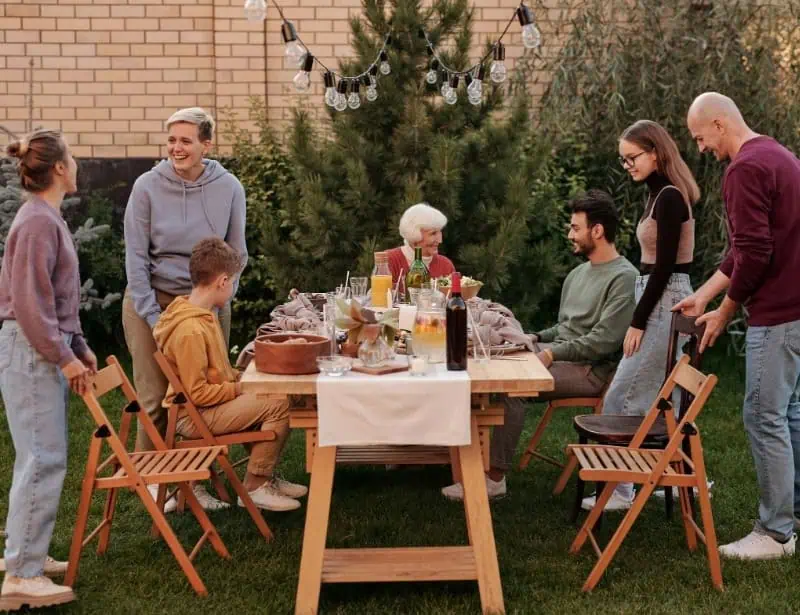
- Set up a potluck dinner in your building's courtyard or entrance hall
- Create a skills exchange board where neighbors can offer various kinds of help
- Host a balcony decoration contest that brightens shared spaces
- Arrange a building-wide open door hour for quick neighborly visits
- Set up a book exchange table in common areas
Suburban Neighborhoods
- Close a residential street for community picnics (with local permission)
- Start a neighborhood walking group that continues beyond the initial event
- Organize yard games for all ages
- Create a neighborhood directory with emergency contacts
- Host garden sharing events where residents swap plants and gardening tips
Rural Communities
- Arrange meals featuring locally-grown foods at central meeting points
- Organize traditional crafts demonstrations that preserve cultural knowledge
- Create community calendars showing residents' important dates
- Establish regular ride-sharing systems starting with the celebration
- Plan seasonal work exchanges for bigger agricultural tasks
Organizing Your Own European Neighbors' Day Event
Planning Steps
- Start preparations 4-6 weeks before May's last Friday
- Connect with building managers or local officials for needed permissions
- Create simple invitations
- Put invitations in mailboxes or common areas two weeks before the gathering
- Keep food simple with a potluck approach where everyone brings something
- Arrange for basic outdoor furniture; ask neighbors to bring extra chairs
- Prepare name tags to help with introductions
- Consider signs in multiple languages in diverse neighborhoods
- Plan activities needing minimal equipment like conversation starters
- Assign setup and cleanup roles to share the work
- Collect contact information for future neighborhood projects
- Take photos of the gathering to create community memory
- Follow up with thank-you notes and ideas for staying connected
Conclusion
European Neighbors' Day rebuilds essential connections in our increasingly disconnected communities. Simple gatherings lead to lasting relationships; conversations over shared food strengthen neighborhood resilience. These annual celebrations start connections that grow throughout the year.
Safety increases when we recognize the people around us. Social isolation decreases through regular interaction.
Mark your calendar for May's final Friday. Small actions can transform communities in profound ways. This celebration reminds us that living near each other can become something meaningful; face-to-face relationships sustain real communities in our digital age.
For related events, also celebrate Won't You Be My Neighbor Day and National Cheer Up The Lonely Day.
Resources:
FAQs (Frequently Asked Questions)
European Neighbors' Day makes communities stronger while helping people work together across borders. The European Commission's Interreg program has backed over 100 cross-border projects tied to these events since 1990. These efforts have fixed roads, boosted local businesses, and brought different cultures together. Recent studies show that 73% of participating neighborhoods report less isolation among residents. This relates to what Eurofound researchers found – people who join community activities tend to feel better about their lives overall.
Check with your local town office first – requirements differ everywhere. You'll generally need space permits for street closures (get these a month ahead), and something in writing if you're using apartment common areas. Most cities care about noise levels after 10pm. For bigger gatherings with 50+ people, you might need food safety papers and liability coverage. In practice, smaller events in private spaces face fewer hurdles. Contact your municipality early since processing times vary from 2 days to 3 weeks depending on your location.
Businesses work best as background supporters rather than promoters. They can open their spaces for meetings, loan basic equipment like tables and chairs, or help with practical needs like trash collection. One coffee shop in Milan let neighbors use their courtyard without any product pushing – this created goodwill that lasted well beyond the event. The European Federation of Local Solidarity suggests businesses participate as community members first, commercial entities second. This keeps the genuine neighborhood spirit alive.
Plan with flexibility built in. Have both covered and open-air options ready. When rain threatens, quick-setup tents work for small groups, while community halls serve larger gatherings. During health restrictions, some neighborhoods tried digital meetups in 2020, with 44% continuing hybrid formats even after restrictions eased. Balcony exchanges and staggered small gatherings proved popular too. Weather apps help, but always have a backup plan and a way to update everyone quickly if things change.
Barbara is a former journalist who is passionate about translating important causes into engaging narratives. She combines communication expertise with an environmental science background to create accessible, fact-driven content.