
25 Scariest Animals (And Are They Really Scary?)

Great white sharks are scary, but have you seen the goblin shark? And that’s just the tip of the iceberg in the animal kingdom. Some are extremely dangerous, others have an odd appearance, and some are just super creepy.
While there are some animals you should hope never to encounter, some other “scary” animals are just misunderstood. Whatever the case, get ready to meet some of the scariest animals in the world.
Top Terrifying Creatures Worldwide
Check out these spooky creatures:
1. Giant African millipede (Archispirostreptus gigas)
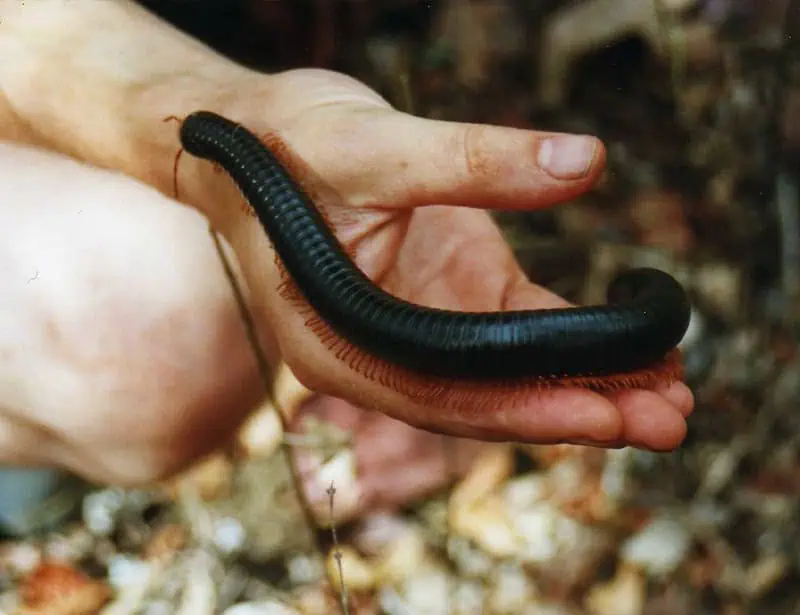
If you can't stand the sight of millipedes, hopefully, you'll never come across giant African millipedes. They are the largest millipedes in the world, measuring up to 12 inches long. They have dark brown or black round bodies with orangey legs and antennas.
Giant African millipedes feed on decaying plant matter, which makes them important for soil health. These millipedes are not dangerous to humans and other animals. When attacked, they curl into a round disc and emit a foul odor.
2. Amazonian giant centipede (Scolopendra gigantea)

This creepy crawly is a foot-long venomous centipede capable of killing almost any other animal. Its venom may not kill humans, but it will cause excruciating pain and injuries.
They hunt worms, snails, roaches, crickets, mice, toads and lizards. Most of their prey are considered pests. Therefore, the Amazonian giant centipede is important for biological pest control.
In the tropical and subtropical forests in northern South America, where they are natives, these giant centipedes can live for up to ten years.
3. Aye-aye (Daubentonia madagascariensis)

The Aye-aye is a member of the lemur family. It is the world’s largest nocturnal primate.
An aye-aye has bulging eyes that glow in the dark, rodent-like teeth, long, slender fingers, and a bushy tail. It is a combination of those features that make people consider it a scary animal.
Its scary appearance, coupled with local Madagascan superstitions, also makes it one of the most hated animals on earth. Locals kill aye-ayes on sight. However, the aye-aye’s activities, like preying on the larvae of wood-boring beetles or spreading seeds, are essential for forest health.
4. Asian giant hornet (Vespa mandarinia)

This is the world's largest hornet, measuring 1.5 to 2 inches long. It has a distinctive yellow, orange, and black pattern.
Asian giant hornets are so aggressive and venomous that they're called ‘murder hornets.’ A couple of these hornets can decimate an entire beehive in a few hours. Their sting could even be fatal for humans.
This hornet is native to Japan, but it is an invasive species in Thailand, China, Nepal, and Russia. It was first sighted in Washington, United States, in 2019 and has been seen only a few times since then.
5. Human botfly (Dermatobia hominis)

You must have seen those movies where alien babies emerge from human bodies. This fly, native to Central and South America, does something similar.
When the human bot fly lands on the skin of a mammal host to feed, the warm blood causes their eggs which they carry on their bodies to hatch. The hatched larvae enter into the host's flesh through the bite wound or hair follicles. They live out the larval stage of their life cycle in the subcutaneous layer, causing pain as they eat tissue and their spikes dig deeper.
Any mammal, including humans, can be a botfly host. However, dogs and cattle are the more common hosts.
6. Giant huntsman spider (Sparassidae)

To many people, spiders are one of the creepiest animals, but most don't even know some species of spiders can grow larger than rats. The giant huntsman spider is one of the largest species of spiders. Its leg span can reach up to 12 inches.
Huntsman spiders don't use web traps; they chase down prey. Once they grasp the unfortunate animal, they inject it with a paralyzing venom. The venom is not fatal to humans but will cause serious discomfort. No need to worry, though; huntsman spiders usually run away from people.
7. Goliath birdeater (Theraphosa blondi)
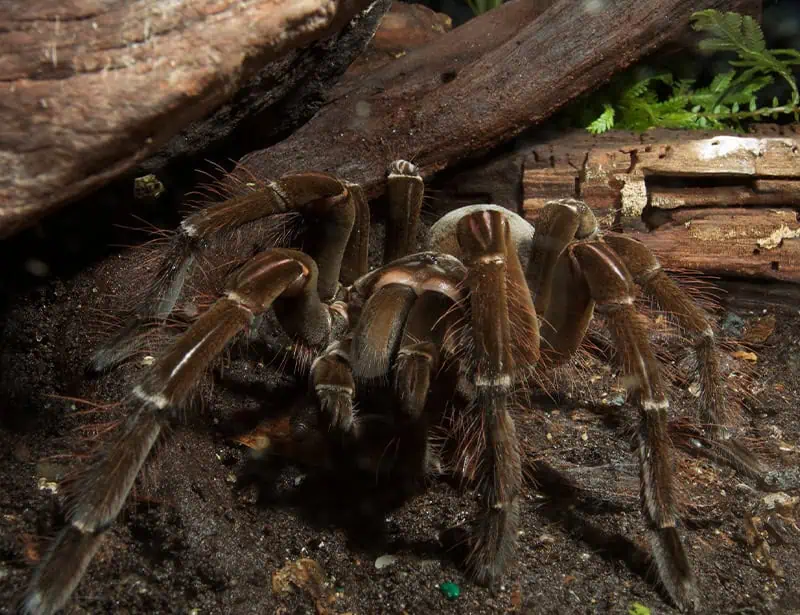
Also known as the Goliath bird-eating spider, this spider is a stuff for nightmares. The terrifying animal is the largest spider in the world. The spider chases down prey and injects them with a special venom. It then drags the animal back to its burrow, drinking its liquefied organs, leaving only the skin and bones.
Goliath bird eaters mostly eat insects but occasionally go for frogs, toads, lizards, snakes, and other large prey. Despite their name, they rarely eat birds. They are endemic to the rainforests of South America.
8. Vampire bat (Desmodontinae)
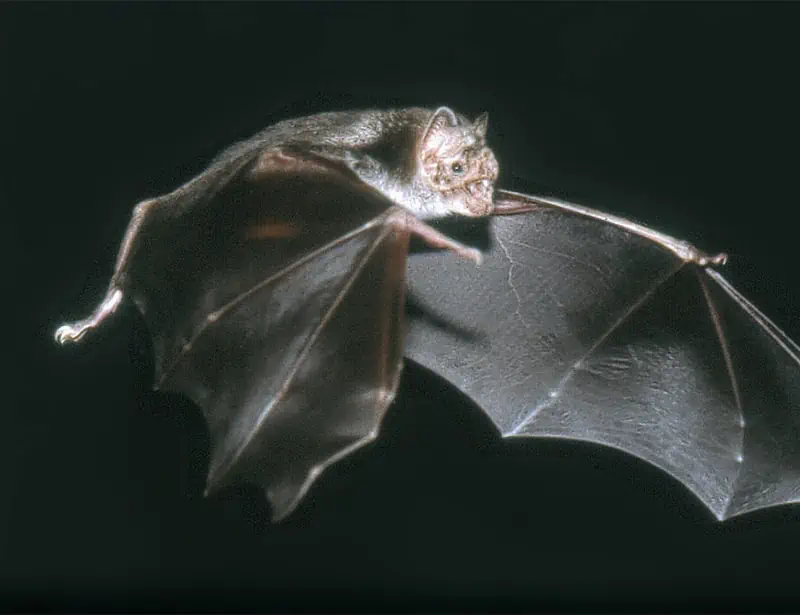
In many cultures, bats are considered scary animals because of their appearance and habits. However, vampire bats up the ante by actually feeding on the blood of other animals. They mainly feed off cattle and horses but have been caught feeding off humans.
When vampire bats find sleeping prey, they use their sharp teeth to create a small incision on the skin. Then they start lapping up the blood that flows out. They don't take enough blood to kill the host, but their bites increase vulnerability to infections and diseases.
9. Flying Fox (Pteropus)

This family of bats has the largest bats in the world. The Indian flying fox has a wing span of about 5 feet. Australia's biggest is the black flying fox. These creepy animals have faces that eerily resemble that of a fox.
Flying foxes feed on fruits, pollen, and nectar. They are vital pollinators and seed dispersers. Unfortunately, they are also carriers of some deadly infections, and a scratch or bite from them can be fatal.
10. Komodo dragon (Varanus komodoensis)

Komodo dragons are the largest species of lizards. An adult can grow to about 10 feet long and weigh 300 pounds.
It turns out that their massive size is the least scary thing about them. Komodo dragons are fierce, venomous hunters with razor-sharp teeth. They hunt pigs, deer, cattle, and other Komodo dragons. Once they can bite their victim, it's only a matter of time before the animal becomes paralyzed or dead.
A Komodo dragon is more than capable of killing a human.
11. Reef stonefish (Synanceia verrucosa)

The reef stonefish is a master of disguise. Its irregular body shape, rough skin, and patchy colors make it look like an encrusted rock or lump of coral. The disguise allows the fish to hide from predators and ambush prey in plain sight.
The stonefish is the world’s most venomous fish. Its sting can kill humans if they do not receive proper and immediate medical treatment. Luckily, there's an antidote, but the sting will still hurt quite badly.
12. Goblin shark (Mitsukurina owstoni)

Deep sea creatures are some of the scariest animals in the ocean. A perfect example is the goblin shark. It is the only species in the Mitsukurinidae family. It lives at depths of 3,000 feet or more in the Pacific, Indian, and Atlantic oceans. A goblin shark is a rare sight, though.
This deep sea shark has a long pointy snout and an expandable jaw, which launches forward to catch prey. Its huge mouth is lined with sharp, pointy teeth. The translucent skin of the goblin shark further sells its scariness.
13. Japanese spider crab (Macrocheira kaempferi)

The Japanese spider crab may seem like a hallucination at first glance. An adult has long spindly legs that measure over 12 ft from tip to tip. This crab is the largest of crustaceans and one of the largest species of arthropods.
Besides their looks, they're not scary animals. They are mild-mannered and rarely hunt; rather, they crawl along the ocean floor, picking at decaying plants and animals.
In the wild, you can see a Japanese spider crab on the Pacific side of Japan.
14. Coconut crab (Birgus latro)

Coconut crabs are the largest land-dwelling crustaceans, with a leg span of over 3 feet. They get their name from cracking into green coconuts with just their pincers.
The bite force of a 4-kilogram coconut crab is about 3300 Newtons. It is stronger than that of almost any animal on land. The pincers have a serrated edge that acts as teeth to aid gripping and tearing.
Besides coconuts, these crabs eat fruits, nuts, and seeds. Unusually for crabs, coconut crabs are active predators. They hunt rats, seabirds, and members of their species.
15. Flying snake (Chrysopelea)

Can snakes fly? Some species can almost fly. Snakes in the Chrysopelea genus are capable of gliding across a 30 m distance between trees.
To “fly,” the snake propels itself from a high branch. Upon take-off, it flattens its body and curves into an s-shape; that's how it achieves aerodynamics and direction. So, it's more gliding than flying.
Snakes are scary animals, and a flying snake sounds doubly so. However, these types of snakes are only mildly venomous and not dangerous to humans. Gliding helps them avoid predators, travel faster, and surprise prey.
16. Inland Taipan (Oxyuranus microlepidotus)

This snake has a reputation for being the most venomous in the world. One bite is estimated to be lethal enough to kill about 100 human adults. Thankfully, inland taipans are shy creatures in remote areas and won't attack humans unless provoked.
Inland taipans hunt small to mid-sized mammals, favoring the Long-haired Rat. The snake's fast-acting venom allows them to attack and kill their prey almost immediately. Venom-dependent predators typically have to release and trail their victims to avoid injury.
17. Sea squirt (Ascidiacea)
You probably know just two animals that can play dead impressively; possums and dogs. However, neither of them has quite the dramatic flair of Polycarpa mytiligera, a sea squirt species.
It will tear open its body and push out its insides when threatened. The elaborate fake death discourages predators with a natural dislike for already dead prey. These creepy creatures can keep up the pretense for days until the danger has passed.
18. Cape buffalo (Syncerus caffer caffer)

The cape buffalo is the most common subspecies of the African buffalo. An adult can be about 5 feet tall and weigh up to 1,840 pounds. Its enormous size, grumpy temperament, and unpredictable reactions are what make the cape buffalo a scary animal. Living in a hostile environment, the animals evolved to fiercely protect their herd, especially their young ones.
African buffaloes are one of the top five most dangerous animals to hunt. That group includes lions, leopards, elephants, and rhinoceroses.
19. Emperor scorpion (Pandinus imperator)

The emperor scorpion is just a little smaller than the largest scorpion in the world. With a shiny black body measuring up to 8 inches, huge pincers, and a scary stinger, this scorpion will strike fear into anybody.
Although most people see scorpions as terrifying creatures, the emperor scorpion is so gentle that some people keep it as pets. Their sting is mildly painful, but their pincers pack a punch.
Emperor scorpions are native to the hot and humid forests of West Africa. They eat ants and help control the insect population.
20. Shoebill stork (Balaeniceps rex)

Depending on how you look at them, shoebill storks can be adorably awkward birds or the creepiest animals in the world. They stand still for hours waiting for prey and produce a call that sounds like a machine gun.
An adult shoebill is five feet tall, weighs about eleven pounds, and has an eight-foot wingspan. Its beak is about 12 inches long and specialized for grabbing large prey.
Shoebill storks eat lungfish, eels, snakes, baby crocodiles and monitor lizards. Unfortunately, these unique African birds are slowly declining.
21. Wolf fish (Anarhichas lupus)

A wolffish is any of the five fish species in the family Anarhichadidae. They are named for their canine-like, sharp teeth. The Atlantic wolffish has some of its front teeth projecting menacingly from its mouth. They also have heavy molars for crunching crabs, starfishes, sea urchins, and others.
This deep-sea fish is present in the northern Atlantic Ocean and the Pacific Ocean. It lives at depths of 300 m or deeper. The largest wolffish can reach lengths of over 7.5 feet. The wolffish is a good source in many cultures.
22. Blobfish (Psychrolutes marcidus)

The blobfish is famous for its looks; it's crowned the ugliest fish in the world. However, in its natural habitat, the blobfish looks like any other fish, not anything like the blob of flesh that we often get to see.
The blobfish is a deep sea fish not adapted for life on or near the surface. It has weak bones, fatty tissue, and no scales but relies on the intense water pressure at 4,000 feet below sea level to hold its shape.
The problem arises when blobfish get accidentally pulled up. Without adequate water pressure, its body collapses.
23. Colossal squid (Mesonychoteuthis hamiltoni)

This deep-sea squid is the largest invertebrate. Its body and tentacles reach a combined length of around 45 feet. An adult weighs at least 1100 pounds. It also has the largest eyes of any animal in the world.
Colossal squids live in the ocean surrounding Antarctica at depths of 66 to 6,562 feet. Scientists don't know so much about them because they are so elusive. They are ambush predators, preying on fish and other squids (possibly other colossal squids).
24. Pacific lamprey (Entosphenus tridentatus)

Looking like dialed-down versions of Dune’s sandworms, Pacific lampreys may just win the title for creepiest animals in the world. These parasitic creatures have bodies like eels, with no necks or jaws. Their powerful suction mouths are full of teeth.
The Pacific lamprey feeds on blood and fluids from fish. They sound dangerous, but these lampreys don't kill their host or attach to humans.
Pacific lampreys are a rich delicacy for bigger fishes and humans. They are culturally important to many Native American tribes. A fossil record shows that lampreys have been around for over 360 million years.
25. Hippopotamus (Hippopotamus amphibious)
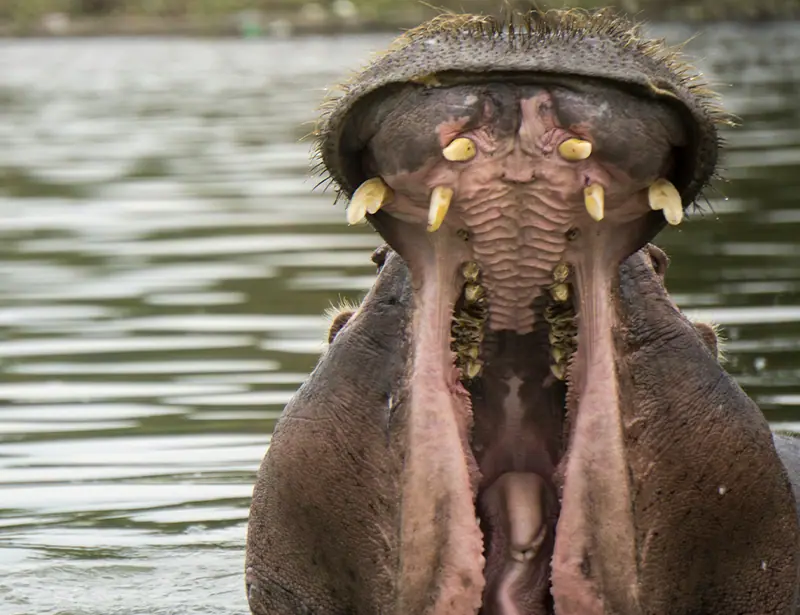
Cartoons often portray hippos as cute, fat, jolly animals. In the wild, the story is much different. Hippos are pretty aggressive when disturbed, especially during the dry season. They are territorial and will attack any animal that trespasses, including lions, crocodiles, and humans.
Hippos have sharp, large teeth and jaws that can stretch open to 150 degrees. Despite weighing over 7,000 pounds, they run at an incredible speed of 30 km per hour.
Hippos are native to sub-Saharan Africa, spending most of their time in shallow waters.
Conclusion
There are many terrifying animals in the animal kingdom. However, some are just misunderstood, while others are not feared enough. Which of the scary animals on our list would you say are not really scary?
Glossary Terms:
Jen’s a passionate environmentalist and sustainability expert. With a science degree from Babcock University Jen loves applying her research skills to craft editorial that connects with our global changemaker and readership audiences centered around topics including zero waste, sustainability, climate change, and biodiversity.
Elsewhere Jen’s interests include the role that future technology and data have in helping us solve some of the planet’s biggest challenges.
Fact Checked By:
Isabela Sedano, BEng.
