
13 Most Endangered Trees in the United States

Endangered tree species risk extinction due to various factors, including fossil fuel mining, illegal logging, fire outbreaks, climate change, pest outbreaks, and disease outbreaks.
The Global Tree Assessment results, the first tree conservation audit conducted in September 2021, show that 29.9% of the world’s trees are endangered. This means that out of 60,000 tree species, 17,510 are at extinction risk (assuming data-deficient species are not threatened). The assessment also shows that over 142 tree species are extinct3.
This article will explore 13 endangered tree species in North America. We will briefly describe these tree species to aid recognition before discussing why they are extinct. We will also discuss the various conservation strategies to protect tree species diversity.
List of Endangered Tree Species
Quick links to rare trees in the United States that need our attention:
1. Florida Yew (Taxus floridana)

Florida Yew is a conifer native of Florida, United States. It is an evergreen small tree that grows up to 12 to 18 feet tall. Its needles are an inch long, with a brownish and scaly bark. It produces flowers in March and single-seeded, pulpy fruits in fall. The berry-like cones are less than 0.5 inches in size.
Florida Yew is a poisonous tree. Its fruit and leaves harm living organisms. The tree's surviving populations are within Torreya State Park, Ravines Preserve, and the Nature Conservancy’s Apalachicola River. Unfortunately, human development, hunting, and recreational activities encroach on the remaining population.
Many threatened trees are on private property, out of the reach of endangered species laws. Also, Florida Yew contains a cancer drug compound known as Paclitaxel or Taxol1. However, scientists can’t use Florida yew as a source because it is a critically endangered species12.
2. Longleaf Pine (Pinus palustris)

The longleaf pine is a member of a gymnosperm tree in the pine family. This endangered species is native to the southern United States, from Virginia, Florida, North Carolina, Alabama, and Louisiana. The tree grows between 60 to 120 feet tall, with short and spare branches forming an open and irregular crown.
Longleaf pine has an orange-brown bark with coarse, rectangular, and scaly plates. It prefers dry sandy upland, sandhill, and flatwood habitats. Logging, fire outbreaks, and land conversion endanger longleaf pine trees. They used to cover up to 60 million acres in the United States before habitat fragmentation13.
Also, invasive species like turkey and blackjack oaks compete with longleaf pines for nutrients and growing space. Longleaf pines are adapted to low-intensity fires, which help eliminate invasive species.
3. Maple-leaf Oak (Quercus acerifolia)

Maple-leaf oaks are another endangered tree species. Their estimated population is below 500 due to cynipid wasps reducing acorn production6. They are native to Arkansas, in the upland forest areas of the Ouachita mountains.
This rare plant grows as a large shrub or small tree in its natural habitat. A mature maple-leaf oak reaches 50 feet. It became an endangered species because of habitat loss. It lost its habitat to human activities like commercial development, mining, road construction, and pollution.
As a perennial plant, it produces flowers and nuts. Its flowers bloom in different colors within three months: white in March, red in April, and green in May. The nuts it produces are light brown and saucer-shaped.
4. Franklin Tree (Franklinia alatamaha)

The Franklin tree is native to Georgia with a conservation status of extinct in the wild since 1998. Its last sighting was in 1803 around the wetland floodplain along the Altamaha River7. We do not know the exact cause of the species' demise. Theories include burning and clearing of land, frequent flooding, and over-collection.
William Bartrams discovered the tree along the Georgia coast in 1765 and named it after his friend and companion, Benjamin Franklin. The only surviving species of the Franklin tree are from the seeds collected by William Bartrams.
The Franklin tree is a small flowering tree in the tea family, Theaceae. It grows up to 25 feet tall and has a diameter of 15 feet. The flowers of the Franklin tree bloom in late summer and early fall.
5. North American Ash (Fraxinus Americana)
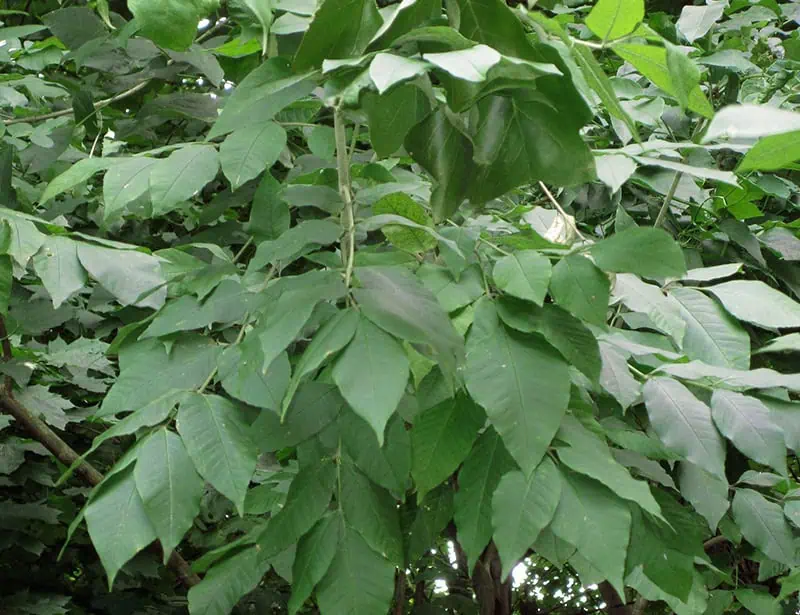
North American or white ash is a critically endangered tree species in the olive family10. It is native to eastern North America and Mexico and thrives in soils rich in humus and moisture. American ash is found in mixed hardwood forests, mountains, and plain areas.
The tree grows on soils with high nitrogen and calcium content. American Ash is a fast-growing species, often up to 90 feet tall. Some trees reach 120 feet, making it the largest tree species in the ash family. Its trunk diameter measures 2 to 3 feet.
How is it an endangered species when it is resistant to drought, fire, and human industrialization? It is threatened with extinction because of pests and diseases. White ash is susceptible to emerald ash borer, a pest that feeds on ash wood. It kills the tree within 3 to 5 years of infestation. Getting rid of the infestation is next to impossible.
Other factors responsible for white ash’s conservation status are lilac borer, brownheaded ash sawfly, ash bark beetle, carpenter worm, ganoderma root rot, ash yellows, fungal leaf spots, surface fungal rot, and redheaded ash borer.
6. California Redwoods (Sequoia sempervirens)

Even though they are one of the oldest redwood species, California or Coast Redwoods are unfortunately endangered. They are the world’s tallest tree, surpassing giant sequoias. They grow past 320 ft, higher than a 30-floor skyscraper. Their trunks have an average width of 27 ft.
Coast redwoods are part of the world’s fastest-growing conifer species, with young trees growing over a foot yearly underneath good conditions. Young trees can reach 100 to 150 ft within 50 years.
Because of their thick trunks, California redwoods are resistant to forest fires. Many wildlife species, such as worms, salamanders, ferns, and huckleberries, rely on the redwood for survival. California redwoods don’t grow in soils with high magnesium and sodium content. They prefer soils formed from limestone, slate, chert, and sandstone.
Although redwoods are fire-resistant, young trees under 20 often die in these outbreaks. They are also endangered tree species because of branch canker and heart rots, which harm their stems and branches. Wood rats destroy the bark of seedlings, while black bears remove the bark from young trees2.
7. Loulu (Pritchardia kaalae)

Loulu is a native Hawaiian species located in O’ahu, in the Ko’olau mountains and southern Wai’anae mountains. This tree grows from elevations of 1000 to 2000 ft. It prefers habitats near brackish ponds close to the sea level and rainforests.
Loulu grows to 30 feet in height and produces 2-inch-long fruits. Hawaiians use the tree's natural resources to make medicines, elegant fans, and spears. However, with only 200 mature trees in the wild, Loulu is critically endangered due to invasive species14, wildfire, and rats and feral pigs overconsumption of fruits.
8. Florida Torreya (Torreya taxifolia)

Florida Torreya is in the same family as Florida Yew. Native to three Northern Florida counties and a southwest Georgia county, it is one of the rarest conifer trees in the world.
It grows along the limestone bluffs and ravines on the eastern bank of the Apalachicola River and its 60 km confluence. A small colony of the threatened species is located at Dog Pond, Jackson County. The USDA Forest Service states that the colony contains 60 endangered tree species.
Florida Torreya grows in a pyramid structure, with glossy, dark green leaves on drooping branches. When crushed, the leaves release a strong scent similar to that of the tomato plant. Florida Torreya is a slow-growing tree with a standard height of 40-50 feet.
Since the turn of the millennium, Torreya has become critically endangered11. Before the onset of the decline in the 1950s, its population hovered around 600,000. Unfortunately, it experienced a 98% decline, mostly due to fungal pathogens.
9. Monkey Puzzle (Araucaria araucana)

Monkey Puzzle is a threatened tree species native to the Andes Mountains of South America and a non-native species in North America. It is an evergreen ornamental conifer tree, but it looks different from its relatives due to its spiral arrangement of rigid, spiky, glossy, and leathery leaves on stiff branches.
It grows to 150 to 164 feet tall and has a diameter of 8 feet. Even though it has lived for over 700 years, the monkey puzzle is on the endangered species list of the IUCN8. Illegal logging, forest fires, and overgrazing were the main culprits of these trees.
10. Fraser Fir (Abies fraseri)

Next on our list of threatened tree species is one of the most popular Christmas trees in the United States. This evergreen pine tree was named after its founder, John Fraser, who was a Scottish botanist. It is native to the Appalachian Mountains in the southeastern United States, at elevations of 4,000 to 6,700 ft.
Continually declining, Fraser firs are officially endangered in their natural habitat15, not because of illegal logging but because of the introduction of the balsam wooly adelgid. This invasive insect related to aphids attacks the tree, causing it to die of starvation. It also weakens it, making it susceptible to other harmful elements.
11. Hawai’i Alectryon (Alectryon macrococcus)

Hawai’i Alectryon is an endangered tree with reddish-brown branches and glossy green leaves. The Hawaiian native grows up to 36 feet tall and has leaves about 22 inches long. It also produces fruits, but indigenous people dislike it because it attracts black twig borer and rat infestation.
The infestation is also a major threat responsible for its dwindling populations. Black twig borers and rats eat the fruits and seeds before germinating, causing inadequate regeneration of new growth. The latest IUCN report gave these Hawaiian trees critically endangered status with less than 250 mature individuals5.
12. Gowen Cypress (Cupressus goveniana)
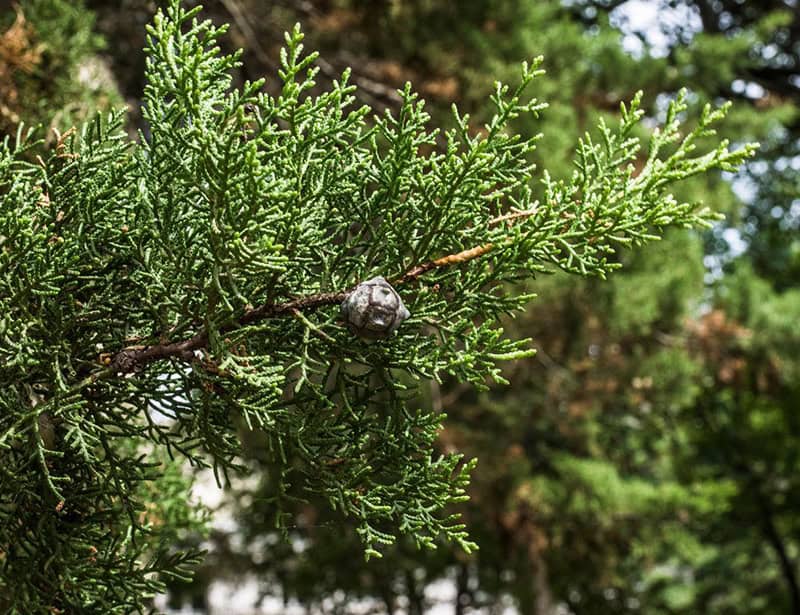
Gowen cypress is endemic to the Coast Ranges of central and northwestern California. The threatened tree species grow up to 23 feet tall, preferably in acidic, poorly drained, and podzolic soils. It is threatened with extinction because of habitat loss, fragmentation, and invasive plants like French brooms and fireweeds.
Gowen cypress’s bark is slightly fire-resistant. It also benefits from heat, helping it crack and propagate its seed cones. According to the USDA Forest Service, frequent fires can stop their reproduction by not giving them a chance to produce cones. Today, IUCN listed the Gowen cypress as an endangered species9, with less than 2,300 mature individuals.
13. Butternut Tree (Juglans cinerea)

The last mention on our list of threatened trees is the butternut tree. It is the central and eastern North American native species that grows in small tree groups in deciduous forests. It became endangered because of a fast-spreading fungal disease introduced in 1967.
Butternut trees soared to endangered status in the latest and only IUCN report published in 201916. Their historical decline is estimated to be up to 80%. Currently, researchers are working on ways to deal with fungal infections, such as in vitro propagation and breeding resistance.
Tree Conservation Efforts: Ongoing Strategies to Protect Globally Threatened Species
We are responsible for the many tree species that have gone extinct and those on the verge of extinction. It is essential we find means of restoring these species because they absorb carbon dioxide from the atmosphere, reducing the intensity of climate change. Here are some of America’s conservation strategies:
- Botanic Gardens Conservation International (BGCI) and Fauna & Flora International (FFI) co-led the Global Trees Campaign to reduce threats and restore threatened trees in America. Since 1999, the Campaign has conserved over 400 threatened species in over 50 countries4.
- Botanic Gardens Conservation International collaborates with other botanic gardens, such as the Morton Arboretum, to create protected areas for many rare species.
- Several environmental organizations spread awareness regarding the critically endangered plants and trees in the environment and offer solutions local communities can adhere to.
- Environmental law enforcement bodies focus on ecological restoration through environmental policies. These policies help prevent harmful activities like illegal logging, intentional wildfires, and the transfer of invasive species.
- Establishing seed banks and situ collections, which hold records of various tree species, provides a rich database essential for tree conservation.
Conclusion
The world’s trees are crucial to the planet's survival because they are not only homes to many animal species but are also necessary for the carbon cycle. However, we’re losing these trees to various environmental and man-made factors. Luckily, America has taken action toward sustainable forestry to protect endangered species.
The government and other environmental organizations work together to create protected areas for trees’ habitats. These protected areas are national parks, national forests, and botanic gardens. Protecting the planet’s lungs helps us prevent severe weather events caused by climate change. It also helps us project many species: animals, plants, and microorganisms that rely on them.
Glossary Terms:
| 1 | Thakur, A., & Kanwal, K. S. (2024). Assessing the global distribution and conservation status of the Taxus genus: An overview. Trees Forests and People, 15, 100501. |
| 2 | Burns, Russell M., and Barbara H. Honkala, tech. coords. 1990. Silvics of North America: 1. Conifers. Agriculture Handbook 654. U.S. Department of Agriculture, Forest Service, Washington, DC. vol. 1, 675 p. |
| 3 | BGCI (2021). State of the World’s Trees. BGCI, Richmond, UK. |
| 4 | BGCI (2021). State of the World’s Trees. BGCI, Richmond, UK. |
| 5 | Bruegmann, M.M. & Caraway, V. 2003. Alectryon macrococcus. The IUCN Red List of Threatened Species 2003: e.T44144A10863892. |
| 6 | Wenzell, K., Kenny, L. & Beckman, E. 2016. Quercus acerifolia. The IUCN Red List of Threatened Species 2016: e.T35039A2858212. |
| 7 | Rivers, M.C. 2015. Franklinia alatamaha. The IUCN Red List of Threatened Species 2015: e.T30408A62077322. |
| 8 | Premoli, A., Quiroga, P. & Gardner, M. 2013. Araucaria araucana. The IUCN Red List of Threatened Species 2013: e.T31355A2805113. |
| 9 | Farjon, A. 2013. Cupressus goveniana. The IUCN Red List of Threatened Species 2013: e.T42219A2962566. |
| 10 | Jerome, D., Westwood, M., Oldfield, S. & Romero-Severson, J. 2017. Fraxinus americana. The IUCN Red List of Threatened Species 2017: e.T61918430A61918432. |
| 11 | Spector, T., Determann, R. & Gardner, M. 2011. Torreya taxifolia. The IUCN Red List of Threatened Species 2011: e.T30968A9585489. |
| 12 | Spector, T., Thomas, P. & Determann, R. 2011. Taxus floridana. The IUCN Red List of Threatened Species 2011: e.T30965A9584928. |
| 13 | Farjon, A. 2013. Pinus palustris. The IUCN Red List of Threatened Species 2013: e.T39068A2886222. |
| 14 | Keir, M. 2018. Pritchardia kaalae. The IUCN Red List of Threatened Species 2018: e.T38647A83787605. |
| 15 | Farjon, A. 2013. Abies fraseri. The IUCN Red List of Threatened Species 2013: e.T32101A2810241. |
| 16 | Stritch, L. & Barstow, M. 2019. Juglans cinerea. The IUCN Red List of Threatened Species 2019: e.T62019689A62019696. |
Jen’s a passionate environmentalist and sustainability expert. With a science degree from Babcock University Jen loves applying her research skills to craft editorial that connects with our global changemaker and readership audiences centered around topics including zero waste, sustainability, climate change, and biodiversity.
Elsewhere Jen’s interests include the role that future technology and data have in helping us solve some of the planet’s biggest challenges.
Fact Checked By:
Isabela Sedano, BEng.
