Don't Step on a Bee Day: Save Our Essential Pollinators

July 10 marks Don't Step on a Bee Day worldwide. This yearly reminder helps us protect essential pollinators through everyday actions. Thomas and Ruth Roy created this observance after their son, Michael, had a painful bee encounter. The U.S. and the UK have embraced this day most enthusiastically.
Honeybees provide ecological services worth $15 billion worth of crops yearly to American farms alone. Their numbers have dropped in ways that threaten food systems and plant variety across the globe. Even though we should be wary of their stings, we should still be responsible stewards.
Key Info: Don't Step on a Bee Day
- When is Don't Step on a Bee Day?
Occurs annually on the 10th of July - This Year (2026):
Friday, July 10, 2026 (date has passed) -
Future Dates
- Saturday, July 10, 2027
- Monday, July 10, 2028
- Tuesday, July 10, 2029
- Wednesday, July 10, 2030
-
Additional Details
- Observed By: Environmental organizations, conservation groups, educational institutions, and public participants
- Where Is It Observed: United States and United Kingdom
- Primary Theme: Bee Conservation and Protection
- Hashtags: #DontStepOnABeeDay #SaveTheBees #BeeConservation #PollinatorProtection #BeeFriendly
Quick Links: Don't Step on a Bee Day
Why Don't Step on a Bee Day Matters
The name mixes practical warning with deeper conservation messaging. American bee populations have fallen by 30% since 2006—a trend I find deeply troubling. These tiny creatures pollinate nearly 80% of flowering plants worldwide. Without them, fruit production that feeds wildlife and humans would collapse.
This single-day focus opens doors to broader environmental engagement. Ground-nesting bees face special risks from people walking and habitat loss. Conservation photographer Krystle Hickman points out that declining wildflowers signal bee troubles; "they are so closely interlinked".
Protecting ecosystems needs both policy changes and personal habits that respect where pollinators live. And sometimes we forget the simplest solutions work best—Don't Step on a Bee Day turns big environmental concepts into direct action anyone can take.
The Origin and Evolution of Don't Step on a Bee Day
Thomas and Ruth Roy started this day through their Wellcat Holidays creative project. Their calendar of holidays also includes National Stay at Home Because You're Well Day and National Eat What You Want Day. Their son's bee sting—ouch!—became a teaching moment that grew into global awareness. They described it as a reminder for "kids and grownups that now is the time when going barefoot can mean getting stung by a bee. If you get stung, tell Mom."
No central group manages the day's promotion or events. Grassroots participation spreads this observance through schools, garden clubs, and local networks. Conservation groups adopted the concept because it makes pollinator education so accessible.
The day grew from basic safety advice to full habitat protection messaging. This organic growth shows how straightforward ideas create a lasting environmental impact.
How to Observe Don't Step on a Bee Day
- Plant native wildflowers in your garden or pots. Native plants give bees nutrition that exotic varieties often lack.
- Build a bee hotel using hollow stems, drilled wood blocks, or bought kits. These structures offer homes for solitary bees that make up most bee diversity.
- Share facts on social media with #DontStepOnABeeDay. Information about pollinator decline reaches new people through personal connections.
- Skip mowing on July 10 to protect ground-nesting bees. Research shows 70% of native bee species nest in soil rather than hives.
- Lead a community bee walk with knowledgeable guides to spot local species. This builds awareness while creating personal connections to conservation.
- Stop using pesticides in your yard and push for pesticide-free public areas.
- Make a bee watering spot with shallow dishes containing pebbles for a safe landing. Bees need reliable water sources, especially during hot weather.
- Host a honey tasting featuring local varieties to support ethical beekeepers. I did this last summer—the differences between honey types amazed everyone!
- Watch a bee documentary with friends to deepen understanding of pollinator issues. Visual stories create emotional investment in conservation.
- Join a citizen science project like Bumble Bee Watch to help with population tracking. Laura Rost, Bee City USA Coordinator at the Xerces Society, notes that communities "play to their own strengths" in conservation work.
Practical "Don't Step" Guidance
Ground-dwelling bees represent about 70% of native bee species. They make small mounds with center holes in bare soil patches. Watch for bee activity near ground level in gardens and natural areas.
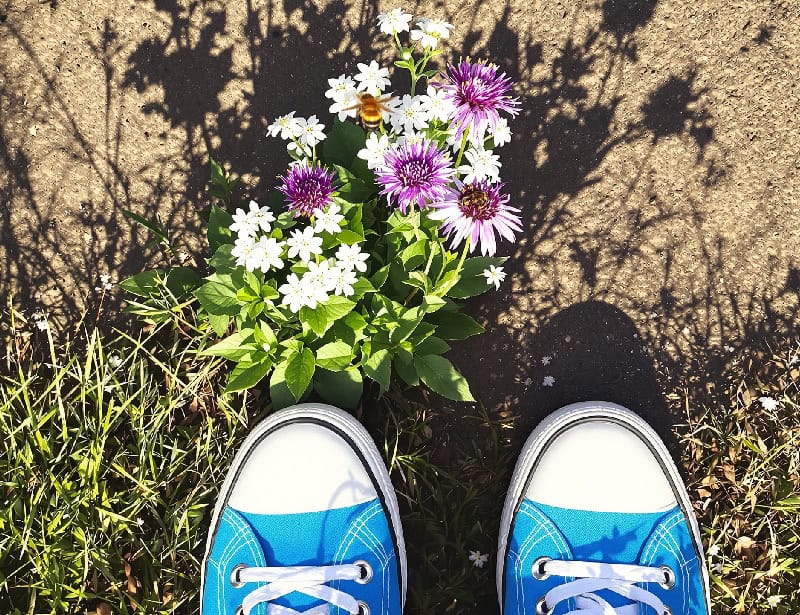
Bees rarely sting unless directly threatened or stepped on. Wearing closed shoes in bee-rich environments protects both you and them. Dead bees can still sting if handled carelessly; their venom apparatus works briefly after death.
This relates directly to mindful walking habits in natural areas. Research by Payne and colleagues found that providing bare ground patches increases soil-nesting bee colonization by 60%[1]. This awareness goes beyond safety to habitat preservation for these ground-nesting species.
Each protected bee contributes to pollination networks that maintain plant diversity.
Conclusion
July 10th offers a chance to reconsider our relationship with essential pollinators. Don't Step on a Bee Day transforms awareness into action through simple behavior changes.
Join the movement by planting native flowers, eliminating pesticides, or simply walking carefully. MacPhail and Hatfield concluded that citizen science programs "contributed a wealth of ecological information", helping to inform conservation management of bee species[2].
Your participation goes beyond symbolic support to real habitat protection. Every undisturbed bee continues its vital ecological work. Mark your calendar for July 10th and step lightly for the bees—our flowering world depends on it.
Resources:
FAQs (Frequently Asked Questions)
About 70% of native bees actually nest in the ground, not hives like many people think. They prefer sunny spots with well-drained soil and not much plant cover. Their homes consist of tunnels anywhere from 6 to 36 inches deep, with separate rooms for each egg they lay. You'll often spot them along garden edges, in bare dirt patches, or on slopes facing south where the sun hits directly.
Bees don't wander too far from home when looking for food. Most stay within 2 km, but the exact distance depends on the bee type. Research shows smaller solitary bees typically fly about 110 meters from their nests. Bumblebees go a bit farther at roughly 450 meters, while honeybees travel around 800 meters. But why the difference? This relates directly to body size - larger bees can generally cover more ground than their smaller relatives.
The good news is most ground-nesting bees can't sting through regular shoes. Any closed-toe footwear works well enough for basic protection. That said, they might get through really thin materials like canvas if pressed against your foot. Have you ever noticed how different shoe materials affect your ability to feel the ground beneath you? For best results, wear leather shoes or synthetic athletic footwear – these give solid protection while still letting you feel the ground enough to avoid stepping directly on nests.
These bees are busiest during the warmest hours, typically from mid-morning until mid-afternoon when the sun is strongest. Energy Department research points to their preference for spots with plenty of sunlight, especially south-facing slopes. This suggests taking extra care during these peak hours if you're walking in areas where ground-nesters might live. Before noon until about 3 PM is when you'll want to watch your step most carefully.
Look for small mounds of dirt that resemble tiny volcanoes, each with a pencil-sized hole in the middle. These holes measure about 1/4 inch across and form perfect circles in the soil. Since 70% of native bees nest this way, these signs are common in bare or patchy ground areas. When you see bees flying in and out of these holes, that's a clear signal of an active colony. And unlike honeybees, these ground-dwellers typically nest in groups rather than maintaining a single large colony.
Sources & References
- [1]
- Payne, H. E., et al. (2024). Native Bee Habitat Restoration: Key Ecological Considerations from Recent North American Literature. Frontiers in Ecology and Evolution, 12, 1358621.
↩ - [2]
- MacPhail, V. J., & Hatfield, R. (2024). Bumble Bee Watch Community Science Program Increases Scientific Knowledge and Conservation Impact. PLOS ONE, 19(5), e0303335.
↩
Barbara is a former journalist who is passionate about translating important causes into engaging narratives. She combines communication expertise with an environmental science background to create accessible, fact-driven content.