
13 Desert Animal Adaptations Beating the Heat

The desert is one of the major biomes on Earth. Every biome has its own species of animals and plants. By natural selection, desert animals have special adaptations that help them survive in their harsh biome.
These adaptations include changes in their genetic and physical features to protect them from the sun, harsh temperatures, predators, and food and water scarcity. Animals without these adaptations can’t survive in these environments.
This article first discusses the various types of desert and their locations. Next, it lists 13 animals and their adaptations. From camels, which store water for later, to the fennec fox, which has enormous ears and dispels heat, discover how these desert dwellers beat the heat and embrace the extremes.
The Desert Environment
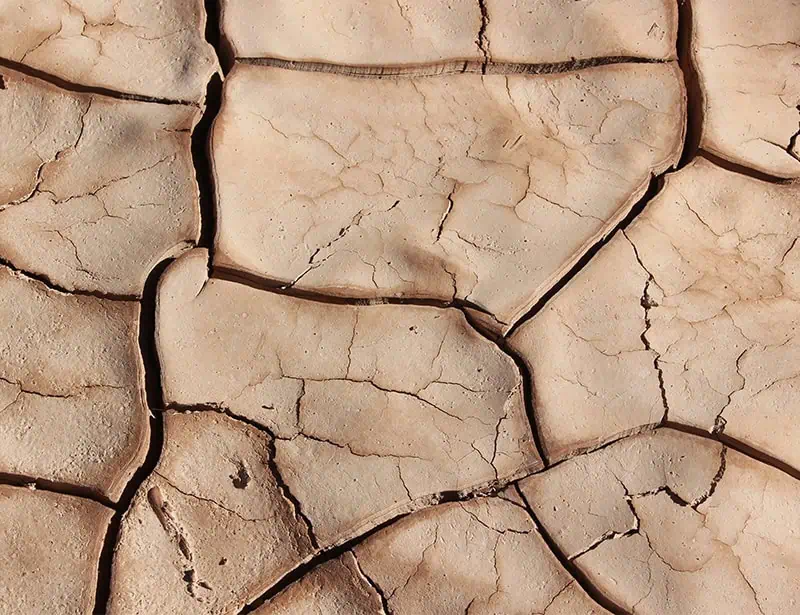
The desert environment is one of the many biomes on planet Earth. Only receiving less than 10 inches of rainfall annually, it covers about one-fifth of the Earth. Not only sand, this habitat can also have gravel or stony soil layers.
Deserts don’t support plant growth, so sparse vegetation exists in these environments. Some deserts with extreme heat and dryness have no plants at all. Some types of deserts are hot, cold, semi-arid, and coastal.
Hot deserts, also known as arid deserts, have warm and dry temperatures all year round. The Sahara and Mojave deserts are prime examples of arid deserts. The Sahara desert covers most of Africa, while the Mojave desert is in the Southwest of the United States.
An example of a cold desert is the Antarctic. Cold deserts have extremely low temperatures and are cooler than other desert types. A semi-arid desert is cooler than a hot desert. It experiences three seasons: a long season of dryness, winter, and a rainy season. You’ll find semi-arid deserts in Asia, Europe, Greenland, and North America.
Lastly, coastal deserts like the Atacama Desert of Chile have more humidity than other deserts because of the fog that blows from coastal areas. However, despite its proximity to coastal areas, rainfall is still rare.
Some plants and animals can survive in the desert despite its heat and dryness. These desert dwellers adapted to their environment physically and genetically. They have various behavioral patterns that help them survive these harsh conditions.
Desert Animals And Their Adaptations
Quick links to impressive desert animals and their adaptations:
1. Camel (Camelus)

Desert adaptations: humps with stored fat and thermoregulation properties, long eyelashes, third eyelid, ears with hairs, thick coat, padded breasts, wide hoofs.
Camels are part of the camelid group, making them relatives of alpacas, llamas, and guanacos. Three species of camels—dromedary, wild Bactrian, and domesticated Bactrian—are found in deserts across Asia and Africa.
Camels have physical adaptations that help them survive in the desert5. One of these includes the hump on camels’ backs. The hump on a camel’s back serves as a fat reservoir. They can go long periods without access to vegetation because of the desert's harsh conditions. So, they convert the stored fat to energy to survive.
The hump also helps with thermoregulation. It helps them release heat from their body on scorching days. They have long eyelashes that protect them from the sunlight’s harsh glare and a third eyelid that protects their eyes from blowing sand. Their ears also adapted to the harsh environment by growing small hairs to filter and warm the air entering the ears.
Camels also have thick coats that help insulate them against the extreme heat. Dromedary camels have a pedestal that raises their body off the ground and allows cool air to pass under. The pedestal is a pad of thick tissue over the sternum.
Camels are heavy desert dwellers. They navigate dunes with their large, wide snowshoe-like feet. The size and shapes of their hoofs help prevent sinking by distributing their weight. They can also consume large quantities of water to compensate for previous water loss and travel long distances without drinking water.
2. Sand Cat (Felis margarita)

Desert adaptations: furry foot pads, thick fur, large ears, reduced hydration levels.
Sand cats, also called sand dune cats, are nocturnal desert animals with numerous behavioral and physical adaptations, including reduced hydration levels. They don’t need to drink water often because they get most of their moisture content from their prey.
Sand cats can go for long periods without water, which is essential because the Sahara desert has little water. The thick fur between their toes protects them from the hot sand. It also helps them hunt small mammals and evade capture stealthily.
Sand cats also have large ears with exceptional hearing range. They can hear a rodent 600 feet away. Their large ears help them regulate their body heat in extreme temperatures. Sand cats’ thick fur also helps them regulate body heat on cold desert nights. It also helps them blend into their environment, further improving the success rates of their hunt for food.
3. Fennec Fox (Vulpes zerda)
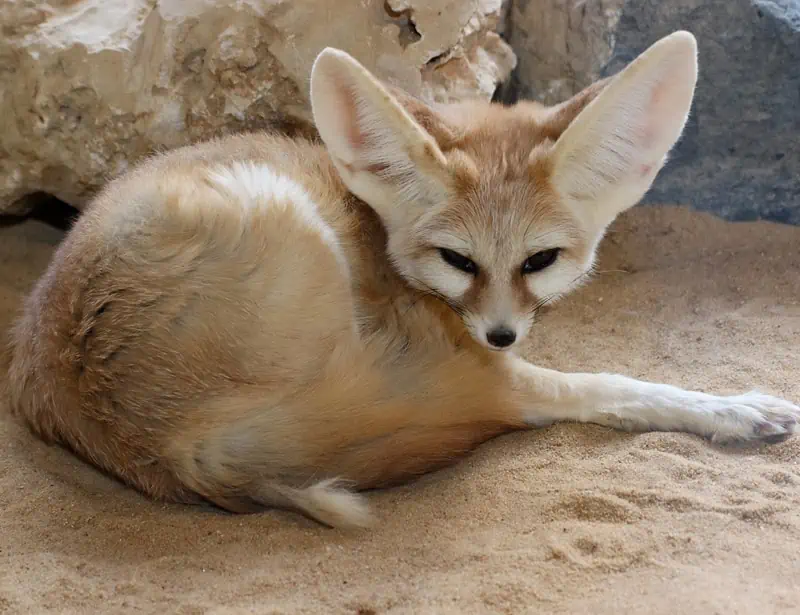
Desert adaptations: thick fur, large ears, panting.
The fennec fox is the smallest fox species on Earth. It is found in the Sahara desert and some areas of North Africa. One of the fennec foxes' desert adaptations is their thick hair, which helps them regulate their body temperature in the desert heat and cold nights.
Their large ears, about 6 inches long, are very distinctive. They help keep the foxes’ bodies cool in extreme temperatures. Also, fennec’s nocturnal behavior helps it avoid most of the sun during the day. They sleep in dens dug with their shovel-like feet.
They start panting when the temperature increases above 95 degrees Fahrenheit. Furthermore, they have adapted to food scarcity in the desert environment by eating both animals and plants, from lizards to insects.
4. Snow Leopard (Panthera uncia)

Desert adaptations: enlarged nasal cavity, large chest, thick fur.
Snow leopards, native to Asia's high-altitude Gobi desert, have well-adapted bodies to survive extreme conditions. Their large chests draw in thin air, and oversized nasal cavities warm it before reaching the lungs.
Giant paws and elongated tails offer excellent balance over rocky landscapes. Plus, thick fur provides necessary warmth during freezing temperatures.
5. Meerkats (Suricata suricatta)
Desert adaptations: burrowing tunnels, dark patches around eyes, third eyelid.
Next on our list of desert animals and their adaptations are meerkats, members of the mongoose family. These desert dwellers are small mammals with weasel-like features. They have dark patches around their eyes that protect them from the sun. They also have a special membrane that protects their eyes from sand as they dig the ground.
You will mostly see them in the Kalahari desert in South Africa, but they also live in the deserts of Botswana, Mozambique, and Zimbabwe. Their sharp claws allow them to dig extensive burrows with a large room and tunnel system.
These burrows always keep them cool from the sun and hot sand. Meerkats regulate their body temperature by stretching and lying on their stomachs in shady areas. They warm their bodies on cold desert nights by sleeping together in groups6.
6. Kangaroo Rats (Dipodomys)

Desert adaptation: burrowing, reduced hydration levels, specialized kidneys, dust bathing.
Kangaroo rats are not a rat or mouse species. They belong to the Hetereomyidae family and are small desert animals weighing less than 200 grams. They have extremely huge eyes and tiny ears.
These well-adapted animals live in burrows in the ground to avoid predators and the harshness of desert environments. Their bodies don’t need a lot of water and have adapted to lose little water. They get the moisture needed for survival from the food consumed—dry seeds.
Kangaroo rats can get half a gram of water from every gram of dry seeds they eat. Furthermore, its kidneys have evolved to concentrate urine to a crystal-like consistency2, reducing the amount of water lost.
Kangaroo rats don’t use water to bathe. Instead, they roll their bodies in the sand. A dust bath is essential to the kangaroo rat’s well-being. The absence of dust baths in their routines mattes the fur, causing it to develop sores.
7. Desert Hedgehog (Paraechinus aethiopicus)
Desert adaptations: burrowing, hibernation.
The desert hedgehog is found in North Africa and the Arabian Peninsula. It can survive the desert heat, but it is slightly more difficult to survive cold nights. Desert hedgehogs escape the heat by spending the day in burrows and only coming out to hunt for food at night.
They hibernate during long periods of frigid temperatures. The sharp spines on their backs don't offer enough insulation against the cool air. They can wake up from hibernation to scavenge for bird eggs, insects, scorpions, and snakes. Like most desert dwellers, desert hedgehogs get most of the water they need from the food they consume7.
8. Arabian Wolf (Canis lupus arabs)
Desert adaptations: large ears, changing fur length, smaller size, long legs, paw pads.
The Arabian wolf, also known as the desert wolf, is a subspecies of the gray wolf native to the Arabian Peninsula. Its desert adaptations include large ears that help regulate body heat. During the hot season, the Arabian wolf has short and thin fur to help reduce the heat from the sun, while it grows long fur to survive the cool air during winter.
Arabian wolves’ size is an adaptation. They are smaller than other wolves, which helps them conserve energy better. Their long legs allow them to cover more distance without expending energy. They also have paw pads that protect their feet from the hot sand and help them move swiftly.
These wolves hunt small birds, reptiles, and hares. Their adaptations don't include low water needs. They can't survive an extended period without water, so they often hang around areas with a water source.
9. Kalahari Lion (Panthera leo vernayi)
Desert adaptations: smaller bodies, reduced hydration levels, panting, sweating.
The Kalahari lion, also known as the desert lion, is a subspecies of the African Lion. Its body weight is not as robust as other lion species worldwide. The Kalahari lion has leaner bodies and longer legs, and its males have darker manes.
They have more endurance than other lions. Like most animals in the desert, their water source is the prey they consume. Kalahari lions mostly hunt small mammals and young antelopes. They also tend to break into smaller pride groups at the peak of an extremely hot season.
10. Sonoran Pronghorn (Antilocapra americana sonoriensis)

Desert adaptations: specialized teeth, ruminant stomachs, sparse hair.
Sonoran pronghorn is a remarkable desert animal. It is the fastest North American mammal, running 60 miles per hour. These animals adapted to the desert in various ways to ensure their survival. Because of their unique dental formation, they can consume plants that other herbivores can't.
Their teeth have high crowns, making it easy to chew abrasive food like dry grasses and succulent plants. The Sonoran pronghorn's stomach has four divisions, which help it digest food properly and extract as many nutrients as possible. It also helps them retain food and water for a long time.
Part of the pronghorn desert adaptations also includes sparse hair to trap heat and regulate their body temperatures on cold nights and hot days4. Unfortunately, they are an endangered species because of poaching, livestock grazing, and habitat destruction. Their population fell drastically from millions to 19,000 within a century.
11. Desert Bighorn Sheep (Ovis canadensis nelsoni)

Desert adaptations: ruminant stomachs, reduced hydration levels,
Bighorn sheep are animals adapted to the extreme conditions of the desert environment. These adaptations include a complex digestive system and cloven hooves. Their digestive system has a similar function to that of Sonoran pronghorns. It helps them digest and absorb nutrients from tough plants.
The rams can go long periods without water— they can lose about 20% of their body weight in water. However, the ewes must be close to a water source, especially during pregnancy and lactation. They prefer drinking water sources in open areas to sense when predators are approaching them quickly.
Bighorn sheep can’t run long distances; they use their clove hooves to climb and hide in rugged or mountainous areas3. Despite being able to survive the rough terrain of their habitats, they are susceptible to ovipneumoniae, a type of bacterial pneumonia, and habitat fragmentation.
12. Elf Owl (Micrathene whitneyi)
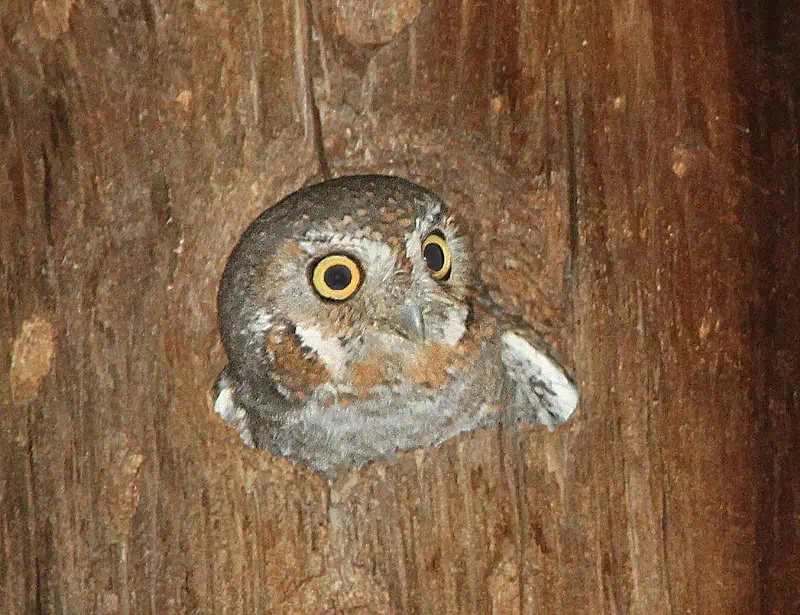
Desert adaptations: staying in tree cavities, panting, opportunistic feeding.
Elf owls are owl species without feathers on their heads or ear tufts. They are the world’s smallest raptors, living in the Sonoran desert. Cavities and old woodpecker holes are resting spots away from the sun’s glare. These birds are nocturnal. They remain inactive during the daytime and active at night.
Their diet includes scorpions, moths, beetles, lizards, crickets, kangaroo rats, and spiders. The owls get the moisture they need from the food they eat. They are opportunistic feeders who wait for insects to pass near them before catching them.
Elf owls don’t have the excellent full-night vision common to other species8. They can see in low-light areas but not in the complete dark. They rely on their superb hearing to navigate their surroundings. These owl species can’t regulate their body temperature in the cold. As the temperature gets colder, their activity reduces. They hold their wings away from themselves, close their eyes, and start panting.
13. Gila Monster (Heloderma suspectum)
Desert adaptations: evaporative water loss, fat storage, hiding in burrows.
The Gila monster is the largest lizard in the United States, growing up to 22 inches long. One of its adaptations is its skin. It maintains its body temperature through limited evaporation in the cloaca1. Scientists describe the lizard as frightful and venomous. The lizard mostly uses the venom to defend itself from predators.
During winter, Gila monsters hide in burrows dug by themselves or other animals, such as tortoises, to keep warm. They also store fat in their tails, which helps them survive this period. Adult Gila monsters eat 35% of their body weight, while the young lizards eat 50%9.
Conclusion: Desert Animal Adaptations
Animals naturally adjust for them to survive in their natural environment. For deserts, animal adaptations include water-conserving organs like the kidney, thermoregulation adaptations, molecular adaptations to avoid hydration damage, and unique digestive systems for special diets.
Glossary Terms:
| 1 | DeNardo, D. F., Zubal, T. E., & Hoffman, T. C. (2004). Cloacal evaporative cooling: a previously undescribed means of increasing evaporative water loss at higher temperatures in a desert ectotherm, the Gila monster Heloderma suspectum. Journal of Experimental Biology, 207(6), 945–953. |
| 2 | Urity, V. B., Issaian, T., Braun, E. J., Dantzler, W. H., & Pannabecker, T. L. (2012). Architecture of kangaroo rat inner medulla: segmentation of descending thin limb of Henle’s loop. AJP Regulatory Integrative and Comparative Physiology, 302(6), R720–R726. |
| 3 | Desert bighorn sheep: Living life on the edge (U.S. National Park Service). (4 January 2022). |
| 4 | Ingmarsson, L. 1999. "Antilocapra americana sonoriensis" (On-line), Animal Diversity Web. |
| 5 | Kohler-Rollefson, I. U. (1991). Camelus dromedarius. Mammalian Species, 375, 1. |
| 6 | Van Staaden, M. J. (1994). Suricata suricatta. Mammalian Species, 483, 1. |
| 7 | Hall, D. 2002. "Paraechinus aethiopicus" (On-line), Animal Diversity Web. |
| 8 | Sterling, K. 2002. "Micrathene whitneyi" (On-line), Animal Diversity Web. |
| 9 | Stewart, M. 2003. "Heloderma suspectum" (On-line), Animal Diversity Web |
Jen’s a passionate environmentalist and sustainability expert. With a science degree from Babcock University Jen loves applying her research skills to craft editorial that connects with our global changemaker and readership audiences centered around topics including zero waste, sustainability, climate change, and biodiversity.
Elsewhere Jen’s interests include the role that future technology and data have in helping us solve some of the planet’s biggest challenges.
Fact Checked By:
Isabela Sedano, BEng.
