40 Amazing and Bizarre Animal Facts That Will Blow Your Mind

Wildlife is full of unique life forms that sometimes exhibit out-of-the-ordinary abilities, behaviors, and characteristics. There are over one million animal species, each with its own biological ancient history. This article explores bizarre animal facts about sea lions, koalas, whales, cheetahs, elephants, sea cucumbers, and many more.
Wonderful and Weird Animal Facts
Check out these facts grouped in the following categories:
Amazing Anatomy
1. Owls have eye tubes instead of eyeballs.
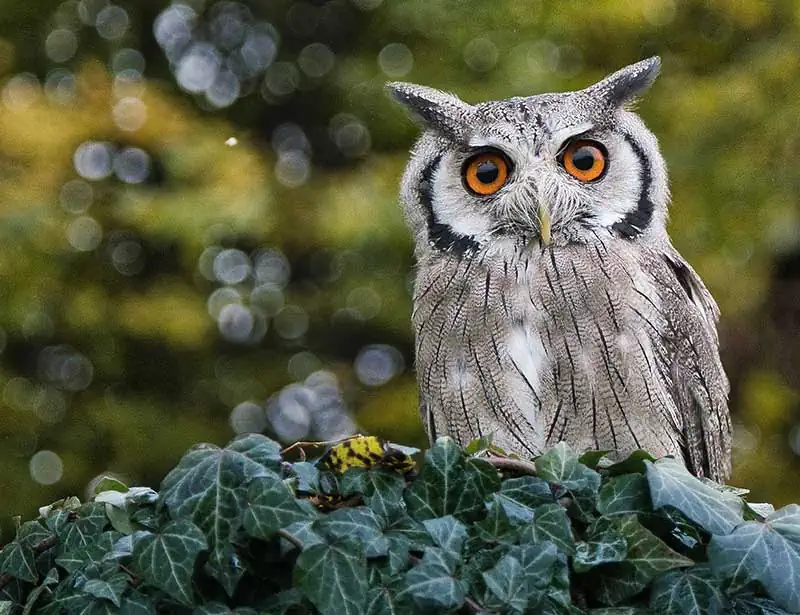
Owls have elongated eyes supported by special bony structures called sclerotic rings. Their unique eye structure helps them see better in dim and low-light areas. They can’t move their eyes around because it is an elongated tube. That is why they move their necks in their desired direction. Owls’ necks can rotate three-quarters of a full degree, 270 degrees, and 90 degrees up and down.
2. Polar bears have transparent fur and black skin.
Next on our list of weird animal facts is polar bears’ black skin and translucent fur. Researchers believe polar bears have black skin to help them absorb heat from the sun, helping them stay warm in the Arctic climate. Also, it protects them from the harmful radiation from the sun.
Their fur is hollow and transparent. It looks white because of the light scattering in the air spaces between each strand. Having transparent fur works to their advantage as it helps them camouflage better, especially when they are hunting for food.
3. Butterflies taste with their feet.

Unlike the tongue with human taste buds, butterflies do not have tongues. They have a straw-like tube called a proboscis. Butterflies have taste buds on their proboscis, antenna, and their feet. Most of their taste receptors are on their feet.
It helps them determine which flower is safe to consume nectar from. The chemoreceptors on their feet help them detect sweet, bitter, salty, and sour flavors. It also helps them determine a safe place to lay eggs after mating.
4. The giant Pacific Octopus has nine brains, three hearts, and blue blood.
The giant Pacific octopus is the master of disguise in the Pacific Ocean. Growing up to 13 feet long, this species has an average lifespan of 4 to 5 years in the wild. However, it is still the longest-living octopus in the ocean.
Its three hearts pump blood to various areas of the body. Two hearts pump the gills, while the third circulates blood to the rest of the body. It has one primary brain and eight mini-brains.
The primary brain controls the octopus's nervous system, while the eight mini brains control arm movements. The Pacific octopus also has blue blood, which is blue because of hemocyanin, the copper-rich protein in its bloodstream.
5. Giant anteaters have no teeth.
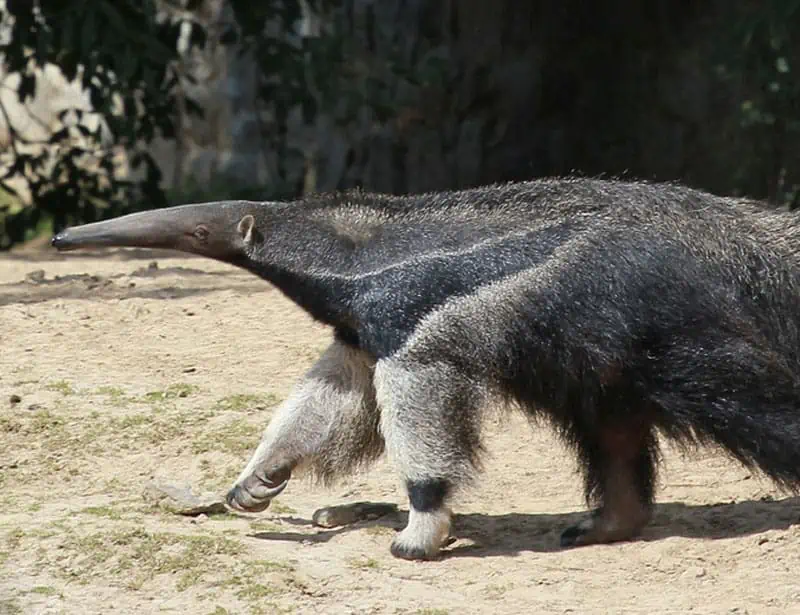
Giant anteaters have no teeth. They eat using their long tongues to scoop up ants, allowing them to swallow up to 35,000 ants daily. Giant anteaters have to eat fast because ants sting them as they try to scoop them. Their saliva is sticky, making it easy for them to lick as many ants as possible in a minute. An anteater can flick its tongue up to 150 times per minute.
6. Female koalas have three vaginas.
The koala's unique reproductive system is next on our list of weird animal facts. It has two lateral vaginae, a partitioned vaginal cul-de-sac, a urogenital opening into the cloaca, duplex cervices and uteri15.
7. Chinchillas’ teeth can grow up to 6.5 cm yearly.
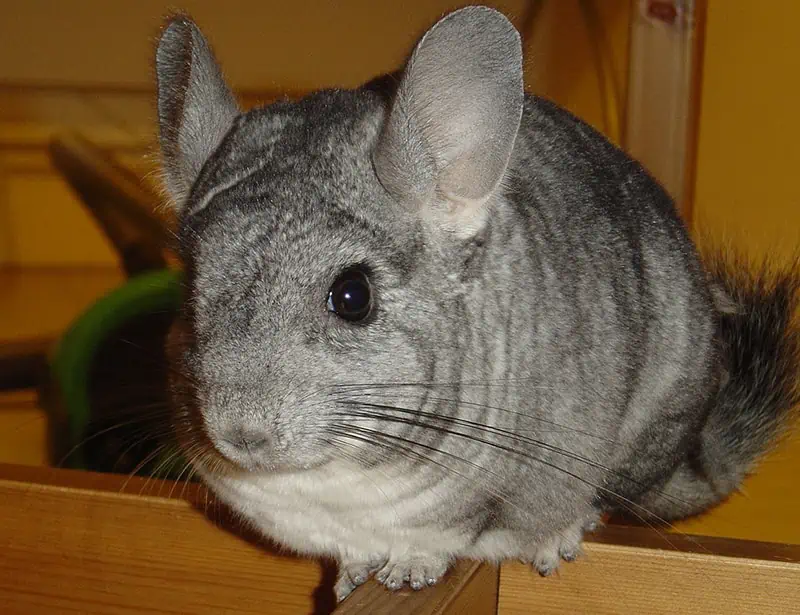
Chinchillas were originally native to South America before humans domesticated them in the early 20th century. Since then, we’ve noticed that chinchillas have many dental problems. One of these dental issues is tooth overgrowth. They experience incisor and coronal cheek tooth overgrowth.
Their teeth grow up to 6.5 cm yearly. Scientists believe that domestication, changes in diet, housing, genetics, and trauma are responsible for these dental problems17. They also experience teeth discoloration, misalignment, and endodontic diseases.
8. The Japanese spider crab has the longest leg span of any arthropod in the world.
The Japanese spider crab is one of the largest arthropods on earth. Its leg bones are about 12.5 feet long, measuring from the tip of one front claw to the other. It has ten legs, making it look like an alien arachnid. The Japanese call it taka-ashi-gani, meaning tall legs crab. Its body weight is 42 pounds, and its average life span is 100 years.
9. Reindeer's eyes change color in the winter.

Reindeer are the only mammals that change their eye color to help them see better as the season changes. They exhibit these changes in their tapetum lucidum, a reflective layer behind the retina that increases the fraction of incoming photons detected in the eye.
Their eyes have a gold-turquoise hue during the summer, but they change to blue during the long Arctic winter4. The color change helps reindeer see better at the peak of winter when snowfall is heavy. It helps their eyes transmit UV light.
10. A dog’s sense of smell is 10,000 times greater than a human’s.
Dogs have about 220 million scent receptors, while humans have 5 million. This explains why dogs can smell things that we can’t. It is one of the reasons law enforcement uses dogs for raids and protection. A study even trained three dogs that can detect non–small cell lung cancer samples with a 96.7% accuracy7.
11. Koala fingerprints are similar to humans.
The koala is the only non-primate animal with fingerprints similar to those of humans. Its fingerprints could confuse crime scenes and be mistaken for a human’s.
12. Platypus have no nipples but still produce milk.
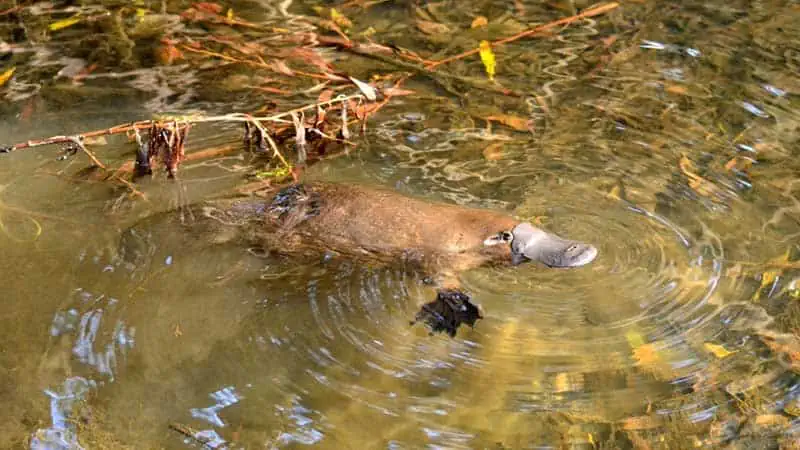
Despite being mammalian in nature, platypus mothers feed their young differently without the use of nipples. The presence of skin grooves enables their milk to seep out, which the babies then absorb.
13. The giant squid has the most enormous eyes in the animal kingdom.
The giant squid has the most enormous eyes, measuring up to 10 inches in diameter. The squid’s eye is as big as a human head. With those large eyes, they can detect a whale that is 394 feet away.
14. The blue whale's tongue weighs as much as an adult elephant.
Its tongue can stretch up to 18 feet and tip the scale at 8,000 pounds, equivalent to the body weight of an adult African elephant.
Animal Superfeats
15. The cheetah is the fastest animal species in the world.

The cheetah is the fastest land animal in the world. It can move 0 to 60 miles per hour within three seconds. However, it can only maintain its speeds for short distances, not long distances. Cheetah is a sprinter.
16. A grizzly bear’s bite force can smash a bowling ball.
A grizzly bear's bite force is 1,160 psi, strong enough to crush a bowling ball or a human skull. It explains how they easily break the bones of a large prey before consuming it.
17. Hummingbirds are the only birds that can fly backward.
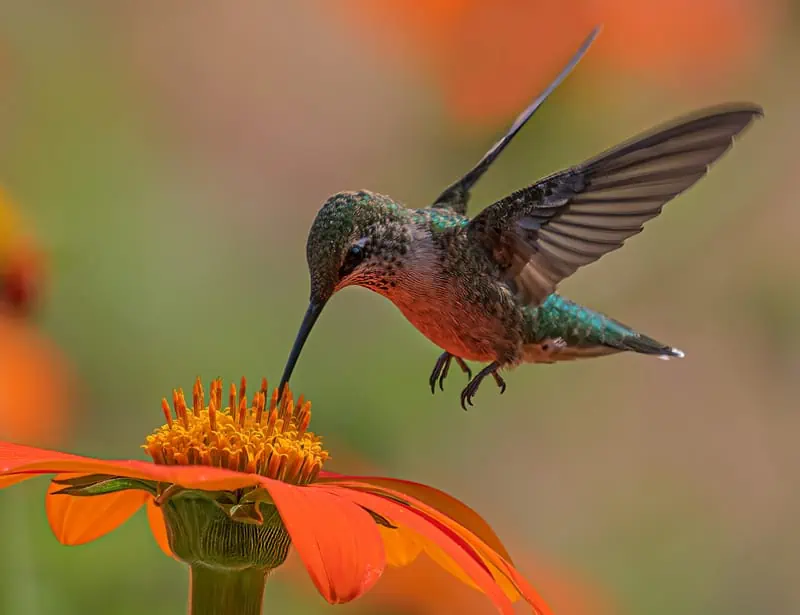
With wings that strike nearly 70 times a second, hummingbirds are the only birds capable of flying backward. Their impressive hovering dexterity and precision are attributed to a unique ball-and-socket shoulder joint, permitting a versatile 360-degree range of motion.
18. The blue whale is the most enormous creature on earth.
The blue whale is the biggest animal on earth. It weighs 400,000 pounds and has a body length of 98 feet. Its heart is as big as a small car. The enormous whale also has a matching appetite. It consumes about 7936 pounds of krills daily.
Survival of the Fittest
19. Vampire bats' saliva keeps the blood flowing from their prey.

Bats are already unique in the animal kingdom because they are the only mammal species to fly. However, vampire bats take their uniqueness up a notch. From their name, you can already tell they survive on blood.
They use their specialized incisor and canine teeth to remove a bit of skin from their prey before licking blood flowing from the incision spot. The vampire bats’ saliva contains anticoagulants and fibrinolytic enzymes that prevent blood clotting during ingestion and inside their gastrointestinal tract during digestion processes1.
20. Immortal jellyfish can survive death indefinitely by resetting its life cycle.
The immortal jellyfish is one of the longest-living animals on earth. It is a tiny jellyfish with 90 white tentacles discovered in the Mediterranean Sea in the 1880s. It has a unique ability called transdifferentiation, which helps it leap back in its development process in response to starvation and physical damage.
Transdifferentiation is an efficient way to recycle cells. It switches between the polyp and medusae developmental stages. When injured, it goes back to the polyp stage. Then, it grows into the medusae stage, which is genetically identical to the previously damaged adult5.
21. The world’s deadliest animal is the mosquito.
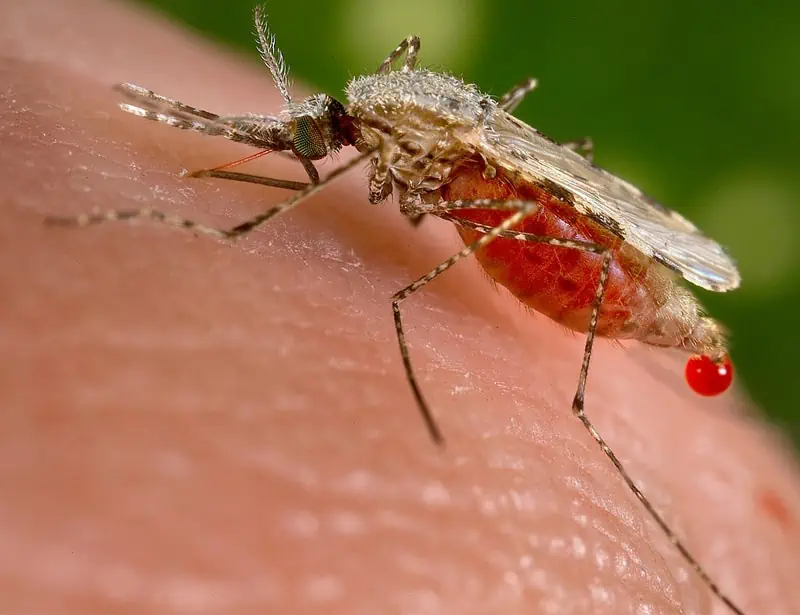
Mosquitoes are the world’s deadliest animals because they are responsible for the most human deaths. In 2022, mosquitoes caused a million deaths. They transmit lethal diseases, including malaria. 627,000 people died from malaria in 2020.
22. Sea cucumbers eject their internal organs to chase predators away.
Sea cucumbers are echinoderms that live in saltwater or near the ocean floor. They do not have brains or eyes. They move very slowly, making it impossible to run from predators. So, when they feel threatened, they try to defend themselves by violently contracting their muscles and forcing their organs out through their anus to scare off their attacker.
They do this because they can regenerate their missing body parts. Some species of sea cucumbers eject white sticky threads that entangle their enemies. The white threads are called cuvierian tubules.
23. A short-horned lizard shoots blood from its eyes to confuse predators.
The short-horned lizard protects itself from predators by squirting blood from the ducts in the corner of its eyes. The squirted blood can reach a distance of 3 feet. It confuses predators like coyotes, snakes, wolves, and dogs and is poisonous to coyotes, wolves, and dogs.
24. Naked mole rats have a resistance to developing cancer.
Researchers found out that these long-living rodents of up to 37 years suppress the formation of cancer cells, even under UV light or chemical induction. They are ideal models for comparative studies on aging11.
25. Army ants can form into water-resistant balls
Demonstrating adapted survival tactics, army ants form ball-like structures to get their breath during high water floods14. This behavior improves their water repellency, resembling a carefully woven waterproof fabric.
Curious Communication
26. Rats can laugh.

Rats can laugh, but not like how humans laugh. Research shows that rats have a laugh center in their brain that gets activated whenever they are tickled or played hide and seek games6. When activated, they let out high-pitched squeaks.
27. Caribbean sperm whales have an accent.
Human speech has various accents across various locations and ethnicities worldwide. This also applies to whales in the deep sea. Sperm whales communicate through specific clicks, known as codas.
A research fellow at Aarhus University in Denmark, Shane Gero, studied sperm whales in the Caribbean for six years and discovered that they have clicks unique to their region12. He recorded about 4,000 calls between 2005 and 2010. These recordings showed that the whales in the Caribbean have distinct individual calls, uniform regional calls, and shared family calls.
28. Bottlenose dolphins use learned vocal labels to address each other.

Next on our list of amazing animal facts is the bottlenose dolphin’s ability to identify each other with specific labels, i.e., names. They developed their unique identity signal, a signature whistle. They copy each other’s signature whistles, which allows them to label or address each other.
The study further shows how dolphins are the only animal species, apart from humans, that use learned signals as specific identification labels for different social companions13. Dolphins didn’t respond to whistles that weren’t their signature whistle.
29. Elephants have a specific alarm call that means human.
Elephants have a specific alarm call to warn other elephants of the presence of humans in the vicinity10. These alarm calls are unique to African elephants. They signal to one another whenever they hear the voices of Samburu tribesmen because humans are the elephant’s primary predators.
30. The howler monkey is known as the loudest land animal.

The monkeys’ call, reaching up to 90 decibels, can travel a staggering 3 miles under specific conditions. Due to an enlarged hyoid bone in their throats, males can create a louder call than females.
Females in the Wild
31. Female lions hunt more than the male lions.
The following bizarre animal facts are more empowering than weirding anyone out. Did you know female lions are the primary hunters in lion pride? Meanwhile, the so-called kings of the jungles protect the pride and its territory.
Female lions band together to hunt other animals like zebras, buffalo, antelopes, deer, and other grassland animals. Their prey are usually larger, so bringing a meal home requires a group effort.
32. Female ferrets will die if they don’t mate during their heat period.

Female ferrets experience induced ovulation, meaning they must mate to stimulate the ovaries to release eggs. When a female ferret doesn’t ovulate, it will continue to produce estrogen until it mates. It causes hair loss and death from a deficiency in red blood cells (estrogen-associated anemia).
33. Whales experience menopause.
Whales are the only non-human mammals that experience menopause. Research shows female killer whales, narwhals, humpback whales, beluga whales, and short-finned pilot whales live for decades after the birth of their last calf. Researchers believe evolution shortened their reproductive period or increased their lifespan beyond their reproductive years16.
34. Male seahorses give birth to their young.
In the wild, females are the ones that carry pregnancy and give birth to their offspring. However, the reverse is the case for the seahorse species. The male seahorse gets pregnant after the female transfers her mature eggs into the male’s brood pouch, where they’re fertilized.
The gestation period lasts two to four weeks before the pregnant male starts experiencing muscular contractions. Then, he ejects as many as 1,000 fully formed juvenile seahorses.
Other Bizarre Animal Facts
35. Sea lion is the first non-human mammal with the proven ability to keep a beat.
Can't get enough of weird animal facts? Here's a fun one. Sea lions can keep up with a beat! A California sea lion named Ronan is the first non-human mammal to keep a beat. The scientists at Long Marine Laboratory at the University of California taught her to bob her head to rhythmic sounds.
After some time, she bobbed her head to tempos and music she hadn’t heard before. The sea lion could keep a beat better in the laboratory than birds2, specifically an African gray parrot. This discovery is groundbreaking because humans often assumed they couldn’t share some musical capabilities with animals.
36. Giraffes have the shortest sleep schedule of any mammals.
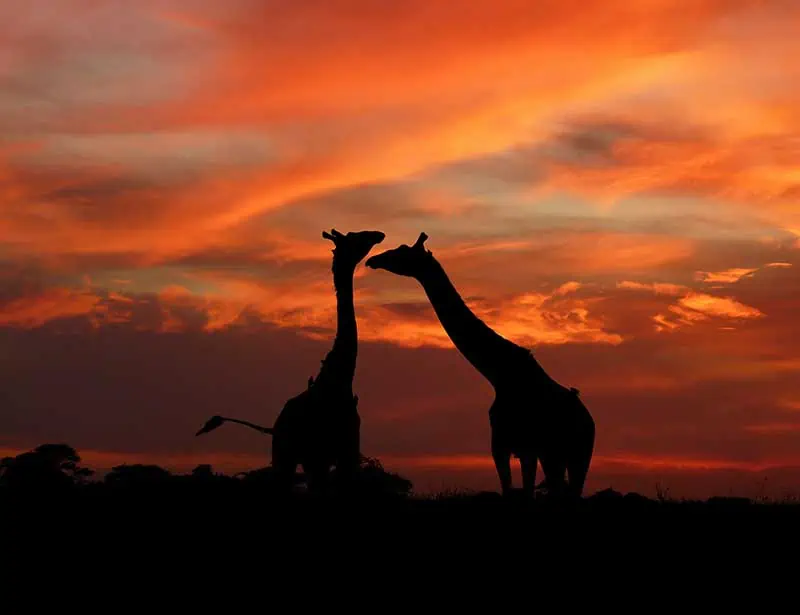
Giraffes are short sleepers. Adult giraffes sleep no longer than 5 minutes at a stretch. They often sleep standing up. They also experience a half resting period where their eyes are half closed, and their ears twitch continuously.
Their sleep pattern is like this because they must stay alert in the wild to protect themselves. Research shows that young giraffes sleep 4.6 hours daily, spread across short bursts lasting no more than 11 minutes8.
37. Rodents like squirrels and rats can’t burp or vomit.
Mammals have the emetic reflex that allows them to puke or burp. However, mice, rats, and squirrels don’t have the emetic reflex, so they can’t vomit. Also, they have a mighty barrier between the esophagus and the stomach, but they lack the muscular strength required to force the barrier open9.
38. Land snails can sleep for up to three years.
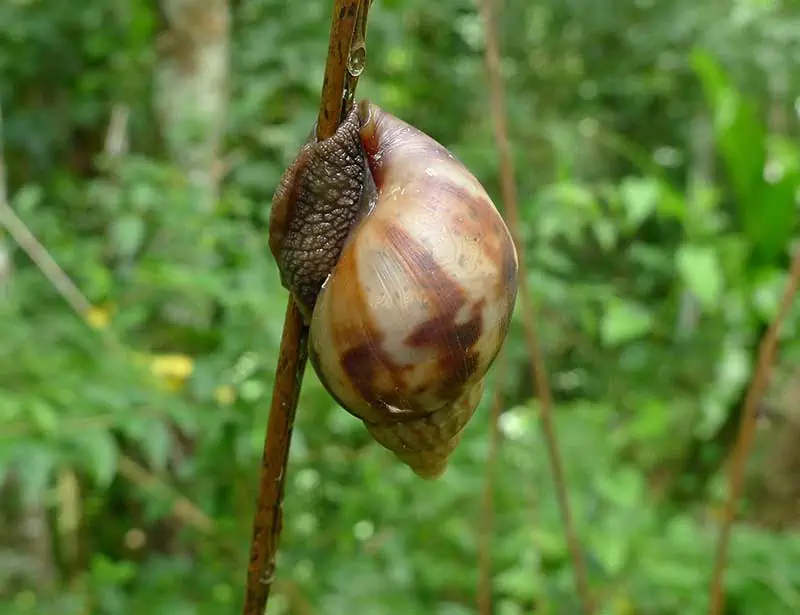
Some land snails hibernate and estivate for up to three years. They withdraw to the extreme corner of their shells and form the epiphragmatic layer to close their shell opening.
The hardened mucus layer helps prevent excessive water loss and freezing of body fluids in freezing temperatures. The structure also prevents the interference of external factors like pathogens and predators3.
39. Many baby animals can already stand up minutes after birth.
For example, baby elephants and giraffes can stand up in less than thirty minutes after birth. Thanks to their long gestational period, they developed their bodies longer, which gives them an advantage in early mobility.
This is crucial to their survival odds in open spaces with little hiding spots like savannas and grasslands.
40. Sea otters hold each other’s paws when sleeping to prevent separation.
Our final bizarre animal fact is rather cute! Sea otters are very social animals who spend their whole lives in water. They form groups known as rafts. Their thick fur keeps them afloat in the ocean, making it easy for them to drift away.
Sea otters hold hands while asleep to keep them from floating away from the group into harm's way. Scientists refer to this behavior as rafting.
Conclusion
We hope you enjoyed reading our list of weird animal facts. You could use it to play a fun trivia game with your family and friends.
Glossary Terms:
| 1 | Delpietro, H. A., Russo, R. G., Rupprecht, C. E., & Delpietro, G. L. (2021). Towards Development of an Anti-Vampire Bat Vaccine for Rabies Management: Inoculation of Vampire Bat Saliva Induces Immune-Mediated Resistance. Viruses, 13(3), 515. |
| 2 | Cook, P., Rouse, A., Wilson, M., & Reichmuth, C. (2013). A California sea lion (Zalophus californianus) can keep the beat: Motor entrainment to rhythmic auditory stimuli in a non vocal mimic. Journal of Comparative Psychology, 127(4), 412–427. |
| 3 | Hülya Şereflişan, & Önder Duysak. (2021). Hibernation Period in Some Land Snail Species (Gastropoda: Helicidae): Epiphragmal Structure and Hypometabolic Behaviors. Turkish Journal of Agriculture - Food Science and Technology, 9(1), 166–171. |
| 4 | Fosbury, R. A. E., & Jeffery, G. (2022). Reindeer eyes seasonally adapt to ozone-blue Arctic twilight by tuning a photonic tapetum lucidum. Proceedings of the Royal Society B: Biological Sciences, 289(1977). |
| 5 | Matsumoto, Y., Piraino, S., & Miglietta, M. P. (2019). Transcriptome characterization of reverse development in Turritopsis dohrnii (Hydrozoa, Cnidaria). G3: Genes, Genomes, Genetics, 9(12), 4127-4138. |
| 6 | Gloveli, N., Simonnet, J., Tang, W., Concha-Miranda, M., Maier, E., Dvorzhak, A., Schmitz, D., & Brecht, M. (2023). Play and tickling responses map to the lateral columns of the rat periaqueductal gray. Neuron, 111(19), 3041-3052.e7. |
| 7 | Junqueira, H., Quinn, T. A., Biringer, R., Hussein, M., Smeriglio, C., Barrueto, L., Finizio, J., & Huang, X. Y. “Michelle”. (2019). Accuracy of Canine Scent Detection of Non–Small Cell Lung Cancer in Blood Serum. The Journal of the American Osteopathic Association, 119(7), 413. |
| 8 | Tobler, I., & Schwierin, B. (1996). Behavioural sleep in the giraffe (Giraffa camelopardalis) in a zoological garden. Journal of Sleep Research, 5(1), 21-32. |
| 9 | Horn, C. C., Kimball, B. A., Wang, H., Kaus, J., Dienel, S., Nagy, A., Gathright, G. R., Yates, B. J., & Andrews, P. L. R. (2013). Why Can’t Rodents Vomit? A Comparative Behavioral, Anatomical, and Physiological Study. PLoS ONE, 8(4), e60537. |
| 10 | Soltis, J., King, L. E., Douglas-Hamilton, I., Vollrath, F., & Savage, A. (2014). African Elephant Alarm Calls Distinguish between Threats from Humans and Bees. PLoS ONE, 9(2), e89403. |
| 11 | Wlaschek, M., Singh, K., Maity, P., & Scharffetter-Kochanek, K. (2023). The skin of the naked mole-rat and its resilience against aging and cancer. Mechanisms of Ageing and Development, 216, 111887. |
| 12 | Gero, S., Whitehead, H., & Rendell, L. (2016). Individual, unit and vocal clan level identity cues in sperm whale codas. Royal Society Open Science, 3(1), 150372. |
| 13 | King, S. L., & Janik, V. M. (2013). Bottlenose dolphins can use learned vocal labels to address each other. Proceedings of the National Academy of Sciences, 110(32), 13216–13221. |
| 14 | Mlot, N. J., Tovey, C. A., & Hu, D. L. (2011). Fire ants self-assemble into waterproof rafts to survive floods. Proceedings of the National Academy of Sciences, 108(19), 7669–7673. |
| 15 | Pagliarani, S., Palmieri, C., McGowan, M., Carrick, F., Boyd, J., & Johnston, S. D. (2023). Anatomy of the Female Koala Reproductive Tract. Biology, 12(11), 1445. |
| 16 | Ellis, S., Franks, D. W., Lybkær, M., Weiss, M. N., & Croft, D. P. (2024). The evolution of menopause in toothed whales. Nature. |
| 17 | V. Derbraudrenghien, A. Van Caelenberg, Hermans, K., Gielen, I., & Martel, A. (2010). Dental pathology in chinchillas. Vlaams Dierengeneeskundig Tijdschrift, 79(5). |
Jen’s a passionate environmentalist and sustainability expert. With a science degree from Babcock University Jen loves applying her research skills to craft editorial that connects with our global changemaker and readership audiences centered around topics including zero waste, sustainability, climate change, and biodiversity.
Elsewhere Jen’s interests include the role that future technology and data have in helping us solve some of the planet’s biggest challenges.
Fact Checked By:
Isabela Sedano, BEng.