15 Asexual Animals From Aphids To Wasps

For most animals, the only way to produce offspring is through sexual reproduction, requiring parents of the opposite sex. However, some organisms in the animal kingdom bear offspring without mating. That phenomenon is called asexual reproduction, and that's what we look into in this article. We also share examples of asexual reproduction observed in animals.
Table of Contents:
How asexual reproduction works

In sexual reproduction, animal embryos develop when a sperm cell fuses with an egg cell. Usually, a male animal provides the sperm, and a female provides the egg.
However, in asexual reproduction, a single parent can develop eggs into embryos all by itself. Many of the animals that reproduce asexually can alternate between sexual and asexual reproduction. In some rare cases, nature restricts some animals to asexualism.
Asexual reproduction occurs in both plants and animals. It is expected to propagate new plants through asexually. In animals, asexualism occurs more in invertebrates than in vertebrate species.
Types of asexual reproduction
Parthenogenesis
They derived the term parthenogenesis from the Greek words “Parthenos” and “genesis,” which translate to “virgin creation.” Parthenogenesis is the most common form of asexual reproduction in vertebrates, and it can occur in different ways.
The one version, automixis, allows gene shuffling as the parent cell divides into daughter cells. It creates young ones that are physically similar but not exact clones. This process passes on two X chromosomes, giving rise to only female offspring.
The second form of parthenogenesis is a process called apomixis. The reproductive cells replicate without shuffling genes, so the young are genetically identical to their parents. They are basically clones.
In some insects, parthenogenesis occurs by non-fertilization to produce male offspring and vice versa.
Fragmentation
Here, the body of an organism breaks off, and each fragment develops into a new organism. Certain worms and sea stars reproduce this way.
Fission
This method is also called binary fission. Here, the body of an organism splits into two new organisms, each bearing one copy of the genetic material. Sea anemones and starfish reproduce via fission.
Budding
In budding, the offspring starts growing on the body of the parent organism. The offspring may break off after a while, as with jellyfish, or they may remain attached to form a colony, like corals.
Hermaphroditism
This form of asexual reproduction occurs in animals where an individual has both male and female reproductive parts. Hermaphrodite animals can mate or self-fertilize. Earthworms and slugs are examples of hermaphrodites.
Asexual reproduction: advantage or disadvantage?
Asexual reproduction has its upsides. For one, it can save a species from extinction. It is also efficient. Since a single organism can produce young ones, there's no need for a mating season with all its complexities.
However, harmful mutations persist because offspring are genetically identical to their parents. Clones usually need special environmental conditions to survive and cannot adapt to changing environments.
Sexual reproduction allows for genetic diversity among species, making it easier for organisms to cope with harsh conditions. Hybrid vigor also eliminates weak genes and strengthens the gene pool.
Perhaps the genetic weakness of asexual species is why many animals capable of sexual and asexual reproduction choose to reproduce sexually.
Can mammals reproduce asexually?
As far as we know, all types of mammals are sexually reproducing species. There have been no scientific reports of natural virgin births in mammals. Perhaps one day, evolution might make it possible. Still, current biology simply doesn't permit a single parent to conceive viable mammalian offspring.
However, scientists have successfully induced asexual reproduction in certain mammals through a process called gene editing7. They edit specific female genes to be identical to those typically from a male in sexual reproduction. The experiment has been successful in mice.
List of Animals That Reproduce Asexually
Here are 15 examples of animals capable of reproducing asexually:
1. Aphid (Aphidoidea)
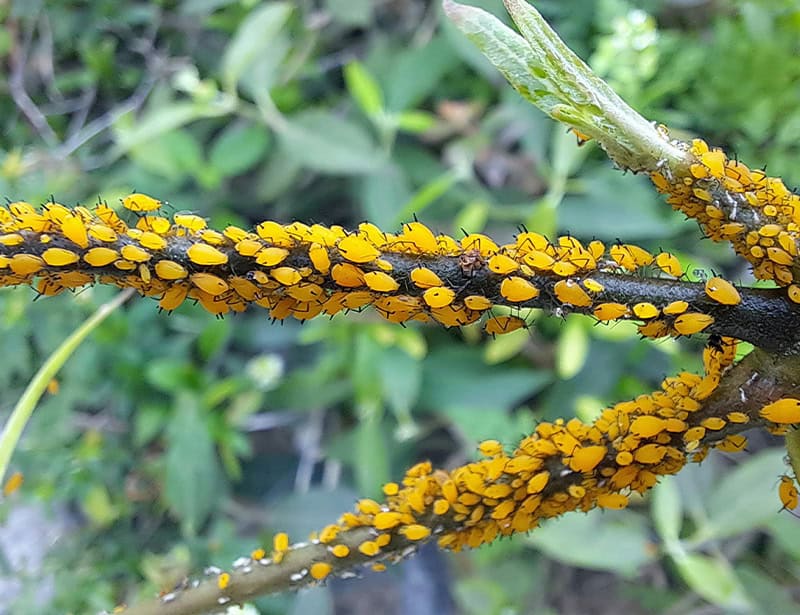
Aphids are organisms with pear-shaped, soft-bodied little horns and a pair of cornicles. Also known as ‘plant lice,’ this type of insect feeds on plant sap. Interestingly, it can reproduce both sexually and asexually.
When there are more daylight hours in spring and summer, aphids reproduce by thelytokous parthenogenesis3. During that period, aphids don't lay eggs but give birth to live offspring, rapidly expanding their population.
In autumn, aphids switch to sexual reproduction. They lay eggs that will incubate over the winter rather than birth live offspring. They do this to scale back the population as less-than-ideal conditions arise.
2. Komodo Dragon (Varanus komodoensis)

The Komodo Dragon, also called a monitor lizard, is perhaps the largest type of lizard in the world. They can reproduce asexually and sexually. In 2020, a female Komodo dragon at the Chattanooga Zoo, Tennessee, hatched three young ones without mating with a male.
In asexual reproduction, female Komodo dragons undergo parthenogenesis. They possess both male and female chromosomes and thus have the genetic information to develop a perfectly healthy embryo. The only downside is that the offspring from this process are always males.
3. Zebra Shark (Stegostoma tigrinum)

Zebra sharks usually reproduce through sexual means. The few reported incidents of asexual reproduction in this shark species have happened as a result of isolation from or rejection of possible mates. Parthenogenesis in a zebra shark will not produce an exact clone of the mother.
In 2016, Leonie, a zebra shark at an aquarium in Townsville, Australia, surprised her keepers with a virgin birth that produced three pups6.
In another instance, a zebra shark housed in Chicago's Shedd Aquarium hatched some pups. At first, her caretakers assumed she had mated with one of the male zebra sharks in her enclosure. However, genetic testing revealed the pups only had the DNA of their mother5.
4. Hammerhead Shark (Sphyrnidae)
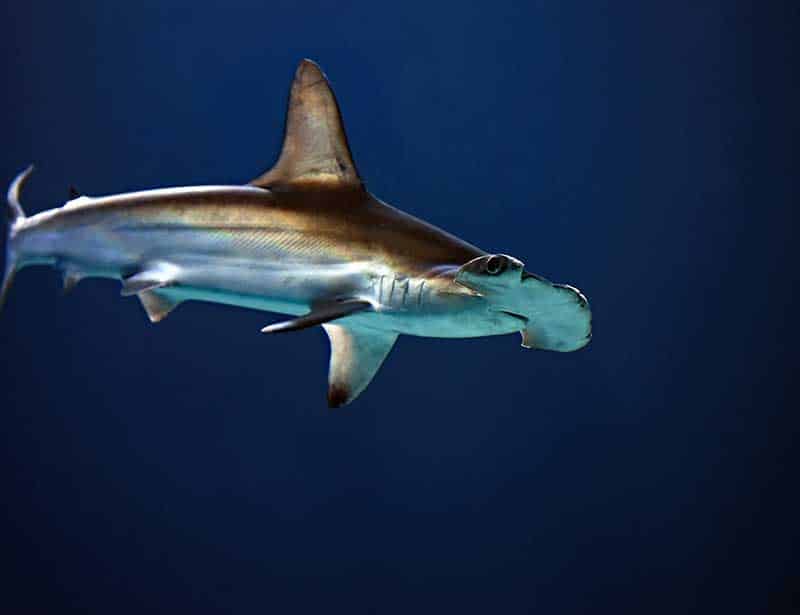
This animal's hammer-shaped head immediately distinguishes it from other marine creatures. However, the shark is famous for more than its head; they can reproduce asexually.
In 2001, a female hammerhead shark gave birth to a pup at an aquarium in the Henry Doorly Zoo, Nebraska. The birth made headlines because the shark was isolated from a male company8, so mating could not have occurred. It was the first recorded event of parthenogenesis in a cartilaginous fish.
A stingray attacked and killed the pup shortly after its birth. However, since virgin-born shark pups are not exact clones, the pup would have thrived had the attack not occurred.
5. Python (Python)

Pythons typically reproduce by mating. However, they have recorded instances of asexual reproduction in captive, isolated female pythons. The female python self-fertilizes her eggs and produces offspring with identical DNA.
Parthenogenesis in pythons is rare, but we have heard of a few cases. In 2012, a reticulated python named Thelma at the Louisville Zoo in Kentucky produced six female offspring despite being isolated from males for over two years.
In another instance, in 2020, a ball python at the Saint Louis Zoo in Missouri laid seven fertile eggs despite not being exposed to a male python for about 15 years. Even more surprising, at 62 years old, this python was considered too old to reproduce.
6. Black Carpenter Ant (Camponotus pennsylvanicus)

The queen of this ant species is responsible for reproduction in the colony. The queen mates with fertile males and hatches her first batch of wingless sterile female workers to begin her colony.
The wingless female workers are products of fertilized eggs and make up most of the colony. When conditions permit, the sexually produced offspring may also be winged virgin queens. To produce males, the carpenter ant queen turns to asexualism. She hatches unfertilized eggs that become diploid clones of herself.
7. Honey Bee (Apis mellifera)

The queen of this type of bee is the only reproductive female in the colony. These queens can lay approximately 2000 eggs per day and reproduce asexually as well as sexually.
At the start of her colony, the queen mates with many males and stores all the sperm she will need for her lifetime of reproduction from that first mating2. A queen bee can live for up to five years.
The queen bee allows some eggs to be fertilized, completing the mating process, and others to remain unfertilized. The fertilized eggs develop into worker bees but can potentially become queens. Meanwhile, the unfertilized haploid eggs always become drones.
8. Smithii ants (Mycocepurus smithii)
Smithii ants are fungus-growing ants found in Latin America. We can find these ants in moist places suitable for fungi, including savannas and rainforests. The Smithii ant species has only female members; despite extensive research, researchers have not found a male.
To reproduce, Smithii ants undergo thelytokous parthenogenesis. Like most ant species, they have a queen responsible for reproduction, as other colony members are sterile. Because of their unique reproduction situation, Smithii ant colonies develop much slower than related species.
Regarding development, they undergo complete metamorphosis like any other ant. They go through egg, larva, pupa, and adult stages.
9. Starfish (Asteroidea)

Starfish or ‘sea stars’ are star-shaped echinoderms with five long arms found in salt waters. All starfish species reproduce through regeneration and fission, essentially just creating clones of themselves.
In regeneration, a starfish loses any part of its body by accident. The lost part can live independently and grow into a new starfish.
During fission, the original organism grows to a point where it divides into two equal parts. Each of the parts forms a new organism.
Starfish's reproduction method makes them quite hard to kill, as they can regrow from a fragmented part. Their regenerative abilities trouble oyster fishers, who try to kill them by cutting them up and throwing them back into the ocean.
10. Amazon Molly (Poecilia formosa)
The Amazon molly is an entirely female fish species that consistently reproduces asexually. It mates with a male of a related species, but the male’s DNA doesn't show up in the offspring. Rather than fertilization, the mating process triggers the cloning of the mother's genes, producing a clone of the mother.
Unlike most fish, Amazon mollies don’t lay eggs. Instead, they give birth to live offspring. The fish has a thriving population and a robust genetic makeup that is rare in asexual species. A study published in Nature Ecology & Evolution Perhaps discussed how its genetic strength comes from the initial cross-breeding between an Atlantic molly and a Sailfin molly 100,000 to 200,000 years ago. The offspring of that mating is the Amazon molly4.
11. Hybrid Killifish (Fundulus diaphanus x Fundulus heteroclitus)
The banded and common killifish are some of the few vertebrate animals that can reproduce asexually. Both species of killifish can cross-breed with one another to produce hybrid females. A hybrid female killifish is sterile but clones itself to reproduce.
We find common and banded killifish along the Atlantic coast of Canada and some parts of the United States. Killifish Researchers have found multiple lineages of asexual killifish clones in different areas.
12. Mole Salamander (Ambystoma)

All the members of this asexual species of salamander are females. They reproduce mainly by cloning and have done so for 3.4 million years1.
Occasionally, they fertilize their eggs by stealing sperm left on leaves and twigs from sexually reproducing salamander species. That process is called kleptogenesis, allowing the Ambystoma salamander to expand its gene pool. Scientists believe kleptogenesis is why the Ambystoma salamander has survived for this long.
13. Whiptail Lizard (Teiidae)
Whiptail lizards or racerunners are from North America, particularly in the United States and Mexico. Since they are exclusively females, they can only produce offspring asexually. Although their eggs develop into embryos without fertilization, the offspring still get a complete chromosome count with the full advantages of genetic variety.
How? Before producing eggs, the lizard’s cells gain two times the standard number of chromosomes during meiosis. Scientists believe the extra chromosomes may be from a cross-breeding that occurred at the inception of the whiptail lizard species.
14. Water Fleas (Daphnia)
Water fleas are zooplankton found in shallow lakes and ponds. These organisms undergo periodic parthenogenesis in response to seasonal changes. They mate in winter and asexually during summer.
In summer, there is abundant food supply, and the weather conditions favor rapid population expansion. So, water fleas asexually produce eggs that hatch within two to three days. The summer offspring are usually females and clones of their mothers.
During the cold months, there are fewer resources. To control their population and manage resources, water fleas mate and lay dormant eggs, which can lie dormant for years before hatching.
15. Wasp

Some species of wasps can reproduce sexually and asexually. In those species, fertilized egg cells produce females, while unfertilized egg cells produce males. In the case of asexual wasps, the female wasps produce only daughters.
Wolbachia-infected wasps are usually females that reproduce exclusively through asexual means. Wolbachia is a bacterium found in many insect species, including wasps, bees, butterflies, and dragonflies. This bacterium lives within the testes and ovaries of these insects.
Wolbachia usually transmits from the insect mother to their offspring. The bacterium interferes with the reproductive system of the wasps to ensure its longevity. It encourages asexual reproduction that produces only females.
Conclusion
Asexual reproduction allows certain animal species to produce offspring when sexual reproduction is not possible or desired. Certain organisms can switch between sexual and asexual reproduction for the sake of efficiency, while nature confines others to asexualism.
Glossary Terms:
| 1 | Denton, R. D., Morales, A. E., & Gibbs, H. L. (2018b). Genome‐specific histories of divergence and introgression between an allopolyploid unisexual salamander lineage and two ancestral sexual species. Evolution, 72(8), 1689–1700. |
| 2 | McAfee, A., Chapman, A., Pettis, J. S., Foster, L. J., & Tarpy, D. R. (2021). Trade-offs between sperm viability and immune protein expression in honey bee queens (Apis mellifera). Communications Biology, 4(1). |
| 3 | Ogawa, K., & Miura, T. (2014). Aphid polyphenisms: trans-generational developmental regulation through viviparity. Frontiers in Physiology, 5. |
| 4 | Warren, W. C., García-Pérez, R., Xu, S., Lampert, K. P., Chalopin, D., Stöck, M., Loewe, L., Lu, Y., Kuderna, L., Minx, P., Montague, M. J., Tomlinson, C., Hillier, L. W., Murphy, D. N., Wang, J., Wang, Z., Garcia, C. M., Thomas, G. C. W., Volff, J., . . . Schartl, M. (2018). Clonal polymorphism and high heterozygosity in the celibate genome of the Amazon molly. Nature Ecology & Evolution, 2(4), 669–679. |
| 5 | Feldheim, K. A., Dubach, J., & Watson, L. (2022). Parthenogenesis in an elasmobranch in the presence of conspecific males. Journal of Fish Biology, 102(2), 525–527. |
| 6 | Dudgeon, C. L., Coulton, L., Bone, R., Ovenden, J. R., & Thomas, S. (2017). Switch from sexual to parthenogenetic reproduction in a zebra shark. Scientific Reports, 7(1). |
| 7 | Wei, Y., Yang, C., & Zhao, Z. (2022). Viable offspring derived from single unfertilized mammalian oocytes. Proceedings of the National Academy of Sciences of the United States of America, 119(12). |
| 8 | Chapman, D. D., Shivji, M. S., Louis, E., Sommer, J., Fletcher, H., & Prodöhl, P. A. (2007). Virgin birth in a hammerhead shark. Biology Letters, 3(4), 425–427. |
Jen’s a passionate environmentalist and sustainability expert. With a science degree from Babcock University Jen loves applying her research skills to craft editorial that connects with our global changemaker and readership audiences centered around topics including zero waste, sustainability, climate change, and biodiversity.
Elsewhere Jen’s interests include the role that future technology and data have in helping us solve some of the planet’s biggest challenges.
Fact Checked By:
Isabela Sedano, BEng.