List of Animals With The Longest Gestation Period

While human mothers carry their young for nine months, the duration varies dramatically in the wild. Elephant moms take up to almost two years. Surprisingly, placental mammals do not take the top spot among animals with the longest gestation period. Sharks and salamanders take the lead!
As you finish reading, you will quickly realize that large size doesn’t equate to longer development. It depends on how long it takes the fetus to develop and survive once it is born. Size is a factor, and so is their habitats.
From deep-sea creatures to massive land dwellers, let’s explore which animals spend the most time in the womb before facing the outside world.
13 Animals With the Longest Gestation Period
Top list of animals with the longest pregnancies arranged in descending order:
1. Sharks (18–42 months)

Sharks, some of the most fascinating fish in the ocean, have varying durations of carrying their young inside the mother’s womb. On average, it is about 11 to 12 months. Below is a list of species with verified shark gestation periods longer than the average:
- Frilled shark (3.5 years)3
- Basking shark (24– 36 months)
- Spiny dogfish/ Mud shark (18– 24 months)
- Great White shark (18 months)8
Unlike other animals, sharks exhibit a wide range of reproductive strategies. Some species lay eggs (oviparous), while others give birth to live young (viviparous or ovoviviparous).
The three shark species above are all ovoviparous, which means eggs hatch inside the mother, and pups are born alive. The long wait is worth it since they give birth to a litter of two to more than 10 pups.
Do Greenland sharks gestate for 8 to 18 years?
Greenland sharks are among Earth’s longest-lived vertebrates, possibly reaching 400 years. While one study estimated female gestation occurs for 8–18 years, scientists caution that this timeframe is likely inaccurate. Due to a lack of data on the shark’s size and reproductive biology, their gestation period is currently unknown4.
2. Alpine Salamander (24-36 months)

The majority of amphibians lay eggs, but a handful give birth to live young. The alpine salamander has the longest gestation period among terrestrial vertebrates and amphibians, lasting 2 to 3 years.
It lives in rocky crevices, underneath stones, or logs in the European Alps. Country distribution includes Albania, Austria, Bosnia and Herzegovina, Croatia, France, Germany, Italy, Liechtenstein, Montenegro, Serbia, Slovenia, and Switzerland.
Female alpine salamanders give birth to live young after two years of pregnancy at altitudes between 650 and 1000m. It can last up to 3 years if it occurs at 1,400 - 1,700 m above sea level.
The embryos survive this long by feeding on the unfertilized eggs in the uterus. Then, a portion of the uterine wall becomes food, and they eat the zona trophic cells during the last stages of the gestation period. Without harming their mothers, they get nutrients via a unique tooth-like organ.
Alpine Salamander’s adaptation is vital to survive the harsh climate of its high-altitude environment. Chances to survive increase as the young salamanders develop inside the womb for a long time. In fact, at birth, they reach one-third the size of their mother10.
3. Elephants (18–23 months)
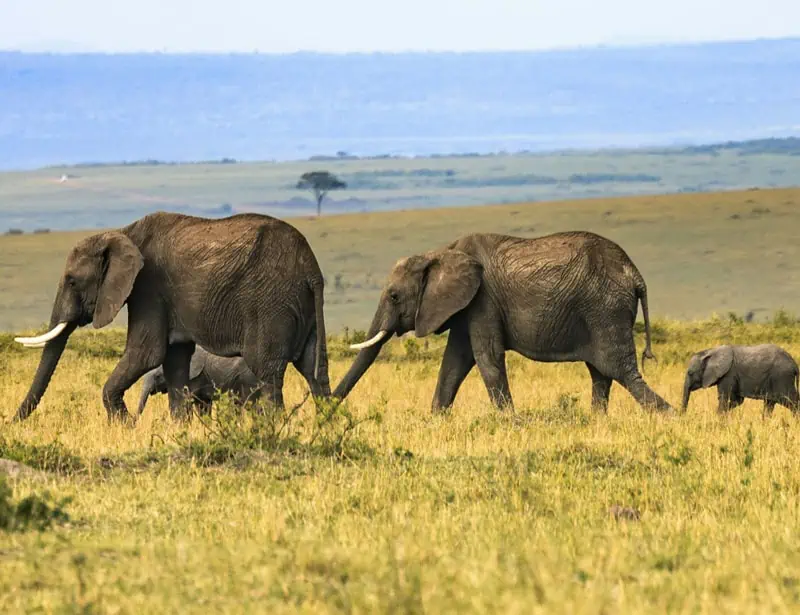
Elephants hold the record for the longest pregnancies among all land mammals, making them one of the most fascinating creatures in the animal world. It should also come as no surprise because they are the largest mammals on land.
Elephants have a gestation period generally between 18 and 23 months5, averaging about 21 months.
Unlike most mammals, elephants invest heavily in each offspring. A female feeds only one offspring, not only for a few months but for an average of two years. If there is no new calf, the young can continue to suckle for up to five years.
Is there a difference in gestational period between Asian and African elephants?
According to The Living Elephants by Raman Sukumar, there’s no solid evidence of differences between African and Asian elephants or between male and female calves6.
4. Whales and dolphins (9–18 months)

Most people don’t realize dolphins and whales are part of the same mammal family, called Cetaceans. In fact, a dolphin is a type of toothed whale. The main difference is that whales tend to be much larger and have stouter bodies, while dolphins are generally smaller with beak-like snouts and more curved dorsal fins.
Most whale species engage in complex courtship rituals, often involving vocalizations, physical displays, and male competition.
The gestation period varies by species, but it generally lasts longer than the nine-month pregnancy in humans. The range
List of cetacean gestation periods:
- Orca/Killer Whale (15–18 months)
- Sperm Whale (14–16 months)
- Beluga Whale (14–15 months)
- Narwhal Whale (13–16 months)
- Gray Whale (12–13 months)
- Humpback Whale (11–12 months)
- Blue Whale (10–12 months)
- Dwarf Sperm Whale (9–11 months)
- Bottlenose Dolphin (12–13 months)
- Common Dolphin (10–12 months)
5. Rhinoceros (15–17 months)
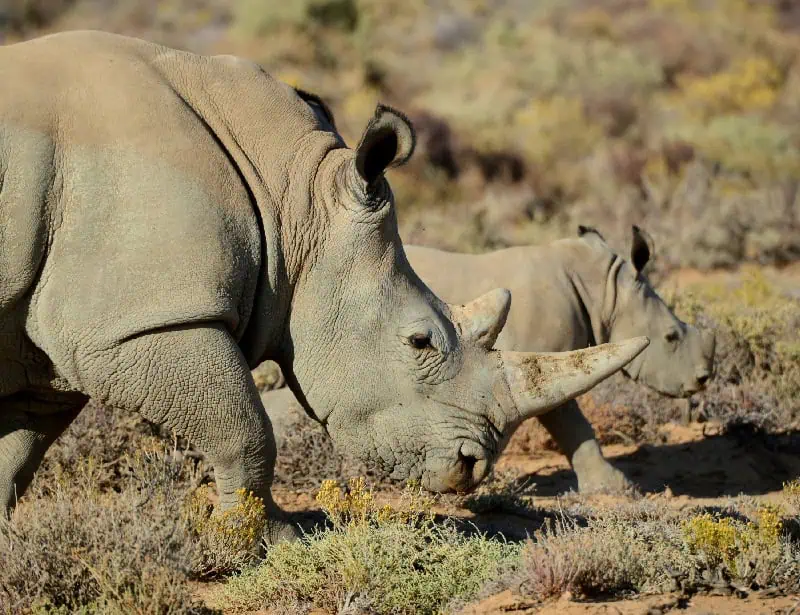
Rhinos generally have long pregnancies, ranging from 15 to 17 months. White rhinoceros carry their young for about 504 days, the longest among the five species. Black rhinoceros gestation is around 460 days, and greater one-horned rhinoceros pregnancies last about 480 days1.
Unfortunately, due to poaching and habitat loss, each birth is critical for the conservation of these majestic creatures. Their slow reproductive rate makes protecting pregnant females essential for the species' survival.
6. Velvet worm (6–17 months)

Did you expect a worm to be one of the animals with the longest gestation period? Nature surprises us again! For a tiny creature, they hold one of the longest pregnancies in the animal kingdom. Velvet worms that can gestate for a long time can internally develop their offspring from 6 to 17 months7.
Unlike most arthropods, the majority of Onychophora species can give birth to live young rather than lay eggs, making them the only invertebrates in this list.
When mating, they engage in a peculiar courtship ritual. Males typically deposit spermatophores (sperm packets) onto the female’s skin, which she absorbs to fertilize her eggs internally. Some species even exhibit delayed implantation, where embryos pause development before continuing growth.
Female velvet worms that are viviparous remain pregnant for up to 15 months, depending on environmental factors. This slow process produces young that are fully formed and independent at birth. With reproduction happening so rarely, each newborn directly supports the survival of the species12.
7. Walruses (15–16 months)

Walruses have unique mating habits tied to their Arctic habitat. Males compete for dominance through vocal displays and physical fights, with the strongest bulls securing harems of females.
Mating typically occurs in water between December and March. Unlike humans, walruses experience circumstances where the fertilized egg does not immediately attach to the uterus, allowing births to align with optimal conditions. The female carries the baby for 15-16 months, including a 3-4 month delay before active pregnancy begins.
This adaptation ensures calves are born in spring or early summer when ice conditions are favorable. Females give birth to a single calf, which relies on its mother’s milk for over a year.
Within the pinniped family, walruses have the longest gestation period, while seals and sea lions carry their young up to 11 months.
8. Giraffes (14–15 months)

Giraffes are the tallest mammals. Understandably, they have one of the longest gestation periods, lasting 14 to 15 months. This extended embryonic development ensures that baby giraffes are strong enough to survive shortly after birth.
When the time comes, the mother gives birth while standing, and the baby tumbles nearly six feet to the ground—a dramatic entrance that helps stimulate its first breath. Within hours, the young giraffe can stand and even run.
Giraffes also have an adaptation to compensate for their single births. They reach early oestrus. While still nursing their baby, they are receptive again for mating three weeks after birth9.
9. Okapi(14–15 months)

Many confuse okapis for zebra-horse hybrids because of their striped legs, but they're actually rare members of the Giraffidae family.
Their gestation range is about 14 to 15 months, similar to their tall relatives. We separated them to give more focus to the lesser-known creature, but equally interesting. While not as famous as other animals in this list, the okapi is endangered. Thus, there is a need for more attention.
Unlike giraffes, okapis are solitary and only join up to mate. This means what we know about their reproduction mostly comes from zoos and similar environments11.
10. Domestic camels (12-14 months)

Next on our list of animals with the longest gestation period are camels. Many early studies documented that it takes the longest among the domestic species, namely the dromedary and the domestic Bactrian. Both species have a gestation period lasting 12 to 14 months before giving birth to live young2.
Pregnant females separate themselves from the herd to find a suitable, private place to give birth to a single calf. They only give birth to one calf, which they nurse for 10 to 18 months before weaning it off.
In comparison, other Camelid family members, the llamas, alpacas, vicuñas, and guanacos have an average gestation period of 11.5 months. Meanwhile, there is no confirmed duration for wild Bactrian camels.
11. Manatees (12–14 months)
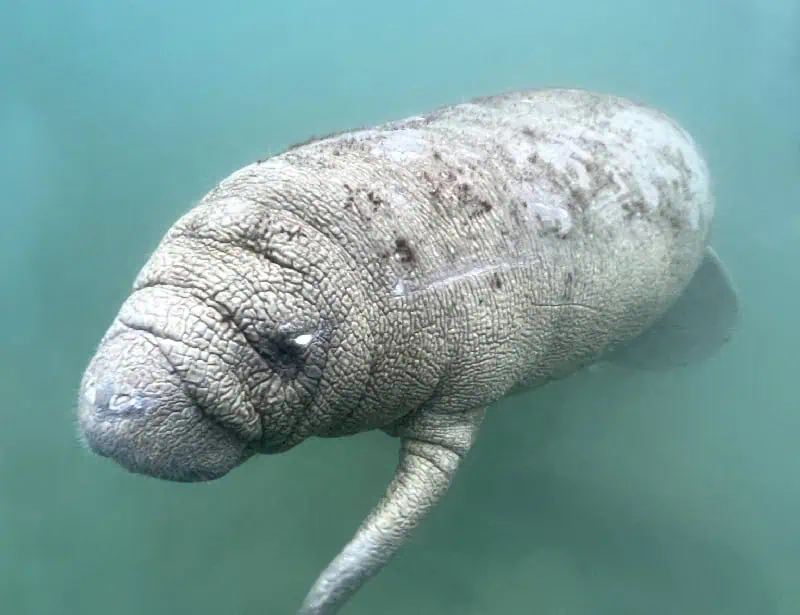
Manatees are aquatic animals with an average lifespan of 40 years in the wild. There are three species of manatees: Florida, Amazonian, and west indian manatees.
Among marine mammals, manatees have one of the longest gestation periods, lasting 12 to 14 months. These gentle giants, closely related to elephants, carry their offspring for nearly a year before giving birth to a single calf. The female remains pregnant longer than many other species, ensuring the calf is well-developed for survival in aquatic environments.
After birth, a manatee calf receives nutrition for up to two years, fostering a strong bond with its mom. Like their land-dwelling relatives, elephants and manatees invest heavily in each pregnancy, contributing to their slow reproductive rate.
12. Tapir (13–14 months)

A tapir’s short trunk and rounded body have led to comparisons with pigs and anteaters, but that’s where the similarities stop. Those animals are pregnant for less than six months, while tapirs take over a year.
Tapirs carry one young for 13 to 14 months and mate every year. You can easily identify its calves by their temporarily striped and spotted coat, which helps them survive dense forests.
Like their close relatives, both tapirs and rhinoceroses face threats. Three out of four species currently have the IUCN’s Endangered status. Slow reproduction and long gestation mean its populations recover slowly after losses.
13. Donkey (11– 14 months)

Donkeys also have long pregnancies lasting for 11 to 14 months. Meanwhile, other Equidae family members, horses and zebras, carry their young for 11 to 13 months.
Now, mule research discussed by Claudia Barbosa Fernandes at The Horse points to placenta differences. This could help explain why donkey gestation runs longer than that of horses.
Conclusion: Animals With The Longest Gestation Period
After reading, did you think that if a human and one of these animals developed simultaneously, you would already have a big baby when the animal is born?
The animal kingdom's longest pregnancies reveal fascinating adaptations from the mighty elephants, with their nearly two-year gestation, to the surprising top contenders, the Frilled shark and the Alpine salamander.
A longer gestation period increases offspring survival after being born in challenging conditions. But that can also work against them. When numbers fall due to threats, recovery takes much longer. This makes animals in this list especially vulnerable to decline.
Glossary Terms:
| 1 | Schwarzenberger, F., & Hermes, R. (2023). Comparative analysis of gestation in three rhinoceros species (Diceros bicornis; Ceratotherium simum; Rhinoceros unicornis). General and Comparative Endocrinology, 334, 114214. |
| 2 | Nagy, P., & Juhász, J. (2019). Pregnancy and parturition in dromedary camels I. Factors affecting gestation length, calf birth weight and timing of delivery. Theriogenology, 134, 24–33. |
| 3 | Tanaka, S., Yoshihisa Shiobara, Syozo Hioki, Abe, H., Nishi, G., Yano, K., & Suzuki, K. (1990). The Reproductive Biology of the Frilled Shark, Chlamydoselachus anguineus, from Suruga Bay, Japan. Japanese Journal of Ichthyology, 37(3), 273–291. |
| 4 | Nielsen, J., Hedeholm, R. B., Lynghammar, A., McClusky, L. M., Berland, B., Steffensen, J. F., & Christiansen, J. S. (2020). Assessing the reproductive biology of the Greenland shark (Somniosus microcephalus). PLOS ONE, 15(10), e0238986. |
| 5 | Sukumar, R. (2003). The Living Elephants: Evolutionary Ecology, Behaviour, and Conservation. United Kingdom: Oxford University Press. |
| 6 | Sukumar, R. (2003). The Living Elephants: Evolutionary Ecology, Behaviour, and Conservation. United Kingdom: Oxford University Press. |
| 7 | Monge-Najera, J. (1995). Phylogeny, biogeography and reproductive trends in the Onychophora. Zoological Journal of the Linnean Society, 114(1), 21-60. |
| 8 | Bruce, B. D. (2008). The Biology and Ecology of the White Shark,Carcharodon Carcharias. Sharks of the Open Ocean, 69–81. |
| 9 | Dagg, A. I. (2014). Pregnancy, growth, reproduction and aging. In Giraffe: Biology, Behaviour and Conservation (pp. 135–152). chapter, Cambridge: Cambridge University Press. |
| 10 | Schwarzenbacher, W., Reinthaler, U., Meikl, M., Bauch, K., Berninger, U., Zobl, E., Wopfner, N., & Schwarzenbacher, R. (2009). The Alpine Salamander. Nationalpark Hohe Tauern - Conference Volume – 4: 287 - 288. |
| 11 | Aguilar, B. 2020. "Okapia johnstoni", Animal Diversity Web. |
| 12 | Wright, J. 2014. "Onychophora", Animal Diversity Web. |
Jen’s a passionate environmentalist and sustainability expert. With a science degree from Babcock University Jen loves applying her research skills to craft editorial that connects with our global changemaker and readership audiences centered around topics including zero waste, sustainability, climate change, and biodiversity.
Elsewhere Jen’s interests include the role that future technology and data have in helping us solve some of the planet’s biggest challenges.
Fact Checked By:
Isabela Sedano, BEng.