December 14th: National & International Days, Celebrations and Observances
As winter deepens in the Northern Hemisphere, December 14 is a day of diverse significance. Energy conservation is especially relevant during these cold, dark months.
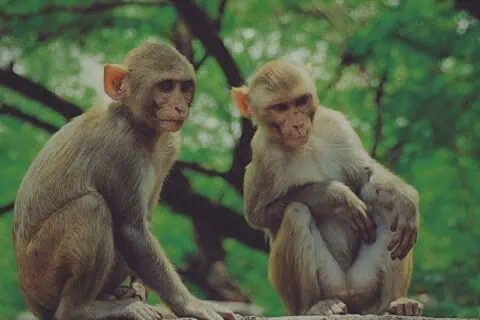
A group of activists launched International Monkey Day in 2000. Their grassroots effort to protect primates and their forest homes has steadily expanded. Conservation groups worldwide now embrace this annual push for awareness.
Choral groups lift their voices in harmonious celebration of World Choral Day. Local families gather Along the French coast for steaming Bouillabaisse bowls, a cherished regional dish.
Meanwhile, in the American South, Alabama commemorates its statehood. From singing to cooking to local festivities, on December 14, people come together in their own distinct ways.
December 14 marks several global and national celebrations. These include International Monkey Day, National Energy Conservation Day, World Choral Day, Alabama Day, and National Bouillabaisse Day. The date also falls during Computer Science Education Week and International Week of the Deaf.
December 14th: Quick Links
National Days and Awareness Events on December 14th
 Biodiversity
 Renewable Energy
Awareness Weeks Including December 14th
We don't have any dedicated pages written for the week-long events including December 14th, 2026 at the moment - do check back we're working on building these out all the time
4 Monthly Observances Across December

 Equality & Diversity

 Mind & Body

 Work & Skills
 Mind & Body
Make A Difference On December 14th
December 14 packs in activities worth your time.
- Today's Energy Conservation Day focus? Lower your thermostat a degree or two. Just grab that extra sweater - it works. The day also highlights primate protection. A quick donation helps conservation teams, or spread the word about monkey habitats. Local choirs put on special shows too - winter concerts fill community centers across town.
- Break out the stockpot and try Bouillabaisse tonight. Fresh fish from sustainable sources makes this hearty French stew special. Nothing beats hot soup on cold nights.
- Know some coding basics? Share what you know - Computer Science Week needs volunteers. Learn to say hello in sign language while supporting Deaf Awareness. Alabama's woods and wetlands need friends too - get to know your local ecosystem.
- Those holiday lights going up? Switch to LEDs this year. They save power and still look great. Small changes add up.
Did You Know? December 14th Facts and Historical Events
On December 14th, three distinct events altered our world. In a Berlin laboratory, Max Planck proved something unexpected about energy - it moves in tiny steps, not smooth flows. His discovery now helps engineers build better solar panels and lets scientists track Earth's temperature shifts with precision.
A brutal race to the South Pole ended that day too. Racing through temperatures of -70°F, Roald Amundsen's team made history on skis and dog sleds. Their detailed weather logs from the trek still give Antarctic researchers valuable baseline data.
By 1994, technology had advanced enough for China to attempt something massive. Workers broke ground on the Three Gorges Dam, which would grow into the planet's biggest power station. Each year it runs, coal consumption drops by 31 million tonnes. The cost? More than 1.3 million residents had to leave their homes.
Water from the dam filled an area larger than Singapore - 632 square kilometers. The flooding hit 47 rare species hard, especially the Chinese sturgeon. Nature adapted in unexpected ways though. Around the edges of this new reservoir, wetlands started forming on their own.
Planck's insights still drive improvements in solar technology. Scientists compare Amundsen's polar notes to current readings, tracking decades of Arctic change. As for Three Gorges, its story reveals the complex trade-offs between clean power and environmental impact. No simple answers emerged, just hard lessons about balancing progress with preservation.
December 14th - Notable Birthdays
December 14th connects four people who transformed different areas of modern life.
- Working at Stanford and Yale in the 1940s, Edward Lawrie Tatum made a finding that changed genetics forever. Testing his theory about genes and enzymes, he showed that one controls the other. This simple but powerful discovery won him the Nobel Prize. Drug development still builds on his work today.
- After finishing at Harvard, Wade Davis went straight to the source - spending time in far-off villages and settlements. He sat with tribal elders and medicine makers, learning their ways firsthand. His work at National Geographic helps keep these traditional practices alive, along with the wild places these communities protect.
- Leonardo Boff looked at faith and nature in a new way. When he wrote "Cry of the Earth, Cry of the Poor," few others saw the connection. His fresh take on environmental ethics soon spread. Even the Pope's recent messages echo Boff's ideas about protecting our world.
- In Cincinnati's poorest areas, Virginia Coffey spotted what others missed. Bad air and dirty water made life harder for families already struggling. She pushed for clean neighborhoods while fighting for equal rights.
Her straightforward solutions turned heads. Cincinnati named her a Great Living Cincinnatian - proof that fixing environmental problems goes hand in hand with social progress.