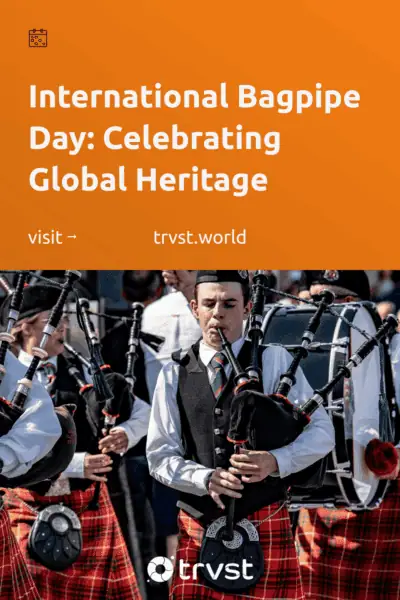
International Bagpipe Day: Celebrating Global Heritage

International Bagpipe Day happens every March 10. Andy Letcher and Cassandre Balosso-Bardin started this thing back in 2012. The Bagpipe Society and International Bagpipe Organisation jumped in early to help out.
Most folks hear "bagpipes" and think Scotland, right? Highland pipes and kilts.
But that's just scratching the surface. Bagpipe traditions stretch across continents and go back centuries.
Key Info: International Bagpipe Day
- When is International Bagpipe Day?
Occurs annually on the 10th of March - This Year (2026):
Tuesday, March 10, 2026 (date has passed) -
Future Dates
- Wednesday, March 10, 2027
- Friday, March 10, 2028
- Saturday, March 10, 2029
- Sunday, March 10, 2030
-
Additional Details
- Observed By: Bagpipers, pipe bands, and bagpipe enthusiasts worldwide
- Where Is It Observed: International
- Primary Theme: Bagpipe Culture And Heritage Celebration
- Hashtags: #InternationalBagpipeDay #BagpipeDay #Bagpipes #PipeBand #BagpipeCulture #BagpipeHeritage #Pipers
Quick Links: International Bagpipe Day
Why This Day Actually Matters

Here's what gets me: people assume Scottish Highland pipes are the whole story. They're not even close. You've got border pipes, uilleann pipes from Ireland, Spanish gaita, Italian zampogna. Each one tells a different cultural story.
UNESCO gets it. They recognized bagpipe culture as a heritage that passes "from generation to generation within the family and community". That's the real deal right there.
Keith Howard's research points to something troubling: "increasing urgency to better understand the wide-scale endangerment and loss of music" across cultures. Economic pressures and modernization are killing off regional traditions.
Master craftsman Julian Goodacre puts it perfectly: "a passion and a vocation," where "each of my bagpipes is an individual creation".
Beyond this, community events keep these traditions breathing. International Bagpipe Day creates awareness for musical practices that might otherwise disappear.
Timeline
Andy Letcher and Cassandre Balosso-Bardin launch International Bagpipe Day; The Bagpipe Society and International Bagpipe Organisation provide early backing
First global events pop up across multiple continents
Growth hits Africa through South Africa and Nigeria, plus Iran joins from Asia
Universities like Harvard and Texas Tech get involved—underground venue performances become the signature style
How to Join In

Listen and Learn
- Hit up local performances or stream concerts online
- Build playlists beyond Scottish pipes to explore variety of heritage music
- Share your events using official hashtags
- Check out museums with traditional bagpipe displays
Get Your Hands Dirty
- Try beginner workshops or watch demonstrations
- Organize flash mobs with other musicians
- Jump into online collaboration videos
- Teach basics to anyone who's curious
Virtual options work too. Official websites help you find local events.
Where It's Happening
This movement spans six continents now. Harvard and Texas Tech host university gatherings. Glasgow, London, and Chester organize UK events. Athens, Haninge, Sweden, and Minsk, Belarus contribute to European activities.
South Africa, Nigeria, and Iran continue to increase their involvement. Pipe bands perform in underground caverns, on hillsides, and in public squares.
The variety shows universal appeal while respecting local customs; numbers climb every year.
Finding Official Events
The International Bagpipe Organisation maintains event listings. The Bagpipe Society focuses on UK resources and connections. Both sites accept submissions from local organizers worldwide.
Social media hashtags coordinate global involvement. The biennial International Bagpipe Conference connects with these annual activities. Local organizers can start new gatherings using official planning materials.
Bottom Line
Mark March 10 on your calendar. Every skill level contributes to keeping these customs alive through active involvement. Find local events, start your own gathering, or grab materials from official websites.
This annual event builds lasting connections between traditional music and today's communities. Growing numbers strengthen the preservation of musical heritage worldwide.
Resources:
FAQs (Frequently Asked Questions)
You don't need pipes to join in. Most events want listeners and people curious about the music. Attend performances, help organize local gatherings, or share bagpipe videos online. Museums often feature bagpipe exhibits during this time. Many celebrations include demonstrations for non-players - they want you to learn about different traditions. The day celebrates bagpipe culture broadly, not just active playing.
International Bagpipe Day welcomes everyone, any background. The founders built it to showcase traditions from many cultures - Highland pipes, Irish uilleann pipes, Spanish gaita, Italian zampogna. You're celebrating musical diversity, not claiming someone else's identity. Learn about and respect the various traditions rather than appropriating symbols or dress from any single culture.
You need three things to start: a practice chanter, beginner instruction book, and a teacher or local band for guidance. The Bagpipe Society recommends learning finger positions and basic techniques on the chanter first. Then you progress to full bagpipes with daily practice for tone and technique. Joining a piping band gives you accountability and community support.
Both happen and both count. The International Bagpipe Organisation coordinates some official events, but most celebrations are community-organized. Official events appear on the founding groups' websites. Grassroots gatherings spread through social media and local networks. This decentralized approach actually strengthens the celebration - it allows different regions to adapt culturally.
International Bagpipe Day focuses on awareness and welcoming newcomers on March 10. It highlights cultural diversity globally. Traditional festivals and Highland Games center on performance and competition within specific traditions. The Day emphasizes participation over competition. This makes it perfect for people who might find formal festivals intimidating but want to explore bagpipe culture.
Barbara is a former journalist who is passionate about translating important causes into engaging narratives. She combines communication expertise with an environmental science background to create accessible, fact-driven content.